แผนการเรียนรู้ของคุณ · ดำเนินต่อ · ทบทวน →
Verb + 着 (zháo) (พยายามได้ / ความสำเร็จ)
แนะนำใหม่ตำแหน่งที่คุณบันทึกจะคงอยู่ในเบราว์เซอร์นี้ การต่อจากตำแหน่งจะไม่ทำให้บทเรียนเสร็จสิ้นหรือตอบคำถามในบทเรียน
 5:44
HSK 5 ไวยากรณ์ 18: คำนามเติม (Complements)
ยกกล่องขึ้นบันไดในวันเสาร์ร้อน คุณต้องการคำสำหรับจุดสุดขั้ว หลังคำคุณศัพท์ 得 ตามด้วยบทลงท้ายสั้นๆ จะดันคุณภาพไปสู่จุดสูงสุดของสเกล…
คำอธิบายภาษาอังกฤษ + ตัวอย่างภาษา mandarins · คำบรรยายตามข้อความที่พูด
ในบทเรียนนี้
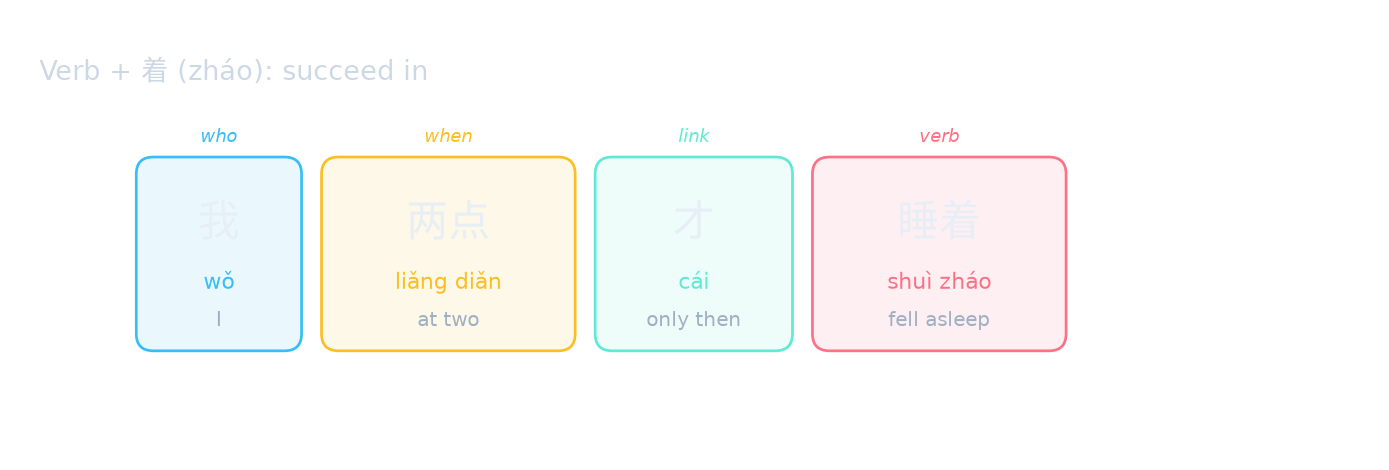
Finally asleep
- You tossed and turned for hours before you managed to sleep.
- I我两点only then / not until才to fall asleep睡着。 — "I didn't get to sleep until two."
- Goal: say you managed to do something with verb + (-ing) / (找着: find, zháo)着 (zháo).
Verb + (-ing) / (找着: find, zháo)着 (zháo) = succeed in
- (-ing) / (找着: find, zháo)着 zháo after a verb marks success in reaching the goal: to fall asleep睡着 (fall asleep), look for找(-ing) / (找着: find, zháo)着 (find), to buy买(-ing) / (找着: find, zháo)着 (manage to buy).
- It is read zháo, not zhe.
the keys钥匙found找着了吗?
Build: “Did you find the keys?”
ความยาก 3/5 · 200 เหรียญ + บอนัสน้อยๆ เมื่อทำสำเร็จครั้งแรกในวันนี้
Verb + 着 (zháo) + 了.
Potential and negative forms
- can't sleep睡不着 = can't get to sleep: I我too太nervous紧张(completed / change)了,can't sleep睡不着 — "I'm too nervous to fall asleep."
- not / haven't没look for找(-ing) / (找着: find, zháo)着 = didn't manage to find: I我look for找(completed / change)了a long time / half a day半天also也not / haven't没look for找(-ing) / (找着: find, zháo)着 — "I looked for a long time but couldn't find it."
I我too太nervous紧张了,can't sleep睡不着。
Complete: “I'm too nervous; I can't get to sleep.” 我太紧张了,睡不____。
ความยาก 1/5 · 100 เหรียญ + บอนัสน้อยๆ เมื่อทำสำเร็จครั้งแรกในวันนี้
睡不着 = can't fall asleep.
zháo versus zhe
- to fall asleep睡着 (shuì zháo) = fall asleep (the goal reached); to fall asleep睡着 (shuì zhe) = in a sleeping state — context and reading tell them apart.
- For finding, to find找到 is the standard, more general form; look for找(-ing) / (找着: find, zháo)着 is colloquial, mainly northern.
- can't sleep睡不着 = can't fall asleep (now or in general); not / haven't没to fall asleep睡着 = didn't fall asleep (it happened): I我too太nervous紧张,can't sleep睡不着。 — "I'm too nervous to sleep." yesterday evening昨晚I我all along / straight一直not / haven't没to fall asleep睡着。 — "I didn't fall asleep all last night."
How is 着 read in 我两点才睡着?
ความยาก 1/5 · 100 เหรียญ + บอนัสน้อยๆ เมื่อทำสำเร็จครั้งแรกในวันนี้
Success in reaching the goal = zháo.
(-ing) / (找着: find, zháo)着 (zháo) versus (found)到
- Both mark success: look for找(-ing) / (找着: find, zháo)着 = to find找到, to buy买(-ing) / (找着: find, zháo)着 = to buy买(found)到.
- to fall asleep睡着 has no (found)到 version: to sleep睡(found)到 means "sleep until": to sleep睡(found)到十点.
I我look for找(found)到了。
睡到十点 means “fell asleep at ten”.
ความยาก 1/5 · 100 เหรียญ + บอนัสน้อยๆ เมื่อทำสำเร็จครั้งแรกในวันนี้
False. 到 after a verb shows the end point in time: 睡到十点 means “slept until ten”. “Fell asleep at ten” is 十点睡着了.
Recap
- Verb + (-ing) / (找着: find, zháo)着 (zháo) = succeed in (to fall asleep睡着, look for找(-ing) / (找着: find, zháo)着); negatives can't sleep睡不着 / not / haven't没look for找(-ing) / (找着: find, zháo)着.
- Read zháo; often interchangeable with (found)到, except to fall asleep睡着.
Read the full reference: HSK 5 grammar — Complements.
You tossed and turned for hours before you managed to sleep. Close the examples. Say a Mandarin response, then write it in Chinese. Explain briefly in English what the lesson’s pattern adds. Compare with the model, then change one detail and try again.
This is supported productive practice. Compare meaning and structure; your answer need not copy the model. A partner or teacher must hear the spoken response to comment on pronunciation.