แผนการเรียนรู้ของคุณ · ดำเนินต่อ · ทบทวน →
要不是 (if it weren't for)
แนะนำใหม่ตำแหน่งที่คุณบันทึกจะคงอยู่ในเบราว์เซอร์นี้ การต่อจากตำแหน่งจะไม่ทำให้บทเรียนเสร็จสิ้นหรือตอบคำถามในบทเรียน
 2:41
HSK 5 ไวยากรณ์ 9: รูปแบบประโยค — เน้นย้ำและการมีอยู่ (Focus & Existence)
要不是 (的话): สมมติฐานตรงข้ามกับความเป็นจริง. โครงสร้าง. 要不是 ตามด้วยสิ่งที่เกิดขึ้นจริง ตามด้วย (的话) ตามด้วยผลเสียที่ไม่ได้เกิดขึ้นจริง. ตัวอย่างประโยค,…
คำอธิบายภาษาอังกฤษ + ตัวอย่างภาษา mandarins · คำบรรยายตามข้อความที่พูด
In this lesson
Lost without you
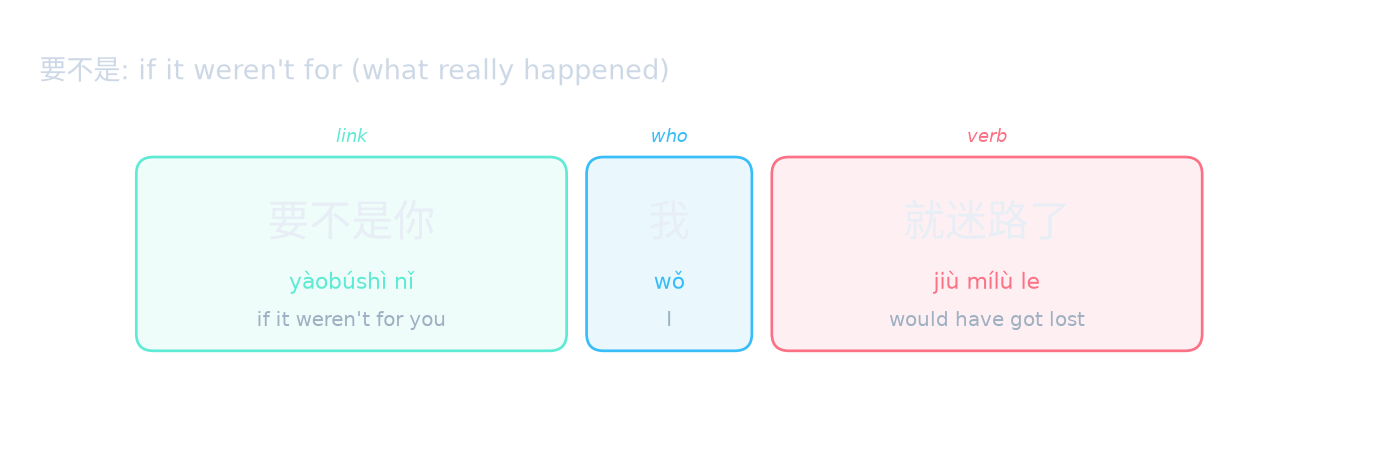
- A friend leads you through the old town to the restaurant. You say: if it weren't for要不是you你,I我would就get lost迷路(completed / change)了。 — "If it weren't for you, I'd have got lost."
- Goal: say what would have happened without someone or something with if it weren't for要不是 + reason,(subject) + would就 + result.
if it weren't for要不是 + reason,would就 + what would have happened
- if it weren't for要不是 + the real reason,(subject) + would就 / already at an earlier time早就 + the result you avoided: the reason really happened, the result didn't.
- if it weren't for要不是to rain下雨,we / us我们would就to go去to climb a mountain爬山(completed / change)了。 — "If it weren't raining, we'd have gone hiking." if it weren't for要不是you你to remind提醒I我,I我already at an earlier time早就to forget忘(completed / change)了。 — "If you hadn't reminded me, I'd have forgotten long ago."
if it weren't for要不是you你,I我would就get lost迷路了。
Complete: “If it weren't for the rain, we'd have gone hiking.” ____下雨,我们就去爬山了。
ความยาก 1/5 · 100 เหรียญ + บอนัสน้อยๆ เมื่อทำสำเร็จครั้งแรกในวันนี้
要不是 + the real reason, then the result that didn't happen.
Build: “If it weren't for the traffic jam, I'd have arrived long ago.”
ความยาก 3/5 · 200 เหรียญ + บอนัสน้อยๆ เมื่อทำสำเร็จครั้งแรกในวันนี้
要不是 + reason, then the result with 早 … 了.
What really happened, what didn't
- if it weren't for要不是you你,I我would就get lost迷路(completed / change)了 → you helped (true) · I got lost (didn't happen).
- The reason can be good or bad: if it weren't for要不是traffic jam堵车,I我early早to / arrive / (result: get)到(completed / change)了。 — "If it weren't for the traffic jam, I'd have been here long ago."
要不是你提醒我,我早就忘了. What really happened?
ความยาก 1/5 · 100 เหรียญ + บอนัสน้อยๆ เมื่อทำสำเร็จครั้งแรกในวันนี้
The reason after 要不是 is real; the result after 就 didn't happen.
In 要不是你,我就迷路了, the speaker got lost.
ความยาก 1/5 · 100 เหรียญ + บอนัสน้อยๆ เมื่อทำสำเร็จครั้งแรกในวันนี้
Thanks to you, the speaker did not get lost.
if it weren't for要不是 or if如果is not / no不是?
- if it weren't for要不是 is about the past or present, something that really happened: if it weren't for要不是you你,I我would就get lost迷路(completed / change)了.
- For a real open condition, use if如果 / if要是: if如果tomorrow明天to rain下雨,we / us我们would就not不to go去(completed / change)了。 — "If it rains tomorrow, we won't go." ✗ if it weren't for要不是tomorrow明天to rain下雨.
Which fits? ____明天下雨,我们就不去了。
ความยาก 1/5 · 100 เหรียญ + บอนัสน้อยๆ เมื่อทำสำเร็จครั้งแรกในวันนี้
An open future condition takes 如果 / 要是.
Recap
- if it weren't for要不是 + real reason,would就 / already at an earlier time早就 + result (… (completed / change)了) = if it weren't for …, … would have ….
- Open future conditions take if如果 / if要是.
Read the full reference: HSK 5 grammar — Sentence patterns.
Thank two people who helped you this term, saying what would have happened without them.
Your answer need not copy the model. A partner or teacher must hear the spoken response to comment on pronunciation.