Oxidation number and redox
แนะนำใหม่ 6:34
อิเล็กโทรเคมีและรีดักชัน-ออกซิเดชัน
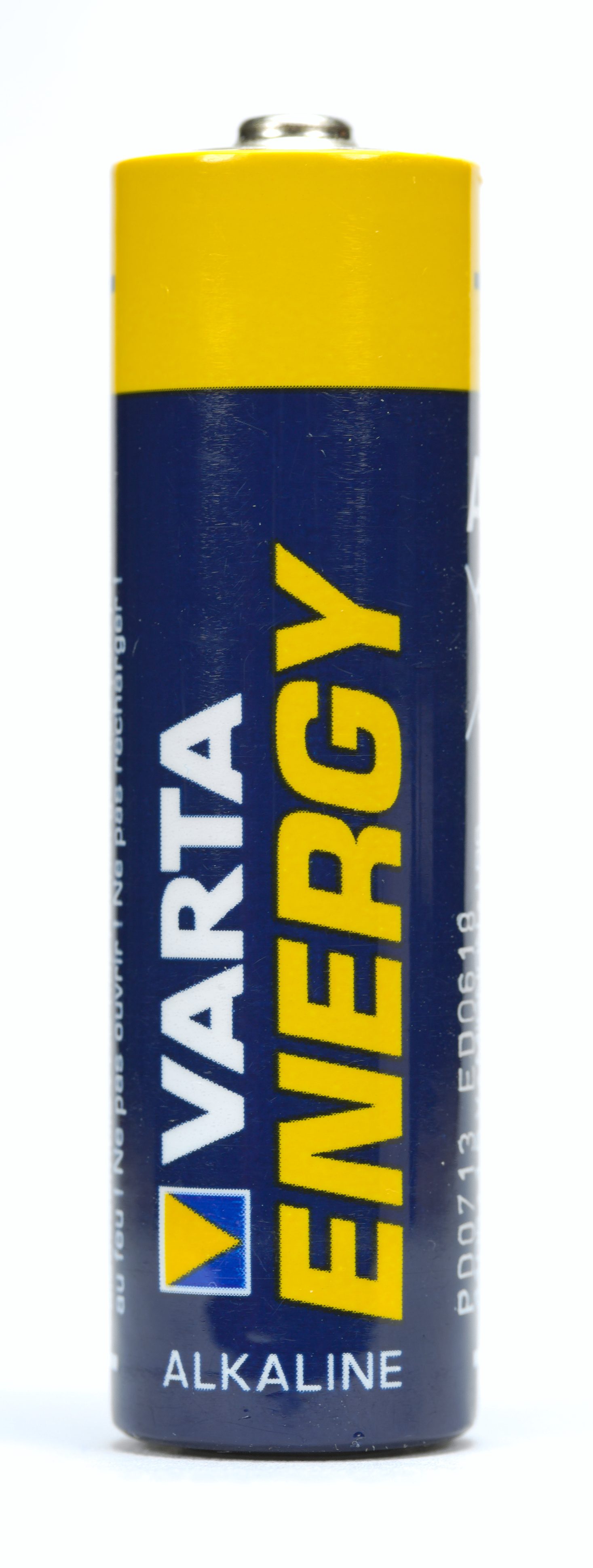
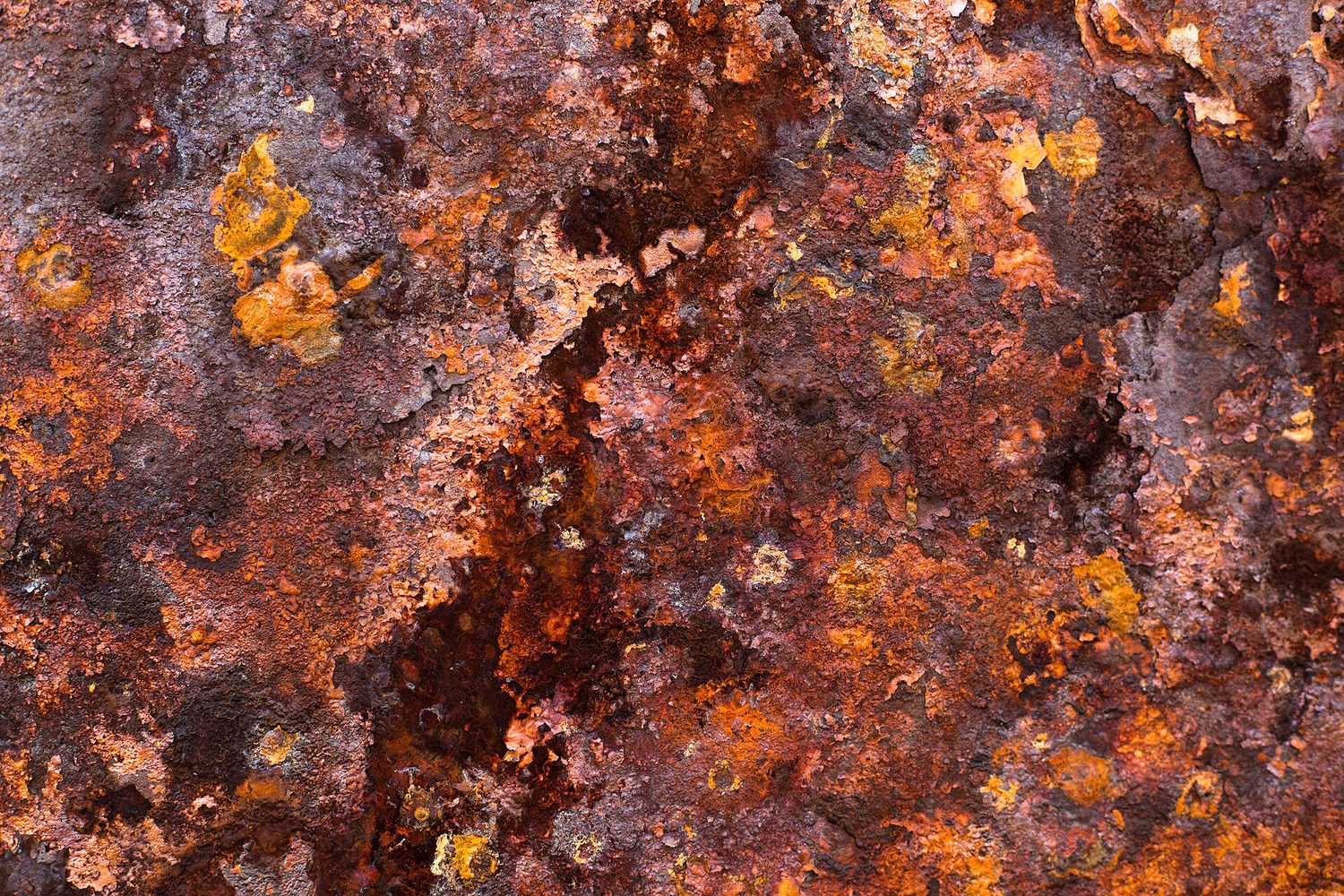
เหล็กสองชิ้น หนึ่งตัวกำลังเป็นสนิมบนรั้ว อีกตัวอยู่ในแบตเตอรี่ ผลักดันอิเล็กตรอนผ่านโทรศัพท์ของคุณ ดูเหมือนจะเป็น…
บรรยายภาษาอังกฤษ · สลับคำบรรยายภาษาอังกฤษและภาษาจีนได้
In this lesson
| English | ความหมาย |
|---|---|
| oxidation number/ˌɒksɪˈdeɪʃn ˈnʌmbə/ | เลขออกซิเดชัน |
| redox/rɪˈdɒks/ | ปฏิกิริยาออกซิเดชัน-รีดักชัน (เรด็อกซ์) |
| oxidation/ˌɒksɪˈdeɪʃn/ | การออกซิเดชัน |
| electron transfer/ɪˈlektrɒn ˈtrænsfɜː/ | การถ่ายโอนอิเล็กตรอน |
| reduction/rɪˈdʌkʃn/ | การรีดักชัน |
Tracking the electrons
- Rusting, batteries and photosynthesis all move electrons from one substance to another. These are redox 氧化还原 reactions.
- An oxidation number 氧化数 keeps track of the electrons: it shows how many an atom has lost (+) or gained (−) compared with the free element.
The rules
| Rule | Example |
|---|---|
| an uncombined element is 0 | Fe, O₂, Cl₂: 0 |
| a simple ion equals its charge | Mg²⁺: +2; Cl⁻: −1 |
| Group 1 is +1, Group 2 is +2, F is −1 | in NaF: Na +1, F −1 |
| O is −2 (but −1 in peroxides) | H₂O₂: O is −1 |
| H is +1 (but −1 in metal hydrides) | NaH: H is −1 |
| the numbers add up to 0 in a compound, or to the charge of an ion | SO₄²⁻: total −2 |
The oxidation number of an uncombined element (like O₂ or Fe) is:
ความยาก 1/5 · 100 เหรียญ + บอนัสน้อยๆ เมื่อทำสำเร็จครั้งแรกในวันนี้
A free, uncombined element always has an oxidation number of 0.
The usual oxidation number of oxygen in a compound is:
ความยาก 1/5 · 100 เหรียญ + บอนัสน้อยๆ เมื่อทำสำเร็จครั้งแรกในวันนี้
Oxygen is normally −2, except −1 in peroxides.
What is the oxidation number of manganese in $\text{MnO}_4^{-}$? (Enter a signed number, e.g. 7 for +7.)
ความยาก 2/5 · 140 เหรียญ + บอนัสน้อยๆ เมื่อทำสำเร็จครั้งแรกในวันนี้
$x + 4(-2) = -1$, so $x = +7$.
What is the oxidation number of nitrogen in the ammonium ion, $\text{NH}_4^{+}$?
ความยาก 1/5 · 100 เหรียญ + บอนัสน้อยๆ เมื่อทำสำเร็จครั้งแรกในวันนี้
$x + 4(+1) = +1$, so $x = -3$.
Apply the rules. Find S in H₂SO₄, Cr in Cr₂O₇²⁻ and N in NH₄⁺.
- H₂SO₄: $2(+1)+x+4(-2)=0$, so $x=+6$.
- Cr₂O₇²⁻: $2x+7(-2)=-2$, so $x=+6$. NH₄⁺: $x+4(+1)=+1$, so $x=-3$.
In KMnO₄, K is +1 and each O is −2. What is the oxidation number of Mn? (give the number, e.g. 7)
ความยาก 2/5 · 140 เหรียญ + บอนัสน้อยๆ เมื่อทำสำเร็จครั้งแรกในวันนี้
+1 (K) + Mn + 4×(−2) = 0, so Mn = +7.
Oxidation numbers in names
- A Roman numeral gives the oxidation number of the element before it: iron(II) sulfate contains Fe²⁺; iron(III) oxide, Fe₂O₃, contains Fe³⁺.
- In an anion, it belongs to the central atom: sulfate(VI) SO₄²⁻, nitrate(V) NO₃⁻, manganate(VII) MnO₄⁻, chlorate(I) ClO⁻.
What is the systematic name of NaClO₃?
ความยาก 1/5 · 100 เหรียญ + บอนัสน้อยๆ เมื่อทำสำเร็จครั้งแรกในวันนี้
Na +1, O 3 × (−2) = −6, so Cl is +5. The name shows it: chlorate(V).
OIL RIG
- Oxidation Is Loss of electrons: the oxidation number goes up. Reduction 还原 Is Gain: it goes down.
- They always happen together. The electrons lost by one species are gained by another (electron transfer 电子转移).
Using OIL RIG, oxidation is:
ความยาก 1/5 · 100 เหรียญ + บอนัสน้อยๆ เมื่อทำสำเร็จครั้งแรกในวันนี้
Oxidation Is Loss of electrons; the oxidation number rises. Reduction Is Gain (number falls).
A substance that loses electrons in a reaction is being ______.
ความยาก 1/5 · 100 เหรียญ + บอนัสน้อยๆ เมื่อทำสำเร็จครั้งแรกในวันนี้
OIL: Oxidation Is Loss of electrons.
What is oxidised? In $4\text{Fe}+3\text{O}_2\rightarrow2\text{Fe}_2\text{O}_3$ (rusting):
- Fe: $0\rightarrow+3$, up, so iron is oxidised 氧化. O: $0\rightarrow-2$, down, so oxygen is reduced.
- Each Fe loses 3 electrons; each O gains 2. Total: $4\times3=12$ lost, $6\times2=12$ gained ✓.
Which reaction is ไม่ใช่ a redox reaction?
ความยาก 1/5 · 100 เหรียญ + บอนัสน้อยๆ เมื่อทำสำเร็จครั้งแรกในวันนี้
In CaCO₃ → CaO + CO₂, Ca stays +2, C stays +4 and O stays −2. Nothing is oxidised or reduced.
Redox is electron transfer
Step through it: the metal loses (is oxidised) and the non-metal gains (is reduced) — oxidation number rises for one, falls for the other.
- Oxidation numbers are written with the sign first (+3), charges with the sign last (3+).
- Not every reaction is redox. If no oxidation number changes, it is not (e.g. $\text{HCl}+\text{NaOH}$).
- Check the special cases: O in peroxides (−1) and H in metal hydrides (−1).
You've got it
- Oxidation number: element 0, simple ion = charge, compound sums to 0, ion sums to its charge.
- Roman numerals in names give oxidation numbers: iron(III), manganate(VII).
- OIL RIG: oxidation = loss, number up; reduction = gain, number down. Always together.