Skip to content · ⁨ข้ามไปยังเนื้อหา⁩
Subjects · ⁨รายวิชา⁩
  • 1 The verb to be
    1.1

    am / is / are

    English

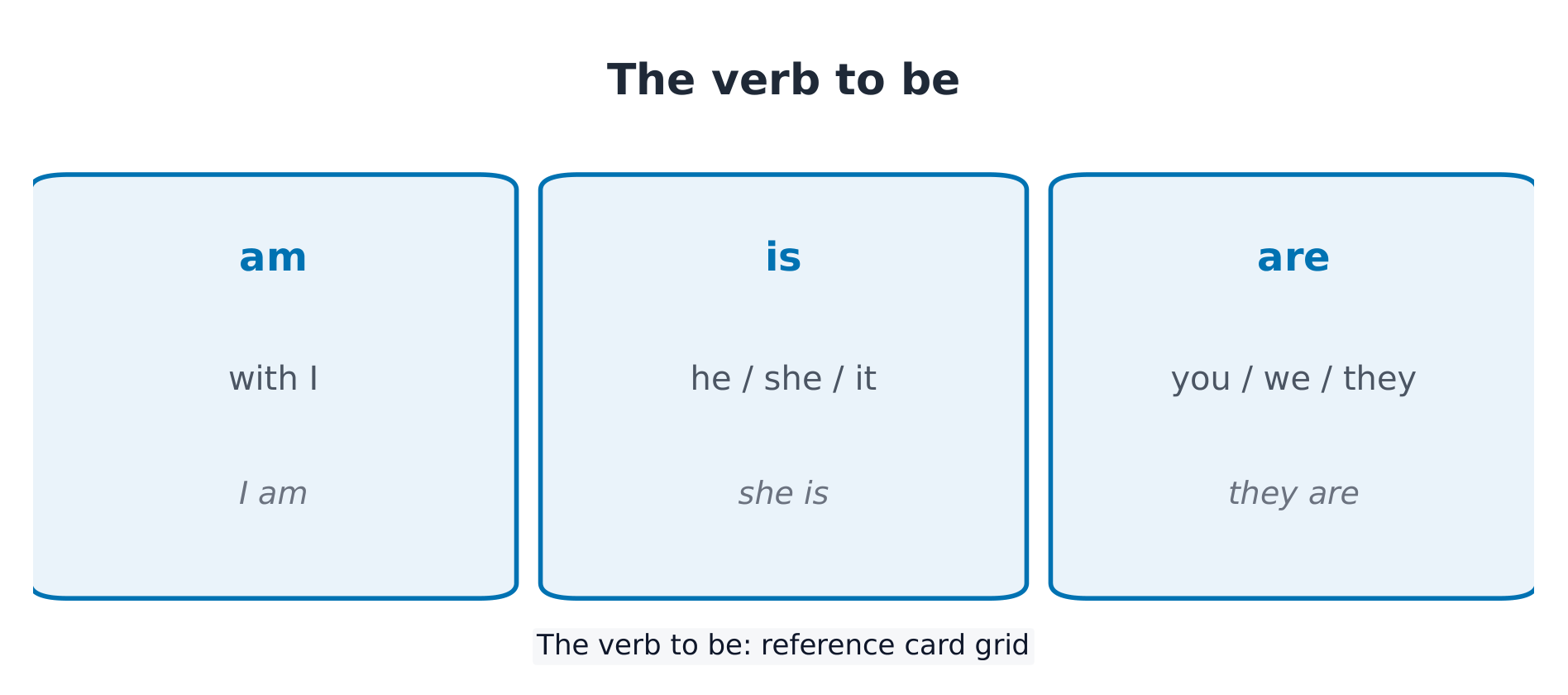
    The verb "to be" means "is / am / are." It changes according to the subject and has three forms:

    • I → am
    • he / she / it → is
    • you / we / they → are

    我I 是am 一名a 学生student.

    I am a student.

    她She 是is 开心happy.

    She is happy.

    他们They (是)are 来自from 中国China.

    They are from China.

    Note: Common spoken contractions: I'm, you're, he's, she's, it's, we're, they're.

    ไทย
    be 动词:am / is / are 随主语变化

    be 动词 (the verb to be)表示"是 / 在"。它随主语变化,有三种形式:

    • I → am
    • he / she / it → is
    • you / we / they → are

    我I 是am 一名a 学生student.

    ฉันเป็นนักเรียน

    她She 是is 开心happy.

    เธอมีความสุขมาก

    他们They (是)are 来自from 中国China.

    พวกเขามาจากจีน

    注意 口语常用缩写:I'm、you're、he's、she's、it's、we're、they're。
    1.2

    การปฏิเสธและการตั้งคำถาม

    English

    Negation: Add not after the be verb (often contracted).

    他He 不是is not 一名a 老师teacher.

    He is not a teacher. (= He isn't a teacher.)

    Interrogative: Place the be verb before the subject.

    (是吗)Are 你you 准备好ready?

    Are you ready?

    Short answers: Yes, I am. / No, I'm not.

    Note: Negative contractions: is not → isn't, are not → aren't; but am not is only contracted to I'm not (there is no ~~amn't~~).

    Common Errors

    • ❌ ~~He busy.~~ → ✓ He is busy. — In Chinese, "He is very busy" can exist without a verb, but an English sentence must have a verb. Use be to link when the predicative is an adjective or noun and there are no other verbs in the sentence (He is busy); do not add be if the sentence already contains an ordinary verb (I go to school).
    • ❌ ~~I am go to school.~~ → ✓ I go to school. — Do not use be and ordinary verbs together; "go" alone suffices for "to go."
    • ❌ ~~They is my friends.~~ → ✓ They are my friends. — Plural subjects (you / we / they) take are.
    • ❌ ~~I am agree.~~ → ✓ I agree. — agree is itself a verb; do not add am before it.
    • ❌ ~~Are you ready? — Yes, I'm.~~ → ✓ Yes, I am. — Contractions cannot be used at the end of affirmative short answers (say Yes, I am); however, negative short answers typically end with a negative contraction (No, he isn't / No, I can't; first person is No, I'm not, as there is no amn't).
    ไทย

    否定: 在 be 动词后加 not(常缩写)。

    他He 不是is not 一名a 老师teacher.

    他不是老师。(= He isn't a teacher.)

    疑问: 把 be 动词放到主语前面。

    (是吗)Are 你you 准备好ready?

    *คุณพร้อมหรือยัง?

    简短回答:Yes, I am. / No, I'm not.

    注意 否定缩写:is not → isn't,are not → aren't;但 am not 只缩写成 I'm not(没有 ~~amn't~~)

    ข้อผิดพลาดที่พบบ่อย

    • ❌ ~~He busy.~~ → ✓ He is busy. — ประโยคภาษาจีน "เขา很忙" สามารถไม่มีกริยาได้ แต่ประโยคภาษาอังกฤษต้องมีกริยาเสมอ เมื่อคำขยาย (predicative) เป็น adjective หรือ noun และในประโยคไม่มีกริยาอื่น จะใช้ be เพื่อเชื่อม (He is busy); แต่ถ้าในประโยคมีกริยาทั่วไปอยู่แล้ว ไม่ต้องเติม be (I go to school)。
    • ❌ ~~I am go to school.~~ → ✓ I go to school. — ไม่สามารถนำ be และกริยาธรรมดามาวางซ้อนกันได้; คำว่า "ไป" ใช้แค่ go เท่านั้น。
    • ❌ ~~They is my friends.~~ → ✓ They are my friends. — ตัวเอกพหูพจน์ (you / we / they) ใช้ are。
    • ❌ ~~I am agree.~~ → ✓ I agree. — agree (เห็นด้วย) เป็นกริยาอยู่แล้ว ไม่ต้องใส่ am ข้างหน้า。
    • ❌ ~~Are you ready? — Yes, I'm.~~ → ✓ Yes, I am. — ในการตอบสั้นแบบยืนยันต้องไม่ใช้คำย่อ(พูดว่า Yes, I am); แต่การตอบสั้นแบบปฏิเสธมักจบด้วยคำย่อปฏิเสธ(No, he isn't / No, I can't; สำหรับบุพจน์บุคคลที่หนึ่งคือ No, I'm not เนื่องจากไม่มีคำว่า amn't)。
  • 2 Subject pronouns
    2.1

    I, you, he, she, it, we, they

    English

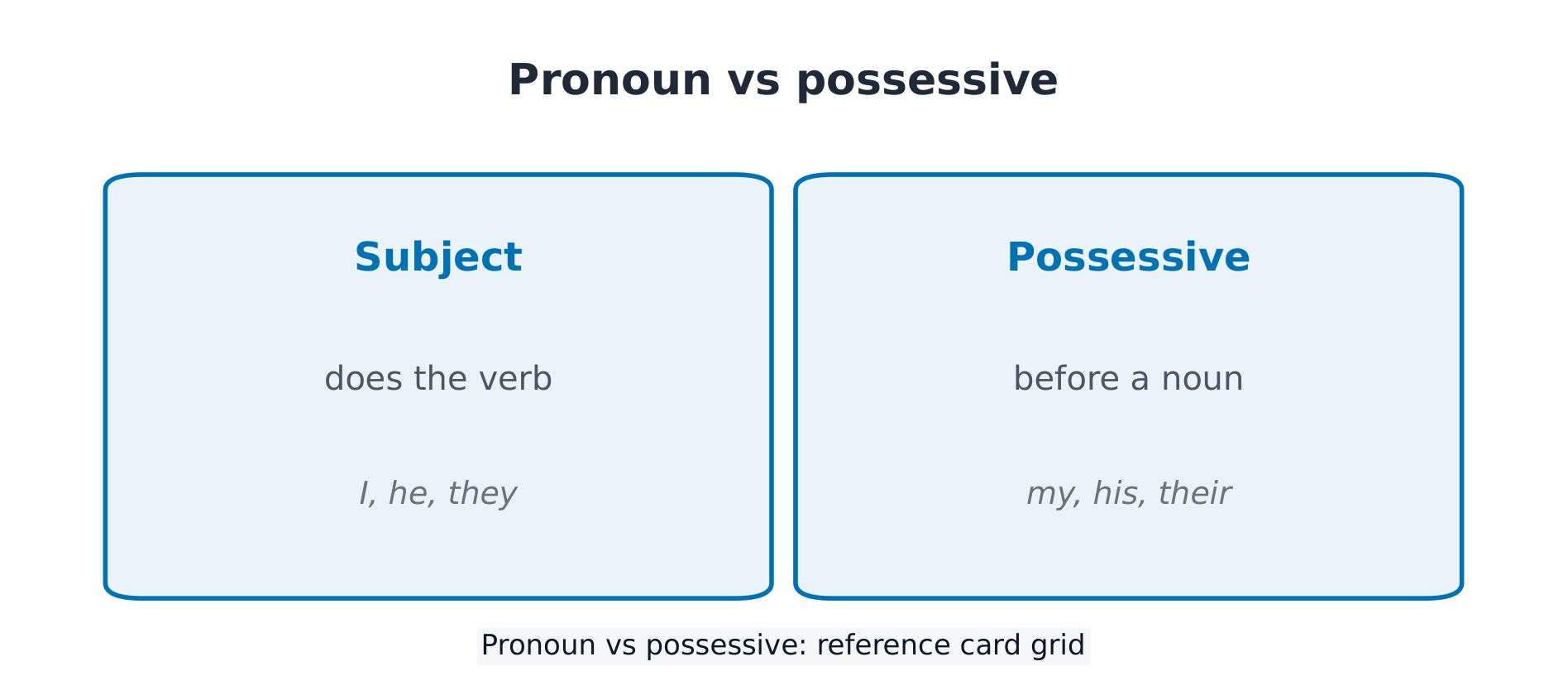
    Subject pronouns replace the subject and are placed before the verb:

    • I(I), you(you), he(he), she(she)
    • it(it), we(we), they(they)

    他He 是is 我的my 哥哥brother.

    He is my brother.

    我们We 喜欢like 音乐music.

    We like music.

    Key Usage Points:

    • I is always capitalized, regardless of its position in the sentence.
    • Things and animals commonly use it: This is my bag. It is new.(This is my bag. It is new.)*
    • Plural people or things both use they: The books are here. They are mine.(The books are here. They are mine.)*

    Note: Subject pronouns are followed by verbs; do not confuse them with object pronouns (me, him, her...) which will be learned later.

    Common Errors

    • ❌ ~~My mother is a doctor. He is very kind.~~ → ✓ She is very kind. — In colloquial Chinese, "he/she" sounds identical, but in English, he and she must be clearly distinguished.
    • ❌ ~~Me am a student.~~ → ✓ I am a student. — Use I for the subject, not me.
    • ❌ ~~My friend he is tall.~~ → ✓ My friend is tall. — The subject needs to be mentioned only once; avoid repeating "noun + pronoun" (the Chinese habit of saying "my friend he..." does not apply in English).
    • ❌ ~~Is raining.~~ → ✓ It is raining. — English sentences must have a subject; weather, time, and dates begin with it.
    ไทย
    คำสรรพนาม主语และคำบอกเจ้าของ

    สรรพนามประธาน (subject pronouns) ใช้แทน主语 วางอยู่หลังกริยา ก่อน:

    • I(ฉัน), you(คุณ/ท่าน), he(เขาชาย), she(เธอ/นาง)
    • it(มัน), we(เรา/พวกเร), they(พวกเขา/พวกมัน)

    他He 是is 我的my 哥哥brother.

    เขาเป็นพี่ชายของฉัน

    我们We 喜欢like 音乐music.

    เรารักดนตรี

    จุดสำคัญในการใช้:

    • I ต้องเขียนตัวใหญ่เสมอไม่ว่าจะอยู่ในตำแหน่งไหนของประโยค
    • สิ่งของ สัตว์ มักใช้ it: This is my bag. It is new.(นี่คือกระเป๋าของฉัน มันใหม่)*
    • บุคคลหรือสิ่งของพหูพจน์ ใช้ they: The books are here. They are mine.(หนังสืออยู่ตรงนี้ พวกมันเป็นของฉัน)*

    ข้อควรระวัง หลังสรรพนามประธานต้องตามด้วยกริยา; อย่าสับสนกับสรรพนาม owner后面要学的宾格代词(me、him、her…)不要混淆。

    ข้อผิดพลาดที่พบบ่อย

    • ❌ ~~My mother is a doctor. He is very kind.~~ → ✓ She is very kind. — ในภาษาพูดภาษาจีน "เขา/เธอ" ออกเสียงเหมือนกัน แต่ภาษาอังกฤษ he / she ต้องแยกให้ชัด。
    • ❌ ~~Me am a student.~~ → ✓ I am a student. — ทำ主语用 I,不用 me。
    • ❌ ~~My friend he is tall.~~ → ✓ My friend is tall. —主语说一次就够,不要"名词 + 代词"重复(中文"我朋友他……"的习惯带不进英语)。
    • ❌ ~~Is raining.~~ → ✓ It is raining. — ประโยคภาษาอังกฤษต้องมี主语;天气、时间、日期用 it开头。
  • 3 Possessive adjectives
    3.1

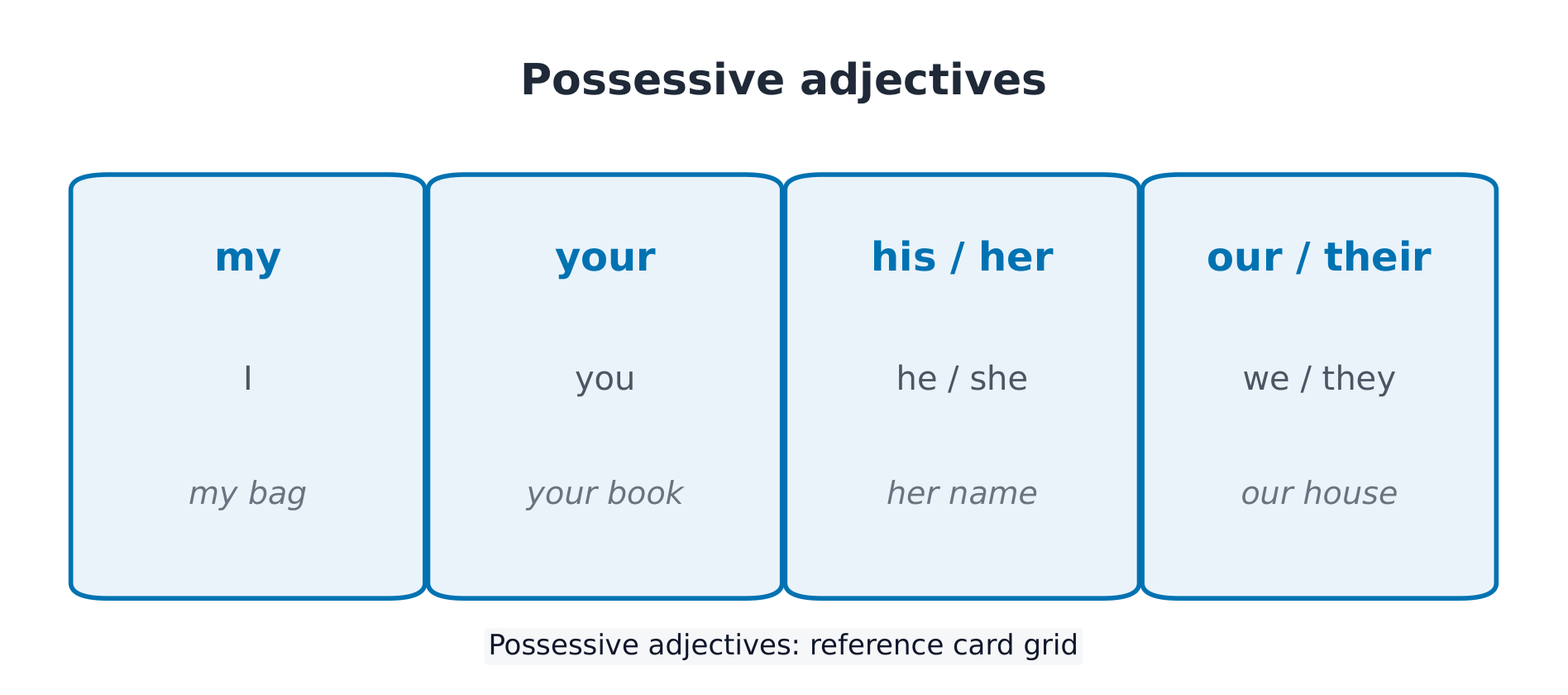
    my, your, his, her, our, their

    English

    Possessive adjectives indicate "whose" and are placed before the noun:

    • I → my(my), you → your(your), he → his(his)
    • she → her(her), it → its(its), we → our(our), they → their(their)

    这This 是is 我的my 包bag.

    This is my bag.

    她的Her 名字name 是is 露西Lucy.

    Her name is Lucy.

    Key Usage Points:

    • Possessive adjectives are always followed by a noun: my book, their house.
    • They do not change with noun number: my book, my books(my remains unchanged).

    Note: Be careful to distinguish its (its, no apostrophe) and it's (= it is). For example: The dog wags its tail.(The dog wags its tail.)*

    Common Errors

    • ❌ ~~This is she book.~~ → ✓ This is her book. — A possessive form must precede a noun: he → his, she → her.
    • ❌ ~~He is me friend.~~ → ✓ He is my friend. — The possessive form of I is my.
    • ❌ ~~The dog wags it's tail.~~ → ✓ …wags its tail. — it's = it is; "its" (possessive) has no apostrophe.
    • ❌ ~~Their is a park near here.~~ → ✓ There is a park near here. — their (their) and there (there/here) sound identical; do not mix them up in writing.
    ไทย
    物主限定词:my / your / his / her

    物主限定词 (possessive adjectives)表示"谁的",放在名词前面:

    • I → my(我的), you → your(你的), he → his(他的)
    • she → her(她的), it → its(它的), we → our(我们的), they → their(他们的)

    这This 是is 我的my 包bag.

    นี่คือกระเป๋าของฉัน

    她的Her 名字name 是is 露西Lucy.

    ชื่อของเธอคือลูซี่

    จุดสำคัญในการใช้:

    • 物主限定词后面一定跟名词: my book, their house。
    • 它不随名词单复数变化: my book, my books(my不变)。

    注意 小心区分 its(它的,无撇号)和 it's(= it is)。例如:The dog wags its tail.(狗摇它的尾巴。)

    ข้อผิดพลาดที่พบบ่อย

    • ❌ ~~This is she book.~~ → ✓ This is her book. —名词前要用物主形式: he → his, she → her。
    • ❌ ~~He is me friend.~~ → ✓ He is my friend. — I的物主形式是 my。
    • ❌ ~~The dog wags it's tail.~~ → ✓ …wags its tail. — it's = it is; "它的"是 its,没有撇号。
    • ❌ ~~Their is a park near here.~~ → ✓ There is a park near here. — their(他们的)和 there(有/那里)读音相同,写的时候别混。
  • 4 this, that, these, those
    4.1

    this 与 that

    English

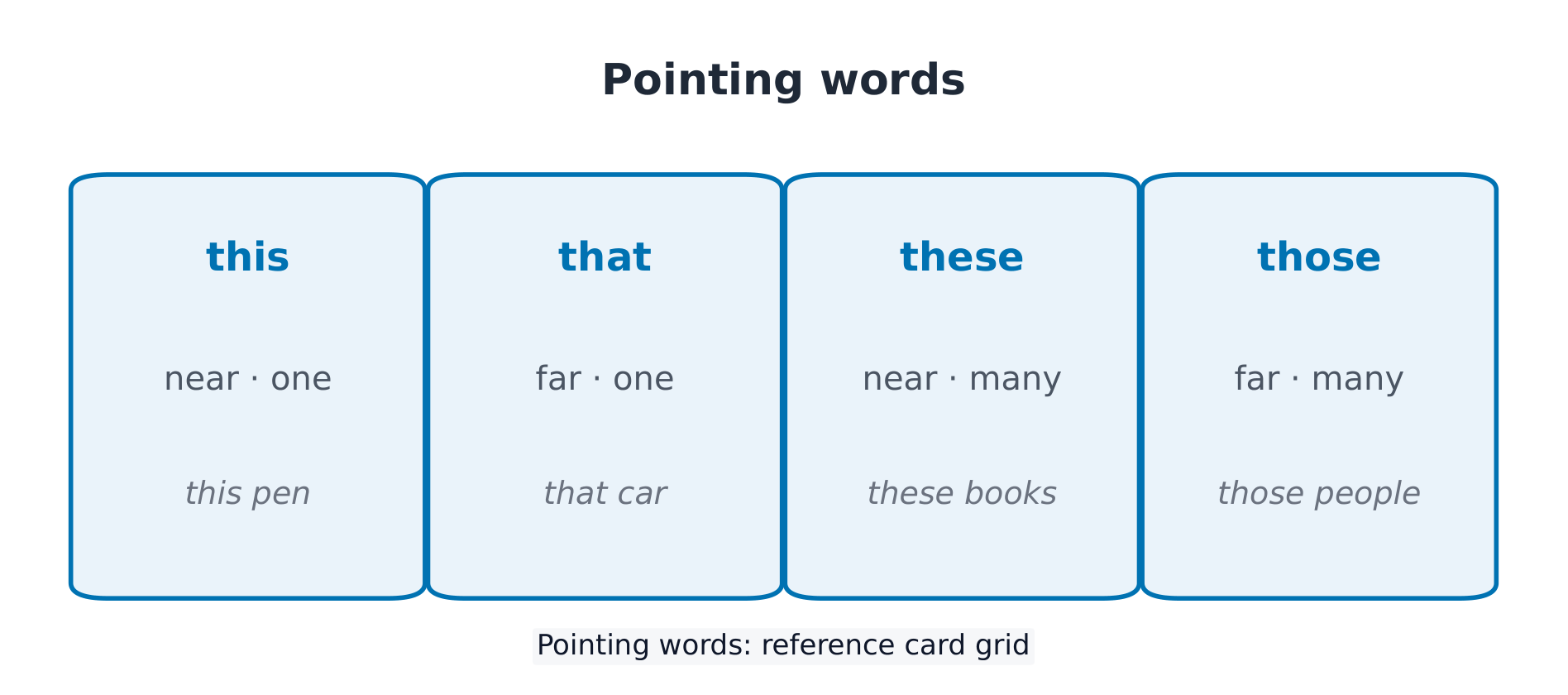
    Demonstratives point out "which one." Use this and that for singular:

    • this(this): Close to the speaker.
    • that(that): Far from the speaker.

    这This 是is 我的my 手机phone.

    This is my phone. (Close)

    那That 是is 你的your 车car.

    That is your car. (Far)

    ไทย
    近/远 × 单数/复数:this / that / these / those

    指示词 (demonstratives)指出"哪一个"。单数用 this 和 that:

    • this(这个):离说话人近。
    • that(那个):离说话人远。

    这This 是is 我的my 手机phone.

    นี่คือโทรศัพท์มือถือของฉัน (ใกล้)

    那That 是is 你的your 车car.

    นั่นคือรถของคุณ (ไกล)

    4.2

    these 与 those

    English

    Use these and those for plural:

    • these(these): Close. those(those): Far.

    这些These 是are 我的my 书books.

    These are my books.

    那些Those 是are 她的her 朋友friends.

    Those are her friends.

    Contrastive Memory:

    • Near → this (singular) / these (plural).
    • Far → that (singular) / those (plural).

    Note: These / those are followed by plural nouns: these books, not ~~these book~~.

    Common Errors

    • ❌ ~~these book~~ → ✓ these books — Plural nouns must follow these / those.
    • ❌ ~~This books are mine.~~ → ✓ These books are mine. — If the noun is plural, the demonstrative must also be plural.
    • ❌ When introducing yourself on the phone, say ~~I am Tom.~~ → ✓ This is Tom. — In English, introduce yourself on the phone using this is.
    • Remember pairs: Near this / these are often used with here; far that / those are often used with there.
    ไทย

    复数用 these 和 those:

    • these(这些):近。those(那些):远。

    这些These 是are 我的my 书books.

    เหล่านี้คือหนังสือของฉัน

    那些Those 是are 她的her 朋友friends.

    เหล่านั้นคือเพื่อนของเธอ

    เปรียบเทียบเพื่อจำ:

    • 近 → this(单)/ these(复)。
    • 远 → that(单)/ those(复)。

    注意 these / those 后面跟复数名词: these books, not ~~these book~~。

    ข้อผิดพลาดที่พบบ่อย

    • ❌ ~~these book~~ → ✓ these books — these / those 后面必须跟复数名词。
    • ❌ ~~This books are mine.~~ → ✓ These books are mine. —名词是复数,指示词也要用复数形式。
    • ❌ 打电话时说 ~~I am Tom.~~ → ✓ This is Tom. — 英语在电话里自报姓名用 this is。
    • 记住配对: 近处 this / these 常和 here 一起用,远处 that / those 常和 there 一起用。
  • 5 a, an and plurals · ⁨a, an และพหูพจน์⁩
    5.1

    a 与 an

    English

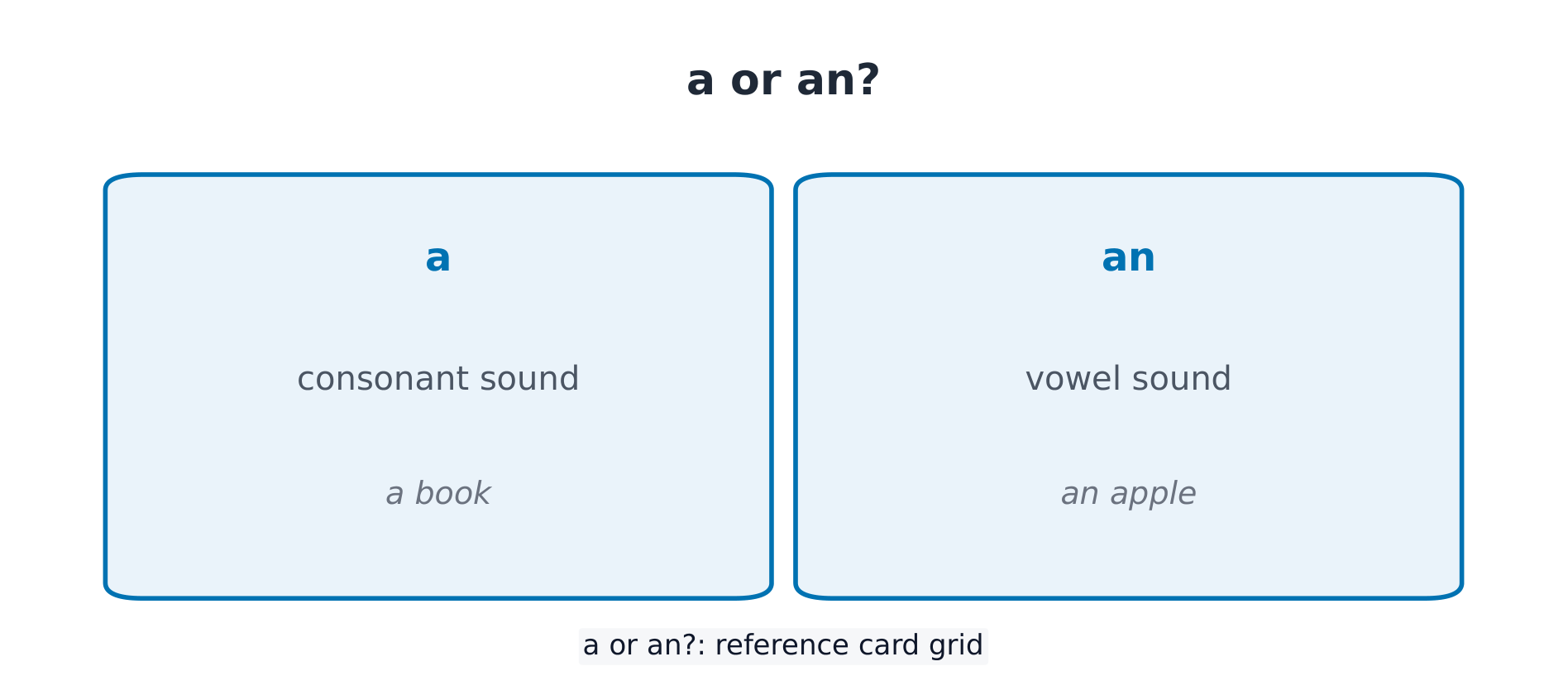
    a and an mean "one" and are used before singular countable nouns. How to choose depends on pronunciation:

    • a + consonant sound: a book, a dog, a cat.
    • an + vowel sound: an apple, an egg, an orange.

    我I 有have 一个a 笔pen.

    I have a pen.

    她She 吃eats 一个an 苹果apple.

    She eats an apple.

    Note: Look at the sound, not the letter: an hour (h is silent), a university (pronounced "yu-").

    ไทย
    a / an:看读音(辅音 vs 元音)

    a 和 an表示"一个",用在单数可数名词前。怎么选,看读音:

    • a + 辅音音: a book, a dog, a cat。
    • an + 元音音: an apple, an egg, an orange。

    我I 有have 一个a 笔pen.

    ฉันมีปากกาหนึ่งด้าม

    她She 吃eats 一个an 苹果apple.

    เธอกินแอปเปิ้ลหนึ่งลูก

    注意 看声音不看字母: an hour(h不发音)、a university(读 "yu-")。

    5.2

    คำนามพหูพจน์

    English

    To indicate "more than one," use the plural form of the noun, usually adding -s:

    • Generally add -s: book → books, car → cars.
    • Words ending in -s / -sh / -ch / -x add -es: bus → buses, box → boxes.
    • Consonant + y ending: change y to i and add -es: baby → babies, city → cities.

    我I 有have 两two 猫cats.

    I have two cats.

    Irregular plurals (must memorize):

    • man → men, woman → women, child → children.
    • foot → feet, tooth → teeth, person → people.

    Note: Do not use a / an before plural nouns: ~~a books~~ ✗ → books / two books ✓.

    Common Errors

    • ❌ ~~I have dog.~~ → ✓ I have a dog. — In Chinese you can say "I have dogs," but singular countable nouns in English must have a / an (or my, the, etc.) before them.
    • ❌ ~~an university~~ → ✓ a university; ❌ ~~a hour~~ → ✓ an hour — Look at pronunciation, not spelling: university starts with a consonant sound /j/, and h is silent in hour.
    • ❌ ~~two book~~ → ✓ two books — Chinese nouns do not change for plurality, but nouns after numbers in English require -s; this is easily forgotten.
    • ❌ ~~three childs~~ → ✓ three children — Irregular plurals must be memorized separately: men, women, children, feet, teeth, people.
    • ❌ ~~a people~~ → ✓ a person (one person) / people (many people) — people is inherently plural.
    ไทย

    เมื่อหมายถึง "มากกว่าหนึ่ง" นามจะใช้ พหูพจน์ โดยทั่วไปเติม -s:

    • 一般加 -s: book → books, car → cars。
    • 以 -s / -sh / -ch / -x 结尾,加 -es: bus → buses, box → boxes。
    • 辅音 + y 结尾,y变 i 加 -es: baby → babies, city → cities。

    我I 有have 两two 猫cats.

    ฉันมีแมวสองตัว

    พหูพจน์ไม่ปกติ(ต้องท่องจำ):

    • man → men, woman → women, child → children。
    • foot → feet, tooth → teeth, person → people。

    注意 复数名词前不加 a / an: ~~a books~~ ✗ → books / two books ✓。

    ข้อผิดพลาดที่พบบ่อย

    • ❌ ~~I have dog.~~ → ✓ I have a dog. — 中文可以说"我有狗",英语单数可数名词前必须有 a / an(或 my、the 等)。
    • ❌ ~~an university~~ → ✓ a university; ❌ ~~a hour~~ → ✓ an hour — 看读音不看字母: university以辅音/j/开头,hour的h不发音。
    • ❌ ~~two book~~ → ✓ two books — 中文名词没有复数变化,英语数字后面的名词要加 -s,最容易忘。
    • ❌ ~~three childs~~ → ✓ three children — 不规则复数要单独背: men、women、children、feet、teeth、people。
    • ❌ ~~a people~~ → ✓ a person(一个人)/ people(许多人) — people本身就是复数。
  • 6 there is and there are · ⁨there is และ there are⁩
    6.1

    พหูพจน์และเอกพจน์

    English

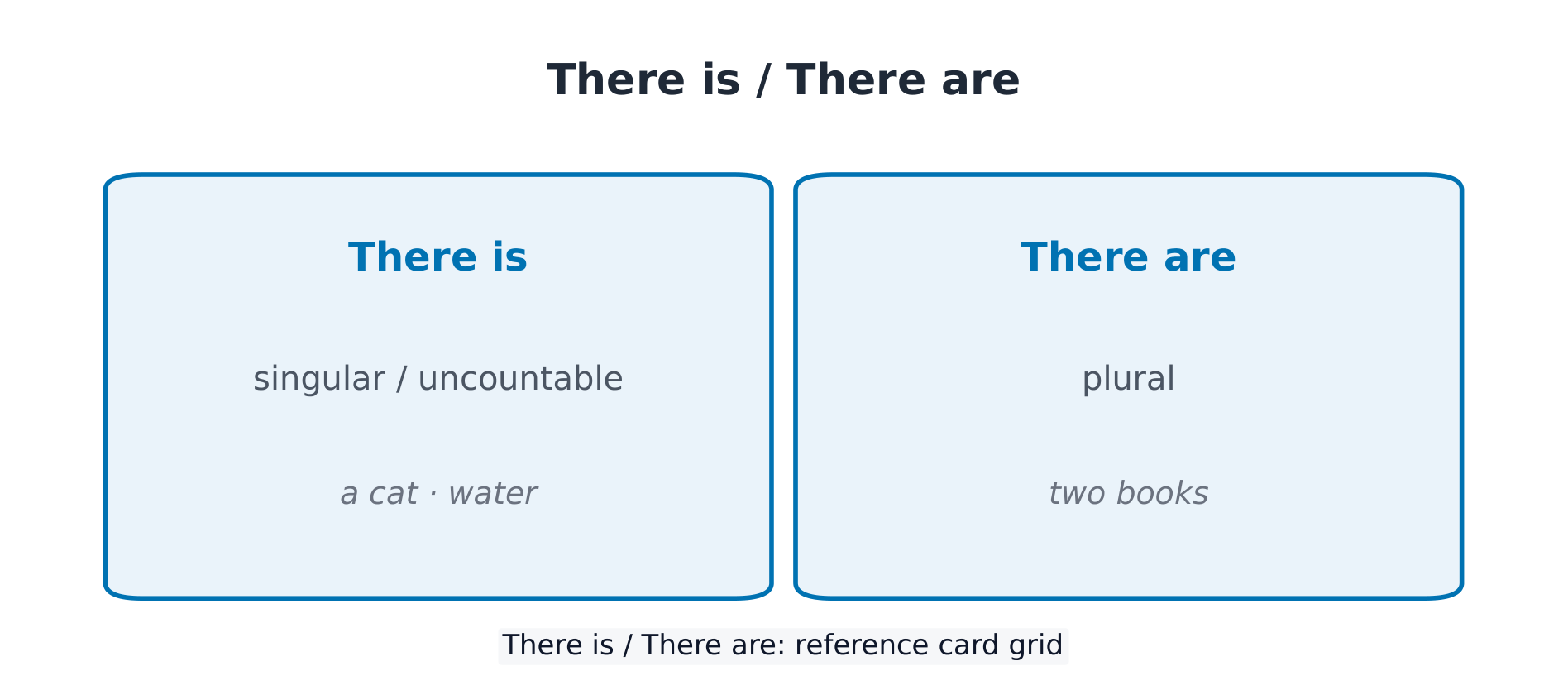
    there is / there are means "there exists" (something exists somewhere).

    • There is + singular / uncountable noun: There is a book.
    • There are + plural noun: There are two books.

    (有)There 有is 一只a 猫cat 在on (冠词)the 沙发上sofa.

    There is a cat on the sofa.

    (有)There 有are 三three 书books 在on (冠词)the 桌上desk.

    There are three books on the table.

    Note: In spoken English, there is is often contracted to there's: There's a problem.

    ไทย
    There is(单数)/ There are(复数)

    there is / there are ใช้สำหรับบอก "มี" (มีการมีอยู่ของสิ่งใดสิ่งหนึ่ง在某处)。

    • There is + คำนามเอกพจน์ / คำนามนับไม่ได้: There is a book.
    • There are + คำนามพหูพจน์: There are two books.

    (有)There 有is 一只a 猫cat 在on (冠词)the 沙发上sofa.

    มีแมวหนึ่งตัวบนโซฟา

    (有)There 有are 三three 书books 在on (冠词)the 桌上desk.

    มีหนังสือสามเล่มบนโต๊ะ

    หมายเหตุ ในภาษาพูด often缩写 of there is เป็น there's: There's a problem.

    6.2

    การปฏิเสธและการตั้งคำถาม

    English

    Negative: there is not / there are not (contracted as there isn't / there aren't).

    (有)There 没有isn't 任何any 牛奶milk.

    There is no milk left.

    Question: Move is / are to the front of there.

    (有吗)Is (有)there 一家a 银行bank 附近near 这里here?

    Is there a bank nearby?

    Short answer: Yes, there is. / No, there isn't.

    Note: Use any frequently in negative / question sentences: Is there any water? (Is there any water?)

    Common Errors

    • ❌ ~~Here has many people.~~ → ✓ There are many people here. — The "have" in the Chinese "There are many people here" indicates existence; use there is / there are in English, do not translate literally as have.
    • ❌ ~~There have a book on the desk.~~ → ✓ There is a book on the desk. — Use is / are after there; there have does not exist.
    • ❌ ~~There is two cats.~~ → ✓ There are two cats. — If the following noun is plural, use are.
    • ❌ ~~There are a milk.~~ → ✓ There is some milk. — milk is uncountable: use there is + some, do not use a.
    ไทย

    ประโยคปฏิเสธ: there is not / there are not(รูปย่อ there isn't / there aren't)。

    (有)There 没有isn't 任何any 牛奶milk.

    ไม่มีนมแล้ว

    ประโยคคำถาม: ย้าย is / are ขึ้นไปไว้หน้า there ก่อน。

    (有吗)Is (有)there 一家a 银行bank 附近near 这里here?

    附近有银行吗?

    คำตอบสั้นๆ: Yes, there is. / No, there isn't.

    หมายเหตุ ในประโยคปฏิเสธ/คำถามมักใช้ any: Is there any water?(มีน้ำไหม?)

    ข้อผิดพลาดที่พบบ่อย

    • ❌ ~~Here has many people.~~ → ✓ There are many people here. — คำว่า "มี" ในภาษาไทย "这里有很多人" บ่งบอกถึงการมีอยู่ ในภาษาอังกฤษต้องใช้ there is / there are ไม่สามารถแปลตรงตัวเป็น have ได้。
    • ❌ ~~There have a book on the desk.~~ → ✓ There is a book on the desk. — หลัง there ต้องใช้ is / are ไม่มีโครงสร้าง there have。
    • ❌ ~~There is two cats.~~ → ✓ There are two cats. — เมื่อคำนาม后面是复数,就用 are。
    • ❌ ~~There are a milk.~~ → ✓ There is some milk. — milk เป็นคำนามนับไม่ได้: ใช้ there is + some,不能用 a。
  • 7 have got
    7.1

    have got / has got

    English

    have got means "to possess" (= have), common in British English.

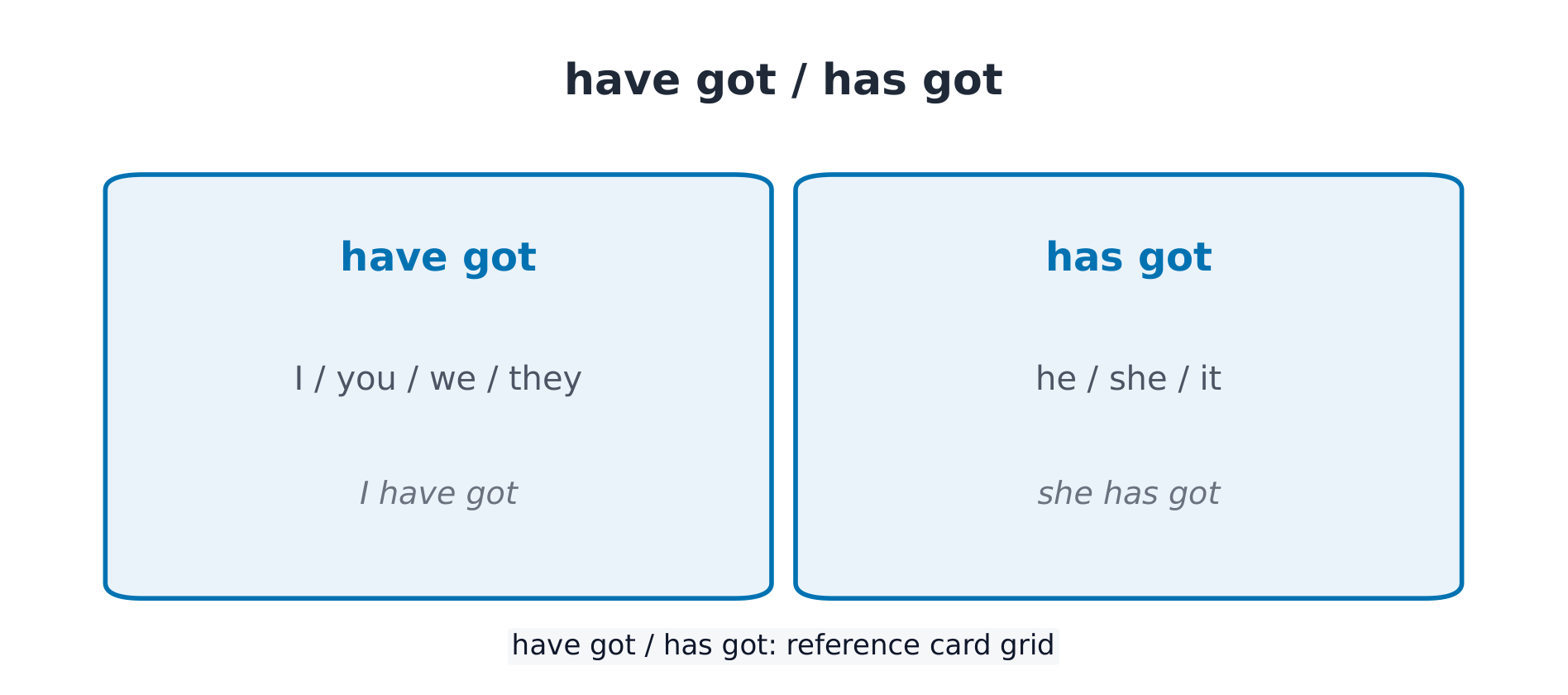
    • I / you / we / they → have got
    • he / she / it → has got

    我I 有have got 一个a 兄弟brother.

    I have a brother. (= I have a brother.)

    她She 有has got 蓝色blue 眼睛eyes.

    She has blue eyes.

    Note: Often contracted in spoken language: I've got, she's got, they've got. Same meaning as have / has.

    ไทย
    have got / has got

    have got หมายความว่า "มี/เป็นเจ้าของ" (= have),พบได้บ่อยในภาษาอังกฤษแบบอังกฤษ。

    • I / you / we / they → have got
    • he / she / it → has got

    我I 有have got 一个a 兄弟brother.

    ฉันมีพี่ชายคนนึง。(= I have a brother.)

    她She 有has got 蓝色blue 眼睛eyes.

    她有蓝色的眼睛。

    หมายเหตุ ในภาษาพูด often缩写 as: I've got、she's got、they've got。ความหมายเหมือนกับ have / has。

    7.2

    การปฏิเสธและการตั้งคำถาม

    English

    Negative: haven't got / hasn't got.

    他He 没有hasn't got 一辆a 车car.

    He doesn't have a car.

    Question: Move Have / Has to the front of the subject.

    (有吗)Have 你you 有got 一支a 笔pen?

    Do you have a pen?

    Short answer: Yes, I have. / No, I haven't.

    Note: have got is mostly used for current possession; for past or habits, use regular have / had.

    Common Errors

    • ❌ ~~She have got long hair.~~ → ✓ She has got long hair. — Use has got for he / she / it.
    • ❌ ~~I have got not a car.~~ → ✓ I haven't got a car. — Place not after have / has, then contract.
    • ❌ ~~Do you have got a pen?~~ → ✓ Have you got a pen? / Do you have a pen? — Both question forms are correct, but never mix them.
    • ❌ ~~Yes, I have got.~~ → ✓ Yes, I have. — Short answers end at have / has, without got.
    ไทย

    ประโยคปฏิเสธ: haven't got / hasn't got。

    他He 没有hasn't got 一辆a 车car.

    他没有车。

    ประโยคคำถาม: ย้าย Have / Has ขึ้นไปไว้หน้า主语。

    (有吗)Have 你you 有got 一支a 笔pen?

    你有笔吗?

    คำตอบสั้นๆ: Yes, I have. / No, I haven't.

    หมายเหตุ have got มักใช้กับสถานะ "การมี" ในปัจจุบัน;เมื่อพูดถึงอดีตหรือนิสัย ให้ใช้ have / had ปกติ。

    ข้อผิดพลาดที่พบบ่อย

    • ❌ ~~She have got long hair.~~ → ✓ She has got long hair. — he / she / it ใช้ has got。
    • ❌ ~~I have got not a car.~~ → ✓ I haven't got a car. — not วางหลัง have / has แล้วค่อยย่อ。
    • ❌ ~~Do you have got a pen?~~ → ✓ Have you got a pen? / Do you have a pen? — ทั้งสองรูปแบบถูกต้อง แต่ไม่สามารถผสมกันเป็นประโยคเดียวได้。
    • ❌ ~~Yes, I have got.~~ → ✓ Yes, I have. — คำตอบสั้นๆ จะจบที่ have / has ไม่ต้องมี got ต่อท้าย。
  • 8 Present simple
    8.1

    习惯与第三人称 -s

    English

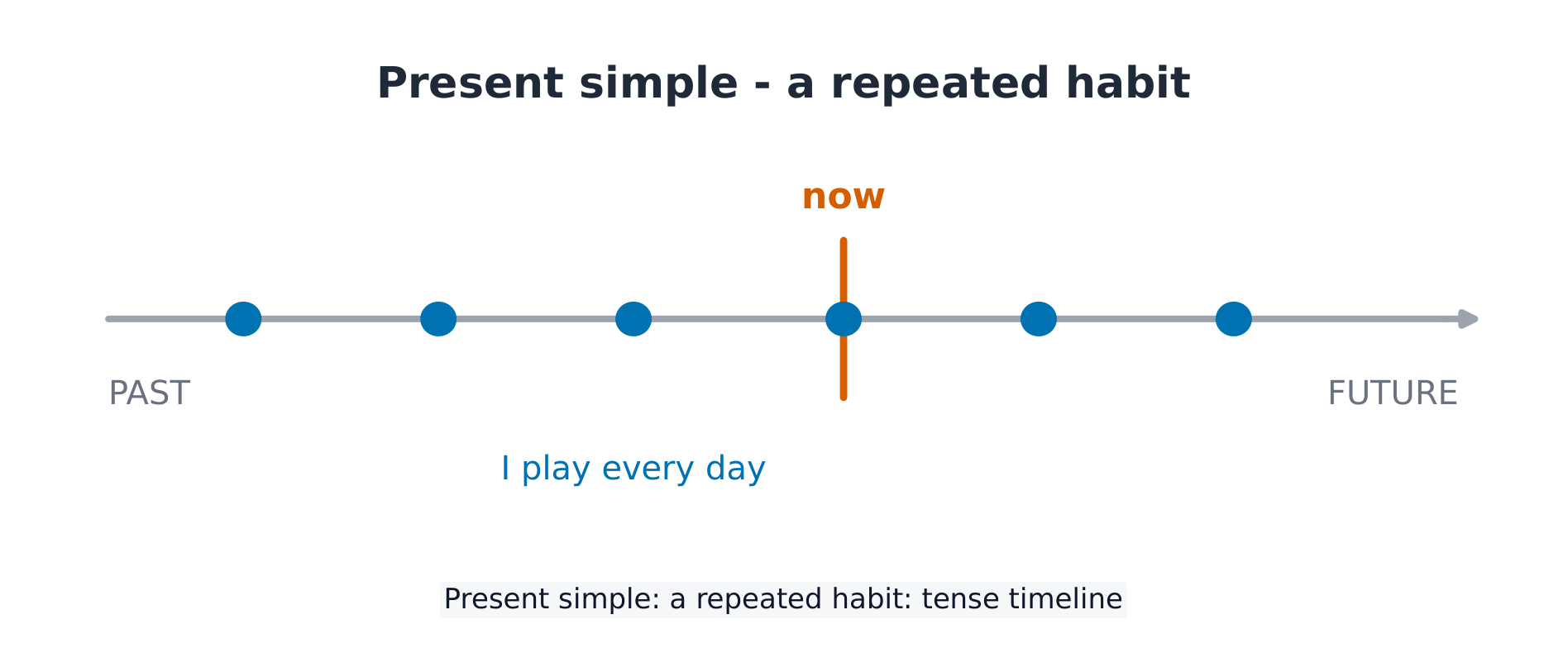
    Present simple (present simple) describes habits and facts. The base form is the infinitive (base verb).

    我I 喜欢like 茶tea.

    I like tea.

    When the subject is he / she / it, add -s to the verb:

    他He 踢plays 足球football.

    He plays football.

    Spelling rules:

    • Generally add -s: like → likes.
    • Words ending in -s / -sh / -ch / -x / -o add -es: go → goes, watch → watches.
    • Consonant + y ending: change y to i and add -es: study → studies.

    Note: Only he / she / it take -s; I / you / we / they use the base form: They like tea.

    ไทย
    一般现在时:反复的习惯

    สัทัยปัจจุบัน (present simple) ใช้บรรยาย นิสัย และ ข้อเท็จจริง。รูปแบบพื้นฐานคือ กริยาแท้。

    我I 喜欢like 茶tea.

    我喜欢茶。

    เมื่อ主语เป็น he / she / it,กริยาจะเติม -s:

    他He 踢plays 足球football.

    他踢足球。

    拼写:

    • โดยทั่วไปเติม -s:like → likes。
    • ลงท้ายด้วย -s / -sh / -ch / -x / -o,เติม -es:go → goes,watch → watches。
    • Accessibility consonant + y,y เปลี่ยนเป็น i แล้วเติม -es:study → studies。

    หมายเหตุ มีเพียง he / she / it เท่านั้นที่เติม -s;I / you / we / they ใช้กริยาแท้:They like tea。

    8.2

    การปฏิเสธและการตั้งคำถาม

    English

    For negatives and questions, use auxiliary verbs do / does (does for he / she / it).

    Negative: Subject + don't / doesn't + base verb.

    我I 不don't 喜欢like 咖啡coffee.

    I don't like coffee.

    Question: Do / Does + Subject + base verb ?

    (助动词)Does 她she 住live 这里here?

    Does she live here?

    Note: When using do / does, the verb returns to its base form (no -s): ~~Does she lives~~ ✗ → Does she live ✓.

    Common Errors

    • ❌ ~~He go to school by bus.~~ → ✓ He goes to school by bus. — Forgetting to add -s in third person singular is the most frequent error; check your work afterwards.
    • ❌ ~~She doesn't likes coffee.~~ → ✓ She doesn't like coffee. — When using does / doesn't, the verb returns to its base form.
    • ❌ ~~I very like English.~~ → ✓ I like English very much. — "Very much" in Chinese cannot be translated literally; very cannot directly modify a verb.
    • ❌ ~~You like tea?~~ → ✓ Do you like tea? — Questions must start with do / does; rising intonation alone is insufficient.
    ไทย
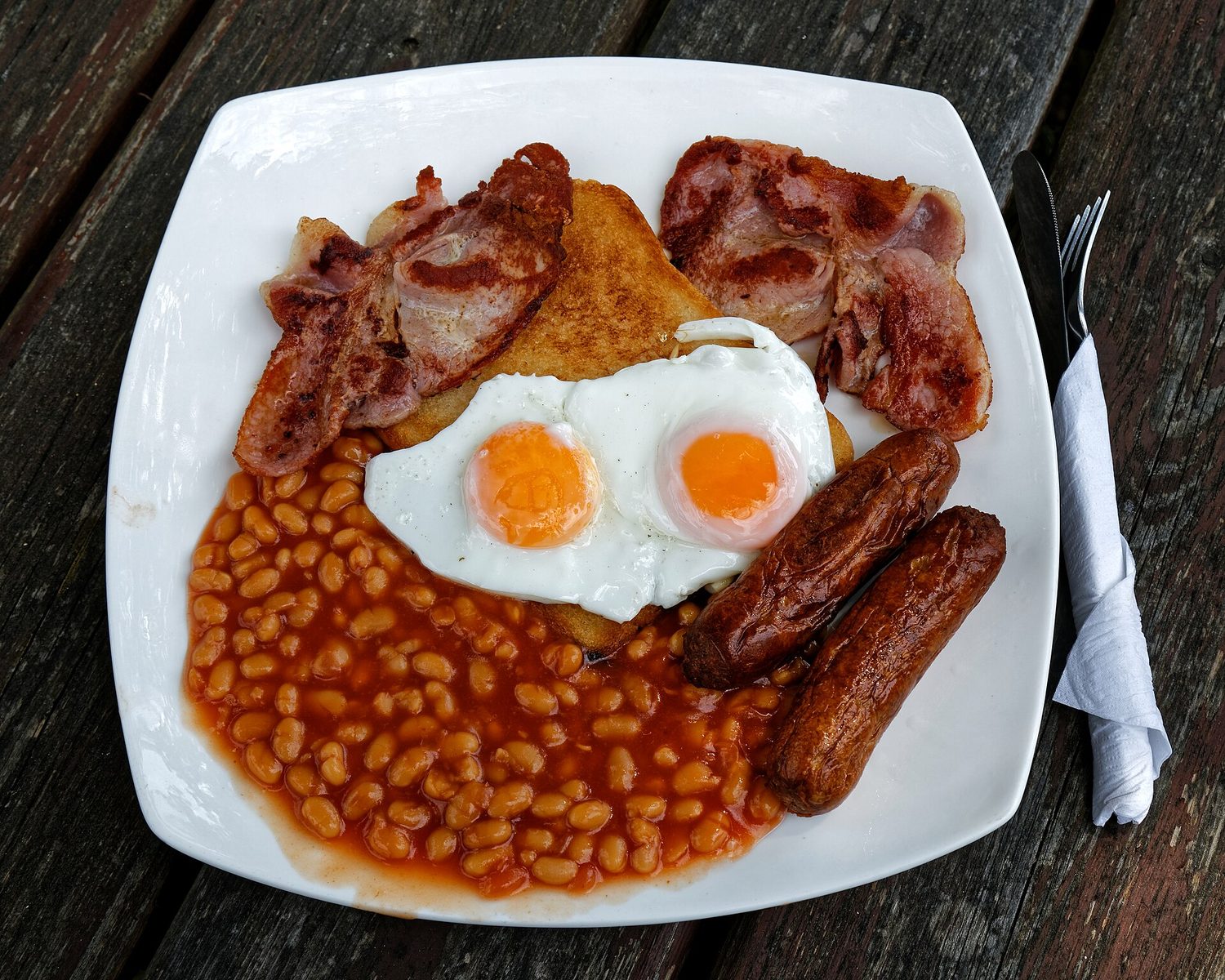
    นิสัยประจำวัน:I have breakfast every morning.

    ประโยคปฏิเสธและคำถามใช้กริยาช่วย do / does(he / she / it ใช้ does)。

    ประโยคปฏิเสธ: Subject + don't / doesn't + กริยาแท้。

    我I 不don't 喜欢like 咖啡coffee.

    我不喜欢咖啡。

    ประโยคคำถาม: Do / Does + Subject + กริยาแท้ ?

    (助动词)Does 她she 住live 这里here?

    她住在这里吗?

    หมายเหตุ เมื่อใช้ do / does,กริยาจะกลับสู่ กริยาแท้(ไม่เติม -s):~~Does she lives~~ ✗ → Does she live ✓。

    ข้อผิดพลาดที่พบบ่อย

    • ❌ ~~He go to school by bus.~~ → ✓ He goes to school by bus. — การลืมเติม -s ของบุคคลที่สามเอกพจน์เป็นข้อผิดพลาดที่พบบ่อยที่สุด,写完回头检查一遍。
    • ❌ ~~She doesn't likes coffee.~~ → ✓ She doesn't like coffee. — เมื่อใช้ does / doesn't,กริยาจะกลับสู่กริยาแท้。
    • ❌ ~~I very like English.~~ → ✓ I like English very much. — "很喜欢" ในภาษาไทยไม่สามารถแปลตรงตัวได้;very ไม่สามารถ修饰动词直接。
    • ❌ ~~You like tea?~~ → ✓ Do you like tea? — ประโยคคำถามต้องขึ้นต้นด้วย do / does,不能仅靠语调上扬。
  • 9 can
    9.1

    能力与请求

    English

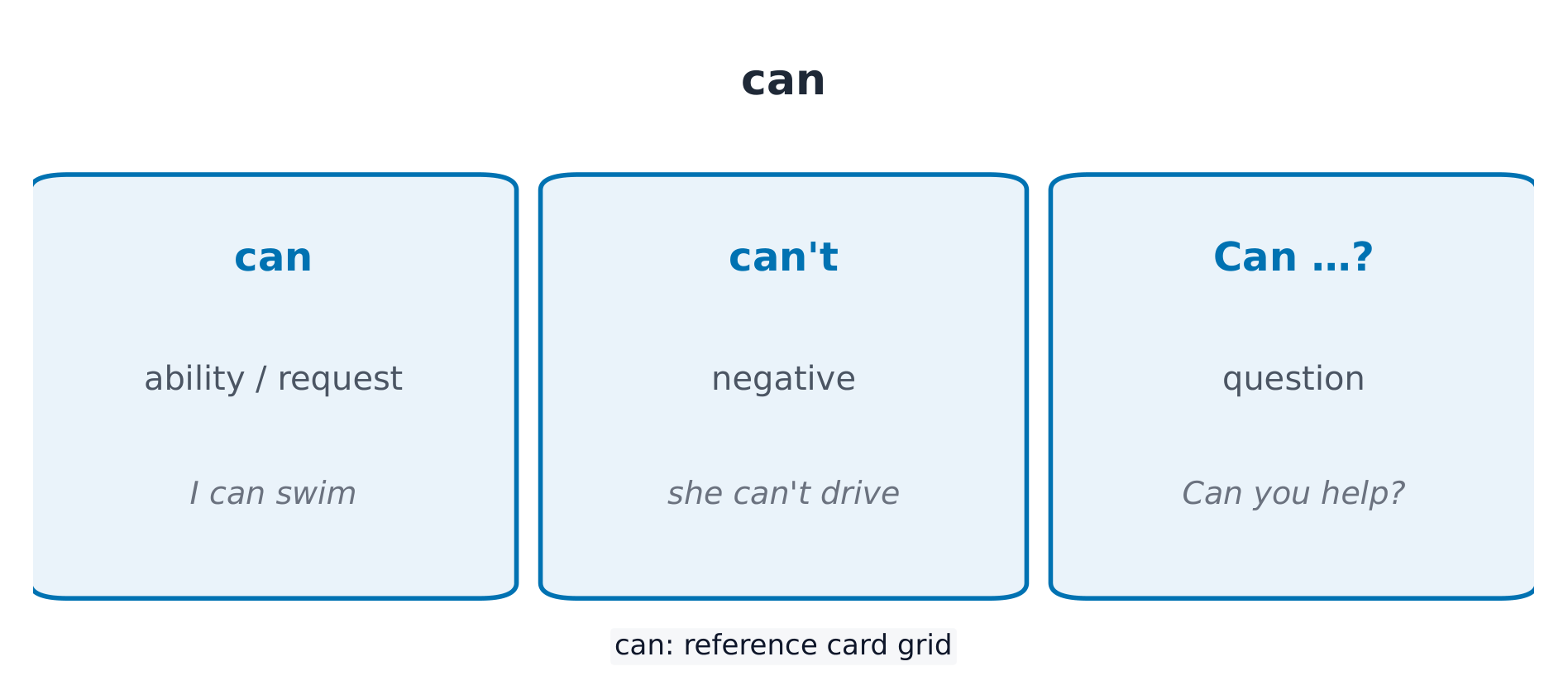
    can expresses ability ("know how to / be able to") or is used for requests. It is followed by the base form of the verb, and remains the same for all persons.

    我I 会can 游泳swim.

    I can swim.

    能Can 你you 帮help 我me?

    Can you help me?

    Note: Use the base form after can: ~~can to swim~~ ✗, ~~can swims~~ ✗ → can swim ✓.

    ไทย
    can:能力、否定、疑问

    can หมายความว่า ความสามารถ ("รู้/สามารถ") หรือใช้เพื่อ ขอ。ตามหลังด้วย กริยาแท้,ทุกบุคคลใช้รูปแบบเดียวกัน。

    我I 会can 游泳swim.

    我会游泳。

    能Can 你you 帮help 我me?

    你能帮我一下吗?

    หมายเหตุ หลัง can ต้องใช้ กริยาแท้:~~can to swim~~ ✗、~~can swims~~ ✗ → can swim ✓。

    9.2

    การปฏิเสธและการตั้งคำถาม

    English

    Negative: cannot (abbreviation can't) + base form of the verb.

    她She 不会can't 开车drive.

    She cannot drive.

    Question: Place Can before the subject.

    能Can 他he 做饭cook?

    Can he cook?

    Short answer: Yes, I can. / No, I can't.

    Note: can has no -s and does not use do/does: ask directly with Can he…?, not ~~Does he can…?~~

    Common Errors

    • ❌ ~~She cans drive.~~ → ✓ She can drive. — can has no third-person singular -s; it is the same for all persons.
    • ❌ ~~I don't can swim.~~ → ✓ I can't swim. — The negative of can is formed directly with not (can't), without using don't.
    • ❌ ~~He can sings very good.~~ → ✓ He can sing very well. — Use the base form of the verb after can; use the adverb well to modify a verb, not good.
    • ❌ ~~You can help me?~~ → ✓ Can you help me? — When making a request, place can before the subject.
    ไทย

    ประโยคปฏิเสธ: cannot(รูปย่อ can't) + กริยาแท้。

    她She 不会can't 开车drive.

    她不会开车。

    ประโยคคำถาม: ย้าย Can ขึ้นไปไว้หน้า主语 ก่อน。

    能Can 他he 做饭cook?

    他会做饭吗?

    คำตอบสั้นๆ: Yes, I can. / No, I can't.

    หมายเหตุ can ไม่มี -s,ไม่มี do / does:คำถามใช้ Can he…? ตรงๆ,ไม่ใช่ ~~Does he can…?~~

    ข้อผิดพลาดที่พบบ่อย

    • ❌ ~~She cans drive.~~ → ✓ She can drive. — can ไม่มี第三人称 -s,ทุกบุคคลใช้รูปแบบเดียวกัน。
    • ❌ ~~I don't can swim.~~ → ✓ I can't swim. — ประโยคปฏิเสธของ can เพิ่ม not ได้เลย(can't),ไม่ต้องใช้ don't。
    • ❌ ~~He can sings very good.~~ → ✓ He can sing very well. — หลัง can ใช้กริยาแท้;修饰动词用副词 well,不用 good。
    • ❌ ~~You can help me?~~ → ✓ Can you help me? — เมื่อขอร้องให้คนอื่นทำ,ให้ย้าย can ขึ้นไปไว้หน้า主语。
  • 10 Imperatives
    10.1

    命令与指示

    English

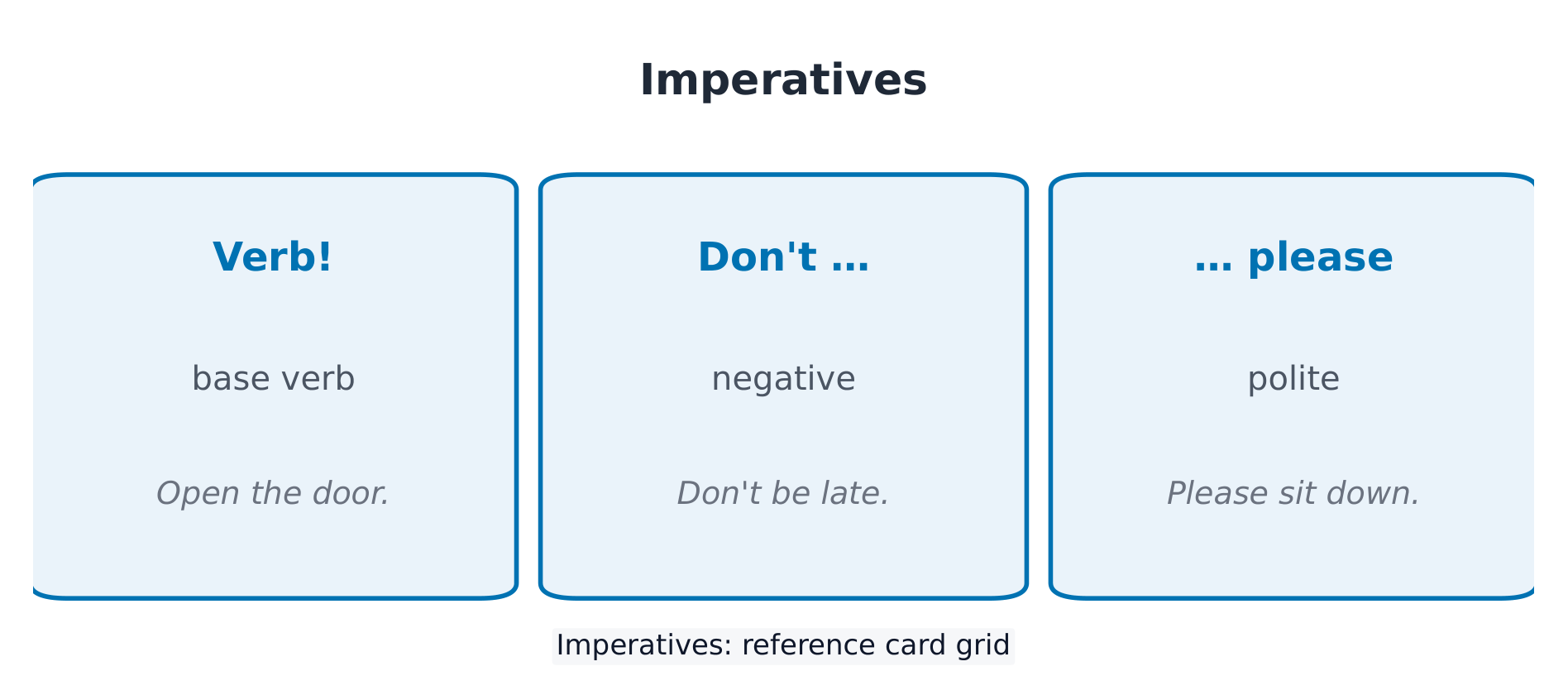
    Imperatives are used to give commands, provide instructions, or make requests. Start directly with the base form of the verb, without a subject.

    打开Open (冠词)the 门door 请, please.

    Please open the door.

    坐Sit 下down.

    Sit down.

    Negative: Add Don't at the beginning.

    不要Don't (是)be 迟到late.

    Don't be late.

    Key Usage Points:

    • Add please to be more polite: Please come in.
    • Also used for directions and instructions: Turn left. Mix the eggs.

    Note: Do not write a subject in imperatives: ~~You open the door~~ (for a command) → Open the door.

    Common Errors

    • ❌ ~~Please open door.~~ → ✓ Please open the door. — Articles must still be included in imperatives.
    • ❌ ~~Don't to touch it.~~ → ✓ Don't touch it. — Follow don't directly with the base form of the verb; do not add to.
    • ❌ ~~No talk in class!~~ → ✓ Don't talk in class! / No talking! — To prohibit an action, use don't + base form; after no, use -ing or a noun.
    • ❌ ~~You sit down!~~ → ✓ Sit down, please. — Adding you to a command sounds angry; add please for politeness, or change to Can you…?
    ไทย
    祈使句:命令、否定、请求

    ประโยคสั่ง (imperatives) ใช้สำหรับออก คำสั่ง,ให้ คำแนะนำ หรือ ขอ。เริ่มด้วย กริยาแท้ โดย ไม่ต้องมี主语。

    打开Open (冠词)the 门door 请, please.

    请把门打开。

    坐Sit 下down.

    坐下。

    ประโยคปฏิเสธ: วางหน้าด้วย Don't。

    不要Don't (是)be 迟到late.

    别迟到。

    จุดสำคัญในการใช้:

    • เพิ่ม please เพื่อความสุภาพ:Please come in.(请进。)
    • ยังใช้ในเส้นทาง,คำอธิบาย:Turn left.(向左转。)Mix the eggs.(把鸡蛋打匀。)

    หมายเหตุ ประโยคสั่ง ไม่เขียน主语:~~You open the door~~(命令时)→ Open the door。

    ข้อผิดพลาดที่พบบ่อย

    • ❌ ~~Please open door.~~ → ✓ Please open the door. — ในประโยคสั่งArticles也不能丢。
    • ❌ ~~Don't to touch it.~~ → ✓ Don't touch it. — หลัง don't紧跟动词原形,不加 to。
    • ❌ ~~No talk in class!~~ → ✓ Don't talk in class! / No talking! — ห้ามทำ某事用 don't + 原形;no后面要用 -ing 或名词。
    • ❌ ~~You sit down!~~ → ✓ Sit down, please. — การเพิ่ม you เข้าไปในคำสั่งฟังดูดุ;若想礼貌就加 please,或改问 Can you…?
  • 11 Question words
    11.1

    what, where, who

    English

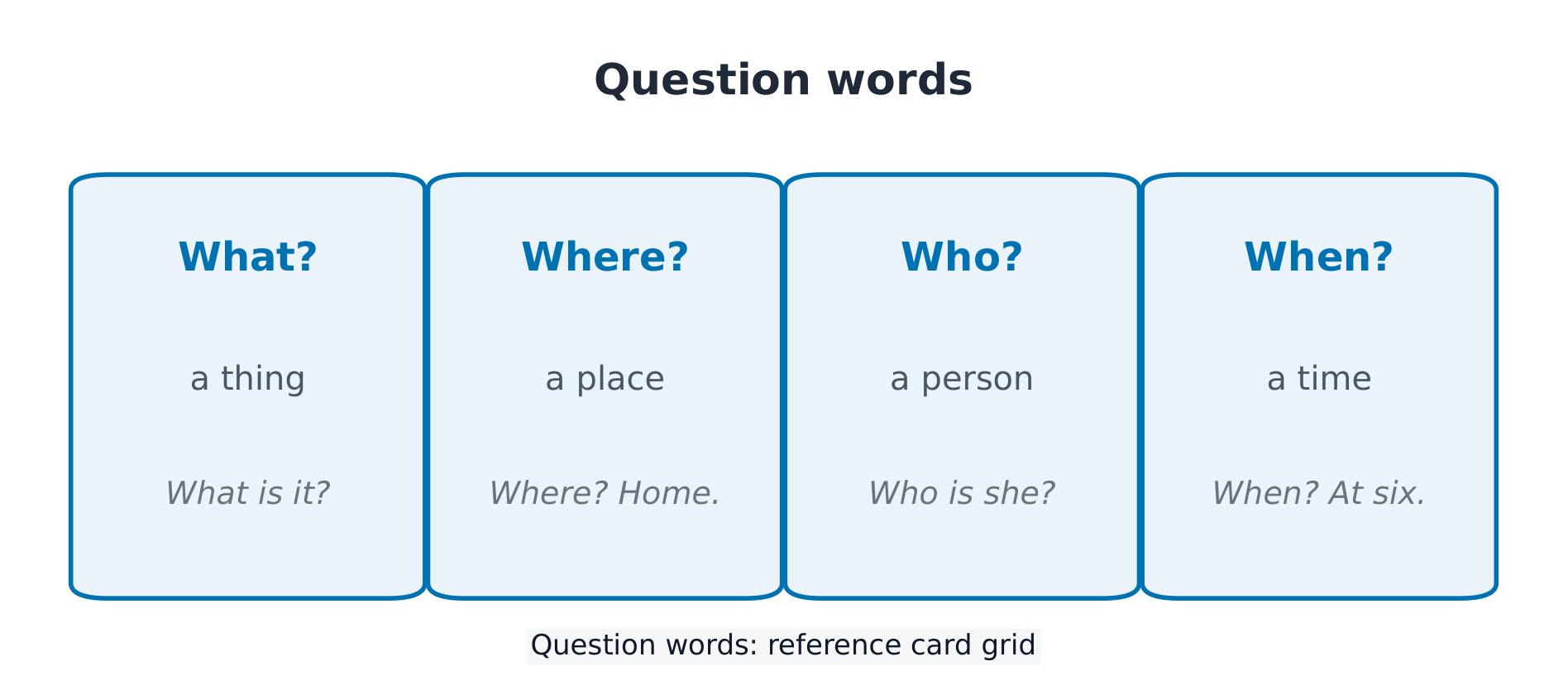
    Question words are placed at the beginning of a question to ask for specific information.

    • what (what), where (where), who (who)

    什么What 是is 你的your 名字name?

    What's your name?

    哪里Where (助动词)do 你you 住live?

    Where do you live?

    谁Who 是is 那个that 男人man?

    Who is that man?

    Note: A be verb or auxiliary do/does often follows the question word: Where do you work?

    ไทย
    疑问词:问事物/地点/人/时间

    Question words (疑问词) วางไว้หน้าคำถาม,用于询问具体信息。

    • what(什么)、where(哪里)、who(谁)

    什么What 是is 你的your 名字name?

    你叫什么名字?

    哪里Where (助动词)do 你you 住live?

    你住在哪里?

    谁Who 是is 那个that 男人man?

    那个男人是谁?

    หมายเหตุ คำคำถามมักตามด้วย فعل to be หรือ助动词 do / does:Where do you work?

    11.2

    เมื่อไร, ทำไม, อย่างไร

    English
    • when (when), why (why), how (how / in what way)

    什么时候When 是is (冠词)the 派对party?

    When is the party?

    为什么Why (是)are 你you 难过sad?

    Why are you sad?

    怎么How (助动词)do 你you 拼写spell 它it?

    How do you spell this?

    Note: how can also combine with adjectives to ask about degree: How old are you? How much is it?

    Common Errors

    • ❌ ~~Where you live?~~ → ✓ Where do you live? — After the question word, you still need do/does or be; you cannot follow directly with the subject.
    • ❌ ~~What means this word?~~ → ✓ What does this word mean? — mean is an ordinary verb: question word + does + subject + base form.
    • ❌ ~~Why you are late?~~ → ✓ Why are you late? — When there is a be verb in the sentence, move be before the subject.
    • ❌ ~~How to spell it?~~ → ✓ How do you spell it? — A literal translation of "How to spell?" loses the subject and auxiliary verb; these must be added.
    ไทย
    • when(เมื่อไหร่), why(ทำไม), how(อย่างไร)

    什么时候When 是is (冠词)the 派对party?

    派对什么时候?

    为什么Why (是)are 你you 难过sad?

    你为什么难过?

    怎么How (助动词)do 你you 拼写spell 它it?

    这个怎么拼?

    หมายเหตุ how ยังสามารถใช้กับ adjective ถามระดับ:How old are you?(คุณ多大?)How much is it?(多少钱?)

    ข้อผิดพลาดที่พบบ่อย

    • ❌ ~~Where you live?~~ → ✓ Where do you live? — หลังคำคำถามต้องมี do / does หรือ be ไม่สามารถวาง主语 (主语) ได้โดยตรง
    • ~~What means this word?~~ → ✓ What does this word mean? — mean เป็นกริยาปกติ: คำคำถาม + does +主语 + กริยาต้นแบบ
    • ❌ ~~Why you are late?~~ → ✓ Why are you late? — เมื่อในประโยคมี to be ให้ย้ายไปไว้หน้า主语
    • ❌ ~~How to spell it?~~ → ✓ How do you spell it? — การแปลตรงตัวจาก "วิธีสะกด" จะทำให้ขาด主语และตัวช่วย ต้องเติมให้ครบถ้วน
  • 12 Prepositions of place · ⁨คำบุพบทบอกสถานที่⁩
    12.1

    ใน, บน, ใต้

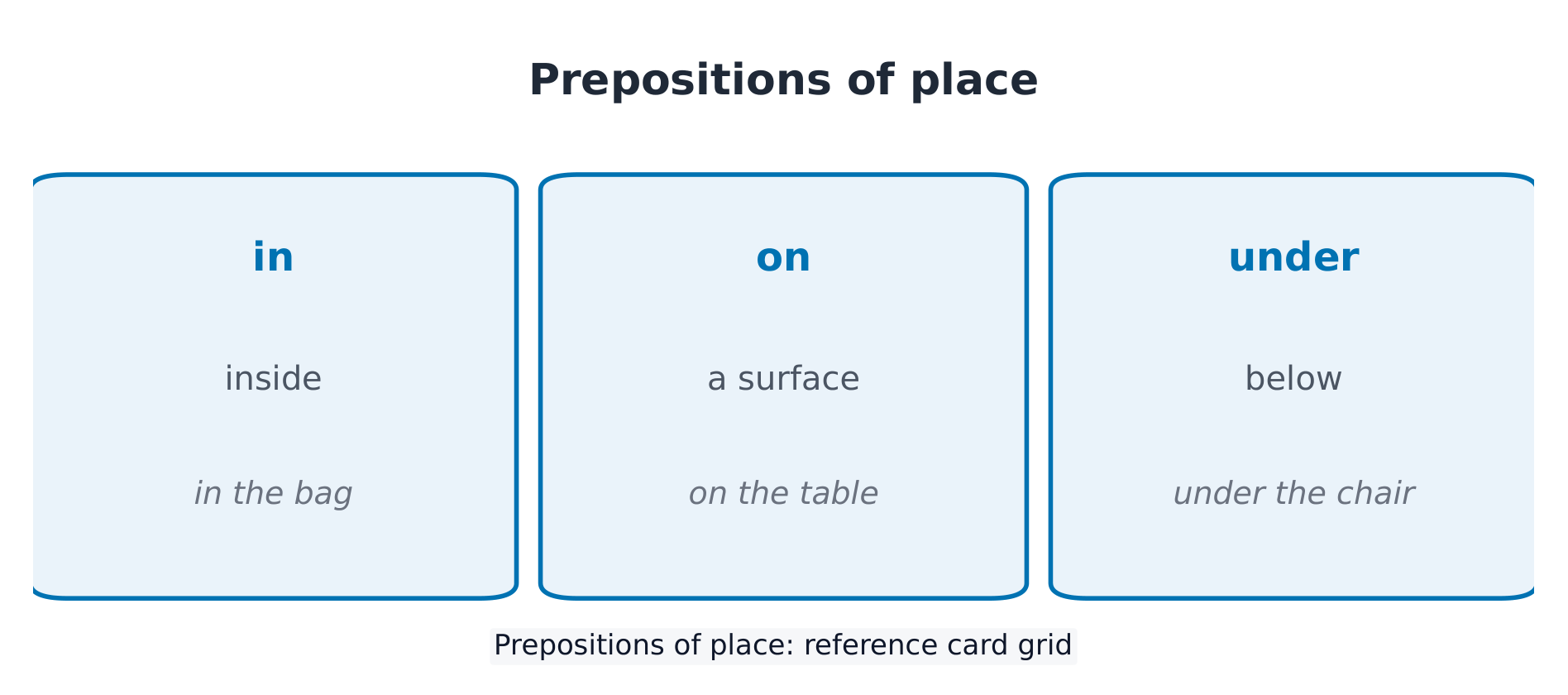
    English

    Prepositions of place indicate where something is located.

    • in (inside...), on (on top of... / surface), under (below...)

    (冠词)The 钥匙keys 在are 在...里in (冠词)the 包里bag.

    The key is in the bag.

    (冠词)The 书book 在is 在...上on (冠词)the 桌上table.

    The book is on the table.

    (冠词)The 猫cat 在is 在...下under (冠词)the 椅子下chair.

    The cat is under the chair.

    ไทย
    ตำแหน่งพยางค์: in / on / under

    介词地点 (prepositions of place) อธิบายว่าสิ่งของอยู่ที่ไหน

    • in(อยู่ภายใน...), on(อยู่บน... / พื้นผิว), under(อยู่ภายใต้...)

    (冠词)The 钥匙keys 在are 在...里in (冠词)the 包里bag.

    钥匙在包里。

    (冠词)The 书book 在is 在...上on (冠词)the 桌上table.

    书在桌上。

    (冠词)The 猫cat 在is 在...下under (冠词)the 椅子下chair.

    猫在椅子下面。

    12.2

    ข้าง cạnh, ระหว่าง, หลัง

    English
    • next to (beside...), between (between...), behind (behind...), in front of (in front of...)

    (冠词)The 商店shop 在is 旁边next to (冠词)the 银行bank.

    The shop is next to the bank.

    她She 坐sits 之间between 汤姆Tom 和and 萨姆Sam.

    She sits between Tom and Sam.

    Note: between means "between two," and is usually followed by A and B: between the door and the window.

    Common Errors

    • ❌ ~~The picture is in the wall.~~ → ✓ The picture is on the wall. — Hanging "on" the wall involves surface contact, so use on.
    • ❌ ~~I read it on the book.~~ → ✓ ...in the book. — Content "inside" a book uses in; people in photos also use in the photo.
    • ❌ ~~The shop is next the bank.~~ → ✓ next to the bank — next to is two words; to cannot be omitted.
    • ❌ ~~between the door with the window~~ → ✓ between the door and the window — between takes the fixed collocation A and B.
    ไทย
    • next to(อยู่ข้าง...), between(อยู่ระหว่าง...), behind(อยู่หลัง...), in front of(อยู่หน้า...)

    (冠词)The 商店shop 在is 旁边next to (冠词)the 银行bank.

    商店在银行旁边。

    她She 坐sits 之间between 汤姆Tom 和and 萨姆Sam.

    她坐在汤姆和萨姆之间。

    หมายเหตุ between หมายถึง "ระหว่างสองอย่าง" มักตามด้วย A and B: ระหว่างประตู and หน้าต่าง

    ข้อผิดพลาดที่พบบ่อย

    • ❌ ~~The picture is in the wall.~~ → ✓ The picture is on the wall. — การแขวนบนผนังคือสัมผัสพื้นผิว ใช้ on
    • ❌ ~~I read it on the book.~~ → ✓ ...in the book. — เนื้อหา "ใน" کتابใช้ in; คนในภาพถ่ายก็ใช้ in the photo เช่นกัน
    • ❌ ~~The shop is next the bank.~~ → ✓ next to the bank — next to เป็นคำสองคำ, to ไม่สามารถตัดทิ้งได้
    • ❌ ~~between the door with the window~~ → ✓ between the door and the window — between ใช้คู่กับ A and B เสมอ

Log in or create account · ⁨เข้าสู่ระบบหรือสร้างบัญชี⁩

IGCSE, A-Level & AP