การส่งต่อ
Every living thing gets one chance to pass its genes on. Flowers do it with petals and pollen, humans with gametes and cycles of hormones — and the packets of information that pass are chromosomes, shuffled by meiosis and recombined at fertilisation. This section runs from flower structure to monohybrid crosses, from Darwin's finches to antibiotic-resistant bacteria.
Edexcel International GCSE Biology 4BI1, Section 3 (statements 3.1–3.39) is the genetics and reproduction section. Crosses and pedigrees carry reliable marks for students who lay out a genetic diagram properly.
การสืบพันธุ์
การสืบพันธุ์แบบอาศัยเพศ ต้องใช้ GAMETE สองตัว; ลูกหลานมีความแตกต่างทางพันธุกรรม การสืบพันธุ์แบบไม่อาศัยเพศ ใช้พ่อแม่เพียงตัวเดียว; ลูกหลานเป็นคลอนที่มีความเหมือนกันทางพันธุกรรม
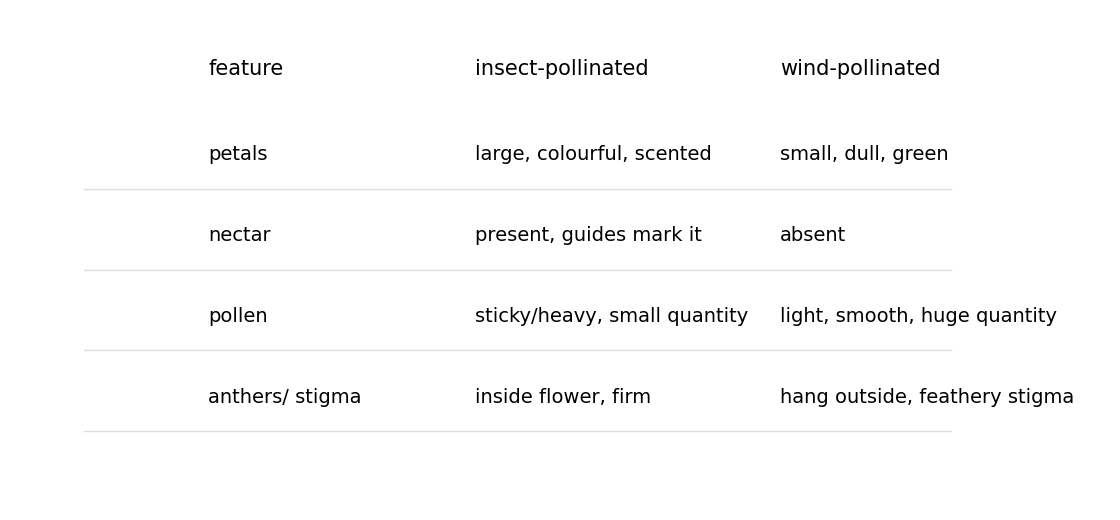
Flowering plants. Insect-pollinated flowers have large colourful petals, scent and nectar; wind-pollinated flowers are small and green, with light smooth pollen in huge quantities, anthers hanging outside and feathery stigmas.
After pollination the pollen grain grows a pollen tube down the style; fertilisation follows, and the ovule becomes the seed while the ovary becomes the fruit. Germinating seeds live on their stored food reserves until the seedling can photosynthesise. Plants reproduce asexually by runners and artificially by cuttings.
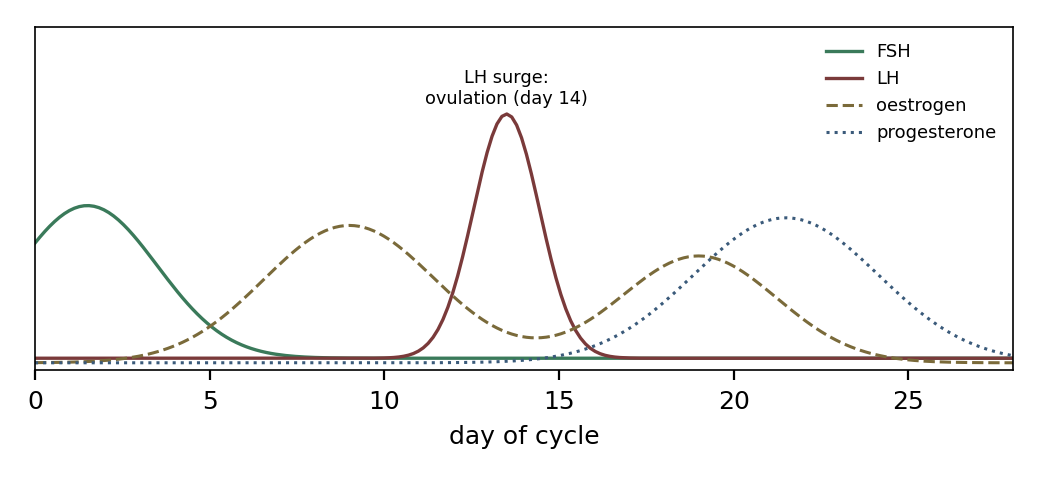
Humans. The menstrual cycle: FSH matures an egg in the ovary; the mature follicle releases oestrogen, which thickens the uterus lining and triggers the LH surge that causes ovulation at about day 14; the empty follicle becomes a corpus luteum releasing progesterone, holding the lining thick until day 28, when the falling hormone levels bring menstruation (B: FSH and LH from the pituitary).
The placenta supplies the embryo with oxygen and nutrients and removes waste; amniotic fluid protects it. Oestrogen and testosterone drive the development of secondary sexual characteristics.
Inheritance
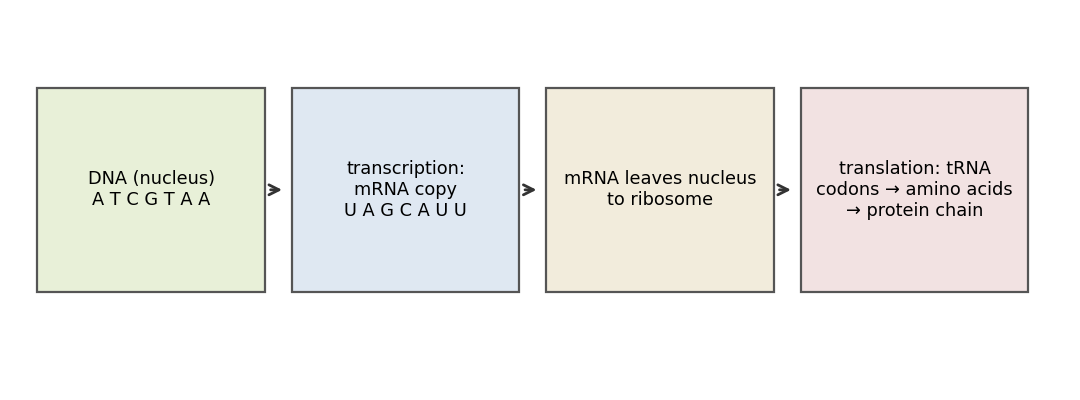
จีโนม คือ DNA ทั้งหมดของสิ่งมีชีวิต; ยีน เป็นส่วนของโมเลกุล DNA ที่รหัสสำหรับโปรตีนหนึ่งชนิด ยีนอยู่บน โครโมโซม ในนิวเคลียส (B) DNA เป็น เกลียวคู่ ที่มีเบสจับคู่กัน — A–T และ C–G; RNA เป็นสายเดี่ยวที่มี U แทน T (B) การสังเคราะห์โปรตีน: การถอดรหัส คัดลอกยีนไปยัง mRNA ในนิวเคลียส; การแปลรหัส ที่ไรโบโซมอ่าน โคดอน แต่ละตัวซึ่งจับคู่กับ tRNA anticodon ที่นำกรดอะมิโนมาเพื่อสร้างสายโซ่
อัลลีล เป็นรูปแบบทางเลือกของยีน คำศัพท์: Dominant (แสดงออกถ้ามีหนึ่งสำเนา), Recessive (ต้องสอง), Homozygous, Heterozygous, Genotype, Phenotype; (B) Codominance — อัลลีลทั้งสองแสดงออก ลักษณะส่วนใหญ่เป็น Polygenic ไม่ใช่ยีนเดียว
การข้ามแบบโมโนไฮบริด จัดเรียงเพื่อให้ได้คะแนน: Genotype ของพ่อแม่ → GAMETE → ตาราง Punnett → อัตรา Phenotype
Worked check. Cystic fibrosis (cf, recessive): both parents heterozygous Cc × Cc. Gametes C or c. Offspring CC, Cc, Cc, cc — 3 unaffected : 1 affected; a 1-in-4 chance per child, the same chance every child.
Sex determination: XX female, XY male. Mother always gives X; father gives X or Y — a genetic diagram of X×X, X×Y gametes gives 1:1 female:male, and the father's gamete decides the sex.
Mitosis makes two cells with identical chromosomes — growth, repair, cloning, asexual reproduction. Meiosis makes four genetically different haploid gametes (human diploid 46 → haploid 23), and random fertilisation of any sperm with any egg creates further variation.
 ความหลากหลายอาจเป็นทางพันธุกรรม, ทางสิ่งแวดล้อม, หรือทั้งสองอย่าง Mutation คือการเปลี่ยนแปลงแบบสุ่มใน DNA ที่หายาก ซึ่งสามารถสืบทอดได้ — ส่วนใหญ่ไม่เป็นอันตราย บางครั้งมีนัยสำคัญ (B: base ที่เปลี่ยนไปอาจทำให้กรดอะมิโนหนึ่งตัวและรูปร่างของโปรตีนเปลี่ยน); รังสีไอออไนซ์และสารก่อการกลายพันธุ์เช่นสารเคมีจากบุหรี่เพิ่มอัตราการกลายพันธุ์
วิวัฒนาการ
Darwin's natural selection, step by step: organisms produce more offspring than survive; variation exists within a species; those with characteristics best suited to the environment survive and reproduce, passing the alleles on; over generations the advantageous characteristic becomes more common.
Antibiotic resistance is selection in action: a random mutation makes one bacterium resistant; antibiotics kill the non-resistant majority; the resistant bacterium survives and reproduces — completing courses of antibiotics and avoiding overuse slows the spread, and resistant infections become hard to control.
ข้อผิดพลาดทั่วไป
- สับสนระหว่างการถ่ายเกสรและการปฏิสนธิ การถ่ายเกสร คือการถ่ายโอนเกสรไปยังเกสรเพศเมีย; การปฏิสนธิคือการรวมกันของนิวเคลียสเพศผู้กับนิวเคลียสไข่ภายในรังไข่, หลังจากรังสีเกสรเจริญเติบโตแล้ว
- บอกว่าผลึกไข่กลายเป็นผลไม้ The ผลึกไข่ เปลี่ยนเป็นเมล็ด; The กระเปาะไข่ เปลี่ยนเป็นผลไม้
- การบอกว่าแม่เป็นผู้กำหนดเพศของเด็ก Every egg carries an X; the sperm carries X or Y, so the father's gamete decides.
- อ่าน 3 : 1 อัตราเป็นการนับจำนวนแน่นอน It gives the chance สำหรับแต่ละ child: 1 in 4 สำหรับแต่ละ child ไม่ว่าเกิดอะไรขึ้นมาก่อนหน้า
- ทิ้ง GAMETE ออกจากรูปแผนพันธุกรรม The marks ต้องการ parents' genotypes → gametes → Punnett grid → offspring genotypes and phenotypes
- บอกว่าแบคทีเรียพัฒนาต้านทานเพราะเคยชินกับยาปฏิชีวนะ A random mutation มีอยู่แล้ว; Antibiotics ฆ่าตัวอื่น ดังนั้นแบคทีเรียที่ต้านทานรอดและ reproduce
- บอกว่า meiosis สร้างเซลล์ identical Mitosis สร้าง identical diploid cells; Meiosis สร้าง four genetically different haploid gametes
ตรวจสอบความเข้าใจของคุณเอง
- ให้ข้อแตกต่างสองประการระหว่างการสืบพันธุ์แบบเพศและการสืบพันธุ์แบบไม่ใช้เพศ
- ระบุการปรับตัวสองประการของดอกไม้ที่ผสมเกสรด้วยลม
- เกิดอะไรขึ้นหลังจากท่อละอองเรื่อเข้าถึง Ovule?
- Hormone ใดพุ่งสูงขึ้นในวันที่ 14 และเกิดผลอย่างไร?
- นิยาม Gene, Allele และ Genome
- (B) ชื่อ Base ที่แทน Thymine ใน RNA และ Translation เกิดขึ้นที่ไหน
- Cross Cc × cc และให้ Phenotype ratio
- ทำไม Gamete ของพ่อจึงกำหนดเพศของเด็ก?
- ให้ข้อแตกต่างสองประการระหว่าง Mitosis และ Meiosis
- อธิบาย Antibiotic resistance โดย Natural Selection เป็นสามขั้นตอน
Answers: 1 sexual — two parents, genetically different offspring; asexual — one parent, genetically identical offspring; 2 light smooth pollen in large quantity; anthers hanging outside the flower with a feathery stigma (small dull petals, no nectar); 3 the male gamete fuses with the ovule's egg cell — fertilisation; the ovule becomes a seed and the ovary a fruit; 4 LH — ovulation (release of the egg); 5 gene — a DNA section coding for one protein; allele — an alternative form of a gene; genome — all the organism's DNA; 6 (B) uracil; at a ribosome; 7 gametes C, c and c, c → Cc, Cc, cc, cc — 1 unaffected : 1 affected; 8 the mother's egg always carries X; the sperm carries X or Y, so XX (female) or XY (male) depends on the sperm; 9 mitosis — two cells, identical, same (diploid) chromosome number, for growth/repair/asexual reproduction; meiosis — four cells, genetically different, half the number (haploid), for gametes; 10 a mutation gives one bacterium resistance; the antibiotic kills the non-resistant bacteria; the resistant one survives and reproduces, so resistance spreads.