Ваш учебный план · Продолжить · Обзор →
老是 (всегда — с укором)
ВведеноВаше сохранённое положение остаётся в этом браузере. Возобновление не завершает урок и не отвечает на его вопросы.
Not again!
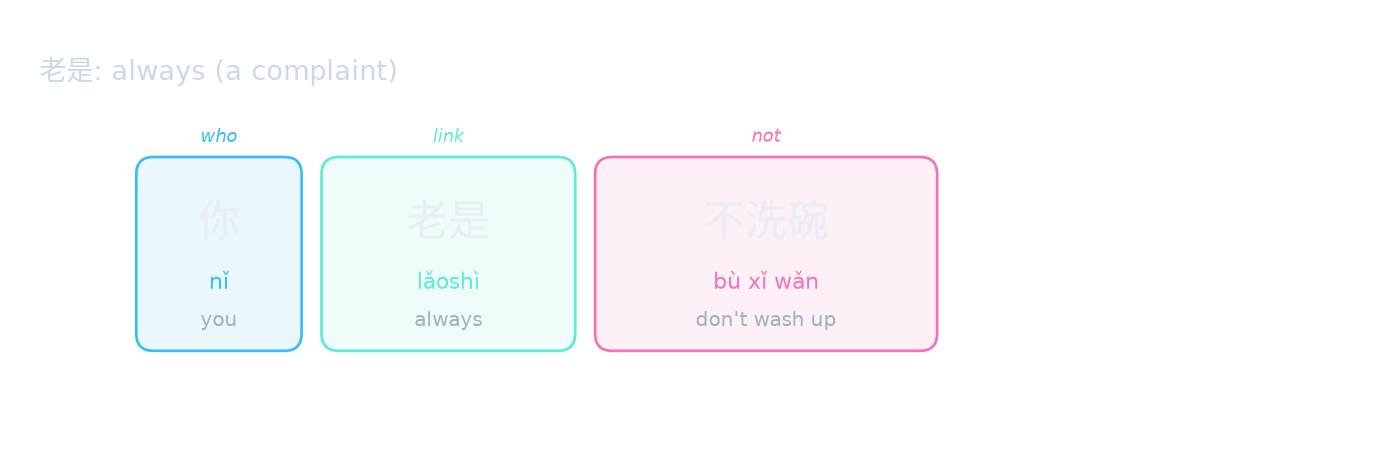
- Your roommate leaves dirty dishes in the sink, and it is the third time this week.
- 你老to be / is是not不to wash the dishes洗碗! — "You never wash the dishes!" (literally "you always don't wash them"). keeps老是 complains.
Subject + keeps老是 + Verb
- keeps老是 = "always, keep on (doing)" with annoyance. It goes before the verb, like always总是.
- It is spoken and emotional; you usually would not use it in a formal report.
he他keeps老是being late迟到。
Complain: “You keep playing on your phone!” 你____玩手机!
Сложность 1/5 · 100 монет + небольшой бонус за первое завершение сегодня
老是 + verb for an irritating habit.
Complaints and worries
- my我(modifier / structural particle)的computer电脑keeps老是having出problems问题。 — "My computer keeps having problems."
- It can describe yourself: my我old老to be / is是to forget忘记带伞。 — "I keep forgetting to bring an umbrella."
my我的computer电脑keeps老是having出problems问题。
Build: “I keep forgetting to bring an umbrella.”
Сложность 3/5 · 200 монет + небольшой бонус за первое завершение сегодня
Subject + 老是 + verb phrase.
Tone and position
- Use keeps老是 for something irritating or worrying; for a neutral habit (he他always总是七点to get up起床) choose always总是.
- keeps老是 goes before the verb (or before not不 / not / haven't没): 你老to be / is是not不to listen to听, not you你not不old老to be / is是to listen to听.
你不老是听 is the right way to say “You never listen.”
Сложность 1/5 · 100 монет + небольшой бонус за первое завершение сегодня
老是 comes before 不: 你老是不听.
keeps老是 versus always总是
- always总是 reports a pattern: he他always总是take坐underground railway地铁to go to work上班。 — "He always takes the subway to work."
- keeps老是 adds a complaint: he他old老to be / is是take坐to give right of way to…错车。 — "He keeps getting on the wrong train."
he他keeps老是take坐the wrong错train车。
A news report says the factory opens at eight every day. Which adverb suits the neutral report?
Сложность 1/5 · 100 монет + небольшой бонус за первое завершение сегодня
总是 states a neutral habit; 老是 would sound like a complaint.
Recap
- keeps老是 + Verb = keeps doing, always, with annoyance or worry.
- Spoken and emotional. For a neutral habit, use always总是.
Read the full reference: HSK 3 grammar — Adverbs.
Your roommate leaves dirty dishes in the sink, and it is the third time this week. Close the examples. Say a Mandarin response, then write it in Chinese. Explain briefly in English what the lesson’s pattern adds. Compare with the model, then change one detail and try again.
This is supported productive practice. Compare meaning and structure; your answer need not copy the model. A partner or teacher must hear the spoken response to comment on pronunciation.