IGCSE Business Studies · IGCSE Бухгалтерский учет и бизнес
Tips · Советы
Business Studies IGCSE (0450) включает шесть тем: понимание деловой деятельности, люди в бизнесе, маркетинг, управление операциями, финансовая информация и решения и внешние факторы. Оба экзаменационных билета построены вокруг коротких кейсов.
Кейс — это основа экзамена. Ответ, правильно определяющий термин, но не упоминающий компанию из условия, получает только балл за знание и останавливается. Тот же ответ, привязанный к этой компании — её размеру, рынку, финансовому положению, приносит баллы за применение и анализ.
Дважды прочитайте условие перед написанием ответа; детали в нём содержат баллы.Финансовые темы — прогнозы движения денежных средств, точка безубыточности, простые коэффициенты — самая стабильная часть для получения баллов, так как она оценивается однозначно (верно или неверно), а не субъективно.
What business activity is for · Для чего предназначена деловая деятельность
Syllabus · Программа
English
understand the purpose of business activity: combining factors of production (land, labour, capital, enterprise) to make goods and services that satisfy people's needs and wants
understand the economic problem: needs and wants are unlimited but resources are scarce, so choices must be made
understand opportunity cost: the next best alternative given up when a choice is made
explain the concept of added value (selling price minus cost of bought-in materials) and how a business can increase added value
понимать цель деловой деятельности: сочетание факторов производства (земля, труд, капитал, предпринимательские способности) для создания товаров и услуг, удовлетворяющих потребности и желания людей
понимать экономическую проблему: потребности и желания безграничны, но ресурсы ограничены, поэтому необходимо делать выбор
понимать понятие упущенной выгоды: лучшее альтернативное решение, от которого отказываются при принятии выбора
объяснять концепцию добавленной стоимости (цена продажи минус стоимость закупаемых материалов) и то, как бизнес может увеличить добавленную стоимость
понимать причины успеха или неудачи бизнеса (например, управленческие навыки, финансы, конкуренция)
Source: Cambridge International syllabus · Источник: Программа Cambridge International
English
A business 企业 is an organisation that makes goods 商品 or provides services 服务 for customers 顾客.
Goods are physical things you can touch — bread, phones, cars.
Services are useful actions done for you — a haircut, a bus ride, a doctor's visit.
The purpose of business activity is to use resources 资源 to make goods and services, so that people's needs 需要 and wants 欲望 are met.
Needs are things you must have to live: food, water, shelter, clothes.
Wants are things you would like but can live without: a holiday, a games console.
Factors of production
To produce anything, a business brings together four factors of production 生产要素 — the resources needed to make goods and services.
Factor
What it means
Example
land 土地
natural resources
farmland, water, oil, minerals
labour 劳动力
the work of people
workers, managers
capital 资本
money and the man-made tools bought with it
machines, factories, vehicles
enterprise 企业家才能
the skill to bring the other three together and take risks
the owner's idea and effort
The economic problem
People's needs and wants are unlimited. But resources are scarce 稀缺 — there are not enough of them for everything. This is the economic problem 经济问题.
Because resources are scarce, you must always choose. You cannot have everything.
Opportunity cost
When you choose one thing, you give up the next best thing. The opportunity cost 机会成本 is the next best choice you give up.
Example: a business has some money and spends it on a new machine. Now it cannot also spend that money on a bigger shop. The bigger shop is the opportunity cost.
Added value
Added value 增值 is the difference between the price a business sells a product for and the cost of the raw materials 原材料 bought in to make it.
$$\text{added value} = \text{selling price} - \text{cost of bought-in materials}$$
A business can increase added value by:
raising the price, often through a strong brand 品牌 or better design,
lowering the cost of materials, for example by finding cheaper suppliers,
improving the product so customers will pay more.
Worked example. A furniture maker buys the wood and fabric for a chair for £40 and sells the chair for £110. The factory rent is £6,000 a month. Find the added value per chair.
The rent is a deliberate distractor. Added value counts only the cost of the bought-in materials, so rent, wages and other running costs stay out of it - they matter for profit, not for added value. Subtract only what was bought in to make the product, and never treat added value as if it were profit.
Why businesses succeed or fail
A business is more likely to succeed when it has:
good management 管理 — skilled leaders who plan well,
enough finance 资金 — money to pay bills while it grows,
a product customers want, and an edge over the competition 竞争 (the other businesses selling similar things).
A business may fail and close down when it runs out of cash, manages money badly, or cannot compete. Weak management and poor cash control are the most common causes.
Русский
Магазины, конкурирующие на главной улице: предприятия производят товары и услуги для удовлетворения потребностей людей.Businesses make goods and services to meet people's needs and wants
Бизнес — это организация, которая производит товары или предоставляет услуги для покупателей.
Товары — это физические вещи, которые можно потрогать: хлеб, телефоны, автомобили.
Услуги — это полезные действия, выполняемые для вас: стрижка, поездка на автобусе, визит к врачу.
Цель деловой деятельности — использовать ресурсы для производства товаров и услуг, чтобы потребности и желания людей были удовлетворены.
Потребности — это то, что вам необходимо для жизни: еда, вода, жилье, одежда.
Желания — это то, что вы хотели бы иметь, но можете жить и без этого: отпуск, игровая приставка.
Факторы производства
Для производства любого продукта бизнес объединяет четыре фактора производства — ресурсы, необходимые для создания товаров и услуг.
деньги и произведенные человеком инструменты, купленные на них
машины, заводы, транспорт
предпринимательство
навык объединения трех остальных факторов и принятия рисков
идея и усилия владельца
Четыре фактора производства объединяются для производства товаров и услуг
Экономическая проблема
Потребности и желания людей безграничны. Но ресурсы ограничены — их недостаточно для всего. Это и есть экономическая проблема.
Поскольку ресурсы ограничены, вам всегда приходится делать выбор. Вы не можете иметь всё.
Альтернативные издержки
Когда вы выбираете один вариант, вы отказываетесь от следующего по ценности варианта. Альтернативные издержки — это упущенная возможность получить лучший из отвергнутых вариантов.
Пример: у бизнеса есть деньги, и он тратит их на новую машину. Теперь он не может потратить эти же деньги на расширение магазина. Расширенный магазин является альтернативными издержками.
Альтернативные издержки — это лучший из отвергнутых вариантов
Добавленная стоимость
Добавленная стоимость — это разница между ценой продажи продукта бизнесом и стоимостью сырья, закупленного для его производства.
$$\text{added value} = \text{selling price} - \text{cost of bought-in materials}$$
Добавленная стоимость — это цена продажи минус затраты на закупаемые материалы
Бизнес может увеличить добавленную стоимость путём:
повышения цены, часто благодаря сильному бренду или лучшему дизайну,
снижения стоимости материалов, например, путем поиска более дешевых поставщиков,
улучшения продукта, чтобы клиенты были готовы платить больше.
Разобранный пример. Изготовитель мебели покупает дерево и ткань для стула за £40 и продает стул за £110. Аренда завода составляет £6,000 в месяц. Найдите добавленную стоимость на один стул.
Аренда здесь служит преднамеренным отвлекающим фактором. Добавленная стоимость учитывает только затраты на закупаемые материалы, поэтому аренда, заработная плата и другие операционные расходы не входят в неё — они важны для прибыли, но не для добавленной стоимости. Вычитайте только то, что было закуплено для создания продукта, и никогда не рассматривайте добавленную стоимость как прибыль.
Почему бизнес succeeds or fails (преуспевает или терпит неудачу)
Бизнес более склонен к успеху, если у него есть:
хорошее управление — квалифицированные лидеры, которые хорошо планируют,
достаточное финансирование — деньги для оплаты счетов во время роста,
продукт, который хотят клиенты, и преимущество перед конкуренцией (другими компаниями, продающими аналогичные товары).
Бизнес может потерпеть неудачу и закрыться, если у него закончится наличность, плохо управляются финансы или он не способен конкурировать. Слабое управление и плохой контроль денежных потоков являются наиболее частыми причинами.
Explore · Исследовать
Value added lab · Лабораторная работа по созданию добавленной стоимости
Change the bought-in cost, the selling price and other costs to see how business activity creates value added. · Измените закупочную стоимость, цену продажи и другие расходы, чтобы увидеть, как деловая деятельность создает добавленную стоимость.
classify business activity into primary, secondary and tertiary sectors with examples
understand the changing importance of business sectors (de-industrialisation) in developed and developing economies
distinguish the private sector and the public sector and give the features of each
Русский
классифицировать деловую деятельность на первичный, вторичный и третичный секторы с примерами
понимать изменение значимости секторов экономики (деиндустриализацию) в развитых и развивающихся экономиках
различать частный и государственный секторы и называть особенности каждого
Source: Cambridge International syllabus · Источник: Программа Cambridge International
English
The three sectors
We sort all business activity into three groups, by how far the work is from the final customer.
Sector
What it does
Examples
primary sector 第一产业
takes natural resources from the earth
farming, fishing, mining, oil drilling
secondary sector 第二产业
makes goods from raw materials
building, manufacturing 制造业, food processing
tertiary sector 第三产业
provides services
shops, banks, transport, tourism
How the sectors change
The importance of each sector changes as a country grows richer.
In a developing economy 发展中经济体 (a poorer country building up its industry), the primary sector is often large — many people farm.
As the country grows, the secondary sector grows too.
In a developed economy 发达经济体 (a rich, industrialised country), most people work in the tertiary sector.
De-industrialisation 去工业化 is when the secondary sector shrinks and the tertiary sector grows. This has happened in many developed economies as factories move abroad.
Private sector and public sector
The private sector 私营部门 is made up of businesses owned by private people and groups. Most aim to make a profit 利润. The public sector 公共部门 is made up of organisations owned by the government, which aim to provide a service to the public.
Private sector
Public sector
Owner
private people and companies
the government
Main aim
usually profit
provide services to everyone
Examples
shops, factories, private firms
state schools, public hospitals, the army
Русский
Три сектора
Мы классифицируем всю деловую активность на три группы в зависимости от того, насколько близко работа находится к конечному потребителю.
Сектор
Что делает
Примеры
первичный сектор
добывает природные ресурсы из земли
сельское хозяйство, рыболовство, добыча полезных ископаемых, бурение нефти
вторичный сектор
производит товары из сырья
строительство, производство, переработка продуктов питания
третичный сектор
предоставляет услуги
магазины, банки, транспорт, туризм
Деловая деятельность протекает от первичного сектора до третичного сектора
Как меняются секторы
Важность каждого сектора меняется по мере богатства страны.
В развивающейся экономике (более бедной стране, наращивающей промышленность) первичный сектор часто велик — многие люди занимаются земледелием.
По мере роста страны растет и вторичный сектор.
В развитой экономике (богатой индустриализированной стране) большинство людей работает в третичном секторе.
Деиндустриализация — это сокращение вторичного сектора и рост третичного. Это произошло во многих развитых экономиках из-за переноса заводов за границу.
Частный сектор и государственный сектор
Частный сектор состоит из предприятий, принадлежащих частным лицам и группам. Большинство из них стремится к получению прибыли. Государственный сектор состоит из организаций, принадлежащих правительству, которые стремятся предоставлять услуги населению.
Частный сектор
Государственный сектор
Владелец
частные лица и компании
правительство
Главная цель
обычно прибыль
предоставление услуг всем
Примеры
магазины, заводы, частные фирмы
государственные школы, общественные больницы, армия
Explore · Исследовать
Classify business activity · Классификация деловой активности
Sort real firms by the sector they mainly belong to. · Отсортируйте реальные компании по основному сектору, к которому они относятся.
1.3
Enterprise, business growth and size · Предпринимательство, рост и размер бизнеса
Syllabus · Программа
English
describe the characteristics of a successful entrepreneur (risk-taker, hard-working, innovative, confident, organised)
explain the contents and purpose of a business plan and how it helps a business raise finance
explain why and how governments support business start-ups (grants, loans, training, advice)
measure the size of a business (number of employees, revenue/sales, capital employed) and the limitations of each measure
explain why some businesses remain small and why/how businesses grow (internal/organic growth and external growth: mergers and takeovers, horizontal, vertical and conglomerate integration)
explain economies and diseconomies of scale (purchasing, financial, managerial, technical, marketing)
Русский
описывать характеристики успешного предпринимателя (готовность к риску, трудолюбие, инновационность, уверенность, организованность)
объяснять содержание и цель бизнес-плана и то, как оно помогает бизнесу привлекать финансирование
объяснять, почему и как правительства поддерживают создание нового бизнеса (гранты, кредиты, обучение, консультации)
измерять размер бизнеса (количество сотрудников, выручка/объем продаж, используемый капитал) и ограничения каждого метода измерения
объяснять, почему некоторые предприятия остаются маленькими, а также причины и способы роста бизнеса (внутренний/органический рост и внешний рост: слияния и поглощения, горизонтальная, вертикальная и конгломератная интеграция)
объяснять экономии и неэкономии масштаба (закупочные, финансовые, управленческие, технические, маркетинговые)
Source: Cambridge International syllabus · Источник: Программа Cambridge International
English
The entrepreneur
An entrepreneur 企业家 is a person who sets up a business and takes the risk of running it. Successful entrepreneurs usually:
are willing to take risk 风险 — to risk their own money on a new idea,
work hard and do not give up,
are innovative 创新 — full of new ideas,
are confident and good at making decisions,
are well organised, able to manage time, money and people.
The business plan
A business plan 商业计划书 is a document that describes the business and its future. It usually contains the business idea and objectives, the product, the market 市场 it will sell to, who will run it, and a plan for the money.
A business plan has two main uses:
it makes the owner think carefully and plan ahead,
it helps the business raise finance 筹集资金 — banks and investors want to see a plan before they lend or invest.
Government support for start-ups
A start-up 初创企业 is a brand-new business. New businesses create jobs and help the economy grow, so governments often support them with:
grants 补助金 — money given that does not have to be paid back,
low-interest loans 贷款 — money lent on easy terms,
training and advice for new owners,
lower taxes in the first years.
Measuring the size of a business
You can measure how big a business is in several ways. Each one has a weakness.
Measure
How it works
Limitation
number of employees 员工
count the staff
a high-tech firm can have few staff but large output 产量
revenue 收入 (sales)
the value of everything sold
a firm selling cheap goods may sell a lot yet be small
capital employed 所用资本
the total money invested in the business
hard to compare between different industries
Staying small or growing
Some businesses stay small on purpose: the owner wants to keep control, the market is small, or the product is specialised.
Businesses that want to grow bigger — to achieve growth 增长 — can do it in two ways.
Internal growth 内部增长 (also called organic growth): the business grows by itself, by selling more, opening new branches, or adding new products. It is slower but lower-risk.
External growth 外部增长: the business joins with another business. This is faster. It happens through a merger 合并 (two businesses agree to join into one) or a takeover 收购 (one business buys control of another).
External growth is classified by the kind of business that is joined.
Type
What joins
Example
horizontal integration 横向一体化
two firms at the same stage of the same business
two car makers join
vertical integration 纵向一体化
two firms at different stages of the same business
a car maker buys a tyre maker
conglomerate integration 混合一体化
two firms in completely different businesses
a car maker buys a food company
Economies and diseconomies of scale
As a business grows, its cost per unit can fall. These savings are called economies of scale 规模经济.
Type
How the cost per unit falls
purchasing
buying large amounts of materials brings a lower price
financial
large firms can borrow money more cheaply
managerial
the firm can afford expert managers
technical
the firm can use large, efficient machines
marketing 营销
the cost of advertising 广告 is spread over more goods
If a business grows too big, the cost per unit can start to rise again. These are diseconomies of scale 规模不经济. They happen because communication 沟通 in a huge firm gets worse, workers feel less important and work less hard, and managers find the firm hard to control.
Русский
Предприниматель
Предприниматель — это человек, открывающий бизнес и принимающий риски на его управление. Успешные предприниматели обычно:
готовы принимать риски — рисковать собственными деньгами ради новой идеи,
усердно работают и не сдаются,
инновационны — полны новых идей,
уверены в себе и хорошо принимают решения,
хорошо организованы, умеют управлять временем, деньгами и людьми.
Каковыми обычно бывают успешные предприниматели
Бизнес-план
Бизнес-план — это документ, описывающий бизнес и его будущее. Обычно он содержит идею и цели бизнеса, продукт, рынок, на котором он будет продаваться, кто будет им управлять, и финансовый план.
Бизнес-план имеет два основных применения:
он заставляет владельца тщательно обдумать ситуацию и спланировать заранее,
помогает бизнесу привлекать финансирование — банки и инвесторы хотят увидеть план перед тем, как дать кредит или инвестировать.
Государственная поддержка стартапов
Стартап — это совершенно новый бизнес. Новые предприятия создают рабочие места и помогают экономике расти, поэтому правительства часто поддерживают их с помощью:
грантов — денег, выдаваемых без обязанности возврата,
кредитов под низкий процент — денег, занимаемых на льготных условиях
обучение и консультации для новых владельцев,
снижение налогов в первые годы.
Измерение размера бизнеса
Размер бизнеса можно оценить несколькими способами. У каждого из них есть недостатки.
Метод
Как это работает
Ограничение
количество сотрудников
подсчет персонала
высокотехнологичная фирма может иметь мало сотрудников, но большой объем производства
выручка (продажи)
стоимость всего проданного
фирма, продающая дешевые товары, может иметь большие объемы продаж, оставаясь небольшой
занимаемый капитал
общая сумма средств, вложенных в бизнес
сложно сравнивать между разными отраслями
Сохранение малого масштаба или рост
Некоторые бизнесы остаются небольшими намеренно: владелец хочет сохранить контроль, рынок мал, либо продукт узкоспециализирован.
Бизнес, который хочет вырасти — достичь роста, — может сделать это двумя путями.
Внутренний рост (также называемый органическим ростом): бизнес растет сам по себе за счет увеличения продаж, открытия новых филиалов или добавления новых продуктов. Это происходит медленнее, но с меньшим риском.
Внешний рост: бизнес объединяется с другим бизнесом. Это происходит быстрее. Это реализуется через слияние (два бизнеса соглашаются объединиться в один) или поглощение (один бизнес покупает контроль над другим).
Внешний рост классифицируется по типу присоединяемого бизнеса.
Тип
Что объединяется
Пример
горизонтальная интеграция
две фирмы на одном этапе одной отрасли
два автопроизводителя объединяются
вертикальная интеграция
две фирмы на разных этапах одной отрасли
автопроизводитель покупает производителя шин
конгломератная интеграция
две фирмы в совершенно разных отраслях
автопроизводитель покупает пищевую компанию
Экономия и неэкономия от масштаба
По мере роста бизнеса затраты на единицу продукции могут снижаться. Эти экономии называются экономией от масштаба.
Тип
Как снижаются затраты на единицу
закупочная
оптовая закупка материалов обеспечивает более низкую цену
финансовая
крупные компании могут занимать деньги под более низкие проценты
управленческая
компания может позволить себе квалифицированных менеджеров
техническая
компания может использовать крупное, эффективное оборудование
маркетинговая
затраты на рекламу распределяются на большее количество товаров
Если бизнес становится слишком большим, затраты на единицу могут снова начать расти. Это называется неэкономией от масштаба. Она возникает из-за того, что коммуникация в огромной фирме ухудшается, сотрудники чувствуют себя менее значимыми и работают менее усердно, а менеджерам трудно управлять компанией.
Средние издержки на единицу снижаются (экономия на масштабе), затем растут (дисэкономия масштаба) по мере роста фирмы
Explore · Исследовать
Business case lab · Бизнес-кейс лаборатория
Classify real decisions so the main business concept becomes concrete. · Классифицируйте реальные решения, чтобы основной концепт бизнеса стал конкретным.
Types of business organisation · Типы организационной структуры бизнеса
Syllabus · Программа
English
describe the features, advantages and disadvantages of sole traders, partnerships, private limited companies and public limited companies
explain the difference between unlimited and limited liability and between incorporated and unincorporated businesses
describe franchises, joint ventures and social enterprises and their advantages and disadvantages
explain the features of public sector business organisations (public corporations)
Русский
описывать особенности, преимущества и недостатки индивидуальных предпринимателей, товариществ, частных акционерных обществ и публичных акционерных обществ
объяснять разницу между неограниченной и ограниченной ответственностью, а также между зарегистрированными и незарегистрированными предприятиями
описывать франчайзинг, совместные предприятия и социальные предприятия, а также их преимущества и недостатки
объяснять особенности государственных организаций бизнеса (государственные корпорации)
Source: Cambridge International syllabus · Источник: Программа Cambridge International
English
Liability
Liability 责任 means who must pay the debts 债务 if a business cannot pay them itself.
With unlimited liability 无限责任, the owner is personally responsible for all the debts. If the business fails, the owner may lose personal things, like a house or car, to pay them.
With limited liability 有限责任, the owner can only lose the money they put into the business. Their personal things are safe.
Incorporated and unincorporated
An incorporated 法人 business has a separate legal identity from its owners. The business itself can own things and be taken to court. Its owners get limited liability. Companies are incorporated.
An unincorporated 非法人 business is not separate from its owner in law. Sole traders and partnerships are unincorporated.
The four main types
A sole trader 独资企业 is a business owned by one person.
Advantages
Disadvantages
easy and cheap to set up
unlimited liability
the owner keeps all the profit
hard to raise finance
the owner makes all decisions
long hours, no one to share the work
private (accounts stay secret)
the business ends if the owner stops
A partnership 合伙企业 is owned by two or more people who share the work, the decisions and the profit. They usually sign a written agreement.
Advantages
Disadvantages
more owners bring more capital
unlimited liability (in most cases)
work and ideas are shared
the profit is shared
easy to set up
partners can disagree
one partner's mistake affects everyone
A private limited company 私人有限公司 (often "Ltd") is owned by shareholders 股东, but its shares cannot be sold to the public. The owners are often family and friends.
Advantages
Disadvantages
limited liability
more legal rules and paperwork
easier to raise capital than a sole trader
shares cannot be sold to the public
control stays in a small group
accounts must be shared with the government
A public limited company 公众有限公司 (often "plc") is a large company whose shares 股份 can be bought by the public on the stock exchange 证券交易所.
Advantages
Disadvantages
can raise very large amounts of capital
expensive and complex to set up
limited liability
accounts are fully public
well known, so easy to borrow
anyone can buy shares, so there is a risk of takeover
the original owners may lose control
Shareholders may receive a share of the profit, called a dividend 股息.
Other forms of organisation
Franchise 特许经营: a person (the franchisee 加盟商) pays to use the name, products and methods of an existing successful business (the franchisor 授权商). The franchisee gets a known brand, training and lower risk, but must pay fees and a share of the profit and has less freedom. Many fast-food chains work this way.
Joint venture 合资企业: two businesses agree to share the cost, risk and profit of one project, while staying separate companies.
Social enterprise 社会企业: a business that trades to help society or the environment, not only to make profit. Most of its profit is put back into its social aims.
Public sector organisation
A public corporation 国有企业 is a business owned and run by the government, such as a national rail or postal service. Its aims include giving an important service to everyone, not only making a profit.
Русский
Штаб-квартира компании: предприятия варьируются от индивидуальных предпринимателей до огромных публичных акционерных обществ.
Ответственность
Ответственность означает, кто должен погашать долги, если бизнес не может расплатиться самостоятельно.
При неограниченной ответственности владелец лично отвечает за все долги. Если бизнес разорится, владелец может потерять личное имущество, например дом или машину, чтобы их погасить.
При ограниченной ответственности владелец может потерять только те средства, которые он вложил в бизнес. Его личное имущество защищено.
Интегрированные и неинтегрированные
Интегрированный бизнес имеет отдельную правовую идентичность от своих владельцев. Сам бизнес может владеть имуществом и быть привлеченным к суду. Владельцы получают ограниченную ответственность. Компании являются интегрированными.
Неинтегрированный бизнес не отделен от владельца в правовом смысле. Индивидуальные предприниматели и партнерства являются неинтегрированными.
Четыре основных типа
Индивидуальный предприниматель — это бизнес, принадлежащий одному человеку.
Преимущества
Недостатки
легко и дешево основать
неограниченная ответственность
владелец получает всю прибыль
сложно привлечь финансирование
владелец принимает все решения
длинные рабочие часы, нет кого разделить работу
частный (отчетность остается секретной)
бизнес прекращается, если владелец останавливается
Партнерство принадлежит двум или более людям, которые делят работу, принятие решений и прибыль. Обычно они подписывают письменное соглашение.
Преимущества
Недостатки
больше владельцев — больше капитала
неограниченная ответственность (в большинстве случаев)
работа и идеи разделяются
прибыль разделяется
легко основать
партнеры могут не согласовать мнения
ошибка одного партнера затрагивает всех
Частная акционерная компания (часто «Ltd») принадлежит акционерам, но ее акции нельзя продать публично. Владельцами часто являются семья и друзья.
Преимущества
Недостатки
ограниченная ответственность
больше правовых правил и бумажной работы
легче привлечь капитал, чем индивидуальному предпринимателю
акции нельзя продать публично
контроль остается в узком кругу
отчетность должна предоставляться государству
Публичная акционерная компания (часто «plc») — это крупная компания, чьи акции могут быть куплены публикой на фондовой бирже.
Преимущества
Недостатки
может привлечь очень большие суммы капитала
дорого и сложно основать
ограниченная ответственность
отчетность полностью публична
хорошо известна, поэтому легко занимать
любой может купить акции, поэтому существует риск поглощения
первоначальные владельцы могут потерять контроль
Акционеры могут получить долю прибыли, называемую дивидендом.
Типы бизнеса разделены по ответственности: неинтегрированные (неограниченная) и интегрированные (ограниченная)
Другие формы организации
Франчайзинг: лицо (франчайзи) платит за использование названия, продуктов и методов уже успешного бизнеса (франчайзера). Франчайзи получает известный бренд, обучение и меньший риск, но обязан платить взносы и отдавать часть прибыли, а также имеет меньше свободы. Многие сети фастфуда работают по такой схеме.
Совместное предприятие: два бизнеса соглашаются разделять затраты, риски и прибыль от одного проекта, оставаясь при этом отдельными компаниями.
Социальное предприятие: бизнес, который ведет торговую деятельность для помощи обществу или окружающей среде, а не только ради получения прибыли. Большая часть его прибыли реинвестируется в социальные цели.
Организация государственного сектора
Государственная корпорация — это бизнес, принадлежащий и управляемый правительством, например национальная железнодорожная или почтовая служба. Ее цели включают оказание важной услуги всем гражданам, а не только получение прибыли.
Explore · Исследовать
Choose the ownership form · Выберите форму собственности
Compare ownership, control and liability in real business types. · Сравните собственность, контроль и ответственность в реальных типах бизнеса.
1.5
Business objectives and stakeholder objectives · Цели бизнеса и интересы заинтересованных сторон
Syllabus · Программа
English
explain the objectives a business might have: survival, profit, growth, market share, customer service, social objectives
explain the objectives of a social enterprise (economic, social and environmental)
identify the main stakeholder groups (owners/shareholders, employees, customers, suppliers, government, local community, banks) and their objectives
explain how and why stakeholder objectives may conflict
Русский
объяснять цели, которые могут преследовать бизнес: выживание, прибыль, рост, доля рынка, обслуживание клиентов, социальные цели
объяснять цели социального предприятия (экономические, социальные и экологические)
определять основные группы заинтересованных сторон (собственники/акционеры, сотрудники, клиенты, поставщики, правительство, местное сообщество, банки) и их цели
объяснять, как и почему цели заинтересованных сторон могут конфликтовать
Source: Cambridge International syllabus · Источник: Программа Cambridge International
English
Business objectives
An objective 目标 is a goal that a business aims for. Common objectives are:
survival 生存 — staying in business, especially when new or in hard times,
profit — earning more than it spends; the main aim of most private firms,
growth — getting bigger, to be safer and earn more,
market share 市场份额 — the share of total sales in a market that one business holds,
customer service 顾客服务 — keeping customers happy so they come back,
social objectives — helping society or the environment 环境.
Objectives of a social enterprise
A social enterprise aims for three kinds of objective together:
economic — earn enough money to survive and grow,
social — help people, for example by giving jobs to those who find work hard to get,
environmental — protect the planet, for example by cutting waste.
Stakeholders
A stakeholder 利益相关者 is any person or group that is affected by a business or has an interest in it.
Stakeholder
What they usually want
owners / shareholders
good profit and a rising dividend
employees
fair pay, safe work, secure jobs
customers
good quality at a fair price
suppliers 供应商
to be paid on time, and regular orders
government
businesses to obey laws and pay tax 税收
local community 当地社区
jobs, but no pollution or noise
banks
to be repaid the money they lent
Why stakeholder objectives conflict
Stakeholders often want different things, so their objectives can conflict 冲突. A business cannot fully please everyone at once.
Owners want to cut costs, but the local community wants less pollution 污染. Cutting costs may create more pollution.
Customers want low prices, but suppliers want to be paid more.
Good managers try to balance these different objectives.
Русский
Цели бизнеса
Цель — это цель, к которой стремится бизнес. Распространенные цели:
выживание — сохранение бизнеса на плаву, особенно когда он новый или находится в трудное время,
прибыль — заработок больше расходов; главная цель большинства частных фирм,
рост — расширение масштабов для большей надежности и увеличения доходов,
доля рынка — доля общих продаж на рынке, которая принадлежит одному бизнесу,
обслуживание клиентов — удержание удовлетворенных клиентов, чтобы они возвращались,
социальные цели — помощь обществу или окружающей среде.
Цели социального предприятия
Социальное предприятие преследует три вида целей одновременно:
экономические — заработать достаточно денег для выживания и роста,
социальные — помогать людям, например, предоставляя работу тем, кому трудно ее найти,
экологические — защита планеты, например, путем сокращения отходов.
Заинтересованные стороны (стейкхолдеры)
Заинтересованная сторона (стейкхолдер) — любое лицо или группа, которые затрагиваются деятельностью бизнеса или имеют к ней интерес.
Заинтересованная сторона
Что они обычно хотят
владельцы / акционеры
хорошая прибыль и растущий дивиденд
сотрудники
справедливая зарплата, безопасные условия труда, стабильность работы
клиенты
высокое качество по справедливой цене
поставщики
своевременную оплату и регулярные заказы
правительство
соблюдение законов и уплата налогов
местное сообщество
рабочие места, но без загрязнения и шума
банки
возврат занимаемых средств
Внутренние и внешние заинтересованные стороны имеют интерес к бизнесу
Почему цели стейкхолдеров конфликтуют
Заинтересованные стороны часто хотят разных вещей, поэтому их цели могут конфликтовать. Бизнес не может полностью удовлетворить всех сразу.
Владельцы хотят более высокой прибыли, но сотрудники хотят более высокой зарплаты. Высокая зарплата снижает прибыль.
Владельцы хотят сократить расходы, но местное сообщество хочет меньшего загрязнения. Сокращение расходов может привести к большему загрязнению.
Клиенты хотят низкие цены, но поставщики хотят получать больше денег.
Хорошие менеджеры стараются сбалансировать эти различные цели.
Explore · Исследовать
Stakeholder interest lab · Лаборатория интересов заинтересованных сторон
See how different stakeholders judge the same business decision. · Посмотрите, как разные заинтересованные стороны оценивают одно и то же бизнес-решение.
Added value = selling price − cost of bought-in materials. A business raises it with a strong brand, better design, or cheaper materials.
Know the three sectors: primary (extracts raw materials), secondary (makes goods), tertiary (services). As a country develops, employment shifts from primary towards tertiary.
Unlimited liability (sole traders, partnerships) puts the owner's personal things at risk; limited liability (Ltd, plc) limits any loss to the money invested.
A stakeholder is anyone affected by the business, and their objectives often conflict — owners want profit, workers want higher pay, the community wants less pollution.
Economies of scale cut the cost per unit as a firm grows; growing too big brings diseconomies of scale (cost per unit rises).
Русский
Добавленная стоимость = цена продажи − стоимость закупленных материалов. Бизнес повышает её благодаря сильному бренду, лучшему дизайну или более дешевым материалам.
Знать три сектора: первичный (добыча сырья), вторичный (производство товаров), третичный (услуги). По мере развития страны занятость смещается от первичного сектора к третичному.
Неограниченная ответственность (индивидуальные предприниматели, партнерства) ставит под угрозу личное имущество владельца; ограниченная ответственность (Ltd, plc) ограничивает возможные убытки суммой вложенных средств.
Заинтересованная сторона — любой, кто затронут бизнесом, и их цели часто конфликтуют — владельцы хотят прибыли, работники хотят повышать зарплаты, сообщество хочет меньшего загрязнения.
Эффект масштаба снижает себестоимость единицы продукции по мере роста фирмы; чрезмерно большой рост приводит к дизэффекту масштаба (себестоимость единицы растет).
объяснить, почему высокомотивированный персонал важен (производительность, низкий уровень отсутствий, низкая текучесть кадров)
изложить теории мотивации: Тейлор (деньги), Маслоу (иерархия потребностей), Герцберг (гигиенические факторы и мотиваторы)
описать финансовые методы мотивации: заработная плата (почасовая/сдельная), оклад, процент от продаж, бонус, участие в прибыли, социальные льготы
описать нефинансовые методы: ротация должностей, обогащение труда, расширение обязанностей, автономия, командная работа, обучение, возможности карьерного роста
Source: Cambridge International syllabus · Источник: Программа Cambridge International
English
Motivation 激励 is the drive that makes people want to work hard. A well-motivated workforce 员工队伍 — all the employees 员工 in a business — brings real benefits:
higher productivity 生产率 — each worker produces more,
lower absenteeism 缺勤 — fewer workers stay away from work,
lower labour turnover 员工流动率 — fewer workers leave, so the business spends less time and money hiring and training new staff.
Motivation theories
Three thinkers explain what makes workers work hard.
Thinker
Main idea
Taylor
Workers are mainly motivated by pay. Pay them more for more work (piece rate) and they work harder.
Maslow
People have a hierarchy of needs 需求层次: five levels, from basic pay and safety up to respect and reaching your full potential. You must meet the lower needs before the higher ones can motivate.
Herzberg
Two groups of factors. Hygiene factors 保健因素 (pay, conditions, rules) do not motivate, but poor ones cause unhappiness. Motivators 激励因素 (achievement and responsibility) truly drive people to work harder.
Financial methods of motivation
These reward workers with money.
Method
What it means
wage 工资
regular pay, often by the hour or week
time rate 计时工资
pay for each hour worked
piece rate 计件工资
pay for each item made
salary 薪金
a fixed yearly amount, paid monthly
commission 佣金
pay based on how much you sell
bonus 奖金
an extra payment for good work
profit sharing 利润分享
workers get a share of the company's profit
fringe benefits 额外福利
extras like a company car, free meals or health care
Worked example. A factory pays a piece rate of £3 per item. Anya makes 210 items in a week. Ben is on a time rate of £12 per hour for a 40-hour week. Who earns more, and what risk does the piece rate carry? Anya earns 210 × £3 = £630. Ben earns 40 × £12 = £480, so Anya earns £150 more. But paying for each item made tempts workers to rush, so quality may fall and more items are rejected - which is why a piece rate usually has to be paired with quality checks. Show the calculation, then judge it: a question that asks who earns more and for an evaluation gives marks for the number and for the drawback.
Non-financial methods of motivation
These motivate without extra money.
job rotation 工作轮换 — workers switch between different tasks, so work is less boring.
job enlargement 工作扩大化 — adding more tasks at the same level.
job enrichment 工作丰富化 — giving more challenging tasks and more responsibility.
autonomy 自主权 — letting workers make some of their own decisions.
teamworking 团队合作 — working in small groups.
training 培训 and chances for promotion 晋升 — helping workers improve and move up.
Русский
Иерархия потребностей Маслоу с примерами из workplace на каждом уровне.
Motivated workers work harder, raising output -> Мотивированные работники работают усерднее, повышая объем выпуска
Мотивация — это побудительная сила, которая заставляет людей работать усердно. Хорошо мотивированный персонал — все сотрудники в бизнесе — приносит реальные преимущества:
более высокая производительность — каждый работник производит больше;
снижение пропусков работы — меньше работников отсутствуют на работе;
снижение текучести кадров — меньше работников уходит, поэтому бизнес тратит меньше времени и денег на найм и обучение новых сотрудников.
Теории мотивации
Три мыслителя объясняют, что побуждает работников работать усердно.
Мыслитель
Основная идея
Тейлор
Работников в основном мотивирует оплата труда. Платите больше за большую работу (сдельная оплата), и они будут работать усерднее.
** Маслоу**
У людей есть иерархия потребностей: пять уровней, от базовой оплаты и безопасности до уважения и реализации своего потенциала. Вы должны удовлетворить низшие потребности, прежде чем высшие начнут мотивировать.
Герцберг
Две группы факторов. Гигиенические факторы (оплата, условия, правила) не мотивируют, но их отсутствие вызывает неудовлетворенность. Мотиваторы (достижение и ответственность) действительно побуждают людей работать усерднее.
Иерархия Маслоу: люди удовлетворяют базовые потребности до высших
Финансовые методы мотивации
Эти методы вознаграждают работников деньгами.
Метод
Что это означает
зарплата (hourly wage)
регулярная оплата, часто почасовая или еженедельная
дополнительные бонусы, такие как служебный автомобиль, бесплатное питание или медицинское обслуживание
Разобранное решение. Завод платит сдельную ставку в размере £3 за единицу продукции. Аня произвела 210 единиц за неделю. Бен работает по почасовой ставке £12 в час при 40-часовой рабочей неделе. Кто зарабатывает больше и какой риск несет сдельная оплата? Аня получает 210 × £3 = £630. Бен получает 40 × £12 = £480, следовательно, Аня зарабатывает на £150 больше. Однако оплата за каждую произведенную единицу побуждает рабочих торопиться, поэтому качество может снизиться, а количество бракованных изделий возрастет — именно поэтому сдельная оплата обычно должна сочетаться с контролем качества. Покажите расчет, затем оцените его: вопрос, в котором требуется определить, кто зарабатывает больше, а также дать оценку, оценивается за вычисление и выявление недостатка.
Ненемерные методы мотивации
Они стимулируют сотрудников без дополнительных денежных выплат.
ротация должностей — рабочие чередуют разные задачи, что делает работу менее монотонной.
расширение труда — добавление новых задач на том же уровне.
обогащение труда — поручение более сложных задач и увеличение ответственности.
автономия — предоставление работникам возможности принимать некоторые самостоятельные решения.
командная работа — выполнение работы в малых группах.
обучение и возможности для повышения — содействие улучшению квалификации и карьерному росту сотрудников.
Explore · Исследовать
Maslow's hierarchy of needs · Иерархия потребностей Маслоу
People are motivated by a ladder of needs — a business motivates staff by helping them up it. · Людей мотивирует иерархия потребностей — бизнес мотивирует персонал, помогая им подниматься по ней вверх.
Organisation and management · Организация и управление
Syllabus · Программа
English
draw and interpret simple organisational charts; explain hierarchy, chain of command, span of control and delayering
explain the role and functions of management (planning, organising, coordinating, commanding, controlling)
describe leadership styles: autocratic, democratic and laissez-faire, and when each is appropriate
explain the role of trade unions in business
Русский
составлять и интерпретировать простые организационные диаграммы; объяснять иерархию, цепь команд, ширину управления и дефильтрацию
объяснять роль и функции менеджмента (планирование, организация, координация, руководство, контроль)
описывать стили лидерства: авторитарный, демократический и попустительский, а также случаи их уместности
объяснять роль профсоюзов в бизнесе
Source: Cambridge International syllabus · Источник: Программа Cambridge International
English
Organisational charts
An organisational chart 组织结构图 is a diagram that shows how a business is organised — who reports to whom. It shows several ideas:
hierarchy 层级 — the levels of staff, from the top down.
chain of command 指挥链 — the line along which orders pass down from managers to workers.
span of control 管理幅度 — the number of subordinates 下属 (people directly below) that one manager controls.
delayering 扁平化 — removing one or more levels to cut costs and speed up messages.
A long chain of command (a "tall" structure) slows messages down. A wide span of control gives one manager many people to watch.
Functions of management
The five main jobs (functions) of management 管理 are:
planning 计划 — setting aims and deciding how to reach them,
organising 组织 — arranging people and resources,
coordinating 协调 — making different parts work together,
commanding 指挥 — giving instructions and guiding staff,
controlling 控制 — checking that targets are met.
Leadership styles
A leadership style 领导风格 is the way a manager leads people.
Style
How it works
Best when
autocratic 专制型
the leader decides alone and gives orders
a crisis, or with new and untrained staff
democratic 民主型
the leader asks staff for ideas before deciding
staff are skilled and want a say
laissez-faire 放任型
the leader sets goals, then lets staff work freely
creative, expert teams
Trade unions
A trade union 工会 is a group of workers who join together to protect their shared interests. A union can bargain for better pay and conditions, support a worker in a dispute, and push for safer work.
Русский
Менеджеры организуют и руководят трудовыми ресурсами, чтобы компания достигала своих целей.
Организационные структуры
Организационная структура — это схема, показывающая, как устроена компания — кто кому подчиняется. Она иллюстрирует несколько понятий:
иерархия — уровни персонала сверху вниз.
линия командования — последовательность передачи приказов от менеджеров к рабочим.
норма управляемости — количество подчиненных (непосредственно стоящих ниже) одним менеджером.
оптимизация структуры — удаление одного или нескольких уровней для снижения затрат и ускорения передачи информации.
Длинная линия командования (высокая структура) замедляет передачу сообщений. Широкая норма управляемости требует от одного менеджера контроля за большим количеством людей.
Организационная диаграмма показывает цепочку команд и широту контроля каждого менеджера
Функции менеджмента
Пять основных функций (ролей) менеджмента:
планирование — постановка целей и определение путей их достижения,
организация — распределение людей и ресурсов,
координация — обеспечение совместной работы различных частей системы,
руководство — выдача инструкций и направление деятельности персонала,
контроль — проверка выполнения плановых показателей.
Сти领导 leadership styles
Стиль лидерства — это способ, которым менеджер ведет за собой людей.
Стиль
Как это работает
Когда наиболее эффективно
авторитарный
лидер принимает решения единолично и отдает приказы
в кризисной ситуации или при работе с новыми не обученными сотрудниками
демократический
лидер просит сотрудников высказать идеи перед принятием решения
когда сотрудники квалифицированы и хотят участвовать в принятии решений
попустительский (laissez-faire)
лидер ставит цели, затем позволяет сотрудникам работать свободно
творческим командам и экспертам
Профсоюзы
Профсоюз — это объединение работников, которые вместе защищают свои общие интересы. Профсоюз может вести переговоры о повышении заработной платы и улучшении условий труда, поддерживать работника в споре и добиваться безопасности на производстве.
Explore · Исследовать
Choose the ownership form · Выберите форму собственности
Compare ownership, control and liability in real business types. · Сравните собственность, контроль и ответственность в реальных типах бизнеса.
Recruitment, selection and training · Подбор, отбор и обучение
Syllabus · Программа
English
describe the recruitment process: job analysis, job description and person specification
compare internal and external recruitment and selection methods (application forms, CVs, interviews, tests)
describe types of training: induction, on-the-job and off-the-job, and their benefits/limitations
explain why a business may need to reduce its workforce (redundancy and dismissal) and the legal controls over employment
Русский
описывать процесс подбора персонала: анализ должности, описание работы и требования к кандидату
сравнивать внутренние и внешние методы набора и отбора (анкеты, резюме, собеседования, тесты)
описывать виды обучения: вводное, на рабочем месте и вне рабочего места, а также их преимущества/ограничения
объяснять, почему бизнесу может потребоваться сократить штат (сокращение штата и увольнение) и правовые ограничения в сфере занятости
Source: Cambridge International syllabus · Источник: Программа Cambridge International
English
The recruitment process
Recruitment 招聘 is finding and attracting people to apply for a job. Selection 选拔 is choosing the best person from those who apply. The process starts with three documents:
job analysis 工作分析 — studying what the job involves,
job description 工作描述 — a list of the duties and tasks of the job,
person specification 人员规格 — the skills, qualities and qualifications the right person needs.
Internal and external recruitment
Internal recruitment 内部招聘 fills the job with someone already in the business. It is cheaper and quicker, and the person is already known, but it brings in no new ideas.
External recruitment 外部招聘 fills the job from outside. It brings new ideas and skills, but it costs more and takes longer.
Common selection methods include the application form 申请表, the CV 简历 (a short summary of a person's education and work history), the interview 面试, and skills tests 测试.
Training
Training improves workers' skills. There are three main types.
induction training 入职培训 — given to new workers, to learn about the business and their role.
on-the-job training 在职培训 — learning while doing the job, beside an experienced worker.
off-the-job training 脱产培训 — learning away from the workplace, for example at a college.
Type
Benefits
Limitations
on-the-job
cheap; uses real tasks
the trainer stops their own work; bad habits can pass on
off-the-job
expert teaching; no work distractions
costs more; the skills may not fit the exact job
Reducing the workforce
Sometimes a business must cut staff numbers.
Redundancy 裁员 — the job is no longer needed, for example because a machine now does it. It is not the worker's fault.
Dismissal 解雇 — the worker is removed for a good reason, such as breaking rules or poor work.
Most countries have employment laws 劳动法 that protect workers. They cover a fair contract of employment 雇佣合同, safe conditions, fair pay, and protection from being sacked unfairly.
Русский
Компании необходимо нанимать, обучать и мотивировать достаточное количество людей с необходимыми навыками.
Процесс найма
Набор персонала (recruitment) — это поиск и привлечение кандидатов на вакантную должность. Отбор (selection) — это выбор лучшего кандидата из числа подавших заявки. Процесс начинается с трех документов:
анализ должности — изучение содержания работы,
описание должности — перечень обязанностей и задач работы,
требования к кандидату (person specification) — навыки, качества и qualifications, необходимые подходящему человеку.
Этапы набора и отбора персонала: от анализа должности до выбора лучшего кандидата
Внутренний и внешний набор персонала
Внутренний набор заполняет вакансию человеком, уже работающим в компании. Это дешевле и быстрее, сотрудник уже известен, но новые идеи не привносятся.
Внешний набор привлекает кандидатов извне. Он приносит новые идеи и навыки, но обходится дороже и занимает больше времени.
Распространенные методы отбора включают анкету кандидата, резюме (краткое резюме образования и трудового стажа), собеседование и тесты на навыки.
Обучение
Обучение повышает квалификацию сотрудников. Выделяют три основных типа.
инструктаж (induction training) — проводится для новых сотрудников, чтобы они познакомились с компанией и своими обязанностями.
обучение на рабочем месте — получение знаний непосредственно во время выполнения работы рядом с опытным сотрудником.
обучение вне рабочего места — обучение вдали от производства, например, в колледже.
Тип
Преимущества
Ограничения
на рабочем месте
недорого; используются реальные задачи
тренер прерывает собственную работу; могут передаваться плохие привычки
вне рабочего места
профессиональное преподавание; нет производственных помех
стоит дороже; приобретенные навыки могут не соответствовать конкретной должности
Сокращение численности персонала
Иногда компании приходится сокращать число сотрудников.
Увольнение по сокращению штата (redundancy) — должность упраздняется, так как она больше не нужна (например, её выполняет машина). Это не вина работника.
Увольнение (dismissal) — работник удаляется за вескую причину, такую как нарушение правил или низкое качество работы.
Большинство стран имеют законодательство о занятости, защищающее работников. Оно охватывает справедливый трудовой договор, безопасные условия, справедливую оплату и защиту от несправедливого увольнения.
Explore · Исследовать
Human resources decision lab · Лаборатория решений в области управления человеческими ресурсами
Classify HR actions by the job they do inside the workforce. · Классифицируйте действия HR по их функции внутри коллектива.
explain the importance of effective communication and the features of good communication
compare one-way and two-way communication and internal and external communication
describe communication methods and barriers to effective communication and how to reduce them
Русский
объяснять важность эффективной коммуникации и особенности качественной коммуникации
сравнивать одностороннюю и двустороннюю коммуникацию, а также внутреннюю и внешнюю коммуникацию
описывать методы коммуникации и барьеры для эффективной коммуникации, а также способы их устранения
Source: Cambridge International syllabus · Источник: Программа Cambridge International
English
Why communication matters
Good communication 沟通 means information is sent, received and understood correctly. It helps workers know what to do, cuts mistakes, and makes people feel valued.
The communication process has five parts: a sender 发送者, a message 信息, a medium 媒介 (the way it is sent), a receiver 接收者, and feedback 反馈 (the receiver's reply, which shows the message was understood).
Types of communication
One-way communication 单向沟通 — information flows in one direction only, with no reply (for example, a public notice).
Two-way communication 双向沟通 — the receiver can reply and give feedback. It is usually better, because it checks understanding.
Internal communication 内部沟通 — between people inside the business.
External communication 外部沟通 — between the business and outside people, like customers 顾客 or suppliers 供应商.
Barriers to communication
A communication barrier 沟通障碍 is anything that stops a message getting through clearly. Common barriers include:
a message that is too long or unclear,
a poor medium, such as a weak phone line,
language differences between sender and receiver,
a receiver who is not paying attention.
To reduce barriers: keep messages short and clear, choose the right medium, and ask for feedback to check the message was understood.
Русский
Почему важна коммуникация
Хорошая коммуникация означает, что информация передается, принимается и правильно понимается. Она помогает работникам знать, что делать, сокращает количество ошибок и создает у людей ощущение ценности.
Процесс коммуникации состоит из пяти частей: отправитель, сообщение, канал (способ передачи), получатель и обратная связь (ответ получателя, подтверждающий понимание сообщения).
Сообщение течет от отправителя к получателю, а обратная связь подтверждает понимание
Виды коммуникации
Однонаправленная коммуникация — информация передается только в одном направлении, без ответа (например, публичное объявление).
Двусторонняя коммуникация — получатель может ответить и дать обратную связь. Обычно она лучше, так как позволяет проверить понимание.
Внутренняя коммуникация — между людьми внутри компании.
Внешняя коммуникация — между компанией и внешними сторонами, такими как клиенты или поставщики.
Барьеры коммуникации
Барьер коммуникации — это всё, что мешает четкой передаче сообщения. К распространенным барьерам относятся:
сообщение, которое слишком длинное или непонятное,
плохой канал, например, слабый телефонный сигнал,
языковые различия между отправителем и получателем,
получатель, который не обращает внимания.
Чтобы снизить барьеры: делайте сообщения краткими и ясными, выбирайте подходящий канал и запрашивайте обратную связь, чтобы убедиться в понимании сообщения.
Explore · Исследовать
Communication route lab · Лаборатория маршрутов коммуникации
Watch a message move from sender to feedback and see where noise can enter. · Посмотрите, как сообщение движется от отправителя к обратной связи и определите, где может возникнуть шум.
Link motivation to its benefits: higher productivity, lower absenteeism, and lower labour turnover.
Match each theory: Taylor (pay / piece rate), Maslow (a hierarchy of needs — lower needs before higher), Herzberg (hygiene factors stop unhappiness; motivators drive real effort).
Separate financial methods (wage, piece rate, salary, commission, bonus) from non-financial ones (job rotation, job enlargement, job enrichment, autonomy).
On an organisation chart, know the chain of command (the line orders travel down) and the span of control (how many people report to one manager).
Distinguish redundancy (the job is no longer needed — not the worker's fault) from dismissal (the worker is removed for a reason such as breaking rules).
Русский
Связать мотивацию с ее преимуществами: более высокая производительность, снижение пропусков и снижение текучести кадров.
Разделять финансовые методы (зарплата, сдельная оплата, оклад, комиссионные, бонусы) на нефинансовые (ротация работы, расширение работы, обогащение работы, автономия).
На организационной диаграмме знать цепочку командования (линия, по которой спускаются приказы) и широту контроля (сколько человек подчиняется одному менеджеру).
Различать сокращение штата (должность больше не нужна — не вина работника) и увольнение (работник удаляется по причине, такой как нарушение правил).
explain the role of marketing: identifying and satisfying customer needs, maintaining/increasing sales and market share, building customer loyalty
explain why customers are important and the costs of losing them
distinguish niche and mass markets and explain market segmentation and its benefits
Русский
объяснять роль маркетинга: выявление и удовлетворение потребностей клиентов, поддержание/рост продаж и доли рынка, формирование лояльности клиентов
объяснять, почему клиенты важны и каковы потери от их ухода
различать нишевые и массовые рынки, а также объяснять сегментацию рынка и её преимущества
Source: Cambridge International syllabus · Источник: Программа Cambridge International
Marketing 营销 is the work of finding out what customers 顾客 want, then making, pricing, selling and promoting products to meet those wants at a profit.
Marketing has several roles:
find out and satisfy what customers want,
keep and increase sales 销售额 and market share 市场份额,
build customer loyalty 顾客忠诚度 so buyers come back again.
Why customers matter
Customers bring in the money, so keeping them is vital. Losing customers is costly: the business loses their future spending, and it must spend a lot on advertising 广告 to win new ones. It is usually far cheaper to keep a customer than to find a new one.
Niche and mass markets
A market 市场 is all the buyers and sellers of a product.
A niche market 利基市场 is a small part of a market with special needs, for example left-handed tools.
A mass market 大众市场 is a large market with many similar buyers, for example soft drinks.
Market segmentation
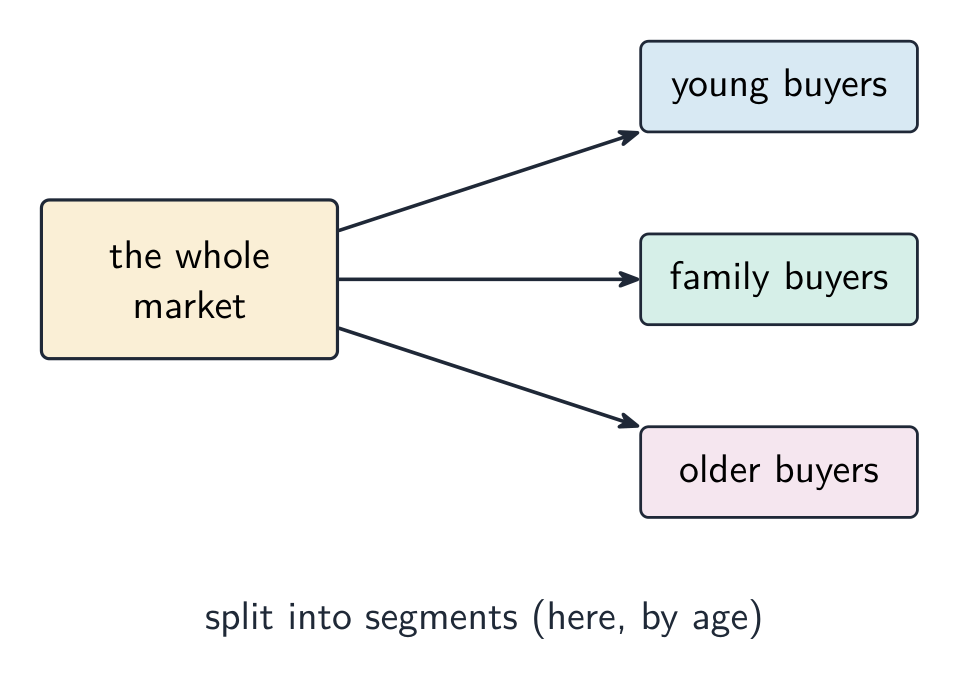
Market segmentation 市场细分 means splitting a market into groups of buyers who share something, such as age, income, gender or location. Its benefits:
the business can design a product to fit each group,
it can aim its advertising at the right people,
it can spot gaps in the market.
Segmentation splits the whole market into groups of similar buyers
See which part of the marketing mix changes in each real decision. · Посмотрите, какая часть маркетингового микса меняется в каждом реальном решении.
distinguish primary (field) and secondary (desk) market research and their methods
explain sampling and the need for accurate, reliable data
present and interpret market research data (tables, charts, graphs) to support decisions
Русский
различать первичные (полевые) и вторичные (бумажные) маркетинговые исследования и их методы
объяснять выборку и необходимость получения точных, надежных данных
представлять и интерпретировать данные маркетинговых исследований (таблицы, диаграммы, графики) для обоснования решений
Source: Cambridge International syllabus · Источник: Программа Cambridge International
Market research 市场调研 is collecting information about customers, rivals and the market, to help make good decisions.
Primary research collects new data; secondary uses existing data
Primary and secondary research
Primary research 一手调研 (also called field research) collects new information directly, for the first time. Methods include questionnaires 问卷, interviews, surveys and tests. It is up to date and fits the exact need, but costs time and money.
Secondary research 二手调研 (also called desk research) uses information that already exists, such as government reports, websites and past sales records. It is cheap and quick, but may be old or may not fit the need.
Sampling and reliable data
A business cannot ask everyone, so it asks a small group, called a sample. Sampling 抽样 must be done with care. If the sample is too small or not typical, the data 数据 will not be reliable, and decisions based on it may be wrong.
Using research data
Research results are shown in tables, charts and graphs. You should be able to read them — for example, find the most popular product, or see how sales change over time — and use them to support a decision.
Explore · Исследовать
Market research cycle · Цикл исследования рынка
Follow how a business turns customer data into a marketing decision. · Отслеживайте, как бизнес превращает данные клиентов в маркетинговое решение.
продвижение: реклама, стимулирующая продажа и роль технологий (интернет, социальные сети) в маркетинговом миксе
Source: Cambridge International syllabus · Источник: Программа Cambridge International
The product life cycleAdvertising on giant screens — promotion is one of the four Ps of the marketing mix.
The marketing mix 营销组合 is the four main choices a business makes about a product. They are often called the four Ps: product, price, place and promotion.
The marketing mix combines the four Ps
Product
The product 产品 must meet customers' needs. Two ideas matter here.
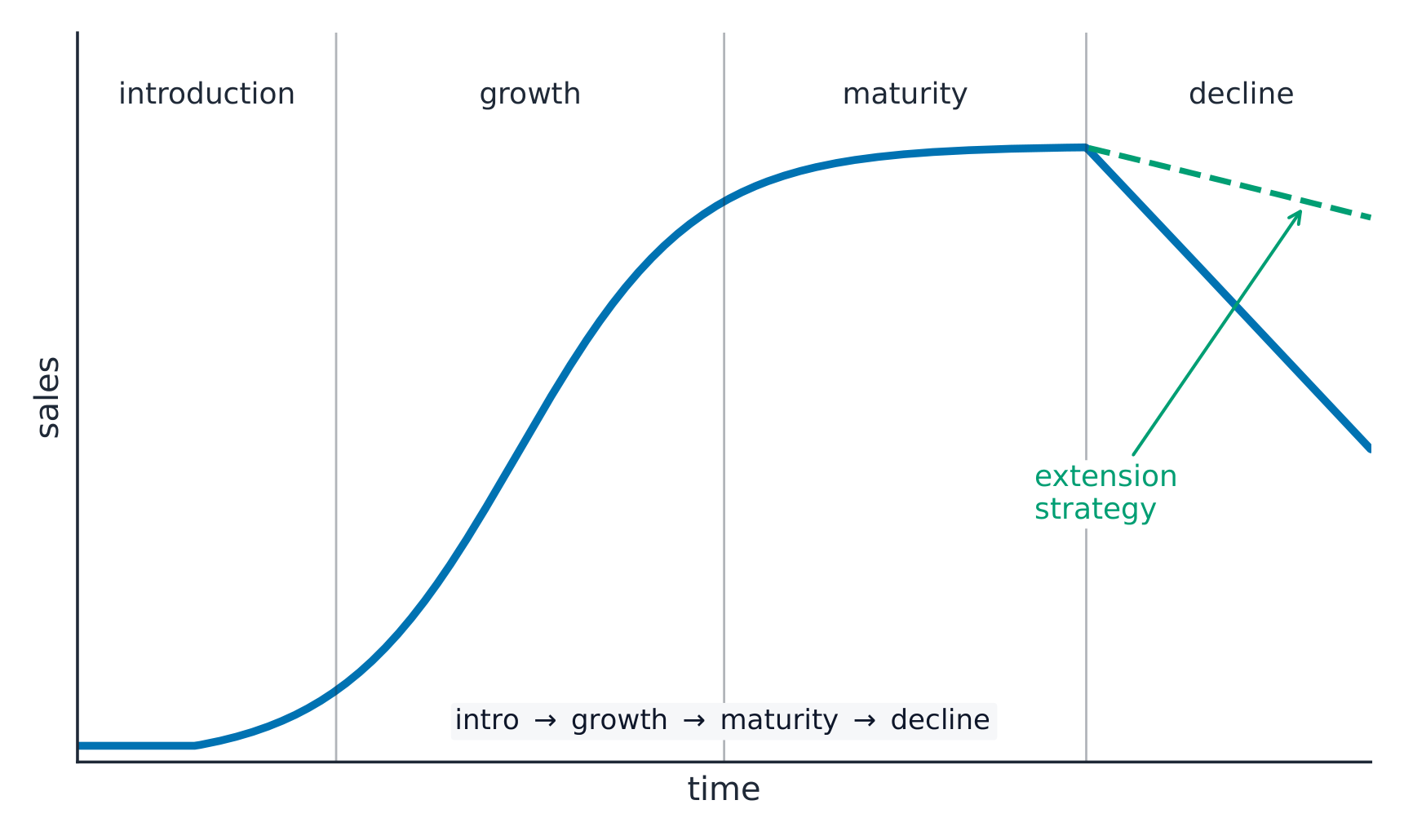
The product life cycle 产品生命周期 describes the sales of a product over time, in four stages: introduction, growth, maturity and decline. When sales begin to fall, a business can use an extension strategy 延长策略 — such as a new design, a new advert, or selling in a new market — to keep the product selling.
Sales of a product over its four life-cycle stages, with an extension strategy in maturity
A strong brand 品牌 (a name, logo and image that customers recognise) and good packaging 包装 (the wrapping that protects the product and attracts buyers) both help a product sell. Building a brand is called branding.
Price
The price 价格 is what the customer pays. A business can choose from several pricing methods.
Method
How it works
cost-plus pricing 成本加成定价
add a fixed share of profit on top of the cost of making the item
penetration pricing 渗透定价
set a low price to enter a market and win customers fast
price skimming 撇脂定价
set a high price at first for a new, special product
competitive pricing 竞争定价
set a price close to rivals' prices
promotional pricing 促销定价
cut the price for a short time to lift sales
dynamic pricing 动态定价
change the price automatically as demand changes, as airlines do
The right price also depends on the cost of making the product, on what customers will pay, on rivals' prices, and on the product's stage in its life cycle.
Worked example. One firm launches a smartphone using technology no rival has. Another enters a crowded soft-drinks market. Which pricing method suits each, and why? The smartphone is new and special with no direct competition, so use price skimming: charge a high price at first to recover the development cost from customers who must have it, then lower it as rivals catch up. The soft drink faces many established rivals, so use penetration pricing: a low price wins customers quickly and buys market share, and it can be raised later. Match the method to the market conditions - a pricing strategy is only right or wrong relative to the competition and the product's stage in its life cycle.
Place
Place 地点 is about how and where the product is sold, so it reaches the customer at the right time. The route a product takes from maker to customer is called a channel of distribution 分销渠道.
Many channels use a wholesaler 批发商 (buys large amounts from makers and sells smaller amounts to shops) and a retailer 零售商 (a shop that sells to the final customer). A business can also sell directly 直销 to customers, or online through e-commerce 电子商务.
A short channel gives more control; a longer channel reaches more buyers
Promotion
Promotion 推广 means telling customers about a product and persuading them to buy it. It includes:
advertising — paid messages on TV, online, on posters and so on,
sales promotion 促销 — short-term offers like discounts, free gifts, or "buy one get one free".
Technology now plays a big part. The internet 互联网 and social media 社交媒体 let a business reach many people cheaply, target the right customers, and sell all over the world.
Explore · Исследовать
The marketing mix (4 Ps) · Маркетинговый микс (4 P)
The marketing mix is the four decisions a business blends to sell a product well. · Маркетинговый микс — это четыре решения, которые компания сочетает для успешной продажи продукта.
explain how a marketing mix can be used to achieve marketing objectives
explain legal controls related to marketing (consumer protection, misleading promotion)
explain the opportunities and problems of entering new markets in other countries
Русский
объяснять, как маркетинговый микс может использоваться для достижения маркетинговых целей
объяснять правовые ограничения, связанные с маркетингом (защита потребителей, вводящая в заблуждение реклама)
объяснять возможности и проблемы выхода на новые рынки в других странах
Source: Cambridge International syllabus · Источник: Программа Cambridge International
A branded shop window: branding helps a product stand out from rivals.
A marketing strategy 营销策略 is a plan that uses the four Ps together to reach the business's objectives 目标. The four Ps must fit each other and fit the target customers. For example, a high-price luxury product needs high-quality packaging, expensive shops and image-based adverts.
Legal controls on marketing
Many countries have legal controls 法律管制 that protect buyers:
consumer protection 消费者保护 laws stop the sale of unsafe or faulty goods,
rules ban misleading 误导 promotion — adverts that lie about what a product can do.
Selling in other countries
A business can grow by entering an international market 国际市场 in another country.
Opportunities: many more customers, higher sales, and spreading risk across markets.
Problems: different languages and tastes, higher transport costs, foreign laws and tariffs 关税 (taxes on imports), and strong local competition 竞争.
Explore · Исследовать
Ansoff strategy lab · Лабораторная работа по стратегии Ансоффа
Sort growth choices by product and market risk. · Отсортируйте варианты роста по уровню риска продукта и рынка.
Learn the four Ps of the marketing mix — product, price, place, promotion — and remember they must fit each other and the target customer.
Primary research collects new data (surveys, questionnaires; up to date but costly); secondary research uses existing data (cheap and quick but may be out of date).
Know the product life cycle (introduction, growth, maturity, decline) and that an extension strategy revives falling sales.
Match the pricing methods: penetration (low, to enter a market), skimming (high, for a new product), plus cost-plus, competitive, promotional and dynamic pricing.
A niche market is small and specialised; a mass market is large, with many similar buyers.
describe the methods of production: job, batch and flow production, and their advantages/disadvantages
explain productivity and how it can be increased
explain lean production and just-in-time (JIT) inventory control and the management of inventory
explain how technology has changed production
Русский
описывать методы производства: единичное, пакетное и поточное производство, а также их преимущества/недостатки
объяснять производительность и способы её повышения
объяснять бережливое производство и систему контроля запасов «точно в срок» (JIT), а также управление запасами
объяснять, как технологии изменили производство
Source: Cambridge International syllabus · Источник: Программа Cambridge International
English
Stock control: the sawtooth chart
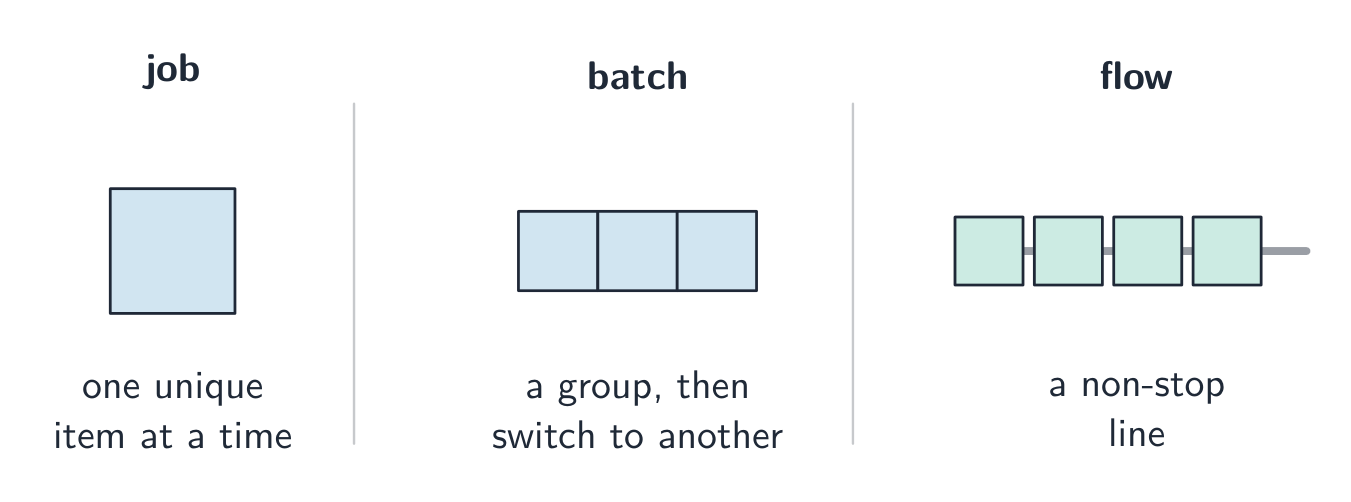
Production 生产 means turning materials and labour 劳动力 into finished goods and services 服务. There are three main methods.
Method
What it is
Good for
Drawback
job production 单件生产
making one item at a time, to order
special, one-off items: a wedding cake, a ship
slow and costly per item
batch production 批量生产
making a group of the same item, then switching to another group
bakeries, clothes in different sizes
machines stand idle while switching
flow production 流水线生产
making goods non-stop on a moving line
mass-made goods: cars, drinks
costly to set up; work can be boring
Productivity
Productivity 生产率 measures how much each worker or machine produces in a set time. Higher productivity lowers the cost per item. A business can raise productivity by:
training workers,
using better machines and technology 技术,
improving motivation 激励,
organising the work better.
Lean production and just-in-time
Lean production 精益生产 means cutting all waste — wasted time, materials, space and effort — while keeping quality.
One key method is just-in-time 准时制 (JIT). With JIT, materials arrive just as they are needed, and finished goods are sold quickly, so the business holds very little inventory 库存 (its stock of materials and goods). This saves storage cost, but one late delivery can stop production. Good management of inventory keeps enough stock to meet demand, but not so much that money is tied up or goods go out of date.
Technology in production
Technology has changed production. Automation 自动化 (machines and robots doing tasks), computer design and online ordering all make production faster, cheaper and more exact. But machines cost a lot to buy and can replace workers' jobs.
Русский
Контроль запасов: график в виде пилы
Производство означает преобразование сырья и труда в готовую продукцию и услуги. Существует три основных метода.
Конвейер сборки автомобилей: выпуск множества одинаковых продуктов на движущейся линии
Метод
Описание
Подходит для
Недостаток
Единичное производство
изготовление изделий поштучно под заказ
уникальные, единичные изделия: свадебный торт, судно
медленно и дорого за единицу
Партийное производство
выпуск группы одинаковых изделий, затем переход к другой группе
пекарни, одежда разных размеров
простои оборудования при переключении
Поточное производство
непрерывное изготовление товаров на конвейере
массовая продукция: автомобили, напитки
дорогие настройки; монотонность труда
Три метода производства
Производительность
Производительность показывает, сколько производит каждый работник или машина за определенное время. Высокая производительность снижает себестоимость единицы продукции. Предприятие может повысить производительность путем:
обучения работников,
использования более совершенного оборудования и технологий,
повышения мотивации,
улучшения организации труда.
Производительность — это выпуск на работника в заданное время; повышение производительности снижает себестоимость единицы продукции
Бесшовное (Lean) производство и «точно в срок»
Бесшовное производство означает устранение всех видов потерь — потраченного времени, материалов, пространства и усилий — при сохранении качества.
Одним из ключевых методов является «точно в срок» (JIT). При JIT материалы поступают ровно тогда, когда они нужны, а готовая продукция быстро продается, поэтому предприятие хранит очень мало запасов (состава материалов и товаров). Это экономит затраты на хранение, но любая задержка поставки может остановить производство. Хорошее управление запасами позволяет поддерживать достаточный объем для удовлетворения спроса, но не слишком большой, чтобы средства не были заморожены или товары не устарели.
«Точно в срок» работает с малым количеством запасов и частыми поставками; «на всякий случай» включает буферные запасы
Технологии в производстве
Технологии изменили производство. Автоматизация (использование машин и роботов для выполнения задач), компьютерное проектирование и онлайн-заказы делают производство быстрее, дешевле и точнее. Однако оборудование стоит дорого и может заменить рабочих места.
Автоматизация: промышленные роботы сваривают и собирают кузова автомобилей — быстрее и точнее, чем вручную, но это дорого и заменяет часть рабочих мест
Explore · Исследовать
Methods of production · Методы производства
A business picks job, batch or flow production to suit its product and order size. · Бизнес выбирает поточную, партионную или единичную продукцию в зависимости от продукта и объема заказов.
Costs, scale and break-even · Затраты, масштаб и точка безубыточности
Syllabus · Программа
English
classify costs into fixed, variable, total and average costs
construct and interpret break-even charts; identify the break-even level of output and the margin of safety
calculate and use break-even output, total revenue, total cost and profit; explain limitations of break-even analysis
Русский
классифицировать затраты на постоянные, переменные, общие и средние
составлять и интерпретировать графики безубыточности; определять уровень выпуска безубыточности и запас прочности
рассчитывать и использовать объем выпуска безубыточности, совокупную выручку, совокупные затраты и прибыль; объяснять ограничения анализа безубыточности
Source: Cambridge International syllabus · Источник: Программа Cambridge International
English
Economies of scale: average cost fallsBreak-even analysis, built line by line
Types of cost
A business has different kinds of cost 成本.
fixed costs 固定成本 do not change with output — rent, salaries, insurance. You pay them even if you make nothing.
variable costs 可变成本 change with output 产量 — materials, and pay for each item made. More output means more variable cost.
total cost 总成本 is fixed costs plus variable costs.
average cost 平均成本 is the total cost divided by the number of items made.
Worked example. A factory has fixed costs of £8,000 and variable costs of £2 per unit, and makes 1,000 units. Find the total cost and the average cost per unit.
The break-even 盈亏平衡 point is the level of output where total revenue exactly equals total cost: the business makes no profit and no loss. Below it the business makes a loss; above it, a profit.
Each item sold gives an amount towards covering the fixed costs. This amount is the selling price minus the variable cost of one item (sometimes called the contribution 贡献 per unit).
$$\text{break-even output} = \frac{\text{fixed costs}}{\text{selling price per unit} - \text{variable cost per unit}}$$
A break-even chart 盈亏平衡图 plots total cost and total revenue against output. The two lines cross at the break-even point 盈亏平衡点.
The margin of safety 安全边际 is how far the actual output is above the break-even output.
$$\text{margin of safety} = \text{actual output} - \text{break-even output}$$
Worked example. A product sells for £15 with a variable cost of £5 per unit, and the firm's fixed costs are £8,000. Find the break-even output, and the margin of safety if the firm actually makes 1,200 units.
The contribution per unit is $\text{\pounds} 15 - \text{\pounds} 5 = \text{\pounds} 10$, so
A large margin of safety is safer, because sales can fall a long way before the business makes a loss.
Limits of break-even analysis. It assumes that all output is sold, and that the selling price and the costs stay the same at every level of output. In real life these often change, so break-even is only a guide.
Русский
Экономия на масштабе: средние издержки снижаютсяТочка безубыточности, строится по линиям
Виды затрат
У предприятия есть разные виды затрат.
Постоянные расходы не меняются в зависимости от объема выпуска — аренда, зарплата, страховка. Вы платите их даже если ничего не производите.
Переменные расходы меняются вместе с объемом выпуска — материалы и оплата за каждую произведенную единицу. Больше выпуска означает больше переменных расходов.
Общие расходы равны сумме постоянных и переменных расходов.
Средние расходы — это общие расходы, деленные на количество произведенных единиц.
Разобранный пример. На завод имеет постоянные расходы £8,000 и переменные расходы £2 на единицу продукции, и производит 1,000 единиц. Найдите общие затраты и средние затраты на единицу.
Точка безубыточности — это уровень выпуска, при котором общая выручка точно равна общим расходам: предприятие не имеет ни прибыли, ни убытков. Ниже этой точки предприятие несет убытки; выше — получает прибыль.
Каждая проданная единица вносит вклад в покрытие постоянных расходов. Этот вклад равен цене продажи минус переменные расходы на одну единицу (иногда называемый маржинальным доходом на единицу).
$$\text{break-even output} = \frac{\text{fixed costs}}{\text{selling price per unit} - \text{variable cost per unit}}$$
График точки безубыточности отображает общие расходы и общую выручку в зависимости от объема выпуска. Две линии пересекаются в точке безубыточности.
Точка безубыточности — это место, где общая выручка равна общим расходам — левее нее — убытки, правее — прибыль
Запас прочности — это разница между фактическим выпуском и объемом выпуска в точке безубыточности.
$$\text{margin of safety} = \text{actual output} - \text{break-even output}$$
Разобранный пример. Продукт продается по цене £15 при переменных расходах £5 на единицу, а постоянные расходы компании составляют £8,000. Найдите точку безубыточности и запас прочности, если компания фактически производит 1,200 единиц.
Маржинальный доход на единицу составляет $\text{\pounds} 15 - \text{\pounds} 5 = \text{\pounds} 10$, поэтому
Большой запас прочности безопаснее, так как продажи могут значительно снизиться до того, как предприятие понесет убытки.
Пределы анализа точки безубыточности. Он предполагает, что весь выпуск реализуется, а цена продажи и расходы остаются неизменными при любом уровне выпуска. В реальности это часто меняется, поэтому анализ точки безубыточности служит лишь ориентиром.
Explore · Исследовать
Break-even · Точка безубыточности
Break-even is where total revenue crosses total cost. · Точка безубыточности — это место, где выручка пересекает общие затраты.
distinguish quality control and quality assurance and the methods used to achieve quality
Русский
объяснять, почему качество важно для бизнеса
различать контроль качества и обеспечение качества, а также методы, используемые для его достижения
Source: Cambridge International syllabus · Источник: Программа Cambridge International
English
Why quality matters
Quality 质量 means a product is good enough for what customers 顾客 need. Good quality:
builds a strong brand 品牌 and customer loyalty 顾客忠诚度,
means fewer returns, complaints and wasted materials,
lets a business charge a higher price.
Poor quality loses customers and damages the brand.
Quality control and quality assurance
There are two main ways to manage quality: quality control 质量控制 and quality assurance 质量保证.
Quality control
Quality assurance
When
check at the end
build in quality at every stage
Who
inspectors check finished goods
every worker is responsible
Idea
find and remove faulty goods
stop faults from happening at all
Русский
Почему качество важно
Качество означает, что продукт достаточно хорош для потребностей клиентов. Высокое качество:
укрепляет сильный бренд и лояльность клиентов,
означает меньше возвратов, жалоб и отходов материалов,
позволяет предприятию устанавливать более высокую цену.
Низкое качество ведет к потере клиентов и повреждению репутации бренда.
Контроль качества и обеспечение качества
Существует два основных способа управления качеством: контроль качества и обеспечение качества.
Контроль качества
Обеспечение качества
Когда
проверка в конце
качество заложено на каждом этапе
Кто
инспекторы проверяют готовую продукцию
ответственность каждого работника
Суть
найти и удалить дефектную продукцию
предотвратить появление дефектов вообще
Контроль качества проверяет на конце; обеспечение качества внедряет качество на каждом этапе
Explore · Исследовать
Quality methods lab · Лаборатория методов качества
Compare quality approaches by when they prevent or find faults. · Сравните подходы к качеству по тому, когда они предотвращают или обнаруживают дефекты.
explain the factors affecting the location decision of a manufacturing business and a service business
explain the factors a business considers when locating in another country and the role of legal controls
Русский
объяснять факторы, влияющие на решение о местоположении производственного предприятия и предприятия сферы услуг
объяснять факторы, которые учитывает бизнес при размещении в другой стране, и роль правовых ограничений
Source: Cambridge International syllabus · Источник: Программа Cambridge International
English
Locating a business
Where a business sits affects its costs and its sales. A manufacturing 制造业 business (one that makes goods) looks at:
nearness to raw materials 原材料, because heavy or bulky materials cost a lot to move,
nearness to customers and the market 市场,
the cost and size of the land,
a supply of suitable labour,
good transport links,
government grants offered in some areas.
A service business (one that sells services, such as a shop or a hair salon) looks more at being close to customers, passing foot traffic, nearby shops, and the rent.
Locating in another country
A business may produce or sell abroad in order to reach new customers and bigger markets, pay lower wages or rent, get nearer to raw materials, or avoid tariffs 关税 (taxes on imports) by making goods inside the country. But it must then deal with different laws, languages and customs, and follow the legal controls 法律管制 of both countries.
Русский
Место расположения предприятия — например, этого распределительного центра — влияет на его затраты и уровень сервиса.
Размещение предприятия
Расположение предприятия влияет на его затраты и продажи. Производственное предприятие (то, которое производит товары) рассматривает:
близость к сырьевым ресурсам, так как тяжелые или громоздкие материалы требуют больших затрат на транспортировку,
близость к клиентам и рынку,
стоимость и размер земли,
наличие подходящей рабочей силы,
хорошие транспортные связи,
государственные субсидии, предлагаемые в некоторых регионах.
Предприятие услуг (то есть бизнес, продающий услуги, например магазин или парикмахерская) больше ориентировано на близость к клиентам, проходимый трафик, соседние магазины и размер арендной платы.
Размещение в другой стране
Бизнес может производить или продавать за рубежом, чтобы охватить новых клиентов и более крупные рынки, платить меньшую зарплату или аренду, приблизиться к сырью или избежать пошлин (налогов на импорт), производя товары внутри страны. Однако ему придется иметь дело с различными законами, языками и обычаями, а также соблюдать правовые требования обеих стран.
Explore · Исследовать
Location factor lab · Лабораторная работа по факторам расположения
Classify why a business chooses one site over another. · Классифицируйте причины, по которым бизнес выбирает один участок вместо другого.
Match the production methods: job (one-off items to order), batch (a group, then switch to another), flow (non-stop mass production on a line).
Learn the formulas: total cost = fixed + variable; average cost = total cost ÷ output; total revenue = price × quantity; profit = total revenue − total cost.
Break-even output = fixed costs ÷ (selling price − variable cost per unit). How far actual output is above break-even is the margin of safety.
Break-even analysis assumes everything made is sold at one fixed price and cost, so it is only a guide.
Quality control checks finished goods at the end; quality assurance builds quality in at every stage.
Русский
Сопоставьте методы производства: индивидуальное (изготовление изделий по заказу единично), партийное (выпуск партии, затем переход к другой), поточное (непрерывный массовый выпуск на конвейере).
Точка безубыточности = постоянные расходы ÷ (цена продажи − переменные затраты на единицу). Расстояние фактического объема выпуска над точкой безубыточности — это маржа безопасности.
Анализ безубыточности предполагает, что вся произведенная продукция продается по одной фиксированной цене и при одних и тех же затратах, поэтому он служит лишь ориентиром.
Контроль качества проверяет готовую продукцию в конце процесса; обеспечение качества закладывает качество на каждом этапе.
5
Financial information and decisions · Финансовая информация и решения
explain why businesses need finance (start-up capital, expansion, working capital, cash-flow problems)
distinguish short-term and long-term finance and internal and external sources of finance
describe sources of finance (retained profit, sale of assets, owners' savings, bank loan/overdraft, share issue, debentures, leasing, hire purchase, trade credit, microfinance, crowdfunding, government grants)
explain the factors that influence the choice of source of finance
Русский
объяснять, почему бизнесу нужны финансы (стартовый капитал, расширение, оборотный капитал, проблемы с денежным потоком)
различать краткосрочное и долгосрочное финансирование, а также внутренние и внешние источники финансирования
описывать источники финансирования ( нераспределенная прибыль, продажа активов, собственные средства владельцев, банковский кредит/овердрафт, эмиссия акций, облигации, лизинг, рассрочка, торговый кредит, микрофинансирование, краудфандинг, государственные гранты)
объяснять факторы, влияющие на выбор источника финансирования
Source: Cambridge International syllabus · Источник: Программа Cambridge International
Banks are a key external source of business finance, through loans and overdrafts.Finance is needed to start up, to run day-to-day, and to grow
Finance 资金 means the money a business needs. A business needs finance to:
start up — start-up capital 启动资金 to buy equipment and stock before it earns anything,
grow — money for expansion 扩张, such as new shops or machines,
run day to day — working capital 营运资金 to pay wages and suppliers while waiting for customers to pay,
survive a cash-flow 现金流 problem, when more money is going out than is coming in.
Sources of finance
Finance can be short-term 短期 (paid back within a year) or long-term 长期 (over several years). It can come from inside the business (internal) or from outside (external).
Source
Internal / external
Notes
retained profit 留存利润
internal
profit kept in the business, not paid out
sale of assets 资产
internal
selling things the business no longer needs
owners' savings
internal
the owners' own money
bank loan 贷款
external
borrowed money, repaid with interest 利息 over time
bank overdraft 透支
external
the bank lets the account go below zero, for short-term needs
issuing new shares 股份
external
only for limited companies; raises money but shares out control
debentures 债券
external
long-term loans to a company that pay interest
leasing 租赁
external
renting equipment instead of buying it
hire purchase 分期付款
external
buy now and pay in monthly parts
trade credit 贸易信贷
external
pay suppliers later, for example after 30 days
microfinance 小额信贷
external
small loans for tiny businesses in poorer areas
crowdfunding 众筹
external
many people each give a small amount, often online
government grants 补助金
external
money from the government that need not be repaid
Sources of finance come from inside the business (internal) or outside it (external)
Choosing a source
The best source depends on how much money is needed and for how long, the cost (interest and fees), the size and legal type of the business (only companies can sell shares), and how much risk and control the owners will accept.
Explore · Исследовать
Sources of finance lab · Лабораторная работа по источникам финансирования
Choose the best type of finance by time, risk and ownership. · Выберите лучший тип финансирования по сроку, риску и собственности.
explain the importance of cash and the difference between cash and profit
construct, complete and interpret a cash-flow forecast (inflows, outflows, net cash flow, opening/closing balance)
explain working capital and how a business can overcome cash-flow problems
Русский
объяснять важность наличности и различие между наличными и прибылью
составлять, заполнять и интерпретировать прогноз движения денежных средств (поступления, расходы, чистый денежный поток, начальный/конечный баланс)
объяснять оборотный капитал и то, как бизнес может преодолеть проблемы с денежным потоком
Source: Cambridge International syllabus · Источник: Программа Cambridge International
Cash-flow forecast
Cash is not the same as profit
Cash 现金 is the money a business can use right now. Profit 利润 is revenue 收入 minus costs over a period. A business can be making a profit yet still run out of cash — for example, if customers have not paid yet. Running out of cash can force even a profitable business to close.
A credit sale earns profit on paper now - the cash arrives much later
The cash-flow forecast
A cash-flow forecast 现金流预测 predicts the money coming in and going out each month. It uses:
inflows 流入 — money coming in (sales, loans),
outflows 流出 — money going out (wages, rent, materials),
net cash flow 净现金流 — inflows minus outflows,
opening balance 期初余额 — the cash held at the start of the month,
closing balance 期末余额 — the cash held at the end of the month.
Worked example. A shop expects inflows of £12,000 and outflows of £9,000 next month, and starts the month with £2,000 in the bank. Find the net cash flow and the closing balance.
A cash-flow forecast tracks the closing balance each month, warning of a shortage early
Working capital
Working capital is the money available for day-to-day running. It is the current assets 流动资产 (cash and things soon turned into cash) minus the current liabilities 流动负债 (debts due within a year).
To overcome cash-flow problems, a business can arrange an overdraft, delay paying suppliers, ask customers to pay sooner, sell spare assets, or cut spending.
Working capital: current assets minus current liabilities
Explore · Исследовать
Cash-flow forecasting · Прогноз движения денежных средств
A forecast of cash in and out each month warns a business of a cash shortage before it strikes. · Прогноз притоков и оттоков денег в месяц предупреждает бизнес о нехватке средств до того, как она наступит.
Drag the monthly cash in, cash out and the one-off oven purchase — does the bakery stay out of the red all six months? · Перетащите ежемесячные поступления, расходы и разовую покупку печи — останется ли пекарня без дефицита все шесть месяцев?
identify the main features of an income statement: revenue, cost of sales, gross profit, expenses and profit for the year
explain how income statements are used by stakeholders
Русский
определять основные элементы отчета о финансовых результатах: выручка, себестоимость продаж, валовая прибыль, расходы и прибыль за год
объяснять, как отчеты о финансовых результатах используются заинтересованными сторонами
Source: Cambridge International syllabus · Источник: Программа Cambridge International
An income statement 损益表 shows how much profit a business made over a period, usually a year.
Line
Meaning
revenue
money from sales
cost of sales 销售成本
the cost of making or buying the goods that were sold
gross profit 毛利润
revenue minus cost of sales
expenses 费用
other running costs: rent, wages, advertising
profit for the year 年度利润
gross profit minus expenses
$$\text{gross profit} = \text{revenue} - \text{cost of sales}$$
$$\text{profit for the year} = \text{gross profit} - \text{expenses}$$
Worked example. A business has revenue of £200,000, cost of sales of £120,000 and expenses of £50,000. Find its gross profit and its profit for the year.
identify the main classifications in a statement of financial position: non-current and current assets, current and non-current liabilities, and owners' equity/capital
explain how the statement of financial position is used
Русский
определить основные разделы в балансе: внеоборотные и оборотные активы, краткосрочные и долгосрочные обязательства, а также собственный капитал/капитал
объяснить, как используется баланс
Source: Cambridge International syllabus · Источник: Программа Cambridge International
A stock exchange: public limited companies raise finance by selling shares to investors.
A statement of financial position 财务状况表 (also called a balance sheet) shows what a business owns and what it owes (its liabilities 负债) on one day.
non-current assets 非流动资产 — things kept for the long term: buildings, machines.
current assets — short-term items: inventory 库存, money owed by customers, and cash.
current liabilities — debts due within a year: an overdraft, money owed to suppliers.
non-current liabilities 非流动负债 — debts due after more than a year: a long-term loan.
owners' equity 所有者权益 — the money the owners put in, plus profit kept in the business.
It is used to check what the business is worth, how much it owes, and whether it can pay its debts.
The two sides always balance: assets equal liabilities plus equity
Explore · Исследовать
Financial statements flow · Поток финансовых отчетов
See how business events become the statements users read. · Посмотрите, как события бизнеса становятся данными, которые читают пользователи.
gross profit margin 毛利率 — gross profit as a percentage of revenue.
profit margin 利润率 — profit for the year as a percentage of revenue.
return on capital employed 资本回报率 (ROCE) — profit as a percentage of the capital employed 所用资本 (money invested). It shows how well the investment is used.
A higher percentage is better for all three.
Worked example. The same business (revenue £200,000, gross profit £80,000, profit for the year £30,000) has capital employed of £150,000. Find its three profitability ratios.
$$\text{acid test ratio} = \frac{\text{current assets} - \text{inventory}}{\text{current liabilities}}$$
the current ratio 流动比率 compares current assets with current liabilities. Around 1.5 to 2 is healthy.
the acid test ratio 速动比率 is stricter: it leaves out inventory, because inventory is not yet sold.
Worked example. A business has current assets of £40,000 (including £10,000 of inventory) and current liabilities of £20,000. Find its current ratio and acid test ratio.
$$\text{acid test ratio} = \frac{40\,000 - 10\,000}{20\,000} = 1.5$$
Who uses account analysis
internal users (owners and managers) use it to control the business and to plan.
external users (banks, suppliers, the government and investors) use it to decide whether to lend, supply or invest.
Markets and accounts: ratios from the income statement and balance sheet show if a firm is healthy
Explore · Исследовать
Accounts ratio diagnosis · Диагностика по счетам
Classify ratios by the question they answer about a business. · Классифицируйте коэффициенты в зависимости от вопроса, который они отвечают о бизнесе.
Cash is not profit: a profitable business can still run out of cash if customers pay late. Watch the closing balance on a cash-flow forecast.
Separate internal sources (retained profit, sale of assets, owners' savings) from external ones (bank loan, overdraft, shares, leasing, trade credit).
Key formulas: net cash flow = inflows − outflows; closing balance = opening balance + net cash flow; working capital = current assets − current liabilities.
Profitability ratios (gross margin, profit margin, ROCE) — higher is better. Liquidity: the current ratio (healthy ≈ 1.5–2) and the stricter acid test (which leaves out inventory).
Only limited companies can raise money by issuing shares; a sole trader or partnership cannot.
6
External influences on business activity · Внешнее влияние на деятельность бизнеса
Every business is affected by external influences 外部影响 — things outside the business that it cannot control, such as the economy, the law and the environment. A good business watches these and plans for them.
Government and laws shape every firm: tax, interest rates and regulation are external influences
explain the business cycle (growth, boom, recession, slump/recovery) and its effects on business
explain government economic objectives and how taxation, interest rates, inflation, unemployment and exchange rates affect business
Русский
объяснить деловой цикл (рост, подъем, рецессия, спад/восстановление) и его влияние на бизнес
объяснить экономические цели правительства и то, как налогообложение, процентные ставки, инфляция, безработица и обменные курсы влияют на бизнес
Source: Cambridge International syllabus · Источник: Программа Cambridge International
Interest rates, taxes, unemployment and inflation all affect business
The business cycle
The economy does not grow at a steady pace. It moves in a repeating pattern called the business cycle 经济周期, with these stages.
Stage
What happens
Effect on business
growth 增长
the economy is rising; people spend more
sales and profit rise; firms expand and hire
boom 繁荣
spending is very high
prices and wages rise; shortages appear
recession 衰退
spending falls; the economy shrinks
sales and profit fall; firms cut jobs
slump 萧条
a deep, long recession
many firms close; high unemployment 失业
recovery 复苏
spending starts to rise again
sales slowly improve
The business cycle moves through growth, boom, recession, slump and recovery
In hard times a business may cut costs, lower prices, or sell cheaper products.
Government economic aims and how they affect business
Governments try to keep the economy healthy. Their main aims are stable prices, plenty of jobs, steady growth, and a stable currency. To manage the economy, a government uses or watches several economic factors. Each one affects every business.
Economic factor
What it is
Effect on business
taxation 税收
money the government takes from incomes and sales
higher tax leaves people with less to spend, and cuts business profit
interest rates 利率
the cost of borrowing money
higher rates make loans dearer, so firms borrow and invest less, and customers spend less
inflation 通货膨胀
a general rise in prices
costs rise; if wages chase prices, the country's goods can become too dear
unemployment
the number of people without work
high unemployment lowers sales, but workers are easier to hire
exchange rates 汇率
the price of one currency in another
a change makes imports and exports cheaper or dearer (see below)
Explore · Исследовать
External influences lab · Лаборатория внешних факторов
Classify outside changes by the channel that hits the business. · Классифицируйте внешние изменения по каналу воздействия на бизнес.
explain external costs and external benefits of business activity and the meaning of sustainable development
explain how business activity can damage or protect the environment and the role of pressure groups
explain ethical business behaviour and the possible conflict between ethics and profit
Русский
объяснить внешние издержки и внешние выгоды хозяйственной деятельности и понятие устойчивого развития
объяснить, как хозяйственная деятельность может наносить ущерб или защищать окружающую среду, и роль групп давления
объяснить этичное поведение бизнеса и возможные конфликты между этикой и прибылью
Source: Cambridge International syllabus · Источник: Программа Cambridge International
Business activity can harm the environment, raising ethical questions for firms and governments.
External costs and external benefits
When a business acts, other people can gain or lose.
external costs 外部成本 are costs paid by other people or by society, not by the business — for example pollution 污染, noise and heavy traffic.
external benefits 外部收益 are gains for others — for example new jobs and better roads.
A business activity can create external costs and external benefits felt by other people
Sustainable development
Sustainable development 可持续发展 means meeting today's needs without harming the ability of future people to meet their own needs. A business can harm the environment 环境 — through waste, pollution, and using up resources — or protect it, through recycling, clean energy and less packaging.
Pressure groups
A pressure group 压力团体 is a group that tries to influence businesses and governments, for example to cut pollution. Pressure groups use the media, protests and boycotts. A business may change its behaviour to avoid bad publicity.
Ethics and profit
Ethical behaviour 道德行为 means doing what is morally right, even when no law forces it — for example fair pay, safe products, and no child labour. Acting ethically can cost more in the short term, so it may conflict 冲突 with profit. But it can also win loyal customers and a good name, which raise profit in the long term.
Explore · Исследовать
External influences lab · Лаборатория внешних факторов
Classify outside changes by the channel that hits the business. · Классифицируйте внешние изменения по каналу воздействия на бизнес.
explain globalisation, its importance to business and the reasons for it
explain the role of multinational companies and their benefits and drawbacks to a country
explain how changes in exchange rates affect businesses that import and export
Русский
объяснить глобализацию, её важность для бизнеса и причины её возникновения
объяснить роль транснациональных компаний и их преимущества и недостатки для страны
объяснить, как изменения обменных курсов влияют на компании, занимающиеся импортом и экспортом
Source: Cambridge International syllabus · Источник: Программа Cambridge International
Shipping containers: businesses trade with the wider international economy.
Globalisation
Globalisation 全球化 is the growing trade and movement of goods, money and people between countries, so the world acts more and more like one single market. It has grown because of cheaper transport, better communication, the internet, and fewer trade barriers such as tariffs 关税 (taxes on imports).
Multinational companies
A multinational company 跨国公司 has operations — factories, branches, or offices — in more than one country. (Simply exporting to other countries is not enough; the firm must actually operate there.)
Benefits to a country
Drawbacks to a country
new jobs and training
profits may be sent out of the country
investment and new technology
local firms may be forced out of business
more choice and lower prices
resources may be used up, or the area polluted
more tax paid to the government
a large firm can have too much power
Exchange rates and trade
An exchange rate is the price of one currency in another. A change affects businesses that import 进口 (buy from abroad) and those that export 出口 (sell abroad).
If the currency gets stronger (rises), exports become dearer for foreign buyers, so they sell less, while imports become cheaper.
If the currency gets weaker (falls), exports become cheaper and sell more, while imports become dearer.
A useful memory aid is SPICED: Strong Pound → Imports Cheaper, Exports Dearer.
How a stronger or weaker currency changes the price of imports and exports
Worked example. A UK firm exports a machine priced at £20,000. The exchange rate moves from £1 = 1.50 USD to £1 = 1.20 USD. What happens to the price a US buyer pays, and is that good for the exporter? Convert the UK price at each rate: at the old rate 20,000 × 1.50 = 30,000 USD; at the new rate 20,000 × 1.20 = 24,000 USD. The pound has weakened, so the machine is 6,000 USD cheaper abroad and the firm should sell more - good for an exporter. Check it against SPICED: a weak pound is the reverse of it, so exports are cheaper. Convert the actual figures rather than only reciting the mnemonic, and notice that the UK price never changed at £20,000 - it is the foreign price that moves.
Explore · Исследовать
International market lab · Лабораторная работа по международным рынкам
See how access to world markets changes quantity and price pressure. · Посмотрите, как доступ к мировым рынкам влияет на давление количества и цен.
Learn the business cycle (growth, boom, recession, slump, recovery) and how each stage changes sales, profit and jobs.
Trace each economic factor to the business: higher interest rates → dearer loans, so less borrowing and spending; higher tax → people have less to spend; inflation → higher costs.
External costs (pollution, noise) fall on other people, not the business; external benefits (new jobs, better roads) help others.
Use SPICED for exchange rates: Strong Pound → Imports Cheaper, Exports Dearer.
Ethical behaviour can cost more in the short term (so it may conflict with profit), but it can win loyal customers and a good name that raise profit later.
Pick one and the site follows you — notes, papers, videos and practice all open on it. · Выберите один, и сайт будет вести вас — конспекты, работы, видео и практика откроются там.
Type to search notes, lessons, code, vocabulary and past-paper questions across every subject. · Введите запрос для поиска заметок, уроков, кода, словаря и вопросов с реальных экзаменов по всем предметам.


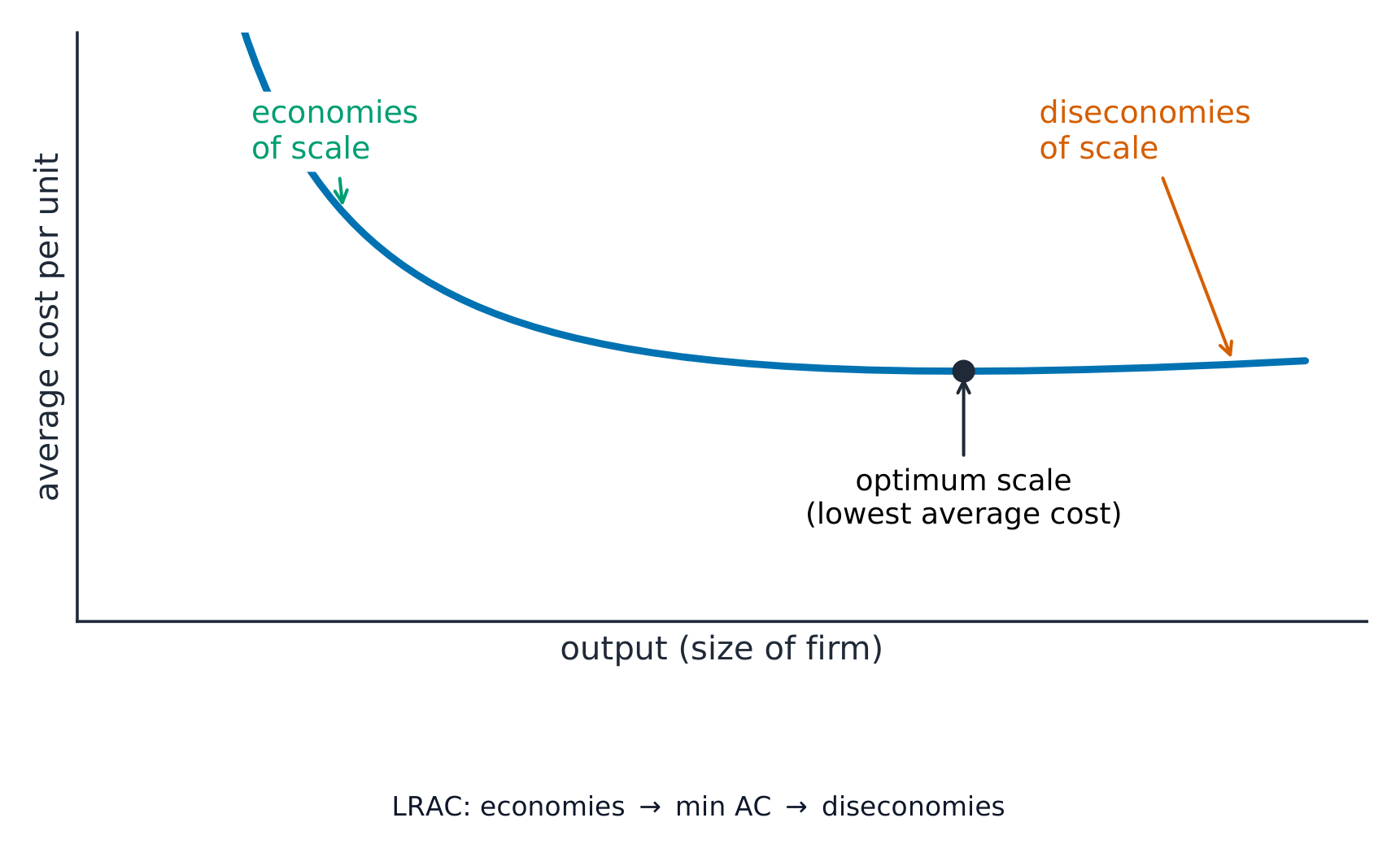


 Motivated workers work harder, raising output -> Мотивированные работники работают усерднее, повышая объем выпуска