The internet and the world wide web
Introduzido| English | Significado |
|---|---|
| internet/ˈɪntənet/ | internet |
| URL/ˌjuː ɑː ˈel/ | URL |
| world wide web/wɜːld waɪd web/ | World Wide Web |
| protocol/ˈprəʊtəkɒl/ | protocolo |
| domain name/dəˈmeɪn neɪm/ | nome de domínio |
| web browser/web ˈbraʊzə/ | navegador web |
| DNS/ˌdiː en ˈes/ | DNS |
| web server/web ˈsɜːvə/ | servidor web |
| cookie/ˈkʊki/ | cookie |
The internet 互联网 and the web
- People mix these up, but they're different.
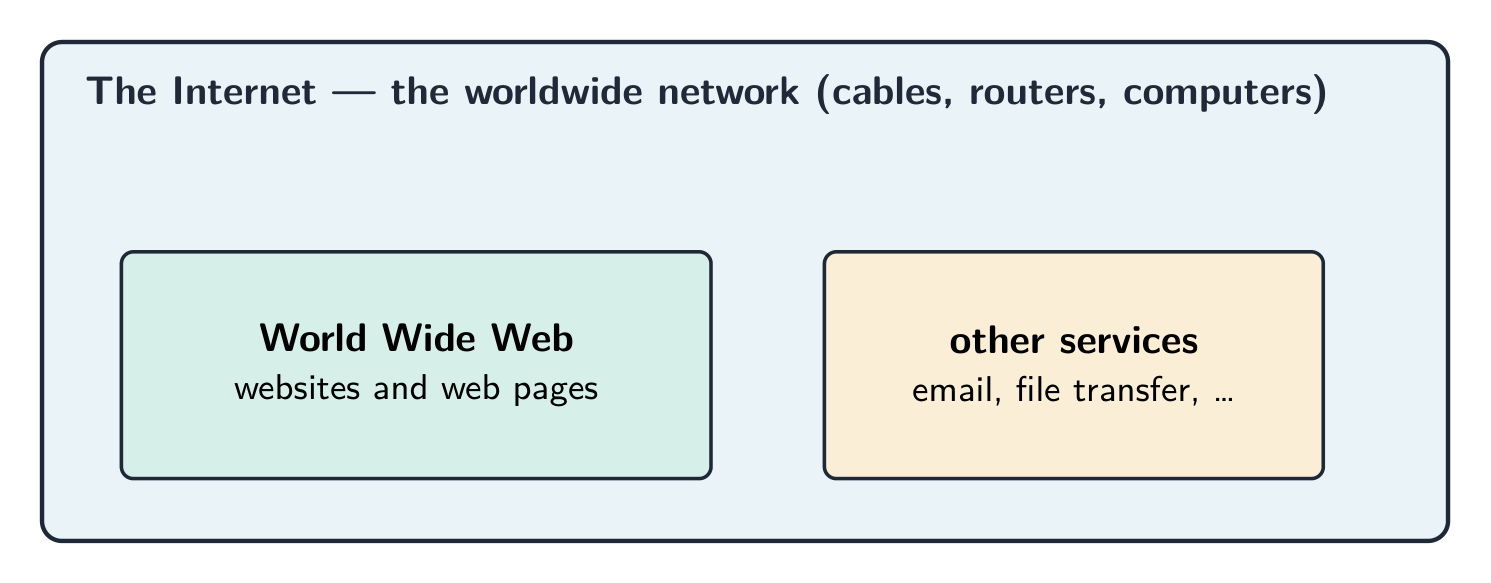
- The internet is the network; the web is something you use on it.
- We'll follow a web page from a typed URL 统一资源定位符 to your screen.
Internet, web, URL and browser
- The internet is the worldwide infrastructure — computers, cables and routers.
- The world wide web 万维网 (WWW) is the collection of websites you view over the internet (email is another internet service).
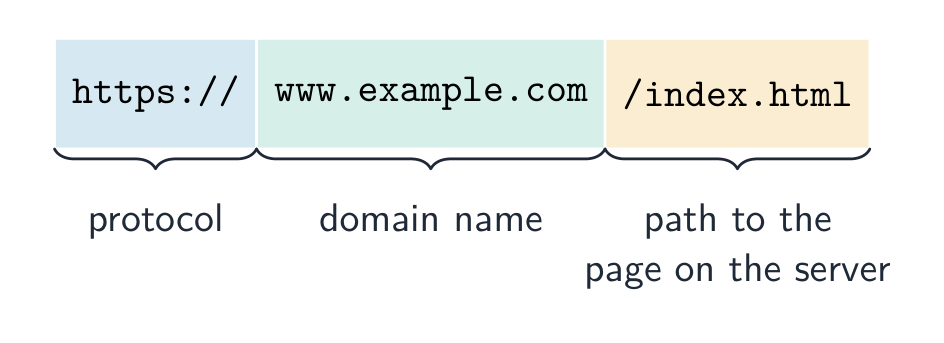
- A URL is a page's text address, in three parts: protocol 协议 · domain name 域名 · path (
https://www.example.com/index.html). - A web browser 网页浏览器 fetches pages and renders their HTML into what you see.
What is the difference between the internet and the world wide web?
Dificuldade 1/5 · Moedas 100 + pequeno bônus na primeira conclusão hoje
The internet is the worldwide infrastructure; the WWW is one service (websites) running on it.
Match each web term to what it is.
Dificuldade 2/5 · Moedas 140 + pequeno bônus na primeira conclusão hoje
The internet is the network; the web is one service on it; a URL names a resource; DNS finds its IP.
A web browser's job is to:
Dificuldade 1/5 · Moedas 100 + pequeno bônus na primeira conclusão hoje
The browser fetches the HTML and renders it into the page you see.
How a web page reaches you
- The browser needs the site's IP address, but a URL is a name.
- It asks a DNS 域名系统 (domain name service), which stores the IP for each web address.
- The DNS returns the matching IP address.
- The browser contacts the web server 网页服务器 at that IP.
- The server sends back the page's HTML, which the browser renders.
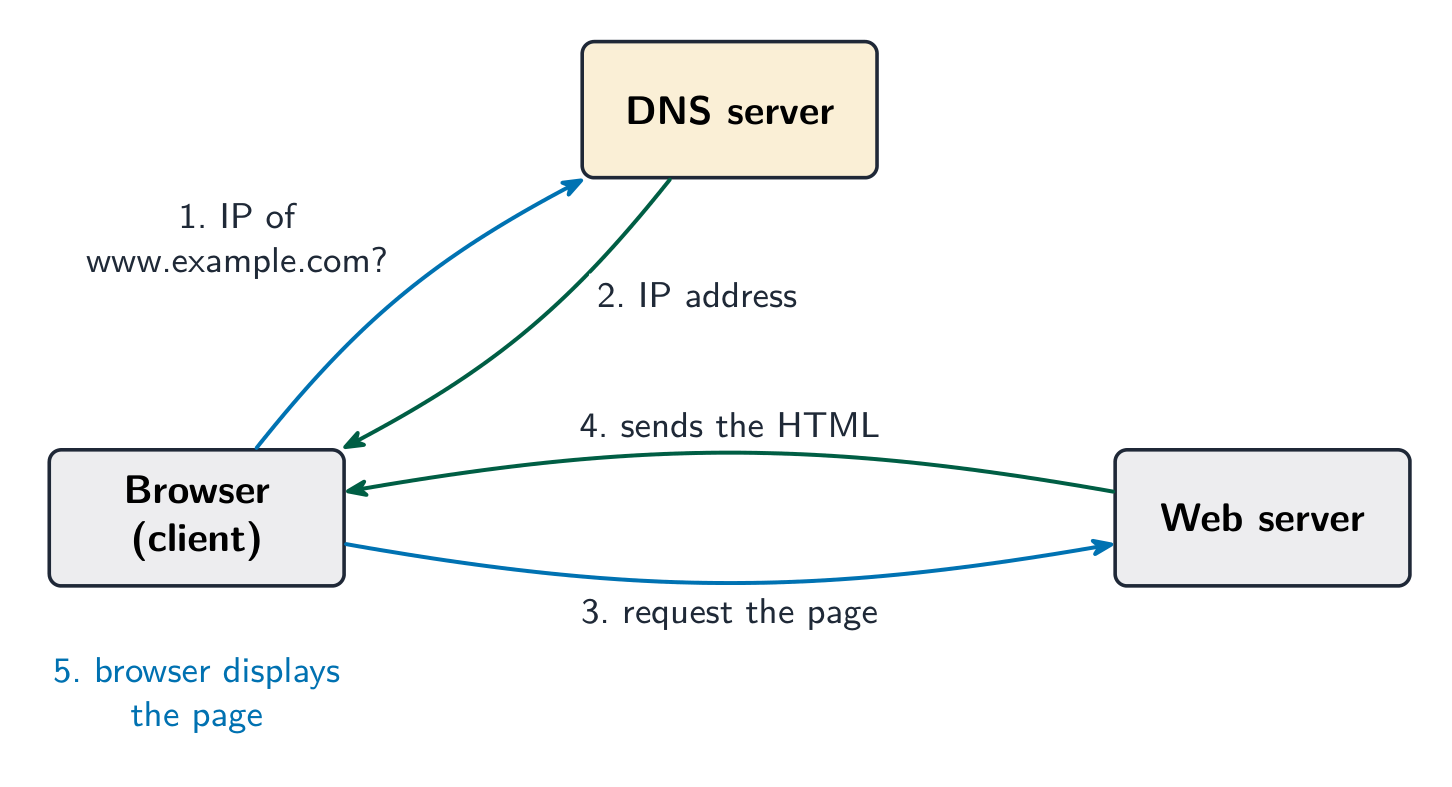
What happens when you load a web page
Step through it. The web address is just a name — DNS turns it into an IP address before the browser can ask the right server for the page.
The domain name service (DNS) is used to:
Dificuldade 1/5 · Moedas 100 + pequeno bônus na primeira conclusão hoje
DNS turns the human-readable domain name into the numeric IP address the browser needs.
Cookies 缓存文件
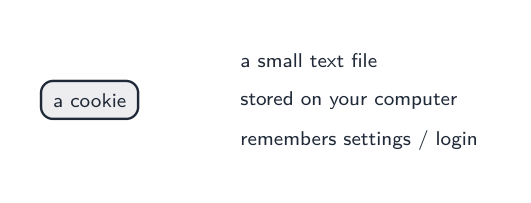
- A cookie is a small text file a website stores on your device to remember things.
- A session cookie is deleted when you close the browser (e.g. a shopping basket).
- A persistent cookie is saved on the device, remembering you between visits (logins, preferences).
A session cookie is saved on the device between visits, while a persistent cookie is deleted when the browser closes.
Dificuldade 1/5 · Moedas 100 + pequeno bônus na primeira conclusão hoje
False. They are swapped: a persistent cookie is saved and remembers you between visits, while a session cookie is deleted when you close the browser.
Worked example: typing a web address
A student types https://www.example.com/index.html and presses Enter. Describe what happens until the page appears.
- The browser sends the domain name
www.example.comto a DNS server, which looks it up and returns the matching IP address. If it does not know, it asks another DNS server. - The browser sends a request to the web server at that IP address. The server sends back the HTML file
index.html(using HTTPS, so it is encrypted), and the browser renders the HTML into the page you see.
What does a DNS server do?
Dificuldade 1/5 · Moedas 100 + pequeno bônus na primeira conclusão hoje
Computers find each other by IP address, so the DNS turns a name into an address.
A session cookie is deleted when the browser is closed, but a persistent cookie stays on the computer.
Dificuldade 1/5 · Moedas 100 + pequeno bônus na primeira conclusão hoje
Persistent cookies remember logins and preferences between visits.
You've got it
- the internet = the network; the WWW = websites you use on it
- a URL = protocol + domain name + path; a browser renders HTML
- DNS turns a domain name into an IP address, then the browser fetches the page from the web server
- session cookies vanish on close; persistent cookies are saved for next time