Climate change and air quality
Introduzido| English | Significado |
|---|---|
| greenhouse gases/ˈɡriːnhaʊs ˈɡæsɪz/ | gases de efeito estufa |
| global warming/ˈɡləʊbl ˈwɔːmɪŋ/ | aquecimento global |
| catalytic converters/ˌkætəˈlɪtɪk kənˈvɜːtəz/ | conversor catalítico |
A measurement on a volcano, 1958
- In March 1958 the scientist Charles David Keeling began measuring carbon dioxide in the air at an observatory on Mauna Loa, Hawaii, far from cities. The first readings were about 315 parts per million (ppm). The record has continued ever since and passed 420 ppm in the 2020s; the line rises every year.
- Carbon dioxide and methane are greenhouse gases 温室气体. Burning fuels also releases gases that harm air quality.
Climate and air quality route
Trace emissions from combustion to atmospheric effects.
CO₂ rose from about 315 ppm in 1958 to about 420 ppm. By how many ppm did it rise?
Dificuldade 2/5 · Moedas 140 + pequeno bônus na primeira conclusão hoje
420 − 315.
The greenhouse effect
- The Sun's energy warms the Earth's surface, which gives off thermal (infrared) radiation. Greenhouse gases absorb some of this energy and re-emit it, keeping the lower atmosphere warmer.
- More greenhouse gas traps more energy, raising the average temperature: global warming 全球变暖, which causes climate change.
Which are greenhouse gases?
Dificuldade 2/5 · Moedas 140 + pequeno bônus na primeira conclusão hoje
They absorb thermal radiation.
Sources of greenhouse gases
- Carbon dioxide: complete combustion of fossil fuels (coal, oil, natural gas) and respiration; deforestation removes trees that absorb it.
- Methane: cattle and other livestock, rice fields, and decomposing waste in landfill.
Which is a major source of methane?
Dificuldade 1/5 · Moedas 100 + pequeno bônus na primeira conclusão hoje
Also rice fields and landfill.
Air pollutants
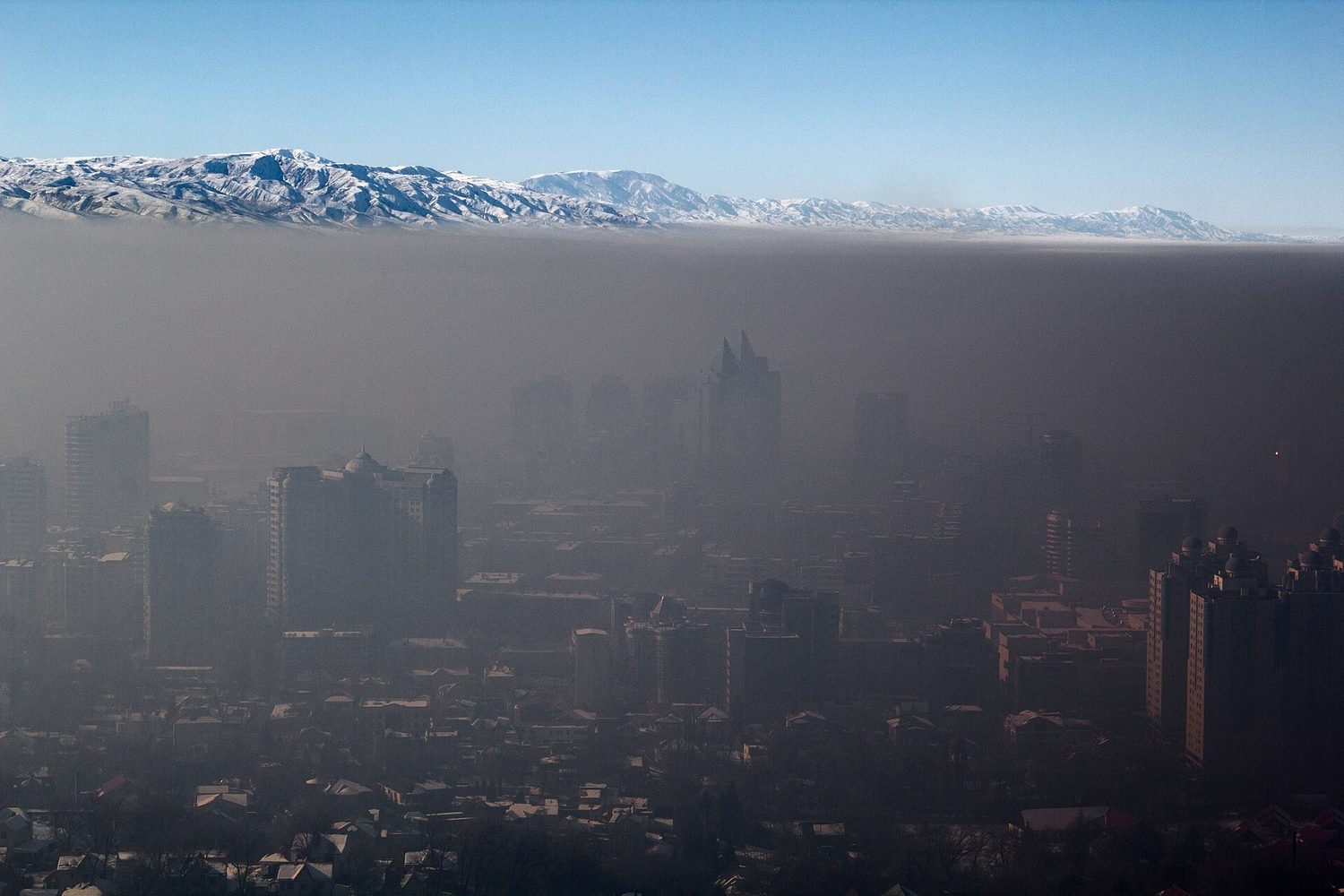
- Carbon monoxide (incomplete combustion): toxic, stops blood carrying oxygen. Sulfur dioxide (sulfur in fuels) and oxides of nitrogen (car engines): acid rain and breathing problems.
- Particulates (soot): lung disease. Many cities now measure these every hour.
Match each pollutant to its effect.
Dificuldade 2/5 · Moedas 140 + pequeno bônus na primeira conclusão hoje
Each has a different harm.
Worked example: what a catalytic converter does
A car's exhaust contains CO and NO.
- Inside the converter: hot gases pass over platinum and rhodium coated on a honeycomb with a large surface area.
- Reaction: 2CO + 2NO → 2CO₂ + N₂.
- Effect: two toxic gases become carbon dioxide and nitrogen — cleaner air, though CO₂ is still a greenhouse gas.

What do CO and NO become in a catalytic converter?
Dificuldade 1/5 · Moedas 100 + pequeno bônus na primeira conclusão hoje
2CO + 2NO → 2CO₂ + N₂.
The honeycomb gives the catalyst a large surface area.
Dificuldade 1/5 · Moedas 100 + pequeno bônus na primeira conclusão hoje
More contact with the gases.
Reducing the problems
- Climate: use renewable energy (wind, solar, hydroelectric), use less energy, plant trees, eat less meat to cut methane.
- Air quality: catalytic converters 催化转化器, low-sulfur fuels, and removing sulfur dioxide from power-station chimneys.
The greenhouse effect is not the same as the ozone hole. Global warming is caused by greenhouse gases trapping thermal energy; ozone loss is a different problem.
Global warming and the ozone hole are the same problem.
Dificuldade 1/5 · Moedas 100 + pequeno bônus na primeira conclusão hoje
Different causes.
CO₂ and methane absorb thermal energy and cause global warming. Combustion also releases CO, SO₂, NOₓ and particulates. Catalytic converters change CO and NO into CO₂ and N₂; renewable energy and fewer fossil fuels reduce both problems.
Explain how increasing carbon dioxide leads to a higher average temperature, in three or four sentences.
The mechanism.