Flowers and pollination
Introduzido| English | Significado |
|---|---|
| pollination/ˌpɒlɪˈneɪʃn/ | polinização |
| stamen/ˈsteɪmen/ | estame |
| anther/ˈænθə/ | anter |
| carpel/ˈkɑːpl/ | carpelo |
| stigma/ˈstɪɡmə/ | estigma |
| ovary/ˈəʊvəri/ | ovário |
| cross-pollination/krɒs ˌpɒlɪˈneɪʃn/ | polinização cruzada |
| self-pollination/self ˌpɒlɪˈneɪʃn/ | autopolinização |
How flowering plants reproduce
- A flower is a plant's reproductive organ, built to make seeds.
- It does this through pollination 传粉 and fertilisation.
Pollen is produced by the:
Dificuldade 1/5 · Moedas 100 + pequeno bônus na primeira conclusão hoje
The anther (part of the stamen) makes pollen.
The female part of the flower, made of stigma, style and ovary, is the ______.
Dificuldade 1/5 · Moedas 100 + pequeno bônus na primeira conclusão hoje
The carpel is the female reproductive part.
Parts of a flower
- Male parts (stamen 雄蕊): the anther 花药 (makes pollen) on a filament.
- Female parts (carpel 雌蕊): the stigma 柱头, style and ovary 子房 (holds ovules).
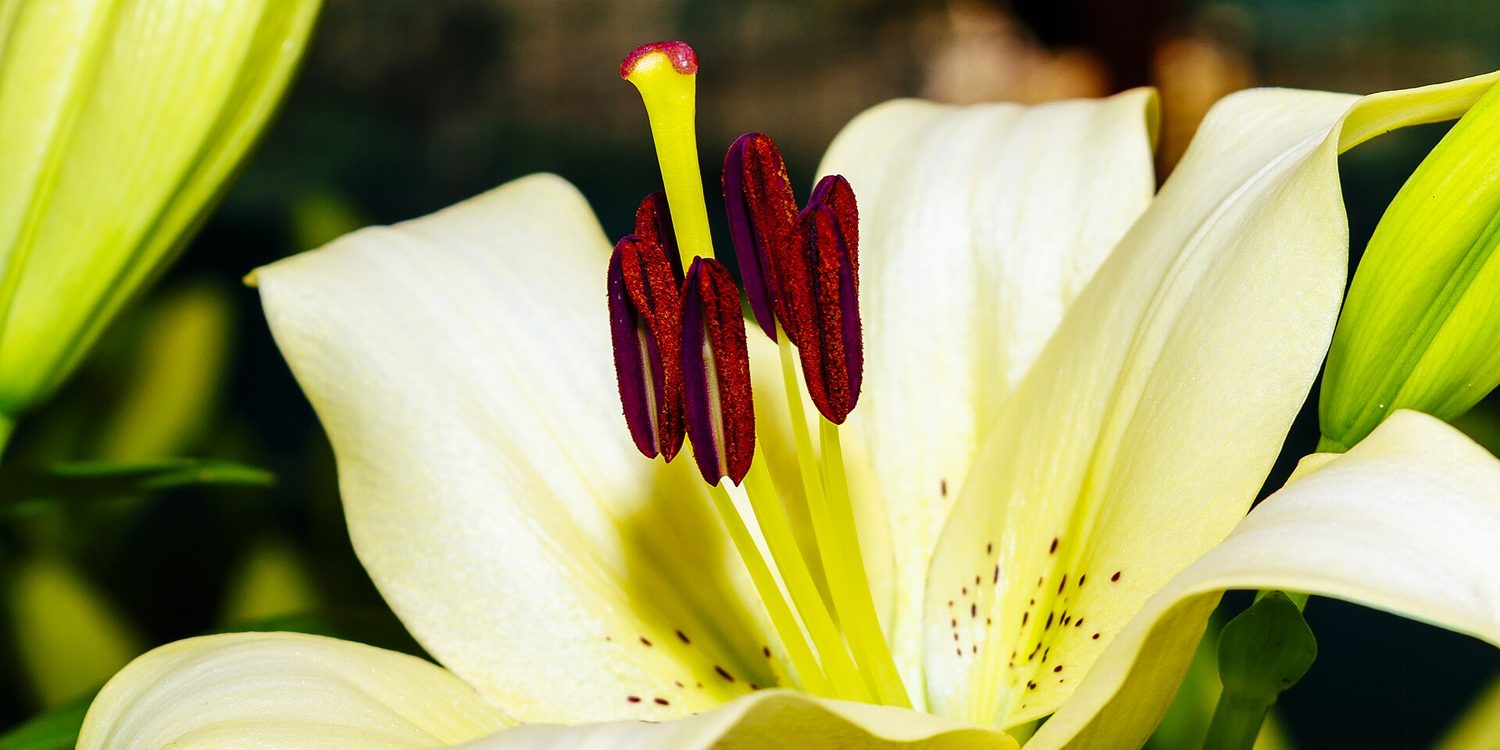
A real lily: the long stamens make pollen and the central stigma receives it
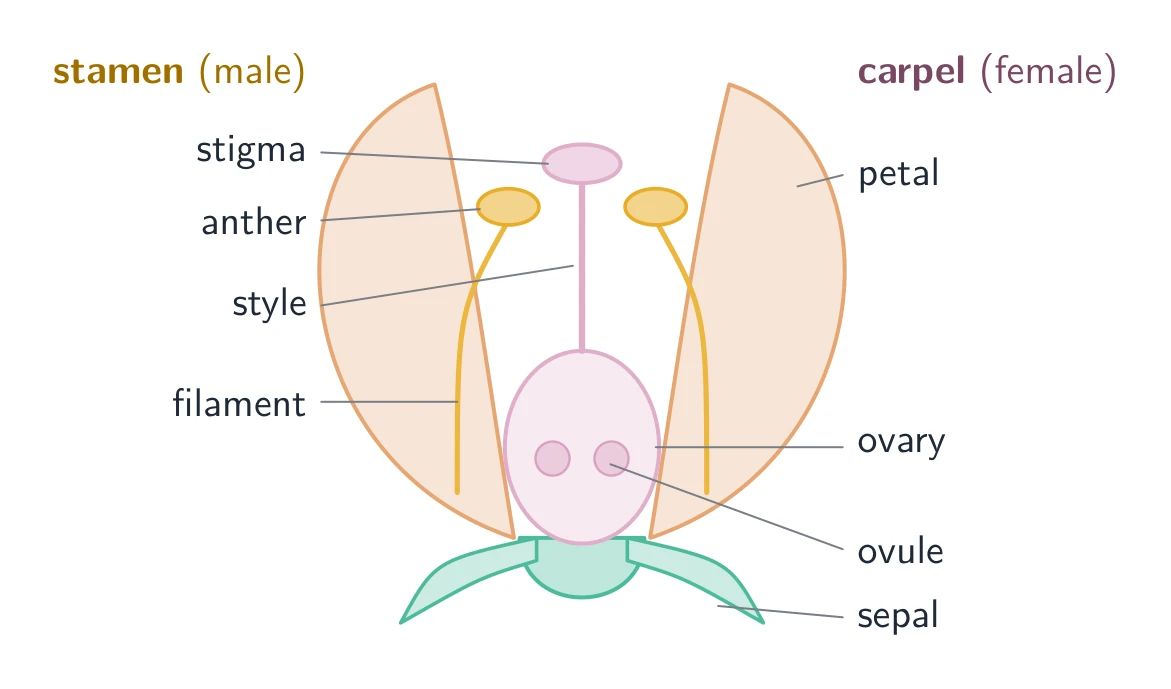
An insect-pollinated flower: the male stamens and the female carpel
Pollination and fertilisation
Pollination delivers pollen to the stigma; a pollen tube then carries the male nucleus to the egg.
Pollination is the transfer of pollen from an anther to a:
Dificuldade 1/5 · Moedas 100 + pequeno bônus na primeira conclusão hoje
Pollen moves from anther to stigma.
Insect-pollinated flowers are usually:
Dificuldade 1/5 · Moedas 100 + pequeno bônus na primeira conclusão hoje
Bright, scented flowers attract insects.
Pollination
- Pollination is the transfer of pollen from an anther to a stigma.
- Insect-pollinated flowers are bright and scented; wind-pollinated flowers have feathery stigmas and dangling anthers.
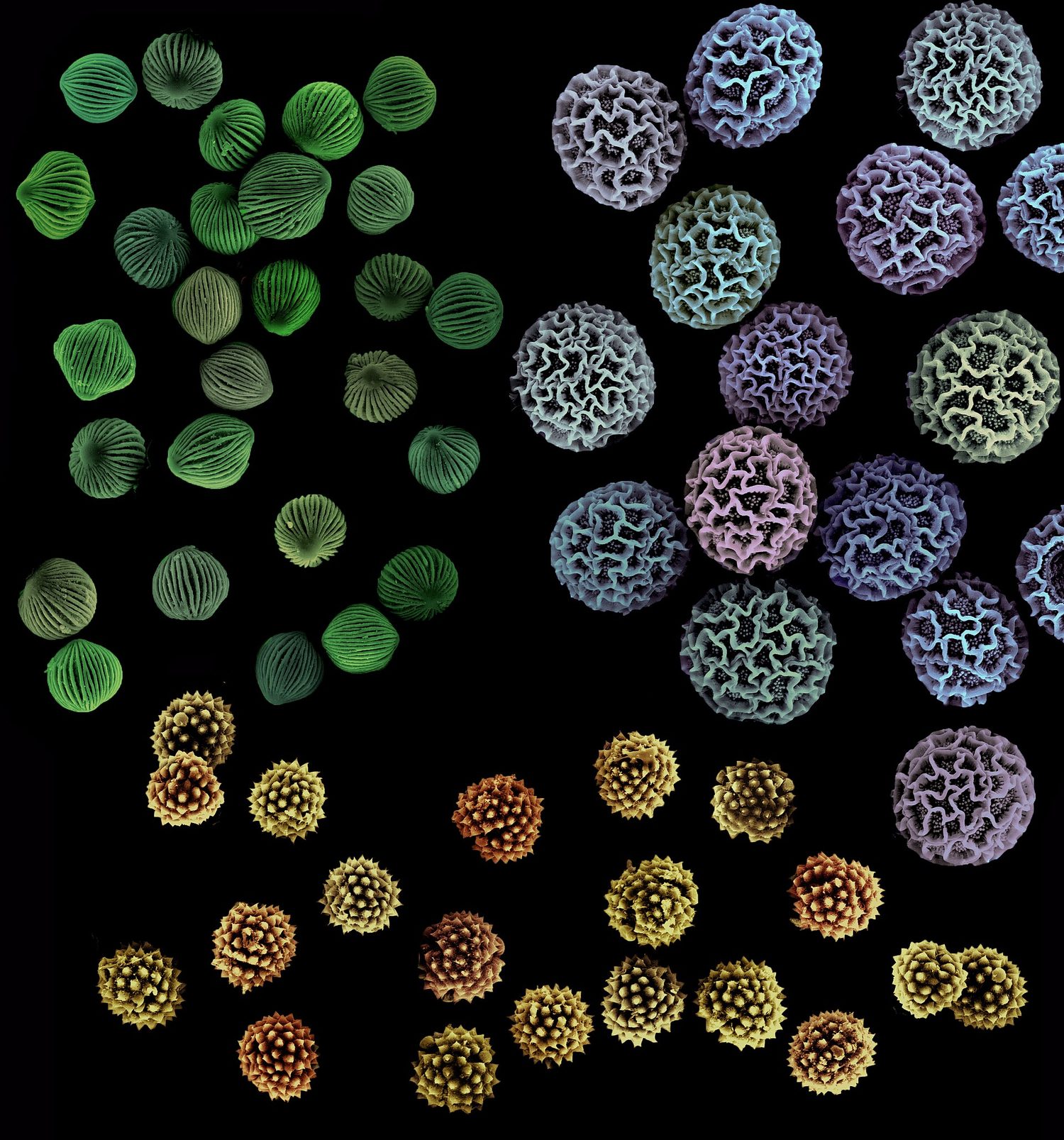
Pollen grains under an electron microscope: their spiky coats help them stick to insects
Self-pollination produces more variation than cross-pollination.
Dificuldade 1/5 · Moedas 100 + pequeno bônus na primeira conclusão hoje
False. Cross-pollination mixes genes from two plants, so it produces more variation than self-pollination.
Self vs cross pollination 异花传粉
- Self-pollination 自花传粉: pollen lands on the same plant — less variation.
- Cross-pollination: pollen reaches a different plant — more variation.
Worked example. A bee visits a bright, scented flower for nectar, brushing against the anther. It carries pollen to the next flower's stigma — insect cross-pollination, which mixes genes between plants.
Insect- and wind-pollinated flowers
| Feature | Insect-pollinated | Wind-pollinated (e.g. grass) |
|---|---|---|
| petals | large, brightly coloured | small or none, often green |
| scent and nectar | present | absent |
| anthers | inside the flower | hang outside on long filaments |
| stigma | small, sticky, inside | large and feathery, outside |
| pollen | fewer, larger, sticky or spiky | very many, small, light and smooth |
A flower has no petals, feathery stigmas outside the flower and huge amounts of light, smooth pollen. How is it pollinated?
Dificuldade 1/5 · Moedas 100 + pequeno bônus na primeira conclusão hoje
Feathery stigmas catch pollen from the air, and light smooth pollen is easily blown.
Why do wind-pollinated plants make so much pollen?
Dificuldade 1/5 · Moedas 100 + pequeno bônus na primeira conclusão hoje
Wind carries pollen randomly, so a lot is wasted; making large amounts makes pollination more likely.
You've got it
- stamen (anther + filament) is male; carpel (stigma, style, ovary) is female
- pollination = pollen moved from anther to stigma (by insects or wind)
- cross-pollination gives more variation than self-pollination
Write from pollen on a stigma
- Pollen from one plant lands on the stigma of another.
- An insect carried the pollen.
What is this transfer called, and why is it useful?
The pollen still has to grow a tube before fertilisation.
Pollination is the transfer of pollen to where?
Dificuldade 1/5 · Moedas 100 + pequeno bônus na primeira conclusão hoje
Pollen arrives on the stigma.