The significance of mitosis
Introduzido| English | Significado |
|---|---|
| mitosis/maɪˈtəʊsɪs/ | mitose |
| genetically identical/dʒɪˈnetɪkli aɪˈdentɪkl/ | geneticamente idêntico |
| tumour/ˈtjuːmə/ | tumor |
| asexual reproduction/eɪˈsekʃuːəl rɪprəˈdʌkʃn/ | reprodução assexuada |
| stem cell/stem sel/ | célula-tronco |
| unspecialised/ʌnˈspeʃəlaɪzd/ | indiferenciado |
| differentiate/ˌdɪfəˈrenʃɪeɪt/ | diferenciar |
Why mitosis 有丝分裂 matters
- Mitosis is nuclear division that makes two genetically identical 遗传上相同 daughter cells.
- Identical copies are exactly what a body needs to grow and repair itself.
- But the same process, out of control, causes tumours 肿瘤.
Por que a mitose importa
Classify real cases by the role mitosis is playing.
The two daughter cells produced by mitosis are:
Dificuldade 1/5 · Moedas 100 + pequeno bônus na primeira conclusão hoje
Mitosis produces genetically identical cells — they carry exactly the same genes as the parent.
Mitosis produces genetically identical daughter cells, which is why it is used for growth and repair.
Dificuldade 1/5 · Moedas 100 + pequeno bônus na primeira conclusão hoje
Identical copies are exactly what growth, repair and asexual reproduction need.
What mitosis is for
- growth of a multicellular organism (more cells).
- replacement of dead or damaged cells.
- repair of tissues by making new cells.
- asexual reproduction 无性生殖 — one parent producing identical offspring.
Each new cell carries exactly the same genes as the parent.
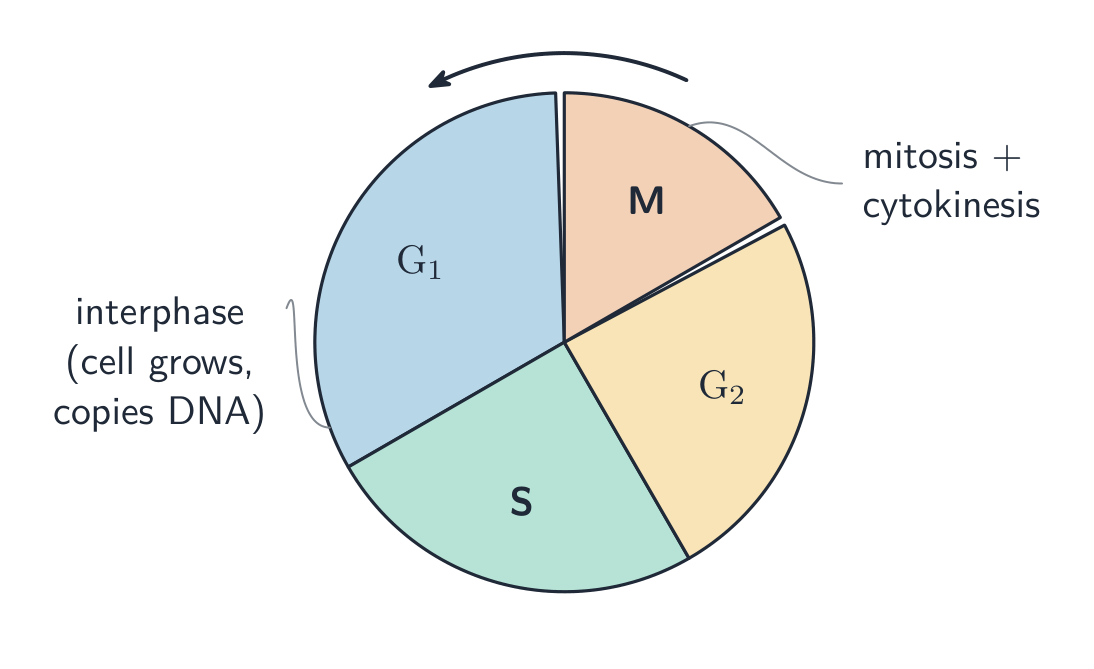
The mitotic cell cycle: interphase then mitosis and cytokinesis
Select todos the roles of mitosis.
Dificuldade 2/5 · Moedas 140 + pequeno bônus na primeira conclusão hoje
Mitosis gives identical cells for growth, repair/replacement and asexual reproduction. Varied gametes come from meiosis; ATP comes from respiration.
Match each role of mitosis to an example.
Dificuldade 2/5 · Moedas 140 + pequeno bônus na primeira conclusão hoje
All of these need genetically identical cells, so all use mitosis.
Stem cells 干细胞
- A stem cell is an unspecialised 未分化 cell that can:
- keep dividing by mitosis, and
- differentiate 分化 (change) into specialised cell types.
- They are the source of new cells for replacing losses and repairing tissues.
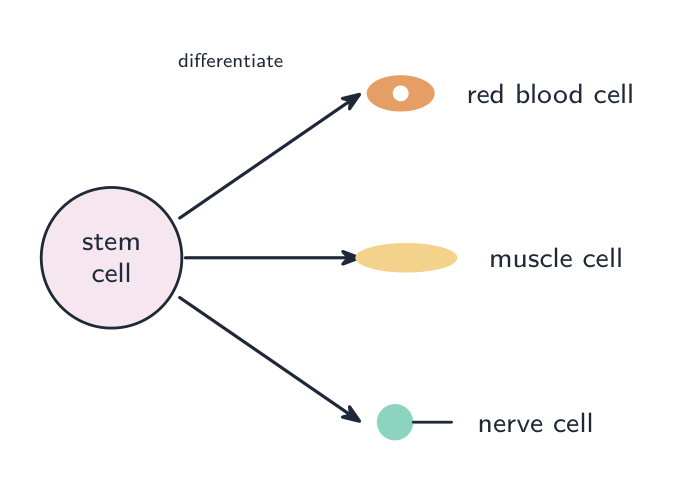
A stem cell can keep dividing or differentiate into many specialised cell types
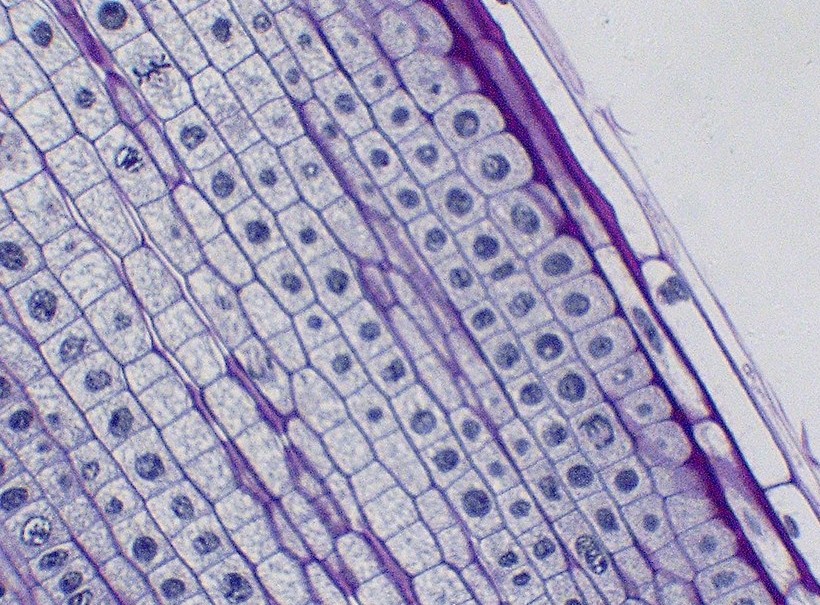
A stained onion root tip: several cells are caught dividing
An unspecialised cell that can keep dividing and differentiate into other cell types is a ______ cell.
Dificuldade 1/5 · Moedas 100 + pequeno bônus na primeira conclusão hoje
Stem cells are unspecialised; they divide by mitosis and can differentiate into specialised cells.
When control is lost
- The cell cycle is normally tightly controlled, so cells divide only when needed.
- If that control is lost, a cell divides again and again without stopping.
- This uncontrolled division produces a lump of cells — a tumour.
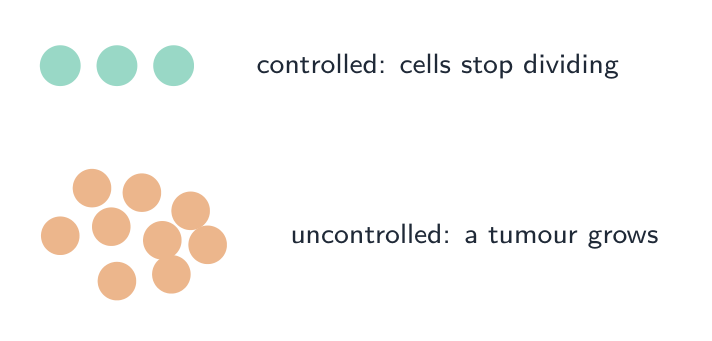
When cell-cycle control is lost, a cell divides over and over, building up into a tumour
A tumour forms when:
Dificuldade 1/5 · Moedas 100 + pequeno bônus na primeira conclusão hoje
Losing cell-cycle control lets cells divide without stopping, building up into a tumour.
Worked example: from one cell to many
A fertilised egg divides by mitosis every 12 hours, and every new cell keeps dividing. How many cells are there after 3 days, and why are they all genetically identical?
- 3 days = 72 hours = $72\div12=6$ divisions. The number doubles each time: $2^6=$ 64 cells.
- Before each division the DNA is copied exactly, and in mitosis each daughter cell receives one chromatid of every chromosome. So all 64 cells carry the same genes; they become different later by differentiation, switching on different genes.
One bacterium divides every 20 minutes. How many cells are there after 2 hours?
Dificuldade 2/5 · Moedas 140 + pequeno bônus na primeira conclusão hoje
120 ÷ 20 = 6 divisions; 2⁶ = 64.
Which does NOT rely on mitosis?
Dificuldade 1/5 · Moedas 100 + pequeno bônus na primeira conclusão hoje
Gametes are made by meiosis, which halves the chromosome number.
You've got it
- mitosis → two genetically identical daughter cells (same genes)
- used for growth, replacement, repair, asexual reproduction
- stem cell = unspecialised; divides by mitosis and differentiates
- losing cell-cycle control → uncontrolled division → a tumour
Write from this case
- A zygote divides many times to form an embryo.
- The divisions are mitotic.
How do the daughter cells compare genetically?
Mitosis copies the genome and separates the copies equally.
What is true of mitotic daughter cells?
Dificuldade 1/5 · Moedas 100 + pequeno bônus na primeira conclusão hoje
Mitosis keeps the same genetic information.