Firms and production
Introduced| English | Meaning |
|---|---|
| productivity/ˌprɒdəkˈtɪvɪti/ | Output produced per unit of input over a given period. |
| production/prəˈdʌkʃn/ | The process of combining resources to create goods or provide services. |
| capital-intensive/ˈkæpɪtl ɪnˈtensɪv/ | Using a relatively large amount of machinery, equipment or other capital compared with labour. |
| labour-intensive/ˈleɪbə ɪnˈtensɪv/ | Using a relatively large amount of labour compared with machinery and other capital. |
| training/ˈtreɪnɪŋ/ | Organised learning and practice intended to develop particular skills or knowledge. |
| technology/tekˈnɒlədʒi/ | The application of knowledge, methods and tools to practical tasks. |
| average cost/ˈævrɪdʒ kɒst/ | Total production cost divided by the quantity produced. |
| competitiveness/kəmˈpetɪtɪvnəs/ | The ability of a business or economy to attract buyers and succeed relative to alternatives. |
Making more from the same
- Two factories with identical machines can turn out very different amounts. The difference is productivity 生产率.
- Raising it is how firms — and whole economies — get richer.
Factors of production lab
Sort real resources by the factor of production they represent.
Productivity is best defined as:
Difficulty 1/5 · 100 coins + a small bonus on first completion today
Productivity measures efficiency — output per worker (or per machine).
8 workers produce 240 units a day. What is productivity (units per worker)?
Difficulty 2/5 · 140 coins + a small bonus on first completion today
240 / 8 = 30 units per worker.
Total output produced is called ______.
Difficulty 1/5 · 100 coins + a small bonus on first completion today
Production is the total; productivity is per worker.
Production 生产 vs productivity
- Production = the total amount produced.
- Productivity = output per worker (or per machine) — efficiency, not just quantity.
Worked example. A team of 5 makes 100 units a day → productivity is 20 units per worker. Add a machine so they make 150 → productivity rises to 30, with the same 5 workers.
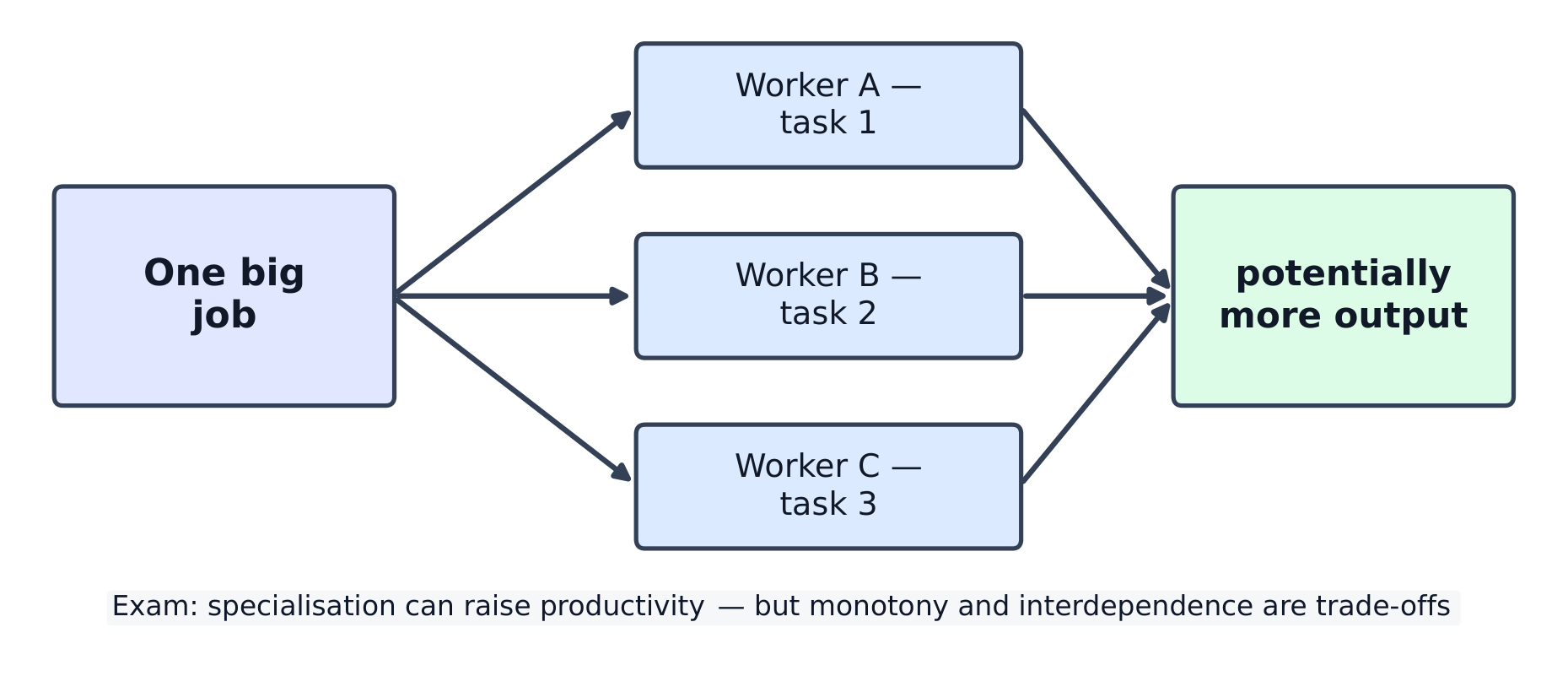
The division of labour raises productivity — each worker specialises in one task
An oil refinery that runs mainly on machinery is:
Difficulty 1/5 · 100 coins + a small bonus on first completion today
It relies mainly on capital (machines), not labour.
Labour- vs capital-intensive 资本密集型
- Labour-intensive 劳动密集型: production relies mainly on workers (a hand car-wash, a restaurant).
- Capital-intensive: production relies mainly on machines (an oil refinery, car assembly).
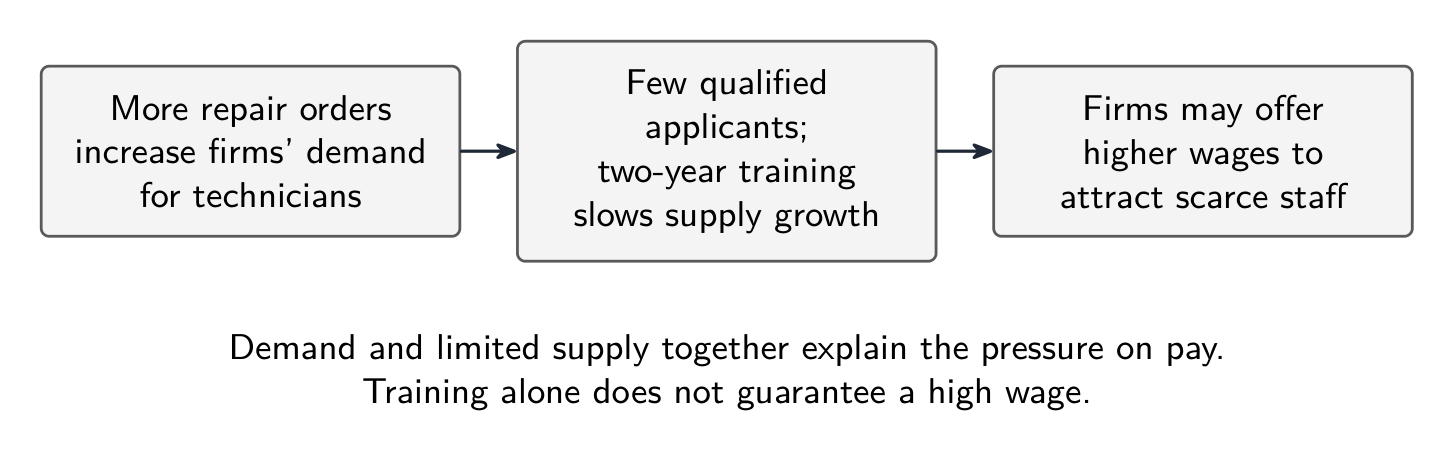
Wages depend on skills, the difficulty of the job, and demand
Which raise productivity? (Select all that apply.)
Difficulty 2/5 · 140 coins + a small bonus on first completion today
More workers raise production, not necessarily output per worker.
Raising productivity
- Better training 培训, newer technology 技术, and improved organisation all raise output per worker.
- Higher productivity lowers average cost 平均成本 and boosts competitiveness 竞争力.
Production rising ≠ productivity rising. Hiring more workers raises production but may leave output-per-worker unchanged. Productivity is about doing more with the same.
You've got it
- production = total output; productivity = output per worker
- labour-intensive uses mostly workers; capital-intensive uses mostly machines
- training, technology and organisation raise productivity → lower cost