| English | 의미 |
|---|---|
| productivity/ˌprɒdəkˈtɪvɪti/ | 생산성 |
| production/prəˈdʌkʃn/ | 생산 |
| capital-intensive/ˈkæpɪtl ɪnˈtensɪv/ | 자본 집약적 |
| labour-intensive/ˈleɪbə ɪnˈtensɪv/ | 노동 집약적 |
| training/ˈtreɪnɪŋ/ | 훈련 |
| technology/tekˈnɒlədʒi/ | 기술 |
| average cost/ˈævrɪdʒ kɒst/ | 평균 비용 |
| competitiveness/kəmˈpetɪtɪvnəs/ | 경쟁력 |
Making more from the same
- Two factories with identical machines can turn out very different amounts. The difference is productivity 生产率.
- Raising it is how firms — and whole economies — get richer.
생산 요소 실험실
실물 자원을 그 생산 요소 유형에 따라 분류하십시오.
생산성을 가장 잘 정의하는 것은:
난이도 1/5 · 100 코인 + 오늘 첫 완료 시 소액 보너스
생산성은 효율성을 측정하며 — 근로자당(또는 기계당) 산출량을 의미한다.
8 명의 근로자가 하루에 240 단위를 생산한다. 생산성(근로자당 단위 수)은 얼마인가?
난이도 2/5 · 140 코인 + 오늘 첫 완료 시 소액 보너스
240 / 8 = 30 단위/근로자
총생산량으로 불리는 것은 ______이다.
난이도 1/5 · 100 코인 + 오늘 첫 완료 시 소액 보너스
총생산은 전체 규모이며, 생산성은 근로자당 수치이다.
Production 生产 vs productivity
- Production = the total amount produced.
- Productivity = output per worker (or per machine) — efficiency, not just quantity.
Worked example. A team of 5 makes 100 units a day → productivity is 20 units per worker. Add a machine so they make 150 → productivity rises to 30, with the same 5 workers.
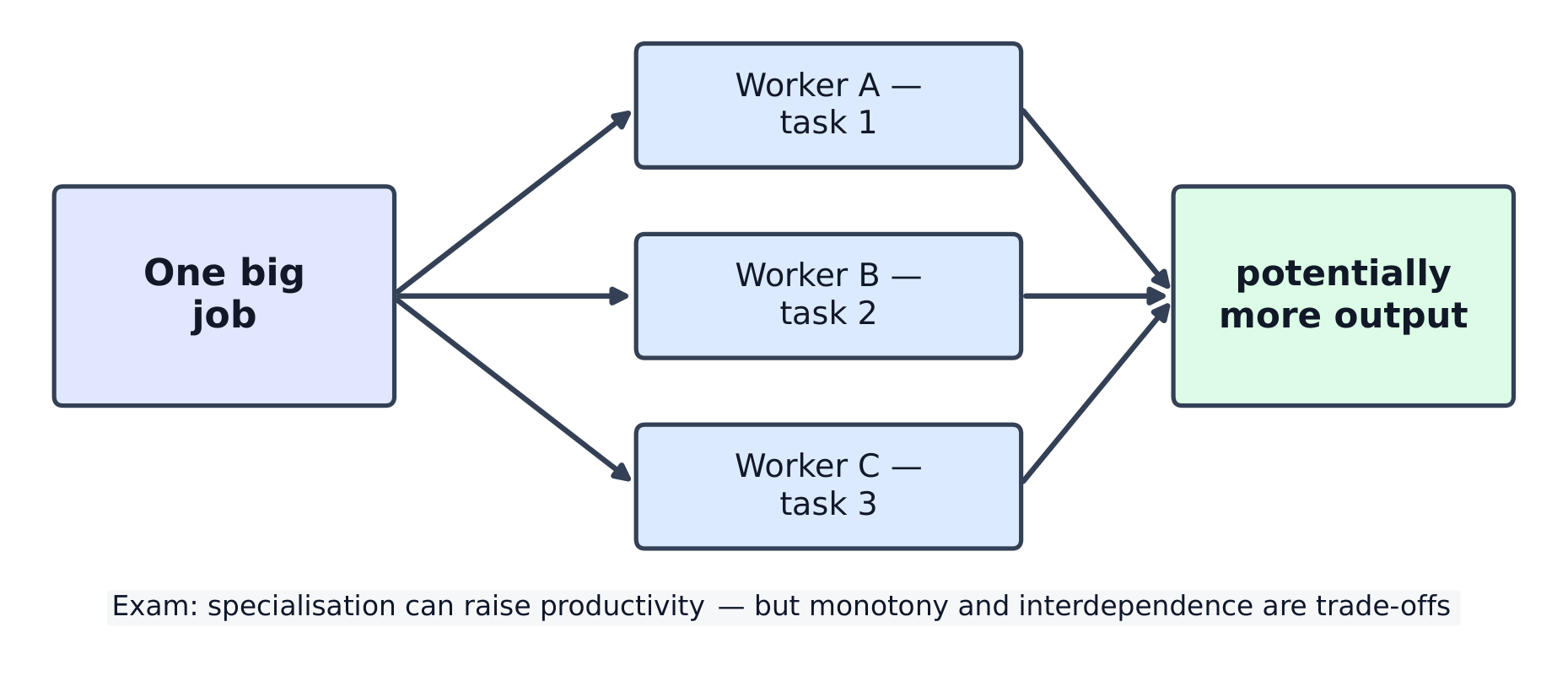
The division of labour raises productivity — each worker specialises in one task
기계 위주로 운영하는 석유 정련소는:
난이도 1/5 · 100 코인 + 오늘 첫 완료 시 소액 보너스
노동보다 자본(기계)에 주로 의존한다.
Labour- vs capital-intensive 资本密集型
- Labour-intensive 劳动密集型: production relies mainly on workers (a hand car-wash, a restaurant).
- Capital-intensive: production relies mainly on machines (an oil refinery, car assembly).
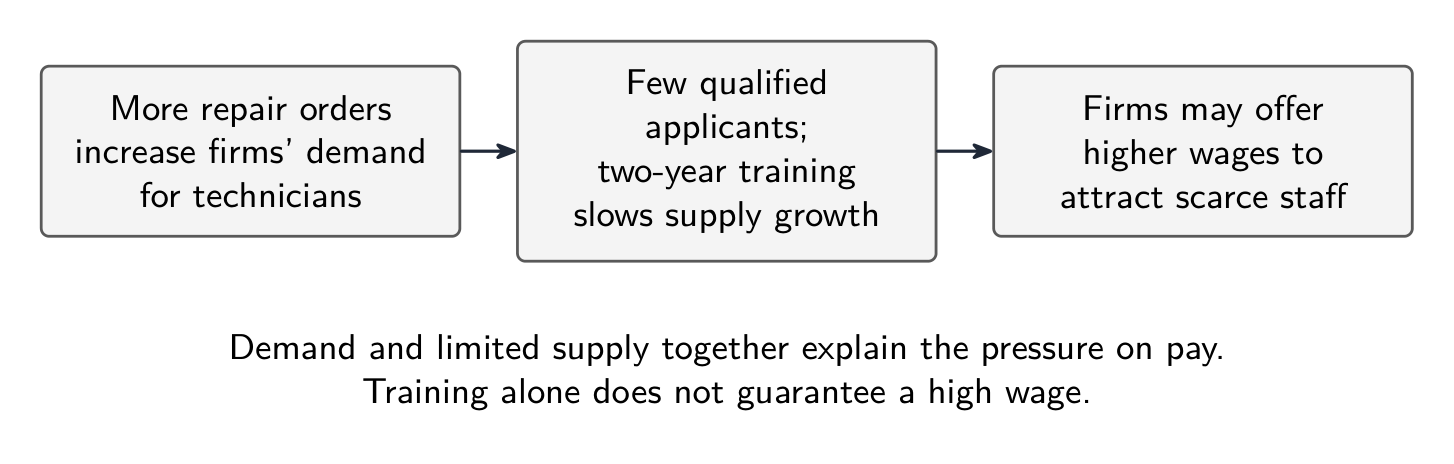
Wages depend on skills, the difficulty of the job, and demand
다음 중 생산성을 높이는 요인은 무엇인가? (모두 선택하시오.)
난이도 2/5 · 140 코인 + 오늘 첫 완료 시 소액 보너스
근로자 수 증가는 총 생산량은 늘리지만, 반드시 근로자당 산출량을 높이는 것은 아니다.
Raising productivity
- Better training 培训, newer technology 技术, and improved organisation all raise output per worker.
- Higher productivity lowers average cost 平均成本 and boosts competitiveness 竞争力.
Production rising ≠ productivity rising. Hiring more workers raises production but may leave output-per-worker unchanged. Productivity is about doing more with the same.
You've got it
- production = total output; productivity = output per worker
- labour-intensive uses mostly workers; capital-intensive uses mostly machines
- training, technology and organisation raise productivity → lower cost