| English | 의미 |
|---|---|
| market research/ˈmɑːkɪt rɪˈsɜːtʃ/ | 시장 조사 |
| secondary research/ˈsekəndəri rɪˈsɜːtʃ/ | 이차 조사 |
| primary research/ˈpraɪməri rɪˈsɜːtʃ/ | 일차 조사 |
| questionnaires/ˌkwestʃəˈneəz/ | 설문지 |
| quantitative/ˈkwɒntɪteɪtɪv/ | 정량적 |
| qualitative/ˈkwɒlɪteɪtɪv/ | 정성적 |
| sample/ˈsæmpl/ | 표본 |
| representative/ˌreprɪˈzentətɪv/ | 대표적인 |
| biased/ˈbaɪəst/ | 편향된 |
Asking before you act
- Launching a product on a guess is risky. Smart businesses find out what customers want first.
- That is market research 市场调研.
시장 조사 사이클
기업이 고객 데이터를 마케팅 의사결정으로 전환하는 과정을 따라보세요.
신규 고객 설문조사를 수행하는 것은:
난이도 1/5 · 100 코인 + 오늘 첫 완료 시 소액 보너스
일차 연구는 새로운 일차 데이터를 수집한다.
인터넷의 기존 데이터를 사용하는 것은:
난이도 1/5 · 100 코인 + 오늘 첫 완료 시 소액 보너스
이차 연구는 이미 존재하는 데이터를 사용한다.
Primary vs secondary research 二手调研
- Primary research 一手调研: new data collected first-hand (surveys, interviews, questionnaires 问卷). Specific but costly.
- Secondary research: existing data (reports, internet, sales records). Cheap and fast, but not tailored.
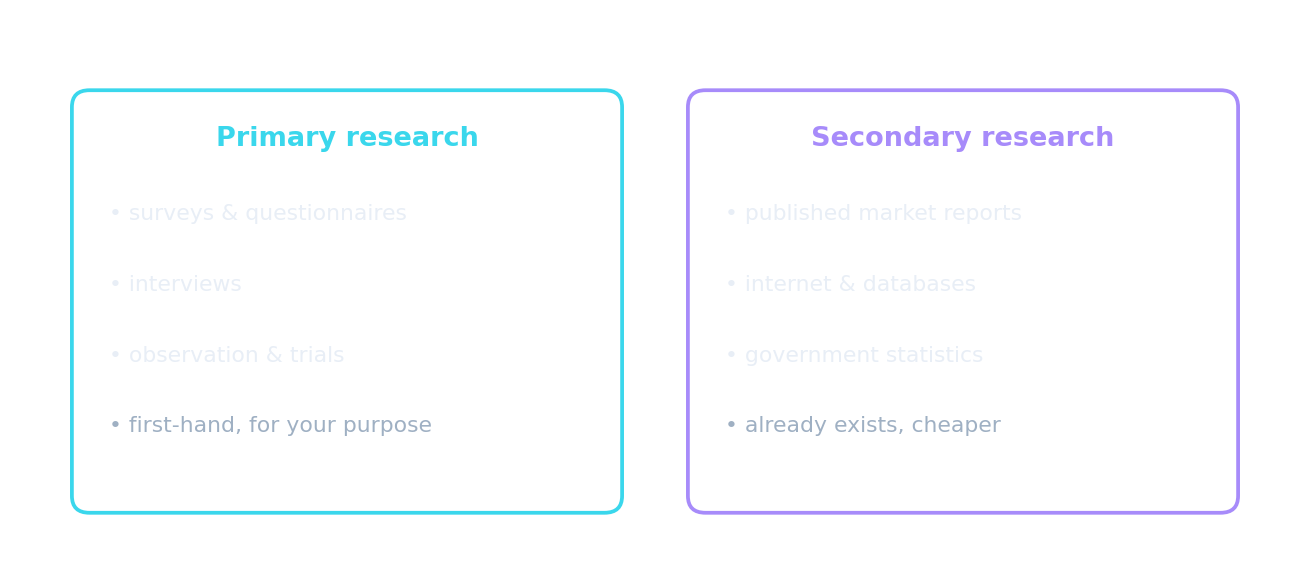
Market research: primary (first-hand) versus secondary (already exists)
고객이 왜 그런 생각을 하는지 탐구하는 연구는:
난이도 1/5 · 100 코인 + 오늘 첫 완료 시 소액 보너스
정성적 연구는 의견과 이유를 포착합니다.
Quantitative 定量 vs qualitative 定性
- Quantitative: numbers — how many, how much.
- Qualitative: opinions and reasons — why customers behave as they do.

Primary research collects new data; secondary uses existing data
작거나 편향된 표본은 오해를 부를 수 있는 연구 결과를 줄 수 있습니다.
난이도 1/5 · 100 코인 + 오늘 첫 완료 시 소액 보너스
표본의 품질은 신뢰도에 영향을 미칩니다.
전체 시장을 대표하기 위해 선택된 작은 집단은 ______입니다.
난이도 1/5 · 100 코인 + 오늘 첫 완료 시 소액 보너스
표본 추출은 모든 사람에게 질문하지 않는 것을 의미합니다.
Sampling 样本 and reliability
- A sample is a small group chosen to represent the whole market.
- A larger, more representative 有代表性的 sample gives more reliable results — but costs more.
Bad research misleads. If a sample is too small or not representative, or questions are biased 有偏的, the results can point a business the wrong way. Quality of research matters, not just quantity.
You've got it
- primary research = new first-hand data; secondary = existing data
- quantitative = numbers; qualitative = opinions and reasons
- a representative sample gives reliable results — design matters