
범위 및 전제 조건
ACT 프레임워크, 2월 2026 개정판. 여기서의 교실 사례는 공식 ACT 형식이 아니다.
- 데이터 및 그래프적 관계 해석하기
- 실험 방법 및 변수 평가하기
- 증거에 기반하여 과학적 주장과 예측을 비교하기
선행 지식: 독립 변수/종속 변수; 통제 변수; 설계 제약 조건.
방법 설명 및 선택
독립 변수와 종속 변수, 축 및 단위를 식별하시오. 제공된 데이터 범위 내에서만 보간하시오.
시험 간에 어떤 요인이 변하고 어떤 요인이 통제되었는지 찾으십시오. 반복 실험은 재현 가능성을 검증합니다.
상반되는 관점에 대해 각 모델마다 하나의 예측을 쓰고, 이를 구분할 수 있는 관측을 찾으십시오.
제공된 과학적 맥락을 사용하십시오. 많은 질문이 전문가의 사실 회상보다는 증거를 위한 추론을 요구합니다.
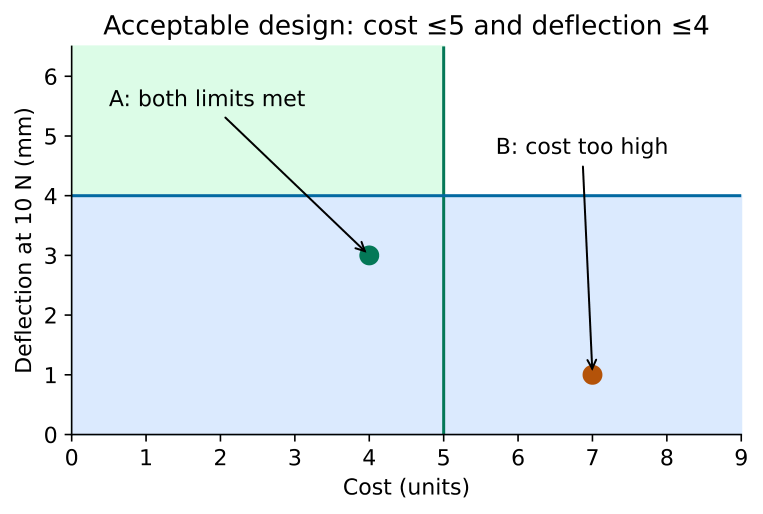
통제 비교에서는 제안된 원인을 변경하고 대안 원인은 고정합니다. 공학적 설계는 명시된 모든 제약 조건을 만족해야 합니다. 반복은 변동성을 추정할 뿐이며, 소재와 두께를 동시에 변경한 것을 되돌릴 수는 없습니다.
해설 예시. 시험 1에서는 산 10 mL를 사용하여 소요 시간이 40 s입니다. 시험 2에서는 같은 온도에서 산 20 mL를 사용하여 소요 시간이 25 s입니다. 여기서는 산의 양이 많을수록 시간이 짧습니다. 더 높은 온도의 세 번째 시험에서는 산 용적 효과를 분리할 수 없습니다.
연습 자료
원본 가상의 연구 요약 — 냉각 슬리브
A laboratory team tests sleeves intended to reduce a small sensor's temperature during operation. All sensors start at 22°C. Temperature is measured after ten minutes of use with the same power setting, room conditions and measuring instrument. Sleeve A costs 4 units, B costs 7 units, and an unsleeved sensor is the control. The design brief requires a cost no greater than 5 units and a final temperature no greater than 35°C. Lower temperature alone is not the only design criterion.
Experiment 1 uses identical sensors and records three independent trials per sleeve. Final temperatures in °C are: control 41,42,43; A 33,34,35; B 30,31,32. The team resets the starting temperature and checks the sensor charge before each trial. They report the means and the full observed ranges. The ranges describe these trials, not every future result. The team has not yet measured sleeve durability.
Experiment 2 investigates thickness for material A. Each sleeve has the same length and fit; thicknesses are 1,2,3 mm. Mean final temperatures are 38,34,32°C respectively. All other stated conditions match Experiment 1. Changing thickness also changes material quantity, so a future design review must measure costs instead of assuming they stay at 4 units. A student proposes testing a 3-mm sleeve in material B against a 1-mm sleeve in material A to identify thickness's effect. This comparison would change two factors at once.
Two original models explain the observed temperature pattern. Model P says final temperature depends only on thickness, regardless of material. Model Q says both thickness and material matter; at equal thickness it predicts that material B produces a lower final temperature than A under the same conditions. Both models predict lower final temperatures as thickness rises over the tested 1–3 mm interval. A decreasing trend alone therefore cannot separate them.
Experiment 3 tests new A and B sleeves, each 2 mm thick, in matched conditions. Mean final temperatures are A 34°C and B 31°C. The measuring instrument's stated resolution is 0.1°C, and the team checks its calibration with a reference. Repeated trials would still be needed to characterise variability and rule out other differences in manufacture. The result conflicts with P's material-independence prediction and is consistent with Q's direction; it is not proof that Q is the only possible explanation.
A separate time series for one sensor with sleeve A records temperatures 22,28,32,34°C at 0,2,4,6 minutes. These observations show warming with successively smaller two-minute increases. No measurements beyond six minutes are supplied in this series. A proposal to continue the first interval's slope to twelve minutes is a model assumption that later measurements may contradict, not a reading from the table.
추론 연습
이 개요는 해당 스킬을 소개합니다. 각 스킬에는 별도의 핸드아웃과 연습지가 마련되어 있습니다: 26, 27 및 28. 이 순서대로 진행하십시오.
연습 1
실험 1에서 대조군, A, B에 대한 평균과 관측 범위를 찾으십시오. 이 시험에서 두 설계 제약 조건을 모두 만족하는 슬리브은 무엇입니까?
Reasoning. Control mean 42°C, range 41–43°C; A mean 34°C, range 33–35°C; B mean 31°C, range 30–32°C. A costs 4≤5 and reaches at most 35°C, so it meets both in these trials. B's lower temperatures do not overcome cost 7>5. This does not guarantee future durability or temperatures.
연습 2
실험 2에서 변경된 변수와 측정된 변수를 식별하십시오. 왜 학생의 A 대 B 제안은 두께만 분리할 수 없습니까?
추론. 두께를 변경하고 최종 온도를 측정합니다. 실험 2에서는 재질, 길이, 맞음새, 초기 온도 및 작동 조건을 통제했습니다. 제안서는 재질과 두께를 동시에 변경하므로, 두 변수 중 어느 것이나 차이를 설명할 수 있으며 반복 실험만으로는 이러한 혼란 요인을 제거할 수 없습니다.
연습 3
이전에는 측정되지 않았던 요구사항을 충족하면서 공정한 온도 비교를 유지하는 3-mm A 설계에 대한 후속 연구를 제안하십시오.
추론. 실제 비용과 내구성을 측정하고, 동일한 재질, 길이, 맞음새, 전력, 초기 온도 및 시간으로 매칭된 최종 온도 테스트를 반복해야 합니다. 무거운 슬리브의 비용이 동일하게 유지될 것으로 가정할 수 없습니다. 선택하기 전에 수용 한계를 명시해야 하며, 냉각 결과만으로 결정해서는 안 됩니다.
한계 및 향후 활용법
개인 ACT 등록 시 과학 과목은 선택 사항이지만, 학교 계약이나 지원 대상 기관에서는 필수로 요구할 수 있습니다. 향상된 EMR 복합 점수(Composite)에는 포함되지 않습니다.
이것들은 이 과정을 위해 작성된 원본 연습 문제이지 공식 시험 문제가 아닙니다.