
Scope and prerequisites
IB Language B first assessment 2020; English B focus. This supplementary reference covers only the outcomes listed below. Your school's text choices, the full guide's procedures and any required live or recorded performance are handled separately.
- Describe and interpret a stimulus 提示材料 with a cultural connection 文化联系
- Respond to questions and develop an interaction 互动 in English
Prerequisites: Describe visible facts; qualify cultural links; answer follow-ups with reasons.
Explain and choose the method
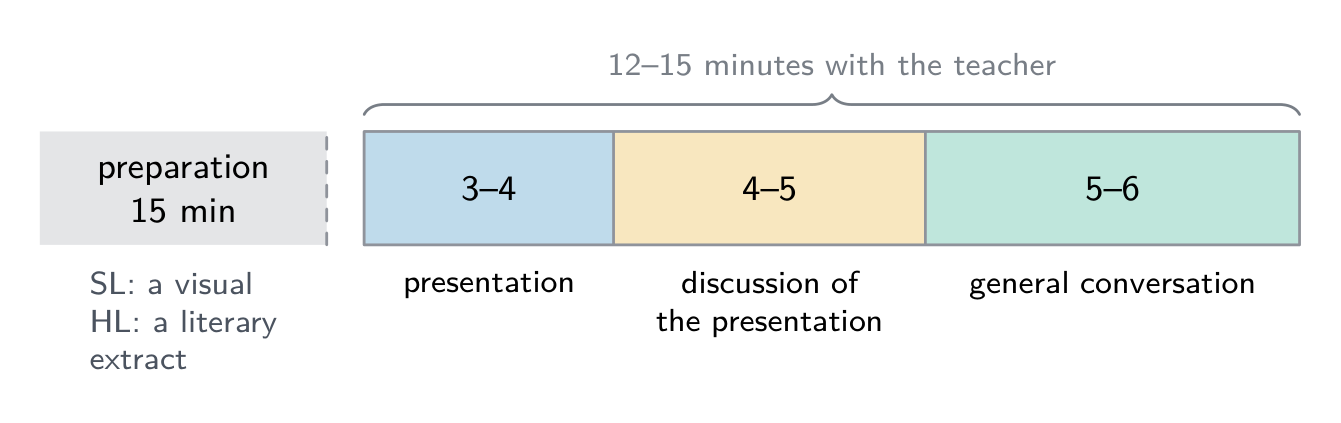
At SL, the oral uses a visual stimulus linked to course themes. At HL, it begins with a literary extract from a studied work.
Present clearly, then respond to the teacher's questions with relevant detail 细节, reasons and examples.
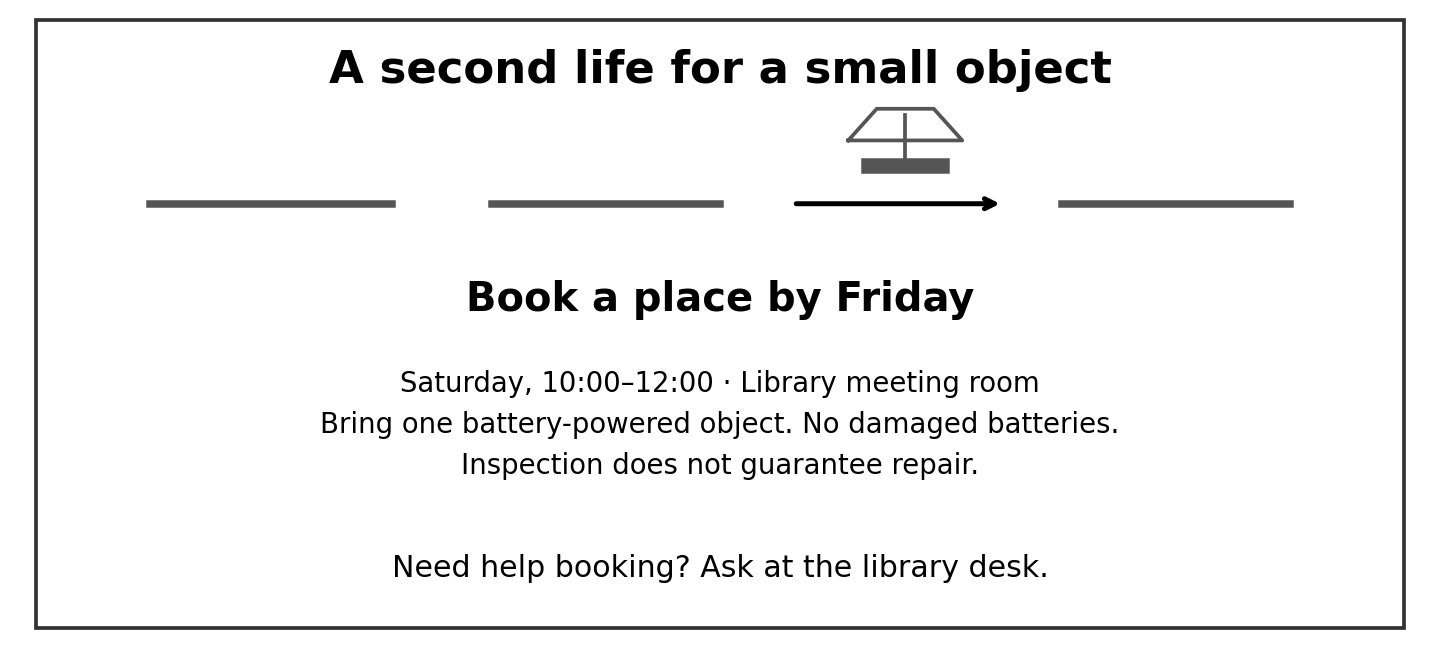
At SL, use the supplied original repair notice image for a thematic rehearsal 排练 about community access; it is not an official oral picture. At HL, begin an extract rehearsal from the original literary text on sheet 4; do not substitute an SL picture for HL literature. Describe or interpret the actual stimulus, give a reasoned theme connection, then respond to a follow-up. A cultural connection needs a specific practice you have studied; no image proves nationality or a whole culture's habits.
Worked example. For a visual, describe people sharing dishes, link this to a particular cultural practice you have studied and qualify the comparison. If asked about differences, explain one specific experience rather than listing stereotypes.
Practice material
Original non-literary stimulus — Library repair session notice. Use the actual supplied notice image with this text.
Large heading: “A second life for a small object”. Main visual: a broken line becomes an unbroken line beside a lamp symbol. Prominent instruction: “Book a place by Friday”. Smaller text: “Saturday, 10:00–12:00. Library meeting room. Bring one battery-powered object. No damaged batteries. Inspection does not guarantee repair.” Footer: “Need help booking? Ask at the library desk.”
The notice is an original classroom design, not a real event announcement. Its audience is local library users who may have a small broken object. Its purpose is to encourage a booking while communicating limits. A reader's actual response has not been measured.
Practice with reasoning
Practice 1
SL — describe two visible choices in the notice and connect them to community access. HL — use the literary extract on sheet 4 to explain the character's situation. Label your route clearly.
Reasoning. SL model: “The notice has a large repair heading and a smaller offer of booking help at the desk. This could make a community activity accessible to people who need assistance, although the small footer may be less noticeable.” HL model: “Leila does the shop work, but visitors still thank her father's name. Her new card asks them to recognise her without removing the old plate.” These are stimulus-grounded rehearsals, not assessed oral certification.
Practice 2
Answer “What would you change, and why?” Then answer “What is one limit on your suggestion?”
Reasoning. SL: “I would make the desk-help line more prominent because readers may need that route. I would test whether readers notice it, because prominence alone does not guarantee use.” HL: “I would ask how visitors respond later to Leila's card. The short extract does not reveal every future response, so I cannot assume permanent recognition.” Other relevant answers with reasons and limits are valid.
Practice 3
Add a connection to a specific studied English-speaking community practice. What must be supplied before you can make that connection responsibly?
Reasoning. Name the actual practice and place from reliable class material, explain one evidenced similarity 相似 or difference, and avoid claiming everyone participates. The current original stimuli provide no verified national setting, so a specific cultural factual claim remains pending that source. Live teacher interaction and recording remain separate requirements.
Limits and next use
HL requires two literary works and extract-based discussion; an SL picture lesson alone does not cover that requirement. The teacher conducts and records the actual oral; self-written answers cannot substitute for interaction.
These are original practice tasks written for this course, not official exam questions.