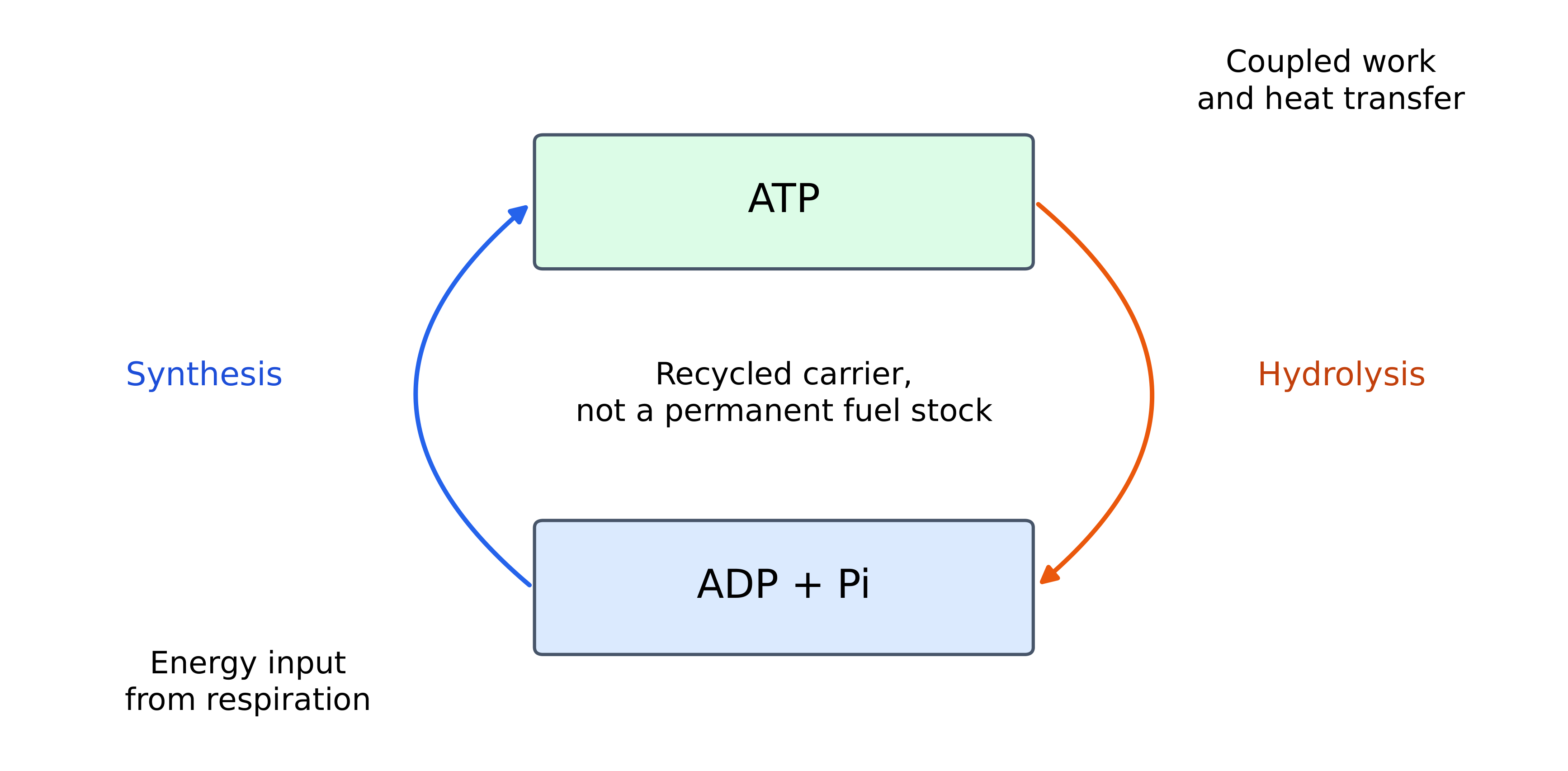
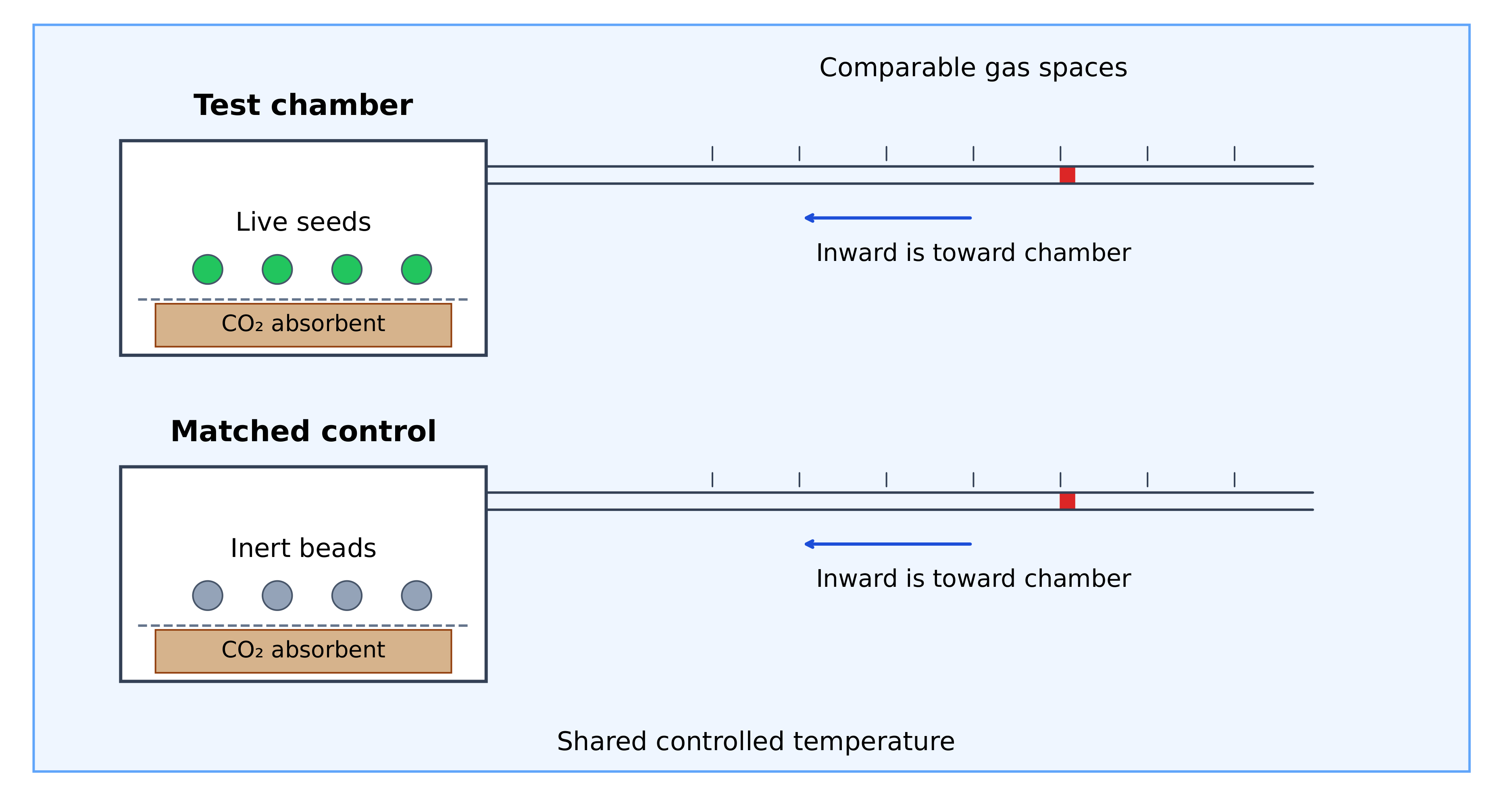
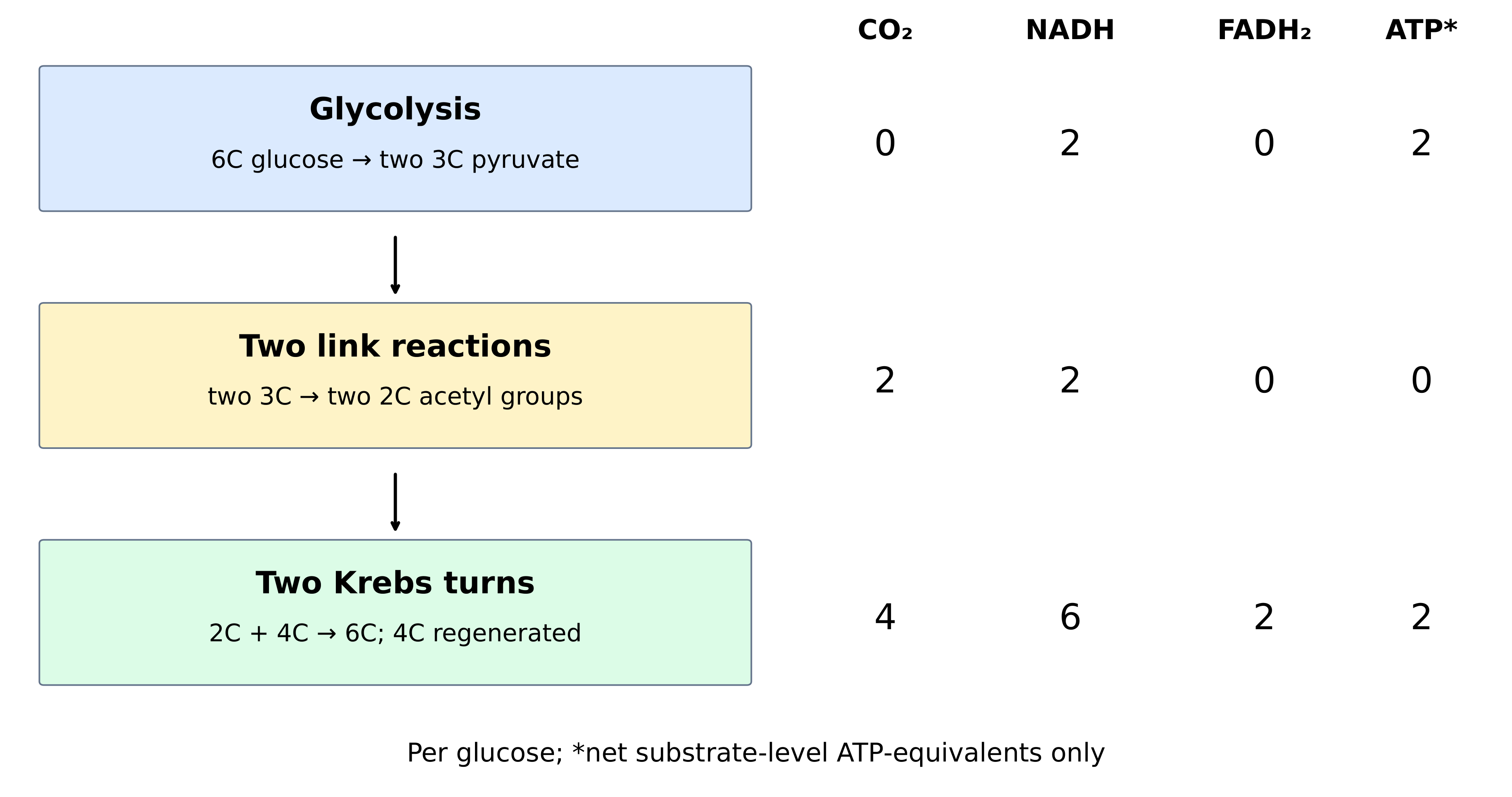
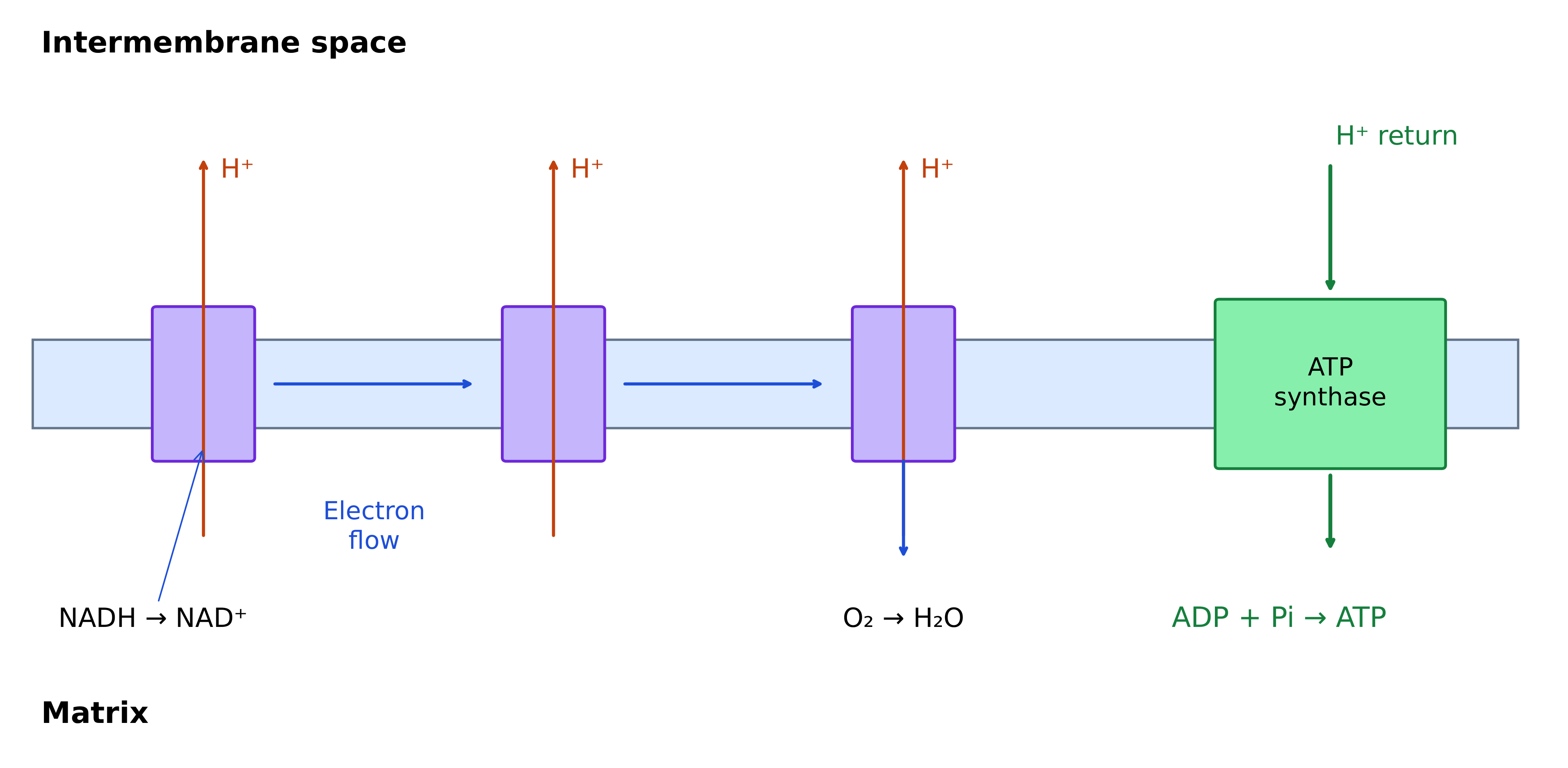
A germinating seed can use oxygen without breathing through lungs, and a muscle can make ATP when oxygen delivery cannot meet its immediate demand. Both observations concern chemical reactions in cells. To explain them, follow energy transfers, carbon atoms and electron carriers, rather than treating respiration as another word for moving air.
This unit covers C1.2 SL and HL: ATP, its uses and recycling, respiratory substrates, aerobic and anaerobic pathways in humans, and measuring respiration. Sections marked AHL are for Higher Level only.
- AHL Additional content covers NAD, glycolysis, lactate and yeast fermentation, the link reaction, Krebs cycle, electron transport, chemiosmosis, oxygen and differences between carbohydrate and lipid substrates.
Prerequisites are enzyme-controlled pathways, oxidation, membrane transport and rate calculations. Scope follows the IB Biology guide.
Exam tips: Write the quantity measured, its units, the control correction and the normalization. Separate ventilation, gas exchange, oxygen uptake and ATP production. ATP hydrolysis has an overall energy release; isolated bond breaking does not.