| English | 意味 |
|---|---|
| diploid/ˈdɪplɔɪd/ | diploid |
| haploid/ˈhæplɔɪd/ | haploid |
| gamete/ˈɡæmiːt/ | gamete |
| meiosis/meɪˈəʊsɪs/ | meiosis |
| homologous/həˈmɒləɡəs/ | homologous |
| allele/əˈliːl/ | allele |
| crossing over/ˈkrɒsɪŋ ˈəʊvə/ | crossing over |
| independent assortment/ˌɪndɪˈpendənt əˈsɔːtmənt/ | independent assortment |
| fertilisation/ˌfɜːtɪlaɪˈzeɪʃn/ | fertilisation |
Shuffling the genetic deck
- A diploid 二倍体 cell (2n) has two sets of chromosomes; a haploid 单倍体 cell (n) has one.
- Gametes 配子 (sex cells) must be haploid — or the number would double each generation.
- They are made by meiosis 减数分裂, which also creates variation.
なぜ遊離胞子は単倍体である必要があるのか?
難易度 1/5 · 100 コイン + 今日初回完了時に小ボーナス付与
もし遊離胞子が双倍体であれば、受精のたびに染色体数が倍増しますが、減数分裂はそれを半分にします。
減数分裂は染色体数を半分にして、_______の遊離胞子(各々1組の染色体)を生成します。
難易度 1/5 · 100 コイン + 今日初回完了時に小ボーナス付与
2つの単倍体遊離胞子が受精時に融合して双倍体の数が回復します。
Homologous 同源 pairs and meiosis
- Chromosomes come in homologous pairs: same length, same genes — but the alleles 等位基因 (versions) may differ.
- Meiosis halves the chromosome number, in two divisions (eight stages: prophase I → telophase II).
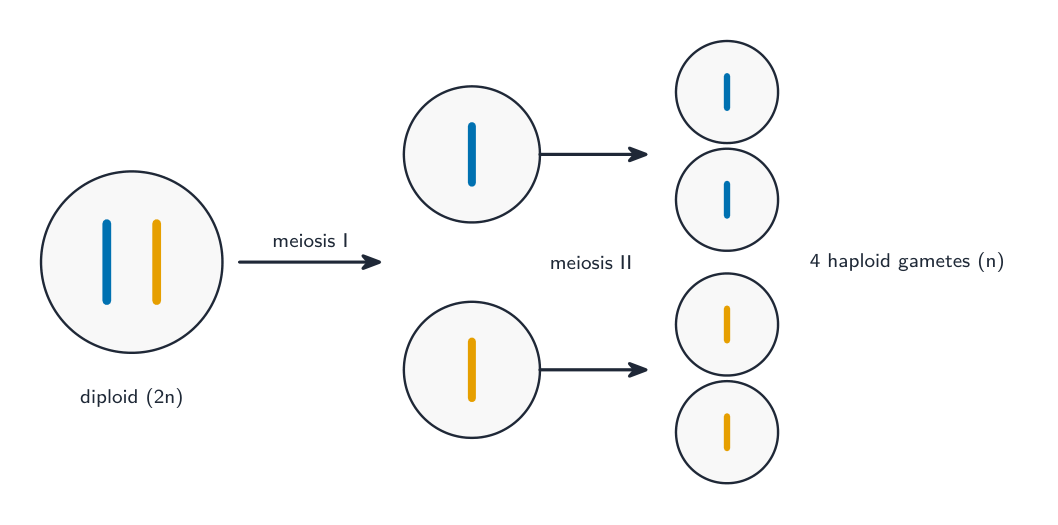
Meiosis runs two divisions, halving the chromosome number from a diploid cell to four haploid gametes

A human egg cell (ovum), one of the gametes produced by meiosis.
減数分裂
段階を追って確認する。2回の分裂により染色体数が半分になり、アルレルがシャッフルされ、4つの異なる遊離胞子が生まれます。
相同染色体のペアとは:
難易度 1/5 · 100 コイン + 今日初回完了時に小ボーナス付与
相同染色体は長さや遺伝子の位置が一致しますが、異なるアルレルを持つことがあります。
Two sources of variation
- Crossing over 交叉互换: homologous chromosomes swap matching pieces, mixing alleles.

Crossing over swaps matching segments between homologous chromosomes, making new allele combinations
- Independent assortment 自由组合: the pairs line up in a random order, so each gamete gets a random mix.

Independent assortment: each homologous pair lines up at random, so many different gamete types form

A human karyotype: 23 pairs of chromosomes, ending in XY (male)
交差による変異の产生メカニズムは:
難易度 1/5 · 100 コイン + 今日初回完了時に小ボーナス付与
キアスマにおいて、相同染色体が相同の断片を交換し、新しいアルレルの組み合わせを生成します。
独立分配とは、各相同対がランダムな順序で配列するため、遊離胞子は染色体のランダムな組み合わせを受け取ります。
難易度 1/5 · 100 コイン + 今日初回完了時に小ボーナス付与
中期Iにおける各ペアのランダムな配向は、膨大な数の可能な遊離胞子組み合わせを生み出します。
各変異の源与其効果にマッチさせよ。
難易度 2/5 · 140 コイン + 今日初回完了時に小ボーナス付与
減数分裂(交差+独立分配)とランダムな受精は既存のアルレルをシャッフルしますが、突然変異は新しいものを作成します。
Random fertilisation 受精
- At fertilisation, any gamete can fuse with any other.
- This random fusion makes every new individual genetically different.
ランダムな受精が変異を増やすのはなぜか:
難易度 1/5 · 100 コイン + 今日初回完了時に小ボーナス付与
どの2つの遊離胞子が会うかはランダムなので、新しいアルレルの組み合わせはすべて固有です。
You've got it
- diploid (2n) = two sets; haploid (n) = one; gametes must be haploid
- homologous pairs: same genes, possibly different alleles; meiosis halves the number
- variation from crossing over + independent assortment
- plus random fertilisation → every individual is unique