対象範囲と前提条件
ACTフレームワーク、2月2026改訂版。元の教室事例は公式形式ではない。各出典形式の採点・フィールドテストの境界を保持すること。
- 完全な節、断片、およびコンマスプライスの区別
- 挿入句の間にも関係なく文法的主語を特定する
- 構造に従って境界や修飾语の标点を適切に配置する
Prerequisites: Independent clauses; subject head; possessives and parallel forms.
説明し、方法を選択する
完全な独立節には主語と有限動詞があり、単独で成立する。althoughやbecauseで導入される従属節には主節が必要である。独立節同士は句点、セミコロン、または適切な接続詞付きコンマでつなぐ。コンマのみではコンマスプライスを生む。セミコロンは断片を修正しない。
主語の中心語を最も近い名詞ではなく特定する。前置詞句や挿入表現が主語と動詞を離すことがある。代名詞は明確な先行語を指し、文法的役割に合う正しい形を用いること。動詞の時制は、機械的にすべての動詞を同じにするのではなく、実際の出来事の順序に合わせて一貫させること。
不要な挿入要素には対になるコンマを使用し、主語と動詞をコンマで分けないこと。コロンは完全な節の後に説明やリストを導くのに使える。アポストロフィは所有や省略を表すが、通常の複数是用しない。标点の選択は、選択範囲外の文全体—including outside the selected span-を含めて判断する。
修飾语は自身が説明すべき対象に接続する。「Walking into the archive, the map caught Lena’s attention」では、冒頭の修飾语が地図を歩行者として誤って表している。正しくは「Walking into the archive, Lena noticed the map.」とする。並列項は文法的形式を一致させる。表面の wording を比較する前に、構造的な誤りを特定すること。
慣習は好ましい音ではなく、文法に従います。 「The group of volunteers records outcomes」では、単数の group を用います。 「Recording the result, Noor checked the card」では、修飾節が Noor に接続されます。 完全な節を分離するには、コンマ+接続詞、セミコロン、または全角ピリオドを使用します。
既存の worked example: 元の編集ケース: “Although the archive was small. Its collection of local maps were extensive, visitors could compare several editions. Examining a faded sheet, a spelling error surprised Lena.” 修正: “Although the archive was small, its collection of local maps was extensive; visitors could compare several editions. Examining a faded sheet, Lena noticed a spelling error.” 最初の従属節が主節に接続した。collection は単数なので was が合致する。セミコロンが2つの完全な節をつなぐ。Lena が examining で説明されている主語となった。
元の文脈を完成させる
オリジナルの連続編集問題 — 修理のための場所
[P1] 毎月最初の土曜日、ボランティアのグループが公共図書館で修理テーブルを開きます。[S1] このプロジェクトは、司書ノールが近所の建物の外に並ぶ壊れたデスクランプに気づいたときに始まりました。[S2] 一部は専門的な作業が必要でしたが、他のものはスイッチが緩み、ケーブルが破損していました。[S3] ノールは訓練を受けていない来場者が危険な電気修理を試みることを望みませんでした。[S4] 彼女は資格を持つ修理人を招き、グループが検査できる品物と、プロに依頼すべき品物を説明させました。最初のセッションでは電池式物体のみを受け付け、破損した電池のもの除外しました。来場者は品物を登録し、作業開始前に欠陥を説明しました。
[P2] 入り口で、二人のボランティアが各来場者の名前と品物を記録します。この記録は、グループが品物を所有者に戻すのを助けます。青いカードは検査待ちの品物の横に置かれ、白いカードは収集準備ができている品物に添えられます。カードは安全を証明したり、修理を保証したりするものではありません。単に品物が処理過程のどこにあるかを示しているだけです。[S5] 図書館のロゴは何年も前にデザインされました。カードの隣には、品物が検査中であることを待ってほしいという看板があります。待っていることは、所有者が即座に現れないかもしれない断続的な欠陥を説明できることを意味します。また、簡単なメンテナンス習慣を学ぶ機会にもなります。
[P3] _cast soon became a problem. The repair table shared an alcove with readers who wanted a quiet place to work. During the first two sessions, a visitor log recorded six complaints about conversation near the alcove. Noor proposed moving the table into a meeting room. The room could hold fewer people, so a move alone would not solve the problem. The group introduced short arrival windows and kept two spaces for visitors without bookings. [S6] This totally amazing system fixed every problem forever. In fact, one visitor still waited outside, and the group had to improve the signs leading to the room. The log recorded one noise complaint during the next two sessions; attendance also fell, so the group did not attribute the whole reduction to the move.
[P4] Volunteers were careful about how they described success. An object leaving the table might work again, need another part, or require professional attention. They recorded these outcomes separately. During the trial, forty objects were inspected. Eighteen worked after a permitted minor adjustment, twelve needed a part, and ten were referred elsewhere. Counting all forty as repaired would hide important differences. [S7] The volunteers recorded the outcomes and wrote the results down in their record. Noor used the figures to decide which spare parts might be useful at later sessions. She did not use them to promise that any particular object could be repaired.
[P5] The project now has a practical aim: help visitors make an informed next decision about a broken object. For some, that means a working lamp. For others, it means knowing when further work would be unsafe or too costly. The group plans to keep the arrival windows for another trial and ask readers whether noise remains a problem. It will also compare attendance and waiting times before adding more spaces. A repair table succeeds through careful limits as well as useful repairs.
Independent practice and checked reasoning
Transfer 1
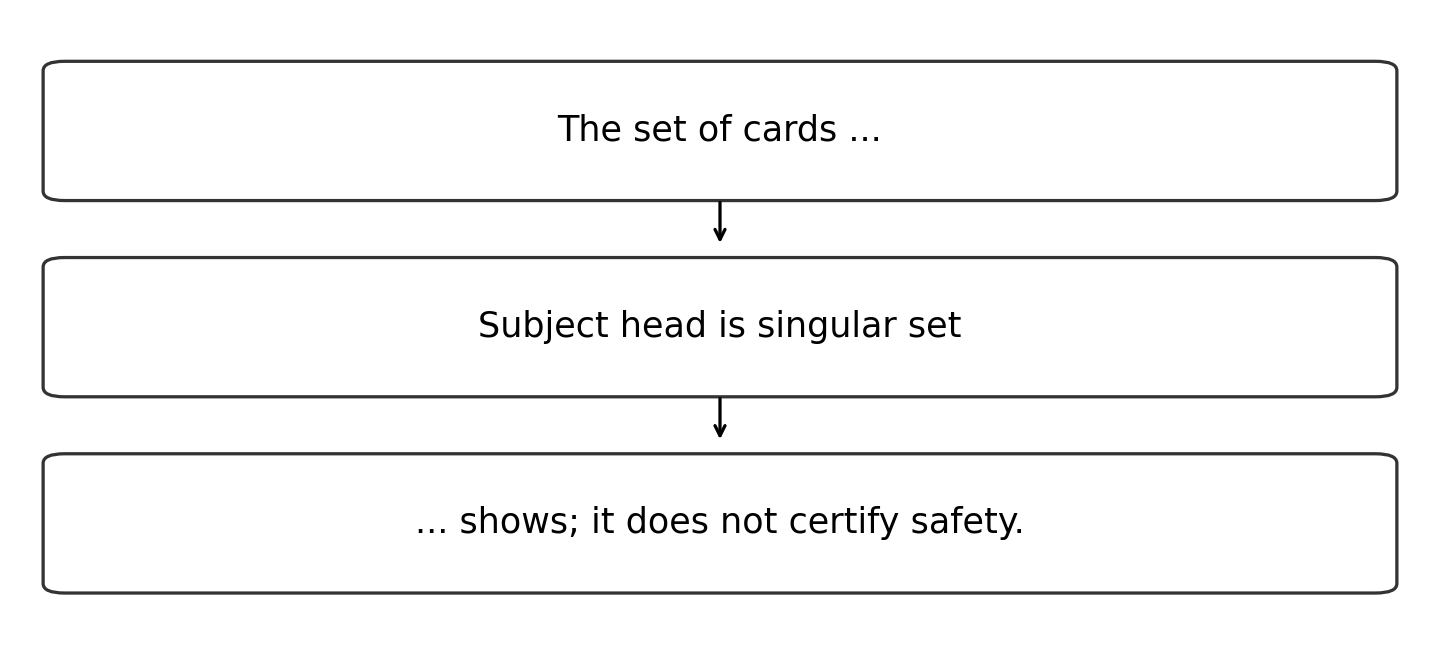
「The set of blue cards show the current stage, they do not certify safety.」を修正します。両方の主張を保持し、一致と境界について説明してください。
推論:「The set of blue cards shows the current stage; it does not certify safety.」。Set は単数です。代名詞 it は set を指します。セミコロンで独立節が接続されています。適切な言い換えで全角ピリオドやコンマ+but も有効です。
Transfer 2
「Inspecting the lamp, a loose switch was noticed by Noor」および「The group aims to inspect, recording, and advise」を修正します。
推論:「Inspecting the lamp, Noor noticed a loose switch」では、点検が行為者に接続されます。「The group aims to inspect, record, and advise」では、to の下に並列不定詞補語が使用されます。これらの意味を保持する他の文法的書き換えも許容されます。
Transfer 3
「The group updates ___ records」および「___ important to label outcomes」で its/it's を選びます。同じ綴りが両方に当てはまらない理由を説明してください。
推論:「its records」は所有形が必要です。「It's important」は「It is important」を意味します。ここではアポストロフィが縮約を表しており、所有ではありません;it が代入できるかを検証することで区別できます。
Limits and next use
停顿符号并非标点规则。句界、修饰语附着关系以及主谓关系を特定してください。
All tasks here are public original practice with authored guidance. They are not official questions or fresh diagnostics. Existing protected tests and mocks remain separate.