Tujuan kebijakan makroekonomi pemerintah
| English | Bahasa Indonesia |
|---|---|
| price stability/praɪs stəˈbɪlɪti/ | stabilitas harga |
| balance of payments/ˈbæləns ɒv ˈpeɪmənts/ | neraca pembayaran |
| equity/ˈekwɪti/ | keadilan |
| trade-offs/treɪd ɒfs/ | trade-offs |
Juggling four balls at once
- A finance minister can rarely fix everything at once: chase growth and inflation creeps up; tame inflation and jobs are lost.
- Real policy is about prioritising among competing objectives — and accepting that hitting one may mean missing another.
Laboratorium tujuan makro
Klasifikasikan contoh kebijakan berdasarkan tujuan makroekonomi yang dituju.
Set mana yang paling tepat mencantumkan tujuan makroekonomi utama?
Keempat ini (ditambah kesetaraan dan lingkungan) adalah tujuan standar.
The objectives, recapped
- Growth, low unemployment, price stability 物价稳定, and a sound balance of payments 国际收支 — plus equity 公平 and the environment.
- At any moment, a government weighs which matters most given the state of the economy.

Central banks, such as the European Central Bank, are a main tool of macroeconomic policy
Dalam resesi dalam, pemerintah paling mungkin memprioritaskan:
Ketika output dan lapangan kerja menurun, menghidupkan kembali pertumbuhan dan lapangan kerja datang pertama.
Mengejar pertumbuhan yang lebih cepat dapat bertentangan dengan mengendalikan inflasi.
Ekonomi yang meledak dapat mengalami overheat, mendorong harga naik — sebuah konflik klasik.
Cocokkan setiap pasangan tujuan dengan konflik di antaranya.
Memperbaiki satu tujuan sering kali memperburuk tujuan lain.
Why they conflict
- Growth vs inflation/BoP: a boom can overheat prices and suck in imports.
- Inflation vs unemployment: cooling inflation with high rates can raise joblessness.
- Growth vs environment: faster output can mean more pollution.

The main macroeconomic objectives often pull against each other, so hitting one can mean missing another
Priorities shift with the cycle. In a recession, governments prioritise growth and jobs; when inflation is high, they switch to price stability — the same objectives, reordered.
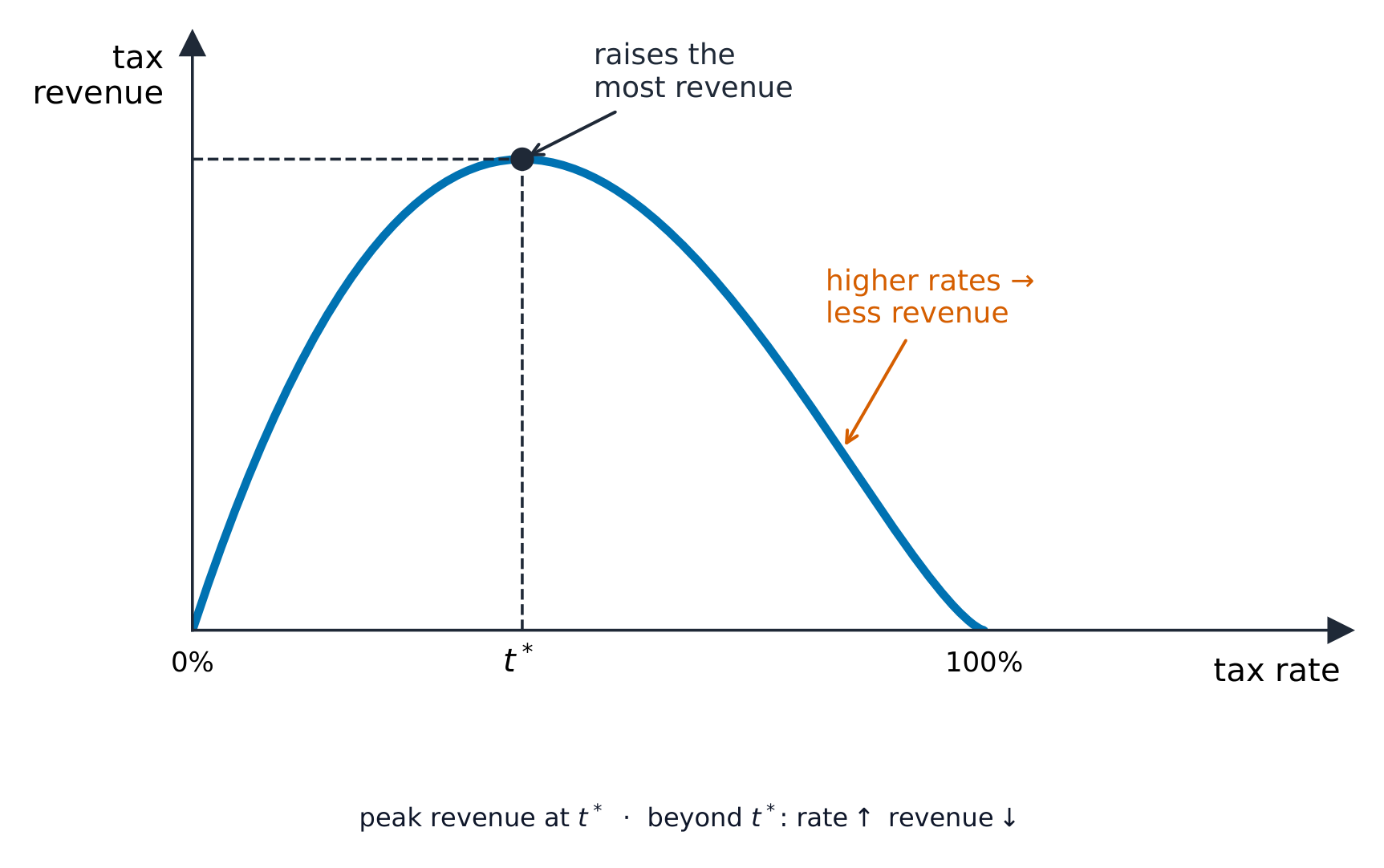
The Laffer curve
Karena tujuan saling bertentangan, kebijakan selalu melibatkan pembuatan ______.
Tidak ada kebijakan yang memperbaiki setiap tujuan sekaligus.
Making the trade-offs 权衡取舍
- Good policy states the objective, picks the tool best suited to it, and accepts the cost to other objectives.
- There is no policy that improves everything at once — economics is the study of these trade-offs.
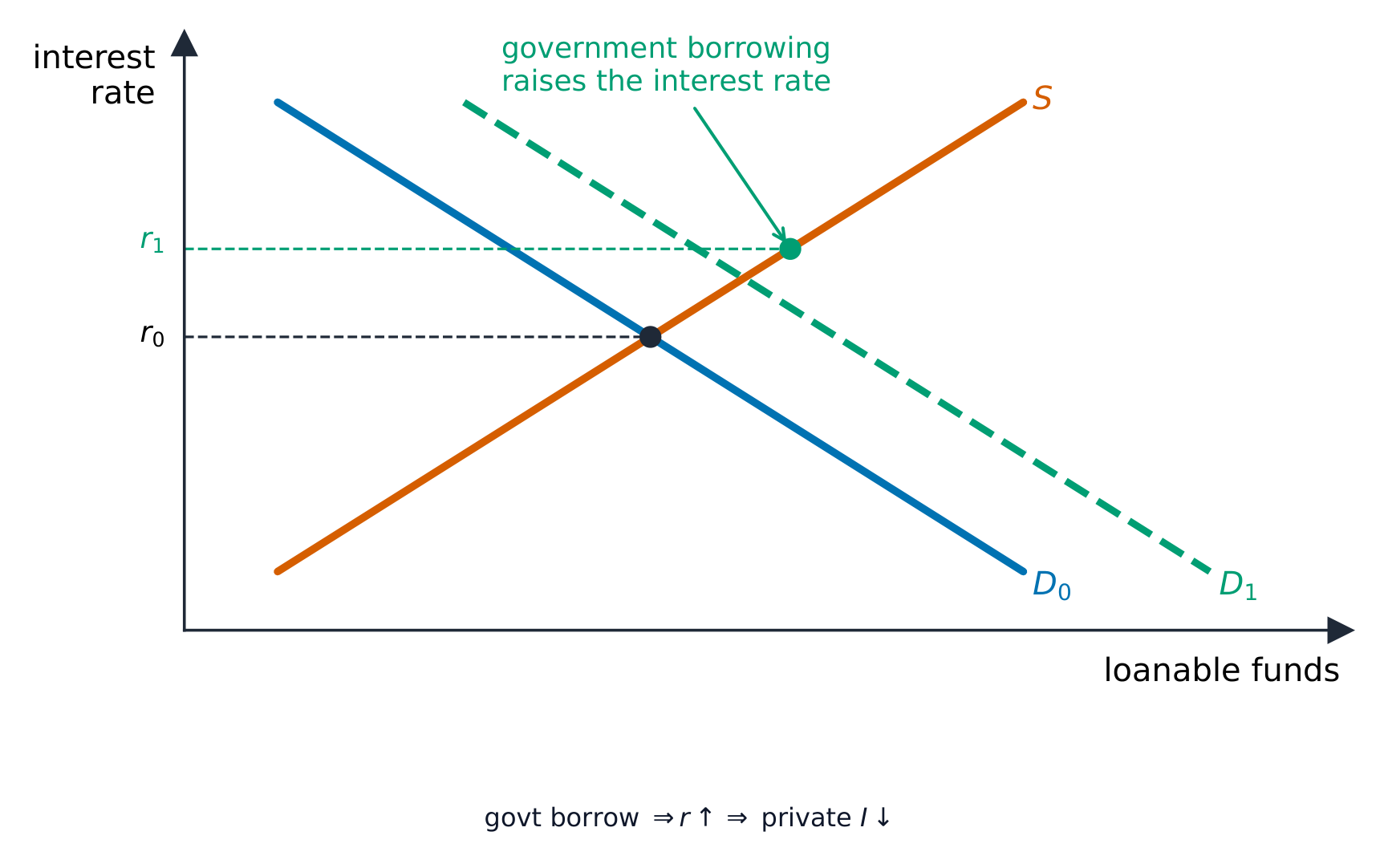
Government borrowing raises interest rates and crowds out private investment
You've got it
- objectives: growth, low unemployment, price stability, balance of payments (+ equity, environment)
- they conflict (growth vs inflation; inflation vs unemployment; growth vs environment)
- policy means prioritising and accepting trade-offs, reordered as the economy changes