Revenue and profit
Diperkenalkan| English | Makna |
|---|---|
| profit/ˈprɒfɪt/ | Laba |
| marginal revenue/ˈmɑːdʒɪnl ˈrevənjuː/ | Penerimaan Marjinal |
| total revenue/ˈtəʊtl ˈrevənjuː/ | Total Penerimaan |
| average revenue/ˈævrɪdʒ ˈrevənjuː/ | Penerimaan Rata-rata |
| normal profit/ˈnɔːml ˈprɒfɪt/ | Laba Normal |
| supernormal profit/ˈsuːpənɔːml ˈprɒfɪt/ | Laba Supranormal |
| profit-maximising/ˈprɒfɪt ˈmæksɪmaɪzɪŋ/ | Memaksimalkan Laba |
Should the bakery bake one more cake?
- A bakery sells cakes. Selling more brings in more money, but to sell more it must cut its price, and each extra cake costs flour, eggs and oven time. The owner's real question is not "how much can I sell?" but "does the next cake add more to revenue than to cost?"
- The answer separates revenue from profit 利润, and gives the rule every profit-maximising firm follows.
Total, average and marginal revenue
- Total revenue 总收益 (TR) = price × quantity. Average revenue 平均收益 (AR) = TR ÷ quantity, which equals the price, so the AR curve is the demand curve.
- Marginal revenue 边际收益 (MR) = the change in TR from selling one more unit. When a firm must lower its price to sell more, MR is below the price.
Revenue & profit
y = ax² + bx + c
Pendapatan total rises then falls as price changes.
A firm sells 50 units at £6 each. What is its total revenue (in £)?
Kesulitan 2/5 · 140 koin + bonus kecil pada penyelesaian pertama hari ini
TR = P × Q = 6 × 50 = 300.
Worked example: finding the profit-maximising output
| Cakes | Price (£) | MR (£) | MC (£) |
|---|---|---|---|
| 1 | 10 | 10 | 3 |
| 2 | 9 | 8 | 4 |
| 3 | 8 | 6 | 6 |
| 4 | 7 | 4 | 8 |
TR rises from £10 to £18, £24 and £28, so each MR is the change in TR.
Reading: the 2nd cake adds £8 to revenue and £4 to cost, so make it. The 3rd adds £6 and costs £6: MR = MC. The 4th adds £4 but costs £8, so it would reduce profit. Profit is maximised at 3 cakes.
- MR falls (10, 8, 6, 4) because the price must be cut on every cake to sell one more.
TR rises from £24 to £28 when the 4th cake is sold. What is the MR of the 4th cake (in £)?
Kesulitan 2/5 · 140 koin + bonus kecil pada penyelesaian pertama hari ini
MR = 28 − 24 = 4.
MR is £9 and MC is £5 at the current output. What should a profit-maximising firm do?
Kesulitan 1/5 · 100 koin + bonus kecil pada penyelesaian pertama hari ini
The next unit adds more revenue than cost.
Normal and supernormal profit
- Profit = TR − TC, where costs include the opportunity cost of the owner's time and money. Normal profit 正常利润 just covers that opportunity cost, so the firm stays in the industry.
- Supernormal profit 超常利润 is anything above normal profit. It attracts new firms, unless barriers to entry keep them out.
Match each term to its meaning.
Kesulitan 2/5 · 140 koin + bonus kecil pada penyelesaian pertama hari ini
Profit types depend on opportunity cost.
The profit-maximising rule: MR = MC
- A profit-maximising 利润最大化 firm produces where MR = MC. Below that output, each extra unit adds more revenue than cost; above it, each extra unit adds more cost than revenue.
- A monopoly then charges the price on the demand (AR) curve at that output, which is above MC.
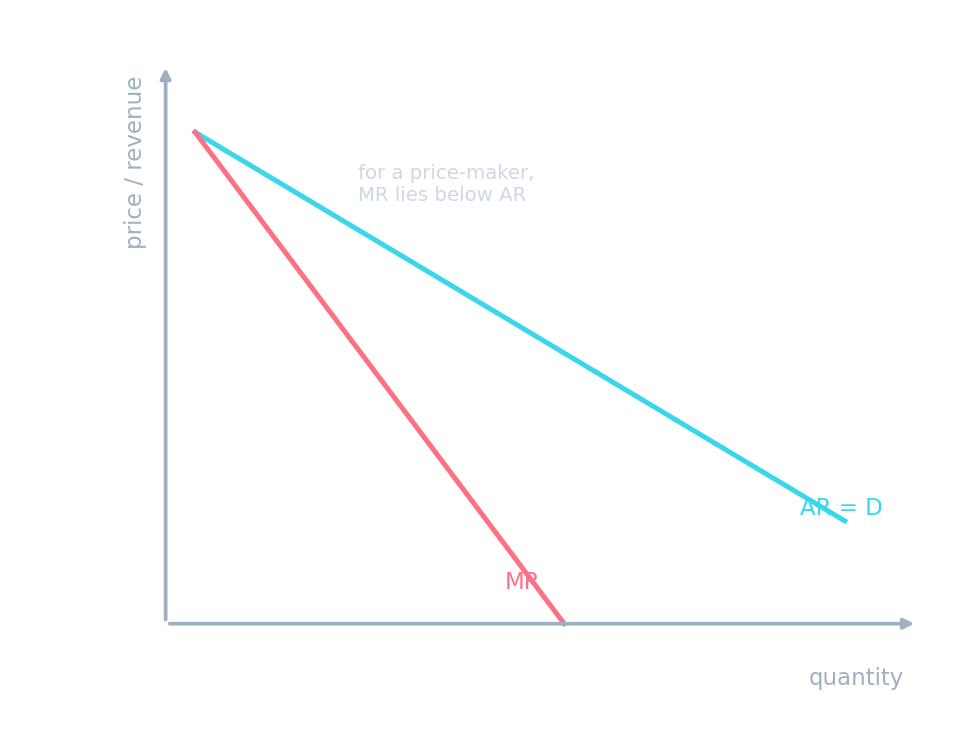
Maximising revenue is not maximising profit. TR is highest where MR = 0, but profit is highest where MR = MC, usually at a lower output.
A firm maximises profit at the output where total revenue is highest.
Kesulitan 1/5 · 100 koin + bonus kecil pada penyelesaian pertama hari ini
Revenue peaks where MR = 0; profit peaks where MR = MC.
TR = P × Q; AR = price; MR = change in TR from one more unit. Profit = TR − TC; normal profit covers opportunity cost, and supernormal profit is anything above it. Firms maximise profit where MR = MC.
Practice (data response). Using the cake table, explain why the bakery should not make a 4th cake. (3 marks)
Data plus the rule.