האמון (הדימוי)
הוצג| English | משמעות |
|---|---|
| A conceit/ə kənˈsiːt/ | קונסויט |
An extended metaphor that surprises
- A conceit 奇喻 is a form of extended metaphor that often appears in poetry.
- Conceits develop complex comparisons that present images, concepts and associations in surprising or paradoxical ways.
- So the surprise is part of the definition — a conceit that felt obvious would not be one.
Comparing a thought to a bicycle is bold; making the wheels, brakes and bell all matter is a conceit.
אמון הוא סוג של...
רמת קושי 1/5 · 100 מטבעות + בונוס קטן בהשלמה הראשונה היום
אחד המציג תמונות וקשרים בדרכים מפתיעות או פרדוקסליות.
Often the natural world and a person
- Often, conceits are used to make complex comparisons between the natural world and an individual.
- That is a pattern worth knowing, because it tells you where to look.
- A poem that starts describing weather, tides or seasons at length is usually building toward a person.
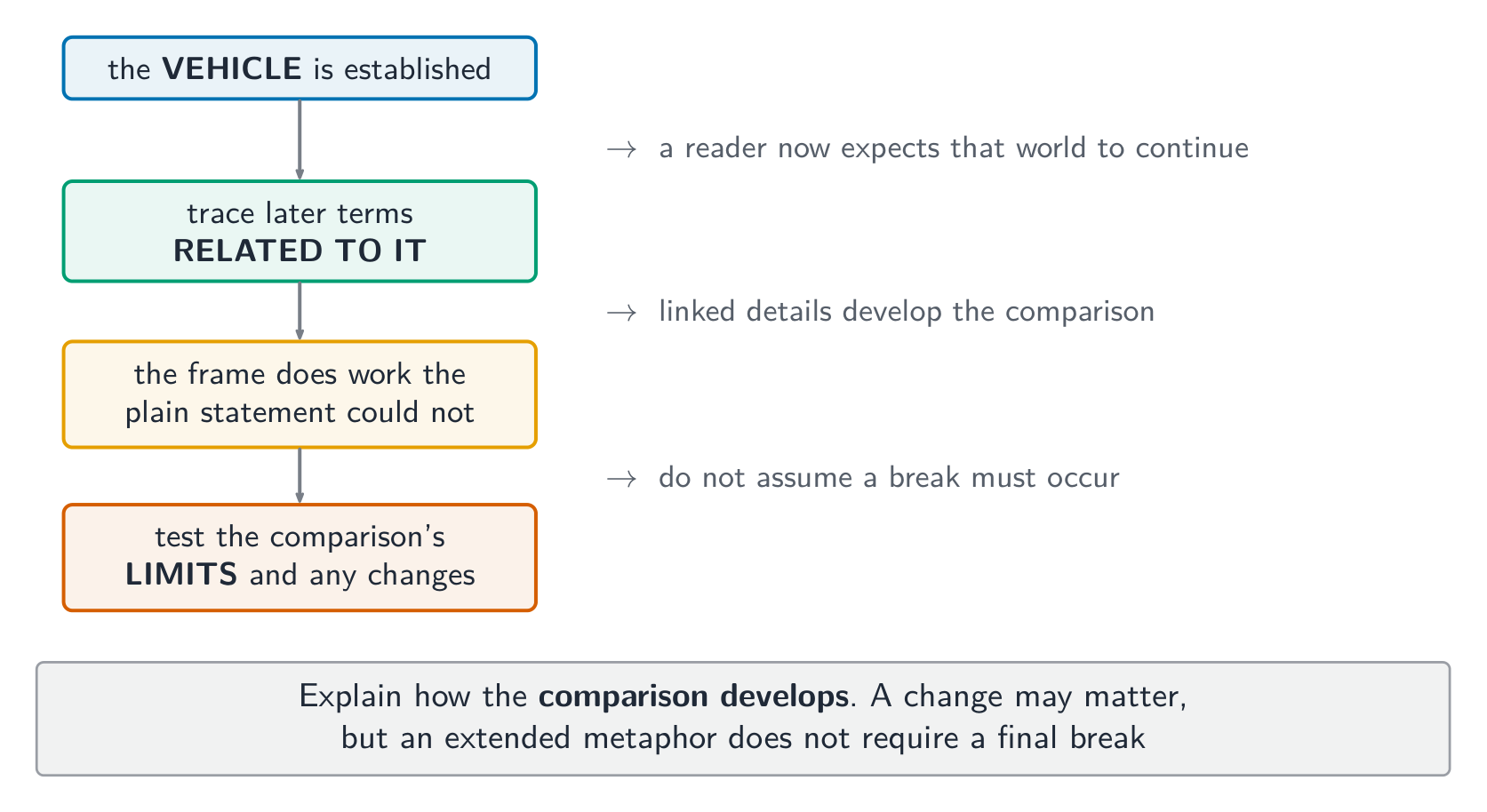
Trace the comparison and its limits without assuming a compulsory break.
התנצלים נבנים לעיתים קרובות בין העולם הטבעי לבין אדם יחיד.
רמת קושי 1/5 · 100 מטבעות + בונוס קטן בהשלמה הראשונה היום
ומכאן ששיר המתאר מזג אוויר באורך רב נוטה להוביל לדמות אנושית.
Comparisons can act on each other
- Multiple comparisons, representations or associations may combine to affect one another in complex ways.
- So in a conceit the later images change how you read the earlier ones.
- Analysing the first image alone gives an answer the rest of the poem contradicts.
שוויון רבים עשויים לשלב זה עם number⟧ זה בתוך דרכים מורכבות.
רמת קושי 1/5 · 100 מטבעות + בונוס קטן בהשלמה הראשונה היום
ולכן תמונות מאוחרות משנות את הקריאה של התמונות הקודמות.
In a conceit, later images change how the earlier ones read. The CED says multiple comparisons combine to affect one another in complex ways — so an analysis built on the opening image alone will usually be contradicted by the poem's own last stanza.
איזה שלב של האמון זה?
סדר כל רכיב של אמון המשווה עצב לגלים.
התנצל צריך להתנתח כ-...
רמת קושי 1/5 · 100 מטבעות + בונוס קטן בהשלמה הראשונה היום
הסיום הוא לעיתים קרובות הפוך, והעקבה אחרי השלבים היא היחידה החושפת זאת.
Track the conceit stage by stage
- A conceit is long, so treat it as a sequence rather than a single device.
- At each stage, say what has been added and what it does to the comparison so far.
- The ending of a conceit is frequently a reversal, and only stage-tracking catches it.
סדר את הטיעון התנצלי לפי הסדר.
רמת קושי 3/5 · 200 מטבעות + בונוס קטן בהשלמה הראשונה היום
היחס האחרון הוא הנקודה שבה התנצל מפסיק להיות מטאפורה ארוכה.
A conceit pass
- Name the main subject and the comparison subject, once.
- List the stages of the extension in order, with what each adds.
- Then say what the last stage does to the first — that relationship is the analysis.
A grief is compared to a tide: it comes in (stage one), it takes what was left on the beach (stage two), and then — stage three — it goes out and leaves everything visible. The final stage reverses the first: what looked like loss was the only thing that ever uncovered anything.
A conceit is an extended metaphor that presents images and associations in surprising or paradoxical ways, often comparing the natural world and an individual. Multiple comparisons combine to affect one another, so track the conceit stage by stage and say what the last stage does to the first.