זבוב בית וצמח תירס עשויים להיראות שונים לחלוטין, אך שניהם חיים באותה שמונה דרכים, ושניהם בנויים מסוג אותו של תא. פרק זה מספק את המילים לחיים המשותפים הללו — המאפיינים שכל אורגניזם מראה — ומפת מגוון החיים: חמש קבוצות של אורגניזמים ואת הווירוסים, שאינם חיים כלל אך עדיין מזהמים כל חי.
Edexcel International GCSE Biology 4BI1, Section 1 נבחן בשתי המבחנים; צפו לשאלות זיכרון ישירות ו"השווה" מתוך 1.1–1.4, לעיתים קרובות סימן אחד למאפיין וסימן אחד לדוגמה המפורשת.
מאפייני החיים
כל אורגניזם חי מבצע את כל שמונה הפעולות: הוא לוקח תזונה (חומר לאנרגיה או לגידול), הוא נושם (משחרר אנרגיה ממזון), הוא פולט פסולת, הוא מגיב לסביבתו, הוא זז, הוא שולט במצב הפנימי שלו (שומר על יציבות בפנים), הוא מתרבה, והוא גדל ומתפתח. קישור הזיכרון MRS GREN רוכש תנועה, התרבות, רגישות, גידול, נשימה, פליטה ותזונה — "השליטה במצב הפנימי" היא הפעולה השמינית שמעבר הזה משאיר בחוץ, ולכן יש לקרוא אותה בנפרד.
וירוס אינו מבצע אף אחת מפעולות אלו לבדו — ולכן הוא אינו חי.
מגוון: חמישה קבוצות ותכונות המאפיינות אותן
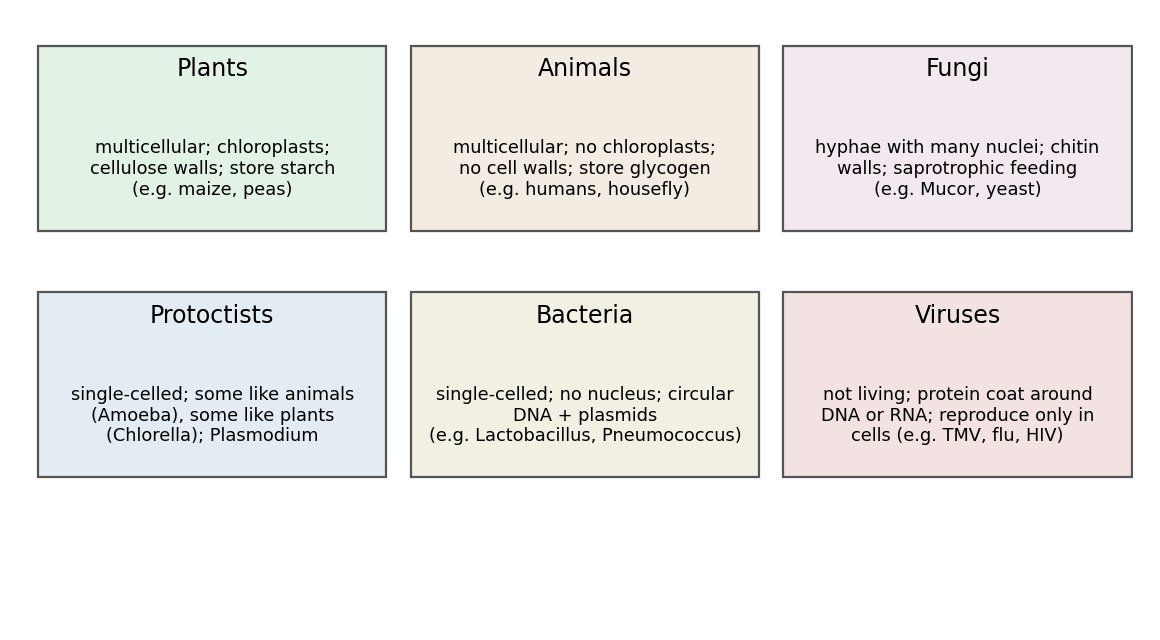
צמחים: רב-תאי; תאים מכילים כלורופלסטים ומבצעים פוטוסנתזה; דופן תא מ-צלולוז; פחמימות מאוחסנות כ-עמילן או סוכרוז. דוגמאות: צמח גרגרי (תירס) וצמח דמוי-שעועית עשבית (אפונה או שעועית).
בעלי חיים: רב-תאי; אין כלורופלסטים, אין פוטוסנתזה; אין דופן תא; בדרך כלל קואורדינציה עצבית ותנועה ממקום למקום; מאחסנים פחמימות כ-גליקוגן. דוגמאות: יונקים (אדם) וחרקים (זבוב הבית, יתוש).
פטריות: אין פוטוסנתזה; הגוף הוא לרוב מיציליום של היפה דמויות-חוט מכילות גרעינים רבים; חלקן חד-תאיות (שמרים); דופן תא מ-כיטין; ניזונות על ידי שחרור אנזימים לעיכול אל מחוץ לגוף וספיגת התוצרים — תזונה ספרותרופית; מאחסנות גליקוגן. דוגמאות: Mucor (היפה טיפוסית) ושמרים (חד-תא).
פרוטוקיסטים: אורגניזמים מיקרוסקופיים חד-תאיים. Amoeba (מים ברכה) דומה לתא בעל חיים; Chlorella יש לה כלורופלסטים והיא דומה לצמח. הדוגמה המחוללת מחלה היא Plasmodium, המגרה מלריה.
בקטריות: אורגניזמים מיקרוסקופיים חד-תאיים עם דופן תא, ממברנת תא, ציטופלזמה ופלסמידים; הן אין להן גרעין אך יש להן כרומוזום מעגלי של DNA. חלקן מבצעות פוטוסנתזה; רובן ניזונות מאורגניזמים חיים או מתים. דוגמאות: Lactobacillus bulgaricus (דמוי-מקל, משמש להכנת יוגורט) וPneumococcus (כדורי, גורם לדלקת ריאה).
השוואה ארבע-צדדית שבודקי ביקוש אוהבים: חומר דופן תא (צלולוז / אין / כיטין / דופן בקטריאלי), גרעין (כן / כן / כן / לא), כלורופלסטים (רק בצמחים ובחלק מהפרוטוקיסטים), פחמימת האחסון (עמילן / גליקוגן / גליקוגן / —).
מחוללים מחלות ווירוסים
מחולל מחלה הוא כל אורגניזם או חלקיק הגורם למחלה — הספציפיקציה מאפשרת פטריות, בקטריות, פרוטוקיסטים או וירוסים.
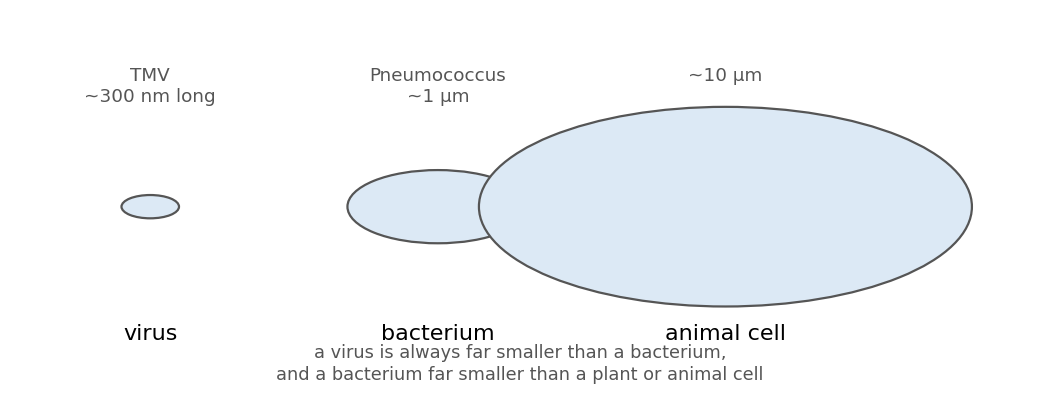
וירוסים הם לא אורגניזמים חיים: הם חלקיקים קטנים (קטנים מבקטריות), פרזיטיים, ויכולים להתרבות רק בתוך תאים חיים; אין להם מבנה תאי — רק מעטפת חלבון המכילה סוג אחד של חומצה גנטית, DNA או RNA (לעולם לא שניהם). לימוד שלושת הדוגמאות הממוענות עם המחלות שלהן: וירוס מosaic של טבק (עלי טבק מנווה — הוא מונע היווצרות כלורופלסטים), וירוס שפעת (שפעת) ו-HIV (איידס).
בדוק את עצמך
פרט שמונה מאפיינים משותפים לכל האורגניזמים החיים.
נתן שתי תכונות של תא צמחי שאין לתא בעל חיים.
איזה קבוצה מאחסנת פחמימות כגליקוגן, ואיזה כעמילן?
תאר תזונה ספרותרופית בפטריות, בשימוש במילים היפה, אנזימים וספיגה.
איך החומר הגנטי של בקטריה שונה מזה של תא צמחי?
ציין את הפרוטוקיסט המחולל מחלה ואת המחלה שהוא גורם.
נסח שלוש סיבות לכך שוירוסים אינם מסווגים כאורגניזמים חיים.
איזה וירוס ממוענת מונע היווצרות כלורופלסטים, ומה התוצאה הנראית?
תשובות: 1 תזונה, נשימה, פליטה, תגובה, תנועה, ויסות מצב פנימי, רבייה, גידול; 2 כלורופלסטים ומעטפת תאית מציולוזין; 3 בעלי חיים והפטריות מאגרים גליקוגן; צמחים מאגרים עמילן (או סוכרוזה); 4 הפטריות משחררות אנזימים עיכול מההיפה למזון מת, ולאחר מכן סופغات את המוצרים האורגניים המומסים; 5 לחיידק אין גרעין — כרומוזום DNA מעגלי בתוספת פלסמידים — בעוד שתא צמחי שומר את ה-DNA שלו בגרעין; 6 פלאסמודיום — malaria; 7 אין מבנה תאי; מתפשטים רק בתוך תאים חיים; אין תהליכי חיים עצמאיים; 8 וירוס מוזיקה של טבק – עליים עם דיוספיות ודוגמת מוזיקה.
One cell became many; many cells became tissues, organs and systems; and every system serves the same three jobs — taking in what the body needs, moving it to where it is used, and removing what the body must not keep. This section is the core of IGCSE Biology: cells and molecules, how substances cross membranes, nutrition in plants and humans, respiration, gas exchange, transport, excretion and coordination.
Edexcel International GCSE Biology 4BI1, Section 2 (statements 2.1–2.95) is the largest section of the course and feeds every long question on both papers. B-suffixed statements are the separate-science (Biology-only) extension; double-award students learn the unlettered core.
stores water and dissolved substances (large and permanent in plants)
2.5B Specialised cells develop by cell differentiation 细胞分化; 2.6B stem cells can replace damaged cells — advantages: treat conditions like paralysis or leukaemia; disadvantages: ethical concerns over embryos, risk of rejection and uncontrolled division.
Biological molecules and enzymes
Carbohydrates contain C, H, O; proteins add N; lipids are C, H, O with much less oxygen. Large molecules are chains of small units: starch and glycogen from simple sugars, protein from amino acids, lipid from fatty acids and glycerol. 2.9 Food tests: glucose — Benedict's (heated, blue → brick red); starch — iodine (yellow-brown → blue-black); protein — Biuret (blue → purple); fat — ethanol emulsion (cloudy white layer).
Enzymes 酶 are biological catalysts 生物催化剂: they speed metabolic reactions without being used up. Each has an active site 活性部位 the substrate must fit. Above an optimum temperature or away from the optimum pH, the active site changes shape (denaturation 变性) and the enzyme no longer works. Practical 2.12/2.14B follow amylase digesting starch at different temperatures or pH with iodine.
Movement into and out of cells
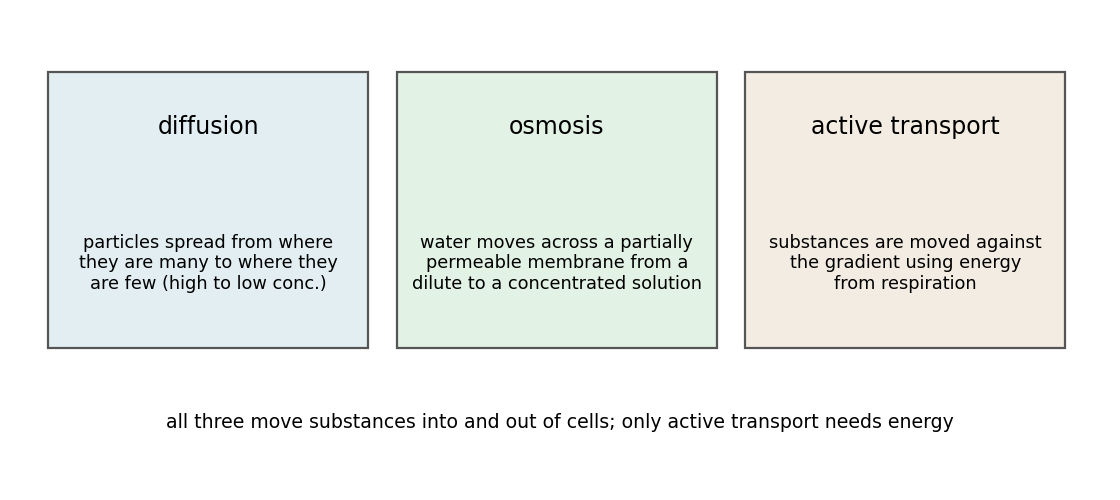
Diffusion 扩散 is the net movement of particles from a higher to a lower concentration (oxygen into blood). Osmosis 渗透 is the diffusion of water across a partially permeable membrane from a dilute to a more concentrated solution. Active transport 主动运输 moves substances against the gradient using energy from respiration (mineral ions into root hair cells). Rate increases with surface-area-to-volume ratio, concentration gradient and temperature, and decreases with distance.
Nutrition
Flowering plants. Photosynthesis converts light energy into chemical energy stored in glucose:
Limiting factors: carbon dioxide concentration, light intensity, temperature — each raises rate until another factor limits. Magnesium ions build chlorophyll (deficiency yellows leaves); nitrate ions build amino acids. 2.23: pondweed shows oxygen evolution; iodine tests a leaf for starch after blocking light, CO₂ or chlorophyll.
Humans. A balanced diet: carbohydrate, protein, lipid, vitamins A (night vision), C (connective tissue), D (calcium absorption), calcium (bones) and iron (haemoglobin), water, and dietary fibre. Energy needs rise with activity, growth (age) and pregnancy. The alimentary canal — mouth → oesophagus → stomach → duodenum and ileum → colon and rectum, with the pancreas supplying enzymes — moves food by peristalsis 蠕动. Digestion: amylase and maltase (starch → glucose), proteases (protein → amino acids), lipases (lipid → fatty acids + glycerol). Bile (made in the liver, stored in the gall bladder) neutralises stomach acid and emulsifies lipids into droplets. The ileum's wall is folded into villi 绒毛: huge surface area, one-cell-thick walls, dense capillary network — built for absorption.
Respiration and gas exchange
Respiration releases energy from glucose to make ATP, which supplies energy for muscle contraction, protein synthesis and active transport. Aerobic: glucose + oxygen → carbon dioxide + water (symbol equation: C₆H₁₂O₆ + 6O₂ → 6CO₂ + 6H₂O). Anaerobic (without oxygen): in animals glucose → lactic acid (less energy, oxygen debt); in plants and yeast glucose → ethanol + carbon dioxide.
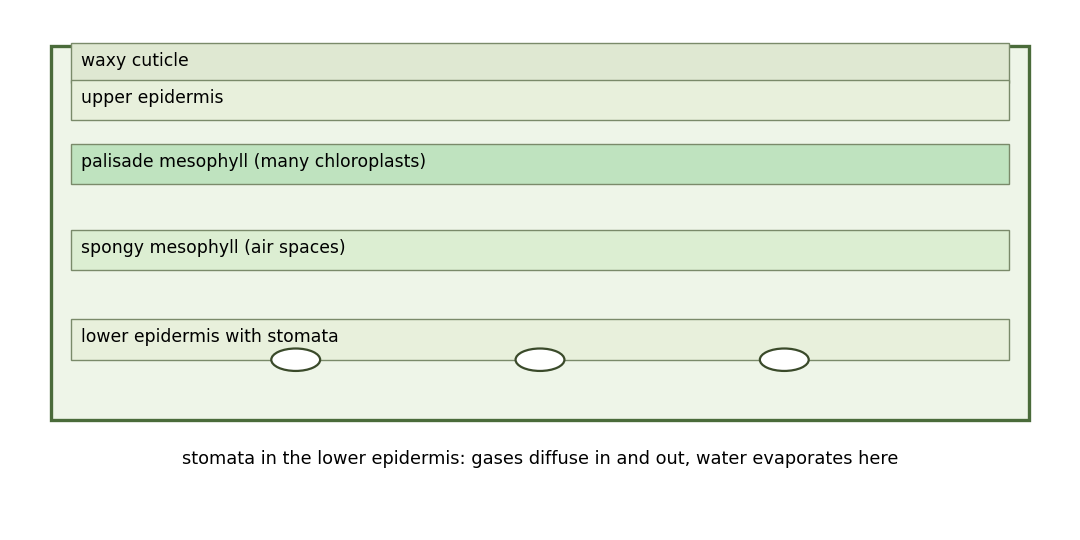
Plants (2.40B–2.45B). Gases move by diffusion through stomata; the leaf's flat shape, air spaces and thin, moist surfaces serve gas exchange as they serve photosynthesis. By day, photosynthesis outweighs respiration, so the net exchange is CO₂ in and O₂ out; at night only respiration continues (net O₂ in, CO₂ out). Hydrogen-carbonate indicator shows this: orange → yellow with CO₂ (dark), orange → purple with less CO₂ (bright light).
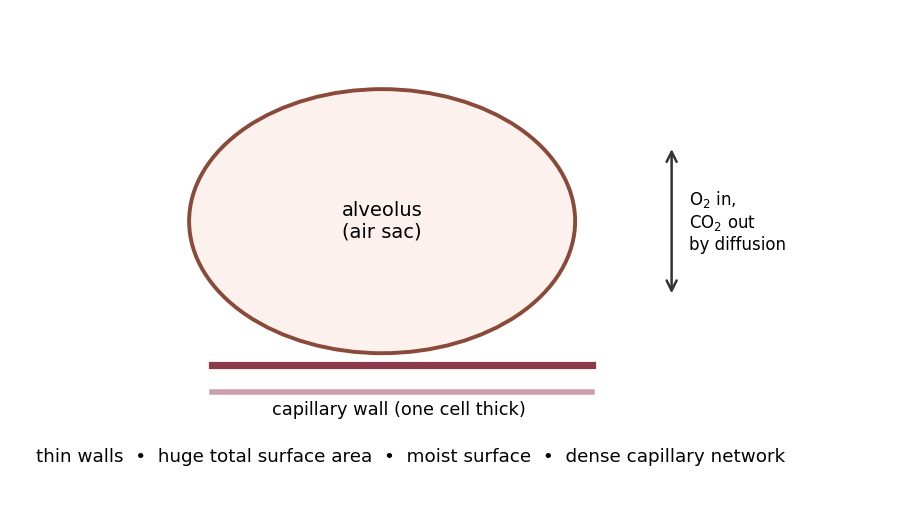
Humans (2.46–2.50). The thorax: ribs, intercostal muscles, diaphragm, trachea → bronchi → bronchioles → alveoli, all in pleural membranes. Inhaling: intercostal muscles and diaphragm contract, the chest volume rises, pressure falls and air flows in. Smoking damages alveoli (emphysema), clogs arteries and raises coronary heart disease risk.
Transport
Unicellular organisms manage with diffusion alone — every part is close to the surface. Multicellular organisms need transport systems.
Plants.Xylem transports water and mineral ions from roots to leaves; phloem carries sucrose and amino acids between leaves and the rest of the plant. B-extension: root hair cells absorb water by osmosis; transpiration 蒸腾作用 is the evaporation of water from surfaces, mostly via stomata, faster in low humidity, high wind, high temperature and bright light.
Humans. Blood: plasma (carries CO₂, digested food, urea, hormones, heat), red blood cells (biconcave discs, no nucleus, full of haemoglobin 血红蛋白 — a large surface and short diffusion path for oxygen), white blood cells (phagocytes ingest pathogens; lymphocytes release specific antibodies), and platelets (clotting, B-extension; vaccination builds memory cells, B-extension).
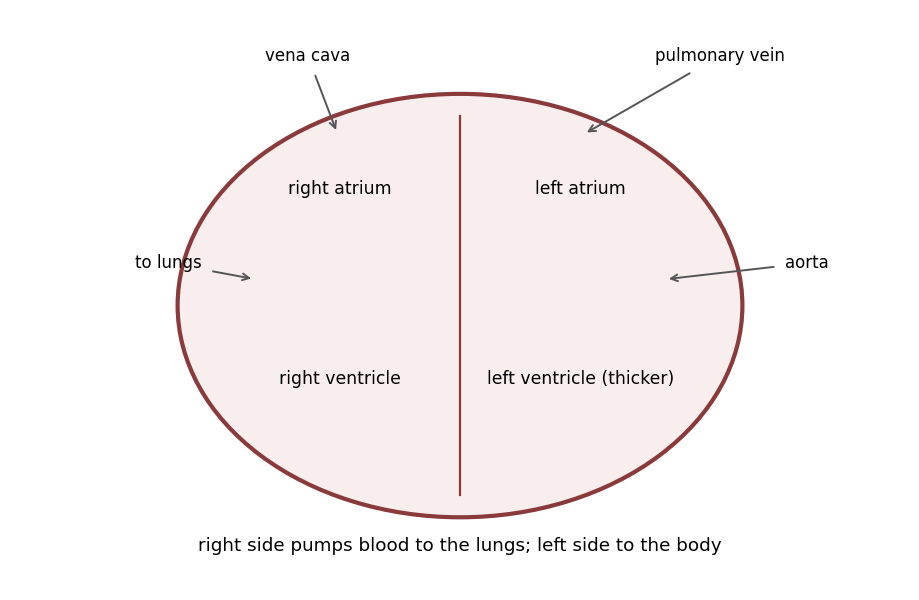
The heart's right side pumps blood to the lungs, the left side to the body; exercise and adrenaline raise heart rate. Arteries carry blood away at high pressure (thick, elastic walls), veins return it at low pressure (wide lumen, valves), capillaries exchange materials (one-cell-thick walls). Risk factors for coronary heart disease include smoking, high-fat diet and lack of exercise.
Excretion
Plants lose waste O₂ and CO₂ through stomata. Humans excrete CO₂ (lungs), urea + water + ions (kidneys — water and urea also in sweat). B-extension: the kidney filters blood in nephrons (Bowman's capsule → glomerulus; ultrafiltration; selective reabsorption of all glucose at the proximal convoluted tubule; water reabsorbed from the collecting duct under ADH — osmoregulation). Urine holds water, urea and ions; the urinary system runs kidneys → ureters → bladder → urethra.
Coordination and response
Homeostasis 稳态 keeps the internal environment constant (water content, temperature). A coordinated response needs stimulus → receptor → effector. Plants respond to light (phototropism 向光性) and gravity (geotropism) — shoots grow towards light, roots downwards — controlled by auxin 生长素 accumulating on the shaded side of a shoot.
Nervous control is electrical, fast and short-lived; hormonal control is chemical in the blood, slower and longer-lasting. The CNS (brain and spinal cord) links to sense organs by nerves; at a synapse 突触 a neurotransmitter 神经递质 passes the signal between neurones.
The eye focuses by changing lens shape (near: more curved) and responds to light via the pupil. Skin temperature control: sweating cools by evaporation; vasodilation loses heat; vasoconstriction conserves it. Hormones: adrenaline (adrenal glands — fight or flight), insulin (pancreas — lowers blood glucose), testosterone (testes), progesterone and oestrogen (ovaries); B-extension adds ADH (pituitary), FSH and LH (pituitary — menstrual cycle).
Check yourself
Put in order of size: cell, organ, organelle, system, tissue.
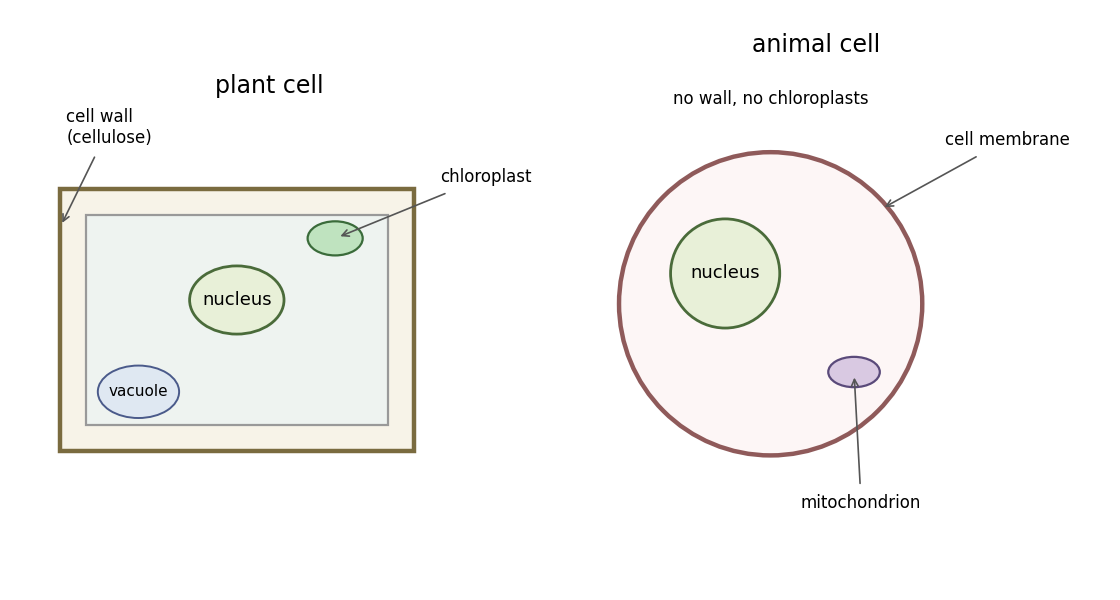
Give two structures a plant cell has that an animal cell lacks, and one the animal cell has that most plant cells lack many of.
Name the small units that build proteins, starch and lipids.
State the colour changes for Benedict's, iodine and Biuret tests.
Why does heating an enzyme far above its optimum stop it working?
Distinguish diffusion, osmosis and active transport in one sentence each.
Write the balanced symbol equation for photosynthesis and for aerobic respiration.
Give two adaptations of the leaf for photosynthesis and two of the alveolus for gas exchange.
Why can a single-celled organism survive without a transport system?
Compare arteries, veins and capillaries by wall thickness, lumen size and function.
Outline what happens to glucose, water and urea as liquid passes along a nephron (B).
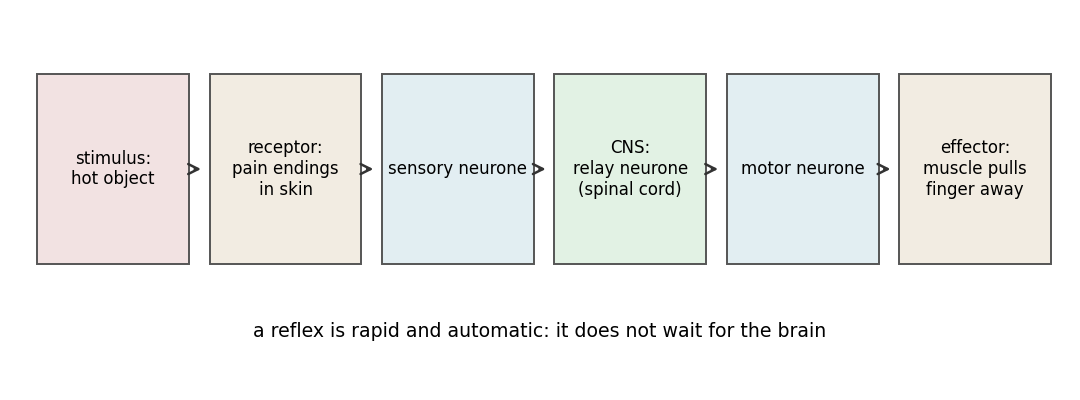
State the pathway of a reflex arc, and give one advantage of reflexes.
Answers: 1 organelle → cell → tissue → organ → system; 2 cellulose wall and chloroplasts (and a large permanent vacuole); animal cells contain many mitochondria; 3 amino acids; simple sugars; fatty acids and glycerol; 4 Benedict's blue → brick red (with glucose, heated); iodine yellow-brown → blue-black (with starch); Biuret blue → purple (with protein); 5 the active site changes shape (denaturation) so the substrate no longer fits; 6 diffusion — net movement down a concentration gradient; osmosis — water only, across a partially permeable membrane; active transport — against the gradient, using energy; 7 6CO₂ + 6H₂O → C₆H₁₂O₆ + 6O₂ (light, chlorophyll); C₆H₁₂O₆ + 6O₂ → 6CO₂ + 6H₂O; 8 leaf: broad flat surface and palisade cells packed with chloroplasts (or air spaces/stomata); alveolus: one-cell-thin walls and enormous surface area (moist surface, capillary network); 9 its surface area is large compared with its volume, so diffusion reaches every part quickly enough; 10 arteries — thick muscular walls, narrow lumen, carry blood away at high pressure; veins — thin walls, wide lumen, valves, return blood at low pressure; capillaries — one-cell-thick walls, exchange materials; 11 (B) all glucose is selectively reabsorbed into the blood at the proximal convoluted tubule; water is reabsorbed from the collecting duct (controlled by ADH); urea is not reabsorbed and leaves in the urine with water and ions; 12 stimulus → receptor → sensory neurone → relay neurone (CNS) → motor neurone → effector; reflexes are rapid and automatic, protecting the body before harm is done.
Every living thing gets one chance to pass its genes on. Flowers do it with petals and pollen, humans with gametes and cycles of hormones — and the packets of information that pass are chromosomes, shuffled by meiosis and recombined at fertilisation. This section runs from flower structure to monohybrid crosses, from Darwin's finches to antibiotic-resistant bacteria.
Edexcel International GCSE Biology 4BI1, Section 3 (statements 3.1–3.39) is the genetics and reproduction section. Crosses and pedigrees carry reliable marks for students who lay out a genetic diagram properly.
Reproduction
Sexual reproduction needs two gametes; the offspring are genetically different. Asexual reproduction needs one parent; the offspring are genetically identical clones.
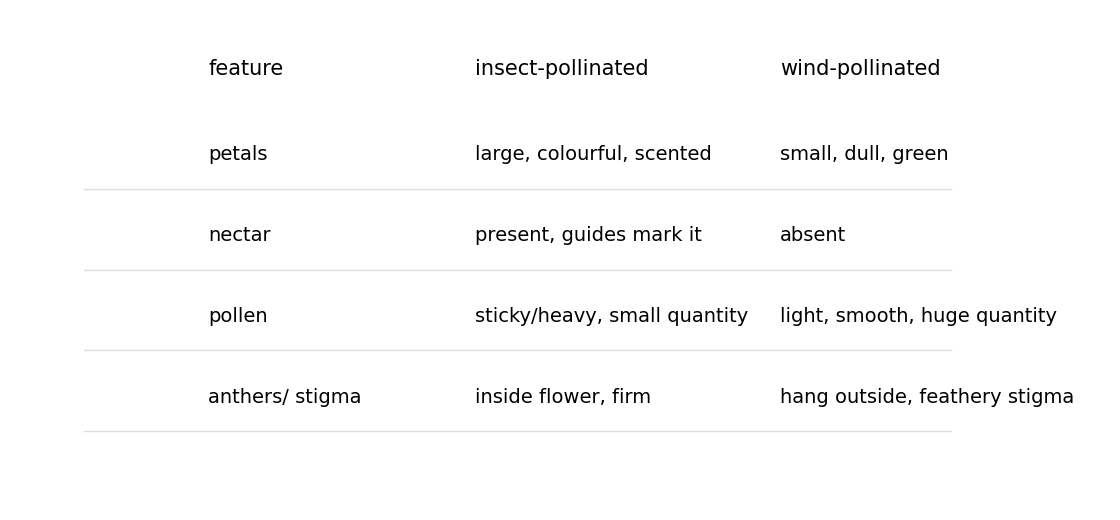
Flowering plants. Insect-pollinated flowers have large colourful petals, scent and nectar; wind-pollinated flowers are small and green, with light smooth pollen in huge quantities, anthers hanging outside and feathery stigmas.
After pollination 传粉 the pollen grain grows a pollen tube 花粉管 down the style; fertilisation 受精 follows, and the ovule becomes the seed while the ovary becomes the fruit. Germinating seeds live on their stored food reserves until the seedling can photosynthesise. Plants reproduce asexually by runners and artificially by cuttings.
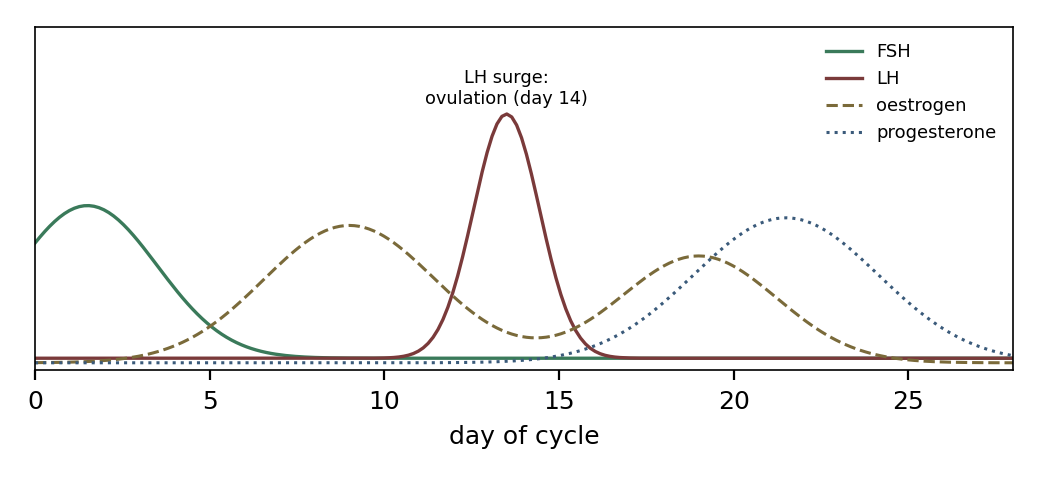
Humans. The menstrual cycle: FSH 促卵泡激素 matures an egg in the ovary; the mature follicle releases oestrogen 雌激素, which thickens the uterus lining and triggers the LH surge that causes ovulation at about day 14; the empty follicle becomes a corpus luteum releasing progesterone 孕酮, holding the lining thick until day 28, when the falling hormone levels bring menstruation (B: FSH and LH from the pituitary).
The placenta supplies the embryo with oxygen and nutrients and removes waste; amniotic fluid protects it. Oestrogen and testosterone 睾酮 drive the development of secondary sexual characteristics.
Inheritance
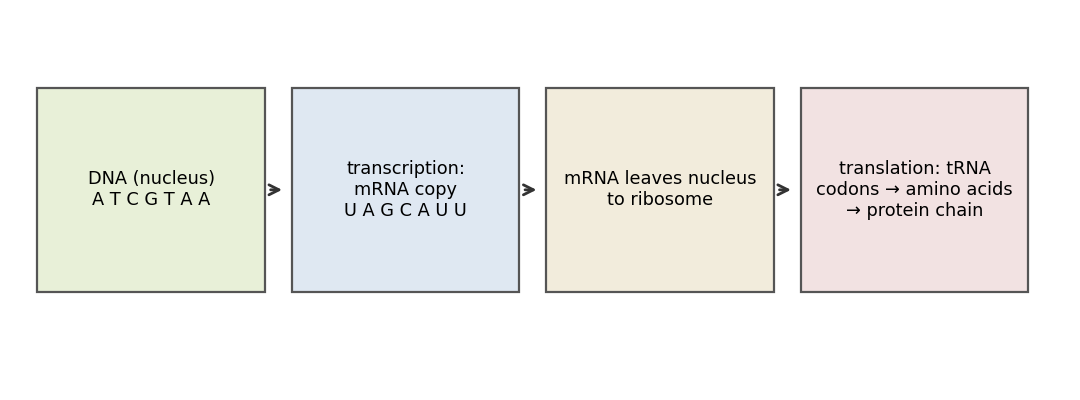
The genome 基因组 is all an organism's DNA; a gene is a section of a DNA molecule coding for one protein. Genes sit on chromosomes in the nucleus. (B) DNA is a double helix 双螺旋 with paired bases — A–T and C–G; RNA is single-stranded with U replacing T. (B) Protein synthesis: transcription 转录 copies the gene to mRNA in the nucleus; translation 翻译 at the ribosome reads codons 密码子, each matched by a tRNA anticodon carrying its amino acid, building the chain.
Alleles 等位基因 are alternative forms of a gene. Vocabulary: dominant 显性 (shows if one copy present), recessive 隐性 (needs two), homozygous 纯合, heterozygous 杂合, genotype 基因型, phenotype 表型; (B) codominance 共显性 — both alleles expressed. Most features are polygenic, not single-gene.
A monohybrid cross, laid out to earn its marks: parents' genotypes → gametes → Punnett grid → phenotype ratio.
Worked check. Cystic fibrosis (cf, recessive): both parents heterozygous Cc × Cc. Gametes C or c. Offspring CC, Cc, Cc, cc — 3 unaffected : 1 affected; a 1-in-4 chance per child, the same chance every child.
Sex determination: XX female, XY male. Mother always gives X; father gives X or Y — a genetic diagram of X×X, X×Y gametes gives 1:1 female:male, and the father's gamete decides the sex.
Mitosis 有丝分裂 makes two cells with identical chromosomes — growth, repair, cloning, asexual reproduction. Meiosis 减数分裂 makes four genetically different haploid 单倍体 gametes (human diploid 46 → haploid 23), and random fertilisation of any sperm with any egg creates further variation.
Variation can be genetic, environmental, or both. Mutation 突变 is a rare, random change in DNA that can be inherited — mostly harmless, occasionally significant (B: a changed base can alter one amino acid and the protein's shape); ionising radiation and chemical mutagens such as tobacco chemicals raise mutation rates.
Evolution
Darwin's natural selection 自然选择, step by step: organisms produce more offspring than survive; variation exists within a species; those with characteristics best suited to the environment survive and reproduce, passing the alleles on; over generations the advantageous characteristic becomes more common.
Antibiotic resistance is selection in action: a random mutation makes one bacterium resistant; antibiotics kill the non-resistant majority; the resistant bacterium survives and reproduces — completing courses of antibiotics and avoiding overuse slows the spread, and resistant infections become hard to control.
Check yourself
Give two differences between sexual and asexual reproduction.
State two adaptations of a wind-pollinated flower.
What happens after the pollen tube reaches the ovule?
Which hormone surges at day 14, and what does it cause?
Define gene, allele and genome.
(B) Name the base that replaces thymine in RNA, and where translation happens.
Cross Cc × cc and give the phenotype ratio.
Why does the father's gamete determine the sex of a child?
Give two differences between mitosis and meiosis.
Explain antibiotic resistance by natural selection in three steps.
Answers: 1 sexual — two parents, genetically different offspring; asexual — one parent, genetically identical offspring; 2 light smooth pollen in large quantity; anthers hanging outside the flower with a feathery stigma (small dull petals, no nectar); 3 the male gamete fuses with the ovule's egg cell — fertilisation; the ovule becomes a seed and the ovary a fruit; 4 LH — ovulation (release of the egg); 5 gene — a DNA section coding for one protein; allele — an alternative form of a gene; genome — all the organism's DNA; 6 (B) uracil; at a ribosome; 7 gametes C, c and c, c → Cc, Cc, cc, cc — 1 unaffected : 1 affected; 8 the mother's egg always carries X; the sperm carries X or Y, so XX (female) or XY (male) depends on the sperm; 9 mitosis — two cells, identical, same (diploid) chromosome number, for growth/repair/asexual reproduction; meiosis — four cells, genetically different, half the number (haploid), for gametes; 10 a mutation gives one bacterium resistance; the antibiotic kills the non-resistant bacteria; the resistant one survives and reproduces, so resistance spreads.
A pond holds more than water: populations that feed each other, cycle carbon and nitrogen, and respond — sometimes catastrophically — to what humans add. Ecology asks four questions: who lives here (population, community, habitat, ecosystem), who eats whom (food chains, webs, pyramids), what goes round (the carbon and nitrogen cycles), and what we are doing to it (pollution, greenhouse gases, eutrophication, deforestation).
Edexcel International GCSE Biology 4BI1, Section 4 (statements 4.1–4.18B) rewards precise definitions and the carbon cycle drawn from memory.
The organism in the environment
A population 种群 is all the organisms of one species in a habitat; a community 群落 is all the populations in that habitat; a habitat 栖息地 is the place; an ecosystem 生态系统 is the community plus its non-living surroundings. Population size is set by abiotic 非生物 factors (light, water, temperature) and biotic 生物 factors (food, predators, disease, competition). Quadrat practicals estimate population size (mean per quadrat × total area ÷ quadrat area), and (B) quadrats along a transect show distribution and biodiversity 生物多样性.
Feeding relationships
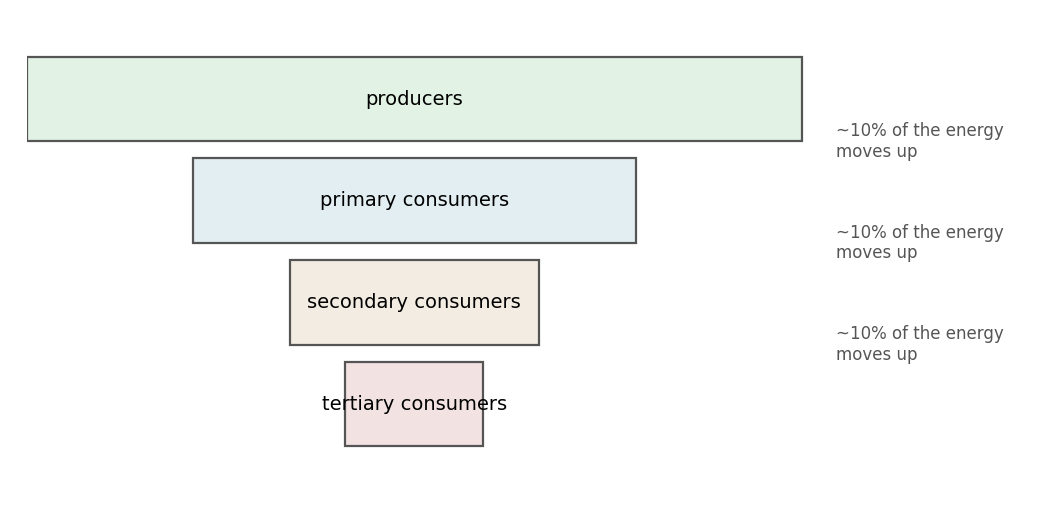
Producers 生产者 (plants) capture light energy; primary consumers 初级消费者 eat producers; secondary and tertiary consumers follow; decomposers 分解者 break down dead material. Arrows in a food chain point from eaten to eater — the direction energy flows. Pyramids of number can invert (one tree, many insects), but pyramids of biomass and of energy transfer always narrow upward — because only about 10 % of the energy at one level passes to the next: the rest is lost in respiration, movement and excretion, and as heat.
Cycles within ecosystems
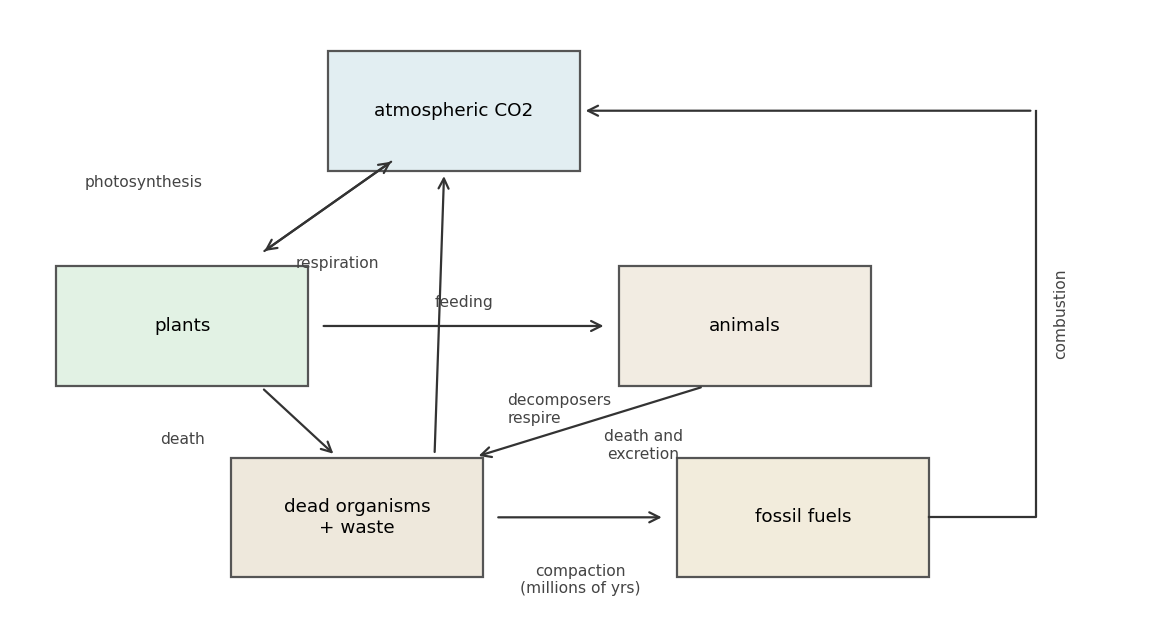
Carbon: photosynthesis removes CO₂ from the air; feeding passes carbon along chains; respiration 呼吸 (all organisms) and decomposition 分解 return it; combustion 燃烧 of fossil fuels releases carbon stored for millions of years.
(B) Nitrogen: nitrogen-fixing bacteria make nitrogen compounds from atmospheric N₂; decomposers break dead matter into ammonia; nitrifying bacteria convert ammonia to nitrates plants absorb; denitrifying bacteria return nitrogen to the air.
Human influences
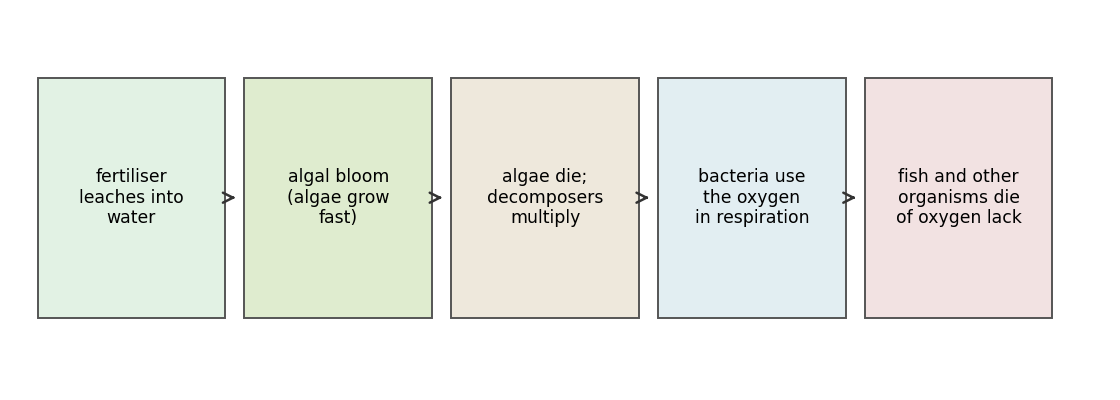
Air pollution: sulfur dioxide dissolves in rain to form acid rain (damages leaves, lakes, buildings); carbon monoxide binds haemoglobin, cutting the oxygen blood can carry. Greenhouse gases 温室气体 — water vapour, carbon dioxide, nitrous oxide, methane and CFCs — trap outgoing radiation; burning fossil fuels, deforestation, agriculture and industry add them, thickening the blanket (the enhanced greenhouse effect), bringing global warming with rising sea levels and shifting climates. Sewage in water feeds microbes that consume oxygen. Eutrophication 富营养化: fertiliser leaches into water, algae bloom, die, and decomposers strip the oxygen — fish suffocate.
(B) Deforestation removes roots and canopy: rain leaches soil minerals away, soil erodes, evapotranspiration falls (less cloud and rain), and stored carbon returns to the air, unbalancing atmospheric gases.
Check yourself
Define population, community, habitat and ecosystem.
Why can a pyramid of number be inverted when a biomass pyramid cannot?
Explain why only about 10 % of energy passes between trophic levels.
Name the four processes of the carbon cycle.
(B) Which bacteria convert ammonia to nitrates, and which return nitrogen to the air?
Why does carbon monoxide kill?
Name the five greenhouse gases.
Describe the eutrophication sequence in four steps.
(B) Give two consequences of deforestation for the carbon cycle and two for the soil.
Answers: 1 population — all organisms of one species in a habitat; community — all populations in a habitat; habitat — the place where organisms live; ecosystem — community plus its environment; 2 number counts individuals — one huge tree can feed many insects, inverting the shape — while biomass measures total mass, which always falls with each level; 3 energy is lost at each step through respiration (heat), movement, and egestion/excretion of uneaten parts; 4 photosynthesis, respiration, decomposition, combustion; 5 (B) nitrifying bacteria; denitrifying bacteria; 6 it binds to haemoglobin more strongly than oxygen, so blood carries less oxygen to tissues; 7 water vapour, carbon dioxide, nitrous oxide, methane, CFCs; 8 fertiliser runs into water → algal bloom → algae die and decomposers multiply → decomposers respire, using the oxygen, so fish and other organisms die; 9 (B) carbon: fewer trees photosynthesise, and burning/combaction releases stored carbon; soil: leaching of minerals and erosion without roots, with less evapotranspiration.
לחם מתנפח, יוגורט עובה, אינסולין מציל חיים — כל אלו תוצרים של אורגניזמים שהופעלו. סעיף זה עוסק בכיצד בני אדם מגדילים תפוקה (חממות, דשנים, בקרת מזיקים), מגדלים מיקרואורגניזמים בקנה מידה גדול (מייצרי תסיסה), ומשנים אורגניזמים במכוון: גידול מובחר, הנדסה גנטית ושמירה.
Edexcel International GCSE Biology 4BI1, Section 5 (הצהרות 5.1–5.20B) משלים את הקורס. ההצהרות עם סיומת B (גידול דגים, מיקרו-התרבות, שמירת יונקים) הן רק לביוlogy.
ייצור מזון
צמחי חקלאות.חממות ו tunnels פוליאתילן לוכדים חום ומגנים על הצמחים, ומאפשרים לגברים לשלוט באור, טמפרטורה, CO₂ ומים; העלאת CO₂ וטמפרטורה לעבר האופטימום מעלה את קצב הפוטוסינתזה והתפוקה. דשנים מחליפים יונים מינרליים (נitrates לחומצות אמינו, מגנזיום לכלורופיל) שהקרקע מאבדת בכל קציר. בקרת מזיקים: רעלים הורגים מזיקים במהירות ובמלואם אך מסכנים בייאקומולציה, פוגעים במינים אחרים ומשאירים שאריות; בקרה ביולוגית (הכנסת טורף של מזיק) היא עצמאית וספציפית אך איטית ופחות נשלטת אם המין הבוקר עצמו מתפשט.
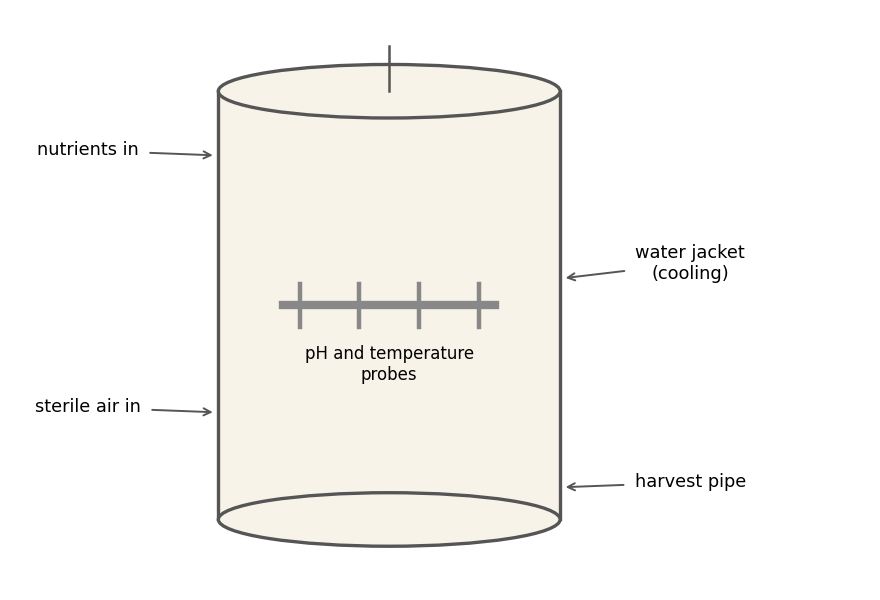
מיקרואורגניזמים.שמרים מפרמנטים סוכר: באנאירובית הם מייצרים פחמן דו-חמצני (שהופך את לחם) ואתנול; Lactobacillus ממיר סוכר חלב לחומצה לקטית, ומעבה יוגורט. מפרימת תעשייה שומרת על מיקרואורגניזמים בדרגת האופטימום שלהם: היבטים אספטיים (ללא זיהום), תזונה, טמפרטורה ו-pH מיטביים, חמצון (אספקת אוויר לתרבויות אוויריות) וערבוב (הערבלה מפילה חום ותזונה באופן אחיד).
(B) גידול דגים מספק חלבונים ביעילות: לשמור על איכות המים, לשלוט בטריפה (אינטראספציפית — בין הדגים — ואינטרספציפית), לשלוט במחלות, להסיר פסולת, לשלוט באיכות ובתדירות ההאכלה, ולבצע הזרגעה נבחרת של זני גדילה מהירה.
גידול מובחר
בחר הורים עם התכונות הרצויות → הצלם אותם → בחר את הצאצאים הטובים ביותר → חזור על כך לאורך דורות. זה מפתח צמחים בתפוקה גבוהה יותר, עמידות למחלות או עמידות לקשיים, ובעלי חיים עם יותר בשר, חלב או רכות — אך זה מצמצם את בסיס הגנים, ומגדיל את החשיפות למחלות, לוקח מספר דורות רבים.
שינוי גנטי (הנדסה גנטית)
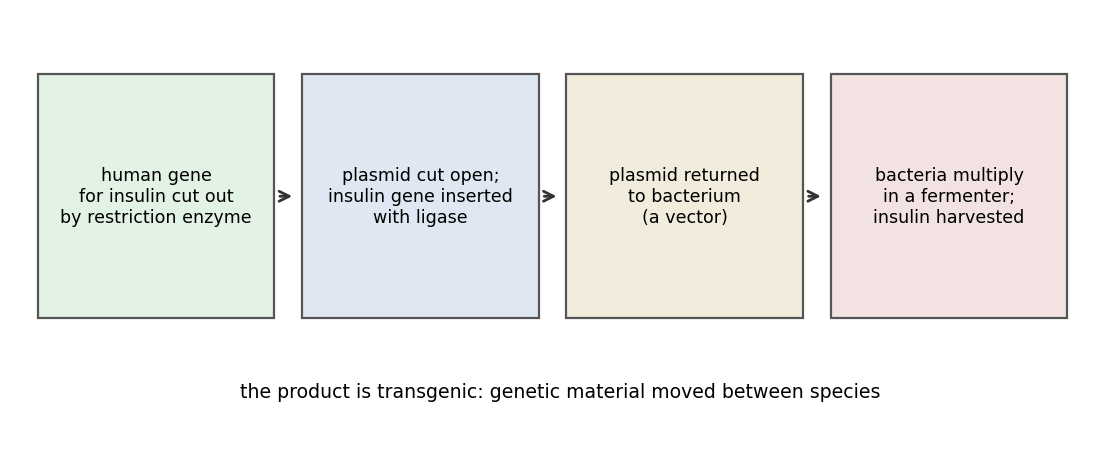
אנזימי הגבלה חותכים DNA באתרים ספציפיים; ליגאזה מחברת חתיכות DNA זו לזו. פלזמיד (או וירוס) משמש כווקטור: גן האינסולין האנושי נחתך, מוכנס לפלזמיד פתוח, וה-DNA רקומבინנטי נקלט על ידי חיידקים, שמתרבים במפרימה ומייצרים אינסולין אנושי. צמחים מהודרים גנטית יכולים להתנגד למזיקים או לעשבי שדה, או ליצור יותר מזון. אורגניזם המקבל גנים ממינים אחר הוא טרנסגני.
השחלה (B)
מיקרו-הכפלה (תרבות רקמות): אקספלאנט קטן מגודל in vitro על תמיסת תזונה עם הורמוני צמיחה, ומייצר צמחי ביצור זהים גנטית — כמות מסחרית של צמחים עם תכונות רצויות, חסרי מחלות ומהירים. השחלת יונקים: גרעין דיפלואידי מתאולה בשלה מוכנס לתא ביצה מונוע (הגרעין שלו הוסר); התא מתחלק לאמביונה המופעלת בגוף מארח — דולי הכבש. בעלי חיים טרנסגניים מהודרים יכולים לייצר חלבונים אנושיים בחלבם.
בדוק את עצמך
ציין שתי דרכים בהן חממה מגבירה תפוקת יבולים.
ציין יתרון אחד וחסרון אחד של בקרה ביולוגית.
מדוע Lactobacillus מעבה חלב?
רשימת חמישת התנאים שמפרימה שומרת עליהם.
(B) ציין שתי שיטות לשליטה בטריפה בגידול דגים.
ציין שני חסרונות של הזרגעה נבחרת.
ציין את האנזים שחותך את ה-DNA ואת האנזים שמחבר אותו.
מהו ווקטור בהנדסה גנטית?
הסבר מדוע חיידקים עם גן האינסולין האנושי מייצרים תרופה שימושית.
(B) סקר את שלבי ההשחלה של יונק.
תשובות: 1 תופס חום בסביבת האופטימום; CO₂, אור ומים נשלטים (שניים מכל); 2 יתרון — מתקיים עצמאית, ללא שאריות; חסרון — איטי, והמין הבוקר עשוי להתפשט; 3 הוא ממיר לקטוז לחומצה לקטית, שמגבשת את חלבון החלב; 4 תנאים אספטיים, תזונה, טמפרטורה ו-pH מיטביים, חמצון, ערבוב; 5 (B) כלובים רשת נגד טורפים אינטרספציפיים; צפיפות גידול נמוכה נגד אינטראספציפיים; 6 מצמצם את בסיס הגנים, כך שהמחלה נפוצה בקלות; לוקח דורות רבים.
המשך תשובות: 7 אנזימי הגבלה חותכים; ליגאז מחבר; 8 פלסמיד או וירוס המכיל DNA רקומביננטי לתוך תא; 9 הם רבים במהירות בחוורמנטר ומפרישים אינסולין אנושי — בטיחותי וניתן לייצור בקנה מידה; 10 (B) גרעין דיפלואידי מתא בוגר → ביצה ללא גרעין → חלוקה לאמביו → השתלה באם מאמצת.
 Variation can be genetic, environmental, or both. Mutation