Enduring Understanding (DAT-1): The way a computer represents data internally is different from the way the data are interpreted and displayed for the user. Programs are used to translate data into a representation more easily understood by people.
Learning Objective DAT-1.A: Explain how data can be represented using bits. [Skill 3.C]
- DAT-1.A.1 Data values can be stored in variables, lists of items, or standalone constants and can be passed as input to (or output from) procedures.
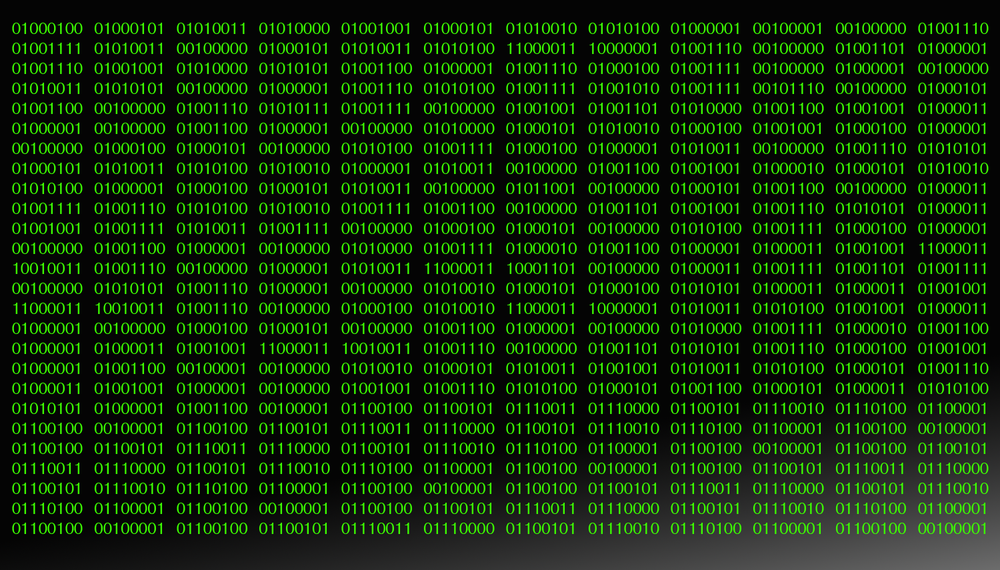
- DAT-1.A.2 Computing devices represent data digitally, meaning that the lowest-level components of any value are bits.
- DAT-1.A.3 Bit is shorthand for binary digit and is either 0 or 1.
- DAT-1.A.4 A byte is 8 bits.
- DAT-1.A.5 Abstraction is the process of reducing complexity by focusing on the main idea. By hiding details irrelevant to the question at hand and bringing together related and useful details, abstraction reduces complexity and allows one to focus on the idea.
- DAT-1.A.6 Bits are grouped to represent abstractions. These abstractions include, but are not limited to, numbers, characters, and color.
- DAT-1.A.7 The same sequence of bits may represent different types of data in different contexts.
- DAT-1.A.8 Analog data have values that change smoothly, rather than in discrete intervals, over time. Some examples of analog data include pitch and volume of music, colors of a painting, or position of a sprinter during a race.
- DAT-1.A.9 The use of digital data to approximate real-world analog data is an example of abstraction.
- DAT-1.A.10 Analog data can be closely approximated digitally using a sampling technique, which means measuring values of the analog signal at regular intervals called samples. The samples are measured to figure out the exact bits required to store each sample.
Learning Objective DAT-1.B: Explain the consequences of using bits to represent data. [Skill 1.D]
- DAT-1.B.1 In many programming languages, integers are represented by a fixed number of bits, which limits the range of integer values and mathematical operations on those values. This limitation can result in overflow or other errors.
- DAT-1.B.2 Other programming languages provide an abstraction through which the size of representable integers is limited only by the size of the computer's memory; this is the case for the language defined in the exam reference sheet.
- DAT-1.B.3 In programming languages, the fixed number of bits used to represent real numbers limits the range and mathematical operations on these values; this limitation can result in round-off and other errors. Some real numbers are represented as approximations in computer storage.
- Exclusion statement: Specific range limitations for real numbers are outside the scope of this course and the AP Exam.
Learning Objective DAT-1.C: For binary numbers: a. Calculate the binary (base 2) equivalent of a positive integer (base 10) and vice versa. [Skill 2.B] b. Compare and order binary numbers. [Skill 2.B]
- DAT-1.C.1 Number bases, including binary and decimal, are used to represent data.
- DAT-1.C.2 Binary (base 2) uses only combinations of the digits zero and one.
- DAT-1.C.3 Decimal (base 10) uses only combinations of the digits $0 - 9$.
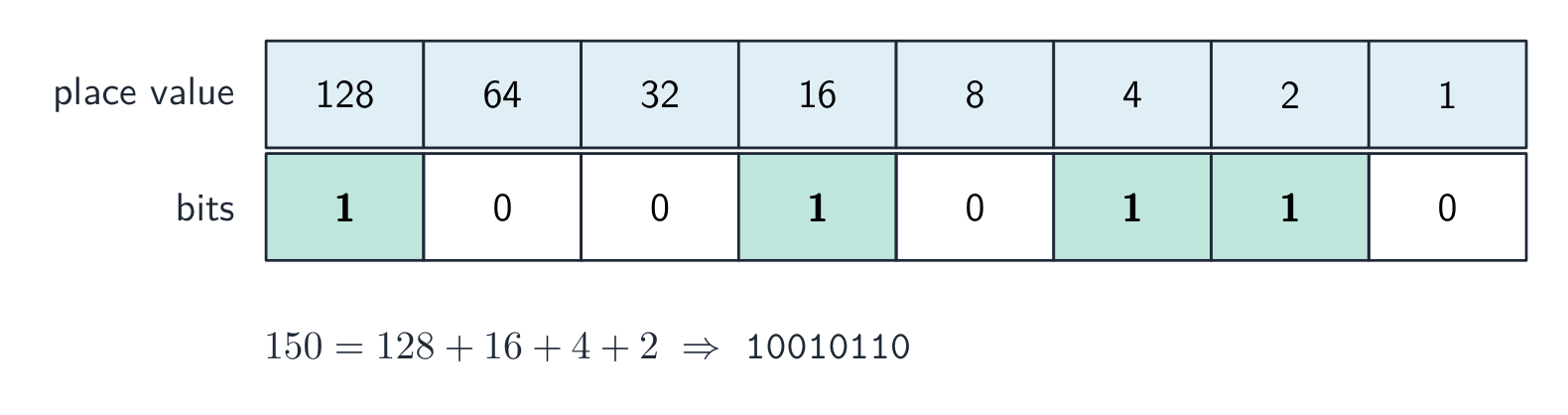
- DAT-1.C.4 As with decimal, a digit's position in the binary sequence determines its numeric value. The numeric value is equal to the bit's value (0 or 1) multiplied by the place value of its position.
- DAT-1.C.5 The place value of each position is determined by the base raised to the power of the position. Positions are numbered starting at the rightmost position with 0 and increasing by 1 for each subsequent position to the left.
הבנה מתמשכת (DAT-1): הדרך שבה מחשב מייצג נתונים בפנים היא שונה מהדרך שבה הנתונים מופנשים ומוצגים למשתמש. תוכניות משמשות להמרת נתונים לייצוג שמבין אנשים בקלות יותר.
מטרת למידה DAT-1.A: הסבר כיצד ניתן לייצג נתונים באמצעות ביטים. [מיומנות 3.C]
- DAT-1.A.1 ערכי נתונים יכולים להיות מאוחזים במשתנים, ברשימות פריטים או בקבועים עצמאיים, ויכולים לעבור כקלט (או כתוצאה) לתוך פרוצדורות.
- DAT-1.A.2 התקני מחשוב מייצגים נתונים דיגיטלית, כלומר שהרכיבים ברמה הנמוכה ביותר של כל ערך הם ביטים.
- DAT-1.A.3 ביט הוא קיצור של דיגיט ביינרי, והוא יכול להיות 0 או 1.
- DAT-1.A.4 בייט הוא 8 ביטים.
- DAT-1.A.5 ה abstraction (התפשטות) היא תהליך של צמצום המורכבות על ידי התמקדות ברעיון המרכזי. על ידי הסתרת פרטים שאינם רלוונטיים לשאלה הדורשת את תשובתה וקבוצת יחד פרטים רלוונטיים ושימושיים, הה abstraction מצמצמת מורכבות ומאפשרת להתמקד ברעיון.
- DAT-1.A.6 ביטים מקובצים כדי לייצג abstractions. abstractions אלו כוללות, אך אינן מוגבלות ל-, מספרים, תווים וצבעים.
- DAT-1.A.7 אותה רצף של ביטים יכול לייצג סוגי נתונים שונים בהקשרים שונים.
- DAT-1.A.8 נתונים אנלוגיים הם בעלי ערכים השונים בצורה חלקה, ולא בתחומים נפרדים, לאורך זמן. דוגמאות לנתונים אנלוגיים כוללים גובה טון ועוצמת קול במוסיקה, צבעים של ציור, או מיקומו של רץ ספרינט בזמן מירוץ.
- DAT-1.A.9 השימוש בנתונים דיגיטליים כדי לקירוב נתונים אנלוגיים מהעולם האמיתי הוא דוגמה ל- abstraction.
- DAT-1.A.10 ניתן לקרוב נתונים אנלוגיים באופן מדויק בדיגיטלי באמצעות שיטת דגימה, המשמעות מדידת ערכים של האות האנלוגי במרווחים קבועים הנקראים דגימות. הדגימות נמדדות כדי לחשב את הביטים המדויקים הנדרשים לאחסון כל דגימה.
מטרת למידה DAT-1.B: הסבר ההשלכות של שימוש בביטים לייצוג נתונים. [מיומנות 1.D]
- DAT-1.B.1 בשפות תכנות רבות, שלמים מיוצגים על ידי מספר קבוע של ביטים, מה שמגביל את הטווח של ערכי שלמים ופעולות מתמטיות על ערכים אלו. הגבלה זו עלולה לגרום to overflow או שגיאות אחרות.
- DAT-1.B.2 שפות תכנות אחרות מספקות abstraction שבו גודל של שלמים שניתן לייצג מוגבל רק בגודל הזיכרון של המחשב; זהו המקרה עבור השפה המוגדרת בדף הרפרנס לבחינה.
- DAT-1.B.3 בשפות תכנות, מספר הביטים הקבוע המשמש לייצוג מספרים ממשיים מגביל את הטווח ואת הפעולות המתמטיות על ערכים אלו; הגבלה זו עלולה לגרום to round-off ושגיאות אחרות. חלק ממספרים ממשיים מיוצגים כקירובים באחסון המחשב.
- הצהרת исключение: הגבלות טווח ספציפיות למספרים ממשיים הן מחוץ לתחום ההשכלה של הקורס ובחינת AP.
מטרת למידה DAT-1.C: עבור מספרים ביינריים: א. חשב את הערך הבוינרי (בסיס 2) של שלם חיובי (בסיס 10) ולהפך. [מיומנות 2.B] ב. השווה וסדר מספרים ביינריים. [מיומנות 2.B]
- DAT-1.C.1 בסיסי מספרים, כולל בינארי ועשרוני, משמשים לייצוג נתונים.
- DAT-1.C.2 מערכת בינארית (בסיס 2) משתמשת רק בשילובים של הספרות אפס ואחד.
- DAT-1.C.3 מערכת עשרונית (בסיס 10) משתמשת רק בשילובים של הספרות $0 - 9$.
- DAT-1.C.4 כמו במערכת העשרונית, מיקום הספרה ברצף הבינארי קובע את ערכה המספרי. הערך המספרי שווה לערך הביט (0 או 1) כפול ערך המקום של המיקום שלו.
- DAT-1.C.5 ערך המקום של כל מיקום נקבע על ידי הבסיס מורם בחזקה של המיקום. המיקומים מסומנים החל מהמיקום הימני ביותר עם 0 ועולים ב-1 עבור כל מיקום נוסף שמאלה.