Aerobic respiration
Introduit| English | Sens |
|---|---|
| aerobic respiration/eəˈrəʊbɪk ˌrespɪˈreɪʃn/ | aerobic respiration |
| glucose/ˈɡluːkəʊs/ | glucose |
A guinea pig in a box of ice, 1783
- In the winter of 1782–83 Antoine Lavoisier and Pierre-Simon Laplace put a guinea pig in a chamber surrounded by ice, and measured how much ice its body heat melted. They compared this with the carbon dioxide it breathed out and with burning charcoal. They concluded that respiration is a slow kind of combustion.
- Aerobic respiration 有氧呼吸 releases energy from glucose 葡萄糖 using oxygen. It happens in every living cell, all the time.
What did Lavoisier and Laplace conclude about respiration?
Difficulté 1/5 · 100 pièces + un petit bonus lors de la première réussite aujourd'hui
Body heat melted the ice.
The equation
- Word equation: glucose + oxygen → carbon dioxide + water.
- Balanced: C₆H₁₂O₆ + 6O₂ → 6CO₂ + 6H₂O. Most of the reactions happen in mitochondria.
Respiration aérobie
Aerobic respiration releases a LOT of energy from glucose using oxygen.
What are the products of aerobic respiration?
Difficulté 1/5 · 100 pièces + un petit bonus lors de la première réussite aujourd'hui
Glucose + oxygen → CO₂ + water.
What the energy is for
- Muscle contraction, making proteins, cell division, active transport, growth, sending nerve impulses, and keeping body temperature constant in mammals and birds.
- Respiration releases energy; it does not "make" energy.
Which use energy from respiration?
Difficulté 2/5 · 140 pièces + un petit bonus lors de la première réussite aujourd'hui
Diffusion is passive.
Aerobic versus anaerobic
- Aerobic respiration uses oxygen and releases much more energy per glucose molecule.
- Anaerobic respiration happens without oxygen and releases much less: in muscles, glucose → lactic acid; in yeast, glucose → ethanol + carbon dioxide.
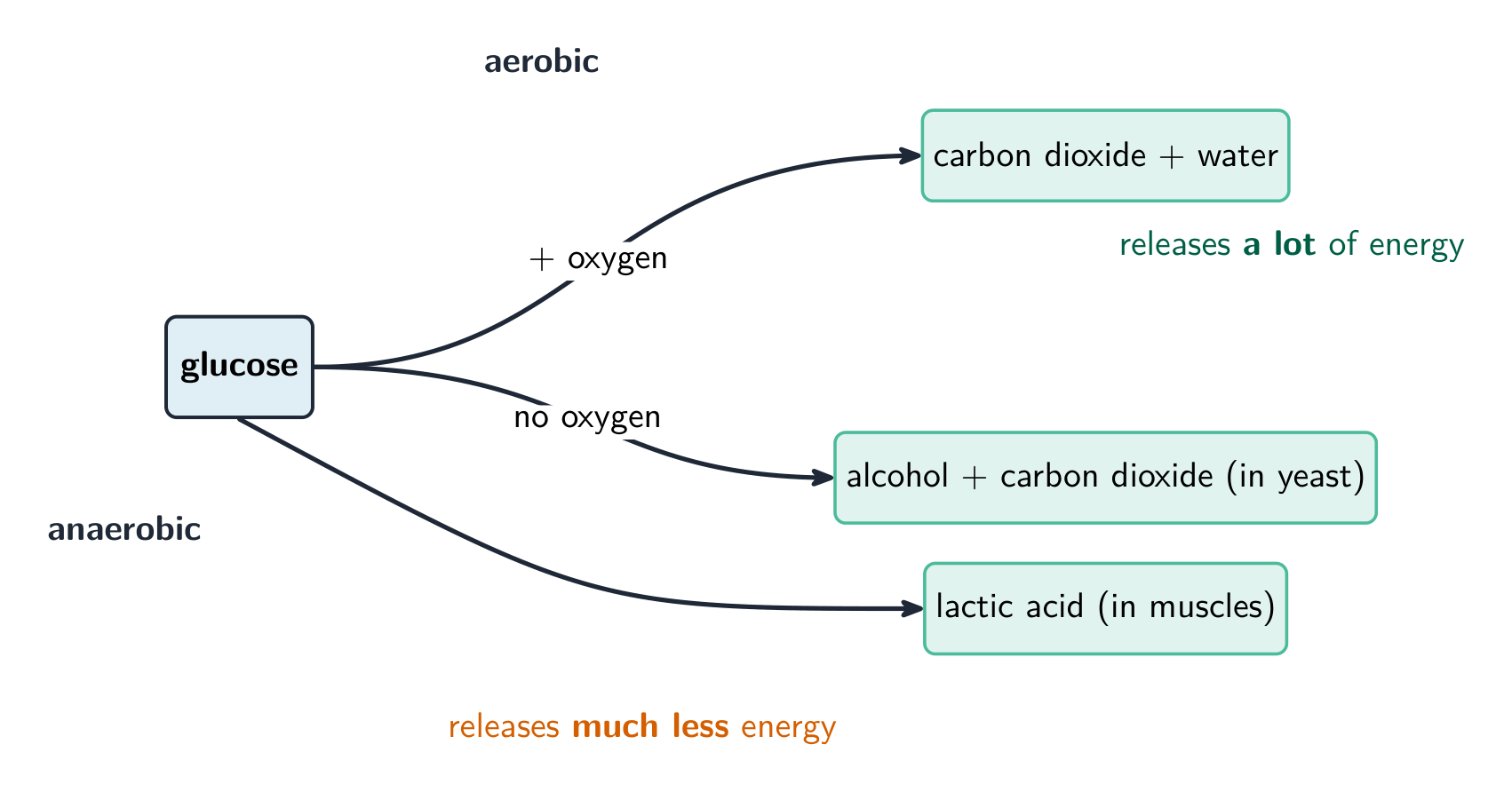
Match each type to its product.
Difficulté 2/5 · 140 pièces + un petit bonus lors de la première réussite aujourd'hui
Different pathways.
Worked example: oxygen for one glucose
How many molecules of oxygen are needed to respire 3 molecules of glucose completely?
- Equation: 1 C₆H₁₂O₆ needs 6 O₂.
- Scale: 3 glucose × 6 = 18 O₂.
- Products: 18 CO₂ and 18 H₂O.
How many O₂ molecules are needed to respire 5 glucose molecules completely?
Difficulté 2/5 · 140 pièces + un petit bonus lors de la première réussite aujourd'hui
5 × 6.
Sustained exercise
- A marathon runner relies on aerobic respiration: breathing rate and heart rate rise to deliver more oxygen and remove carbon dioxide.
- In a sprint, muscles also respire anaerobically; lactic acid builds up, and extra oxygen is needed afterwards (the oxygen debt).
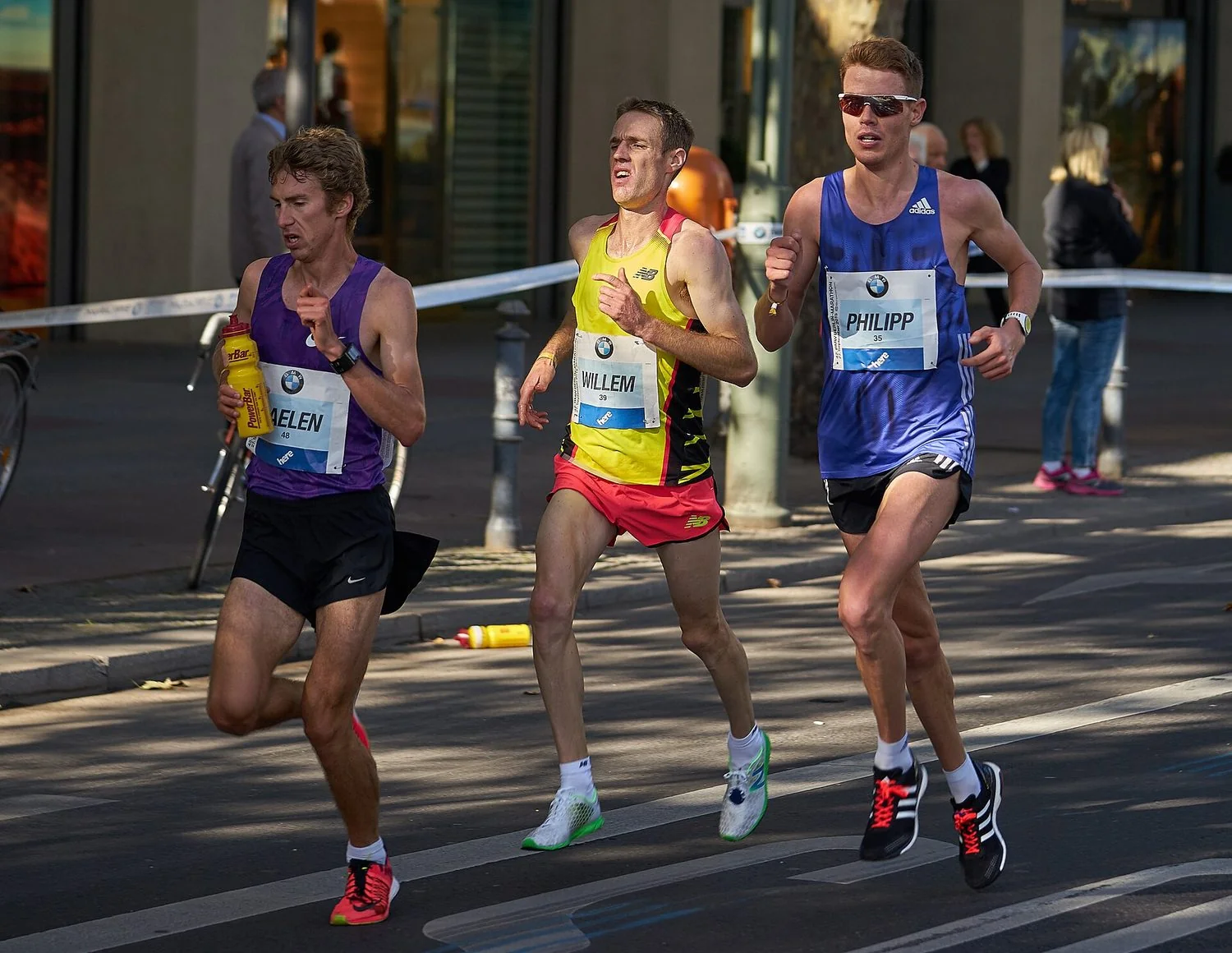
During a sprint, lactic acid builds up in muscles.
Difficulté 1/5 · 100 pièces + un petit bonus lors de la première réussite aujourd'hui
Some anaerobic respiration.
Respiration is not breathing. Breathing moves air in and out of the lungs; respiration is a chemical reaction inside every cell.
Respiration and breathing are the same process.
Difficulté 1/5 · 100 pièces + un petit bonus lors de la première réussite aujourd'hui
Respiration is a reaction in cells.
Aerobic respiration: C₆H₁₂O₆ + 6O₂ → 6CO₂ + 6H₂O, releasing energy in every cell for movement, growth, active transport and warmth. Without oxygen, anaerobic respiration releases much less energy.
Explain why a runner's breathing rate and heart rate increase during a long race.
Linking supply and demand.