Food chains and food webs
Introducido| English | Significado |
|---|---|
| food chain/fuːd tʃeɪn/ | cadena alimentaria |
| food web/fuːd web/ | red alimentaria |
| herbivore/ˈhɜːbɪvɔː/ | herbívoro |
| decomposers/ˌdiːkəmˈpəʊzəz/ | descomponedores |
Who eats whom
- In any habitat, organisms are linked by what they eat.
- These feeding links form food chains 食物链 and, joined together, food webs 食物网.
Food web energy route
Move energy from producer to consumers and see why each link loses energy.
In a food chain, the arrows show the direction of:
Dificultad 1/5 · 100 monedas + un pequeño bono en el primer intento de hoy
Arrows point from the eaten to the eater.
Food chains
- A food chain shows the flow of energy from one organism to the next.
- The arrows point in the direction the energy flows (from the eaten to the eater).
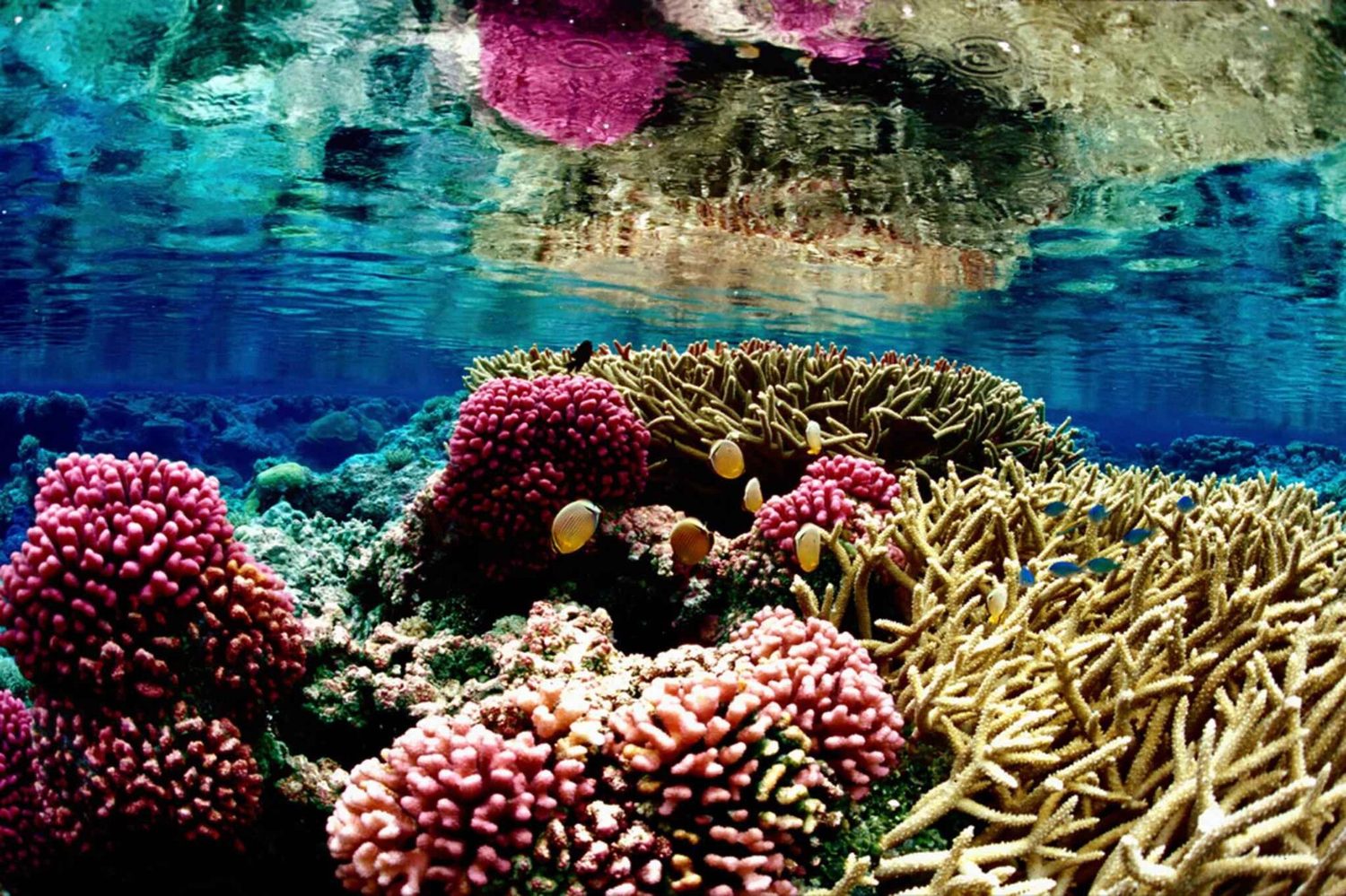
A coral reef: a rich ecosystem where many food chains link into a food web
A food web is:
Dificultad 1/5 · 100 monedas + un pequeño bono en el primer intento de hoy
Food webs link multiple chains.
Food webs
- Most organisms eat more than one thing, so chains link into a food web.
- A food web shows all the feeding relationships in a habitat.
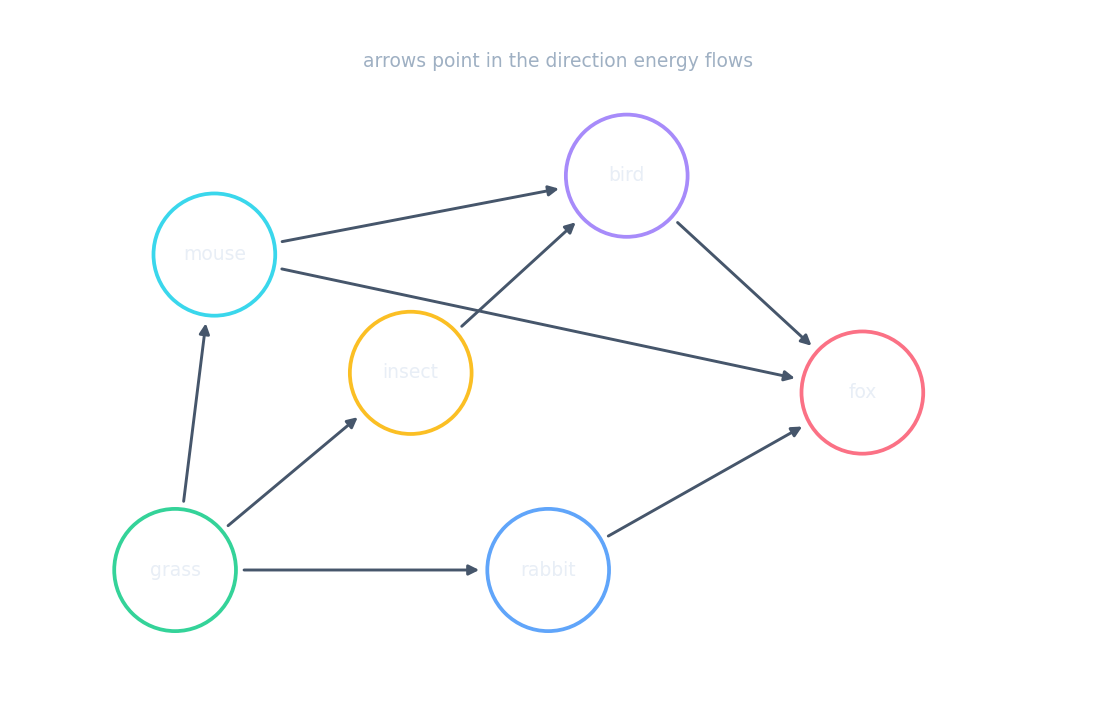
Arrows point from each organism to the one that eats it — the direction energy flows.
A primary consumer is an organism that eats:
Dificultad 1/5 · 100 monedas + un pequeño bono en el primer intento de hoy
Primary consumers eat producers.
Decomposers break down dead matter and recycle nutrients.
Dificultad 1/5 · 100 monedas + un pequeño bono en el primer intento de hoy
Bacteria and fungi recycle nutrients back to the soil.
The first organism in every food chain is a ______.
Dificultad 1/5 · 100 monedas + un pequeño bono en el primer intento de hoy
Producers capture the Sun's energy.
Feeding levels
- Producer → primary consumer (herbivore 食草动物) → secondary consumer → and so on.
- Decomposers 分解者 (bacteria, fungi) break down dead matter and recycle nutrients.
The arrow points TO the eater. In a food chain, the arrow shows the direction energy moves — from the food to the consumer. "Grass → rabbit" means the rabbit eats the grass.
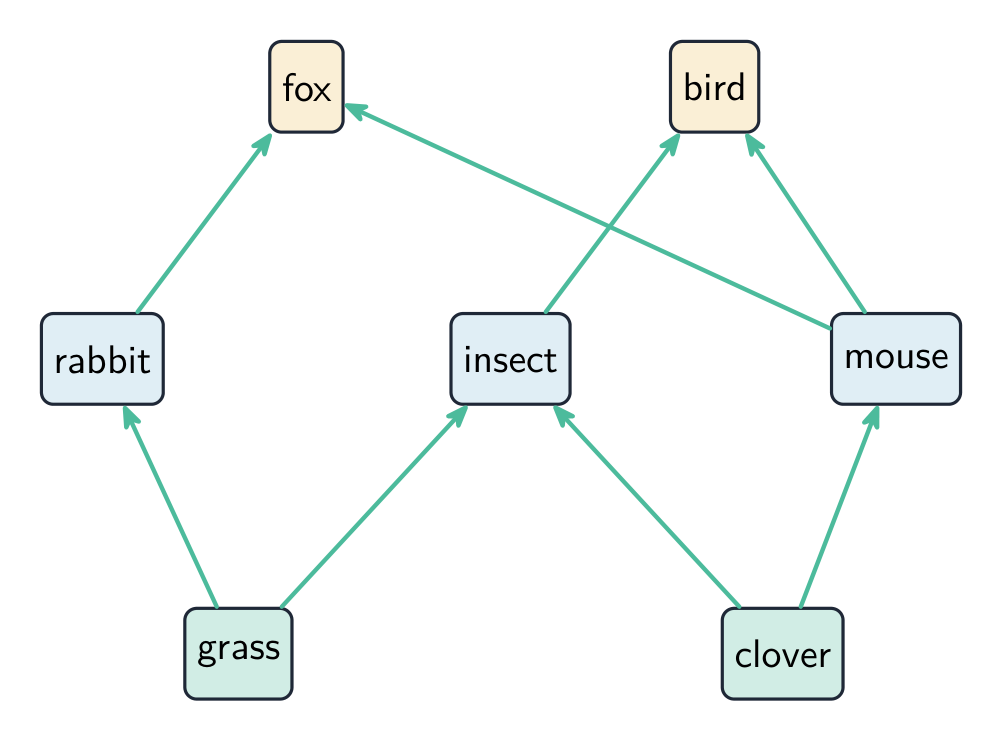
A food web is several food chains linked together
Worked example: remove one species
A food web has two chains: grass → rabbit → fox and grass → grasshopper → bird → fox. A disease kills most of the rabbits. Predict the effects.
- Foxes lose a main food, so they eat more birds: bird numbers fall. With fewer birds eating them, grasshoppers increase. Grass may grow more, since fewer rabbits eat it.
- Fox numbers may also fall if they cannot find enough food. In a food web, a change to one population spreads along every link.
In grass → grasshopper → bird → fox, what is the bird?
Dificultad 1/5 · 100 monedas + un pequeño bono en el primer intento de hoy
Grass is the producer, the grasshopper the primary consumer, so the bird that eats it is the secondary consumer.
If the birds die out, the number of grasshoppers is likely to rise at first.
Dificultad 1/5 · 100 monedas + un pequeño bono en el primer intento de hoy
Fewer predators eat them; later their numbers may fall again if they run short of grass.
You've got it
- a food chain shows energy flow; arrows point to the eater
- linked chains form a food web (most organisms eat several things)
- levels: producer → primary → secondary consumer; decomposers recycle nutrients
Write from an arrow in a food chain
- A diagram shows grass, then a grasshopper, then a bird.
- Arrows point from the grass to the grasshopper.
What does the arrow mean, and what do decomposers do?
The arrow is energy flow, not 'points at the meal'.
In a food chain, the arrow points toward what?
Dificultad 1/5 · 100 monedas + un pequeño bono en el primer intento de hoy
The eater is at the head of the arrow.