Groups of organisms · Grupos de organismos
| English | Español |
|---|---|
| kingdoms/ˈkɪŋdəmz/ | reinos |
| photosynthesis/ˌfəʊtəʊˈsɪnθəsɪs/ | fotosíntesis |
| fungi/ˈfʌŋɡi/ | hongos |
| bacteria/bækˈtɪərɪə/ | bacterias |
| protoctists/ˈprəʊtəʊktɪsts/ | protoctistas |
| vertebrates/ˈvɜːtɪbreɪts/ | vertebrados |
| invertebrates/ɪnˈvɜːtɪbreɪts/ | invertebrados |
| prokaryotes/ˈprɒkərɪəʊts/ | procariotas |
| eukaryotes/ˈjuːkərɪəʊts/ | eucariotas |
The great kingdoms 界 of life
- A mushroom, an oak tree, a tiger and the germs that make you ill are all living — but profoundly different.
- Biologists sort all life into a few huge groups called kingdoms.
Los grandes reinos de la vida
- Un hongo, un roble, un tigre y los gérmenes que te enferman son todos seres vivos — pero profundamente diferentes.
- Los biólogos clasifican toda la vida en unos pocos grupos inmensos llamados reinos.
Groups of organisms lab · Laboratorio de grupos de organismos
Compare organism groups by the feature that identifies them. · Comparar grupos de organismos según la característica que los identifica.
Which of these are kingdoms of living things? (Select all that apply.) · ¿Cuáles de estos son reinos de seres vivos? (Seleccione todas las que correspondan.)
Rocks are not living. The kingdoms include animals, plants, fungi, bacteria and protoctists. · Las rocas no son vivas. Los reinos incluyen animales, plantas, hongos, bacterias y protoctistas.
The five kingdoms
- Animals: many cells, no cell walls, feed on other organisms.
- Plants: many cells, cell walls, make food by photosynthesis 光合作用.
- Fungi 真菌, bacteria 细菌 and protoctists 原生生物 make up the rest.
A dichotomous key: each step gives two choices until you reach the organism
Los cinco reinos
- Animales: muchas células, sin paredes celulares, se alimentan de otros organismos.
- Plantas: muchas células, con paredes celulares, producen su propio alimento mediante la fotosíntesis 光合作用.
- Los Hongos 真菌, las bacterias 细菌 y los protoctistas 原生生物 conforman el resto.
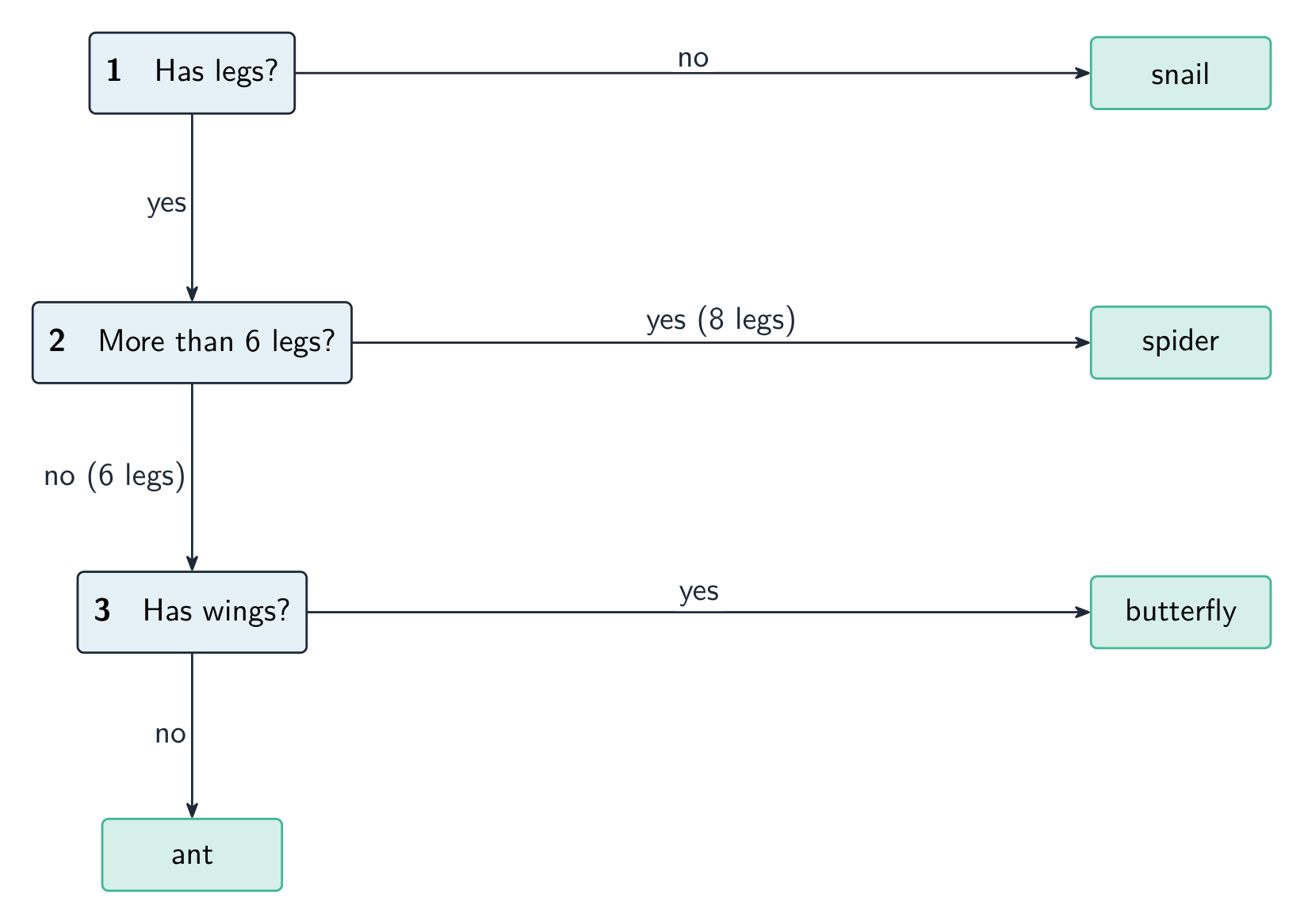
Una clave dicotómica: cada paso ofrece dos opciones hasta identificar al organismo
Which feature do plant cells have that animal cells do not? · ¿Qué característica tienen las células vegetales que no tienen las células animales?
Plant cells have a cell wall, chloroplasts and a large vacuole. · Las células vegetales tienen una pared celular, cloroplastos y una gran vacuola.
Plants make their own food by the process of ______. · Las plantas producen su propio alimento mediante el proceso de ______.
Plants are producers; animals must eat other organisms. · Las plantas son productoras; los animales deben alimentarse de otros organismos.
Animals vs plants
- Plant cells have a cell wall, chloroplasts and a large vacuole; animal cells do not.
- Plants make their own food (photosynthesis); animals must eat other organisms.
A virus has just two parts: a protein coat around its genetic material
Animales vs. plantas
- Las células vegetales tienen pared celular, cloroplastos y una gran vacuola; las células animales no.
- Las plantas producen su propio alimento (fotosíntesis); los animales deben alimentarse de otros organismos.
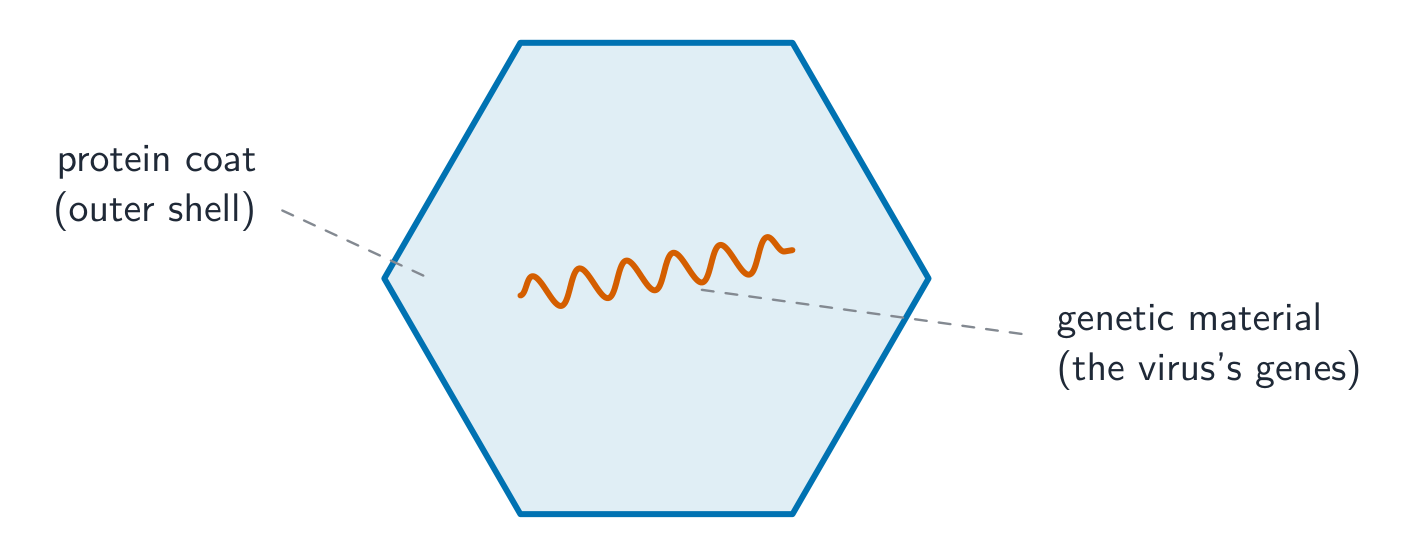
Un virus tiene solo dos partes: una cápside proteica que rodea su material genético
Which group are vertebrates? · ¿A qué grupo pertenecen los vertebrados?
Mammals have a backbone; insects, spiders and worms do not. · Los mamíferos tienen columna vertebral; insectos, arañas y gusanos no la tienen.
Bacteria are prokaryotes, meaning their cells have no proper nucleus. · Las bacterias son procariotas, lo que significa que sus células no tienen un verdadero núcleo.
Bacteria lack a nucleus; the other kingdoms are eukaryotes. · Las bacterias carecen de núcleo; los otros reinos son eucariotas.
Vertebrates 脊椎动物 and invertebrates 无脊椎动物
- Vertebrates have a backbone: fish, amphibians, reptiles, birds, mammals.
- Invertebrates have no backbone: insects, spiders, worms, molluscs.
Bacteria are different from the rest. Bacteria are prokaryotes 原核生物 — their cells have no proper nucleus. Animals, plants, fungi and protoctists are eukaryotes 真核生物, with a nucleus. This is a fundamental divide.
Vertebrados 脊椎动物 e invertebrados 无脊椎动物
- Los vertebrados tienen columna vertebral: peces, anfibios, reptiles, aves y mamíferos.
- Los invertebrados no tienen columna vertebral: insectos, arañas, gusanos y moluscos.
Las bacterias son diferentes al resto. Las bacterias son procariotas 原核生物 — sus células carecen de un verdadero núcleo. Los animales, plantas, hongos y protoctistas son eucariotas 真核生物, con un núcleo. Esta es una división fundamental.
You've got it
- life is sorted into kingdoms: animals, plants, fungi, bacteria, protoctists
- plant cells have a cell wall, chloroplasts and a vacuole; animal cells don't
- vertebrates have a backbone, invertebrates don't; bacteria have no nucleus
Ya lo tienes
- La vida se clasifica en reinos: animales, plantas, hongos, bacterias y protoctistas.
- Las células vegetales tienen pared celular, cloroplastos y una vacuola; las células animales no.
- Los vertebrados tienen columna vertebral, los invertebrados no; las bacterias no tienen núcleo.