Tu plan de aprendizaje · Continuar · Revisar →
反而 vs 却 (en cambio / en cambio sin embargo)
IntroducidoTu posición guardada se conserva en este navegador. Continuar no completa la lección ni responde sus preguntas.
Yet versus instead
- Tomaste una siesta para sentirte mejor, pero te despertaste aún más cansado.
- I / me我to sleep睡(completed / change)了one / a一to feel觉,yet却or / still还是very很tired累;not only不但没好,instead反而more更tired累(completed / change)了。 — "Tomé una siesta, pero sigo cansado; lejos de mejorar, me siento incluso más cansado."
yet却 = pero, sin embargo (un contraste)
- yet却 marca un contraste con la primera cláusula; va después del sujeto: he他very很tired累,yet却to sleep睡not不(ongoing -ing)着 (está muy cansado, pero no puede dormir).
- La segunda parte simplemente va en contra de lo que se esperaría, sin ser necesariamente lo opuesto.
already已经spring春天了,the weather天气yet却still还very很cold冷。
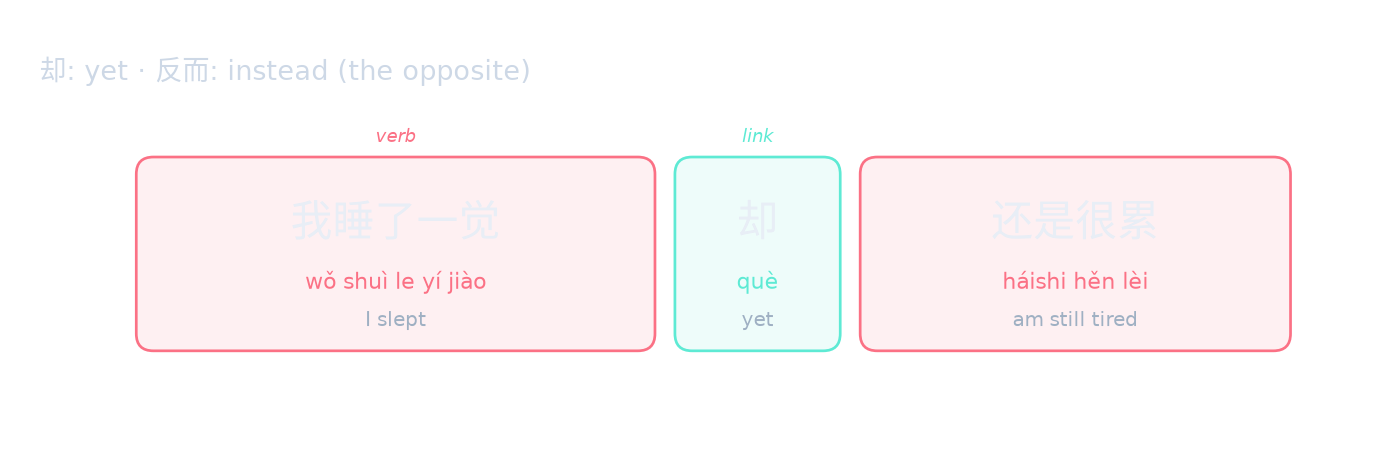
Build: “It's already spring, yet it's still cold.”
Dificultad 3/5 · 200 monedas + un pequeño bono en el primer intento de hoy
Subject + 却 + predicate.
instead反而 = al contrario, ocurrió lo opuesto
- instead反而 indica que el resultado fue en dirección opuesta: took吃(completed / change)了medicine药,the illness病instead反而more更serious重(completed / change)了 (tomó la medicina, pero la enfermedad empeoró).
- Suele seguir a not only不但not不 / not only不但not / haven't没: he他not only不但没生气,instead反而to laugh笑(completed / change)了.
took吃了medicine药,the illness病instead反而more更serious重了。
Complete: “After the medicine, the illness got worse instead.” 吃了药,病____更重了。
Dificultad 1/5 · 100 monedas + un pequeño bono en el primer intento de hoy
The opposite of the expected result = 反而.
¿Contraste o inversión?
- Un simple "pero": yet却. El resultado opuesto al esperado: instead反而.
- Ambos siguen al sujeto: he他yet却…, he他instead反而…; ninguno inicia la cláusula.
“He's clever, but he doesn't work hard.” Which fits? 他很聪明,____不努力。
Dificultad 1/5 · 100 monedas + un pequeño bono en el primer intento de hoy
却 marks a plain contrast after the subject: 他很聪明,却不努力. 反而 would mean the result goes against what was expected, and 因此 / 于是 show result or sequence.
Comparación directa
- he他very很got rich有钱,yet却not不happy快乐 — rico pero infeliz (contraste).
- he他got rich有钱(completed / change)了,instead反而not不happy快乐(completed / change)了 — se hizo rico y se volvió más infeliz (inversión).
he他got rich有钱了,instead反而not不happy快乐了。
反而 can start a clause before the subject.
Dificultad 1/5 · 100 monedas + un pequeño bono en el primer intento de hoy
False. 反而 is an adverb and goes after the subject, before the verb: 他反而笑了. It does not come before the subject.
Resumen
- yet却 = pero, sin embargo (contraste); instead反而 = en cambio (lo opuesto al resultado esperado).
- Ambos van después del sujeto; not only不但not不…instead反而… es el marco clásico de inversión.
Lee la referencia completa: Gramática HSK 6 — Comparación de adverbios similares.
You took a nap to feel better, but woke up even more tired. Close the examples. Say a Mandarin response, then write it in Chinese. Explain briefly in English what the lesson’s pattern adds. Compare with the model, then change one detail and try again.
This is supported productive practice. Compare meaning and structure; your answer need not copy the model. A partner or teacher must hear the spoken response to comment on pronunciation.