Tu plan de aprendizaje · Continuar · Revisar →
平时 vs 平常 (usualmente / ordinario)
IntroducidoTu posición guardada se conserva en este navegador. Continuar no completa la lección ni responde sus preguntas.
Generalmente, pero no hoy
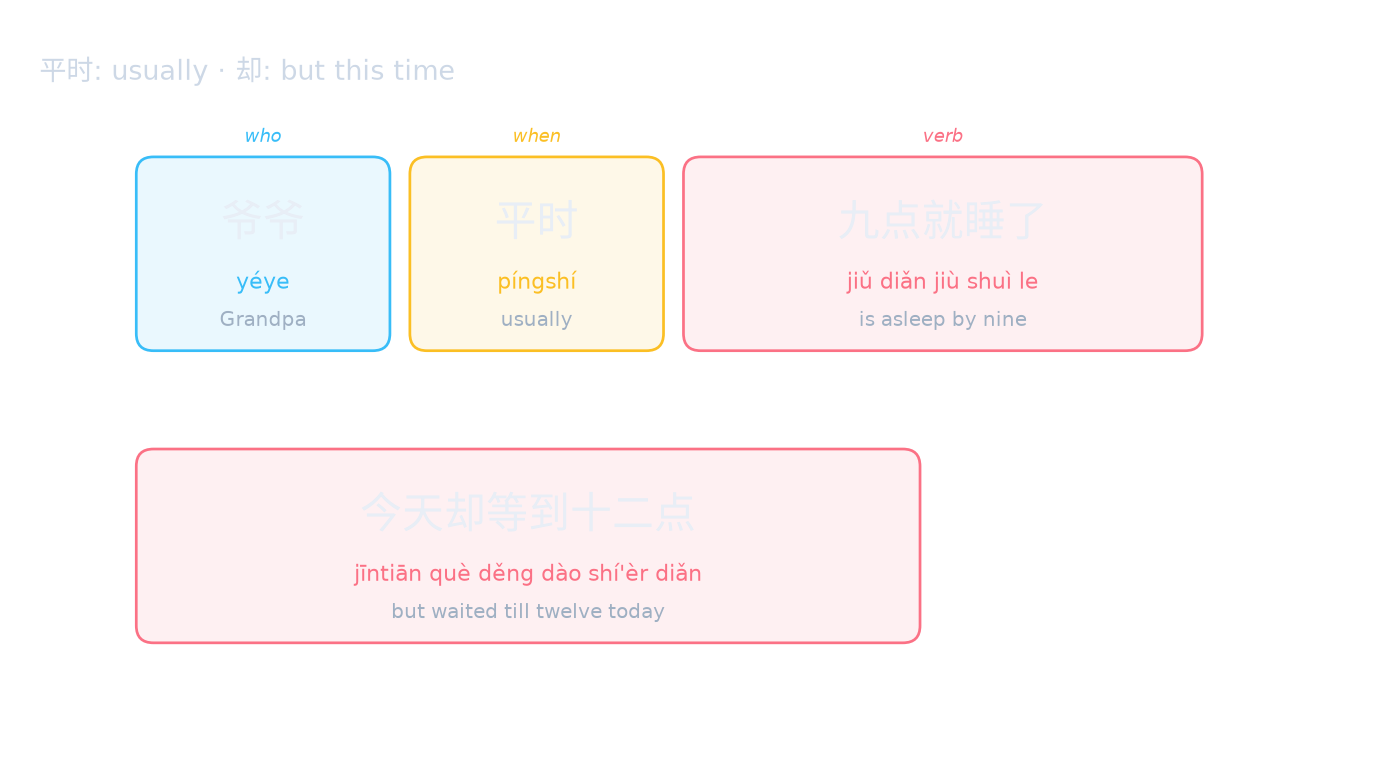
- Tu abuelo normalmente se acuesta a las nueve, pero esta noche es Nochevieja.
- father's father爷爷usually平时at nine九点then / just就to sleep睡(completed / change)了,today今天yet却all along一直to wait until等到十二点。 — "Papá normalmente se acuesta a las nueve, pero hoy se quedó despierto hasta la medianoche."
usually平时 = generalmente, en tiempos ordinarios (palabra de tiempo)
- usually平时 contrasta días ordinarios con un momento especial: usually平时very很busy忙,at weekends周末only then才is free有空 (estoy ocupado habitualmente, solo tengo tiempo los fines de semana).
- Puede ser sustantivo: with / and跟usually平时like一样 — "igual que siempre".
he他usually平时very很busy忙,at weekends周末only then才is free有空。
Build: “He's usually busy; only at weekends is he free.”
Dificultad 3/5 · 200 monedas + un pequeño bono en el primer intento de hoy
平时 contrasts with the weekend.
ordinary平常 = usual, ordinario (adjetivo y palabra de tiempo)
- ordinary平常 puede significar "generalmente" como usually平时: I / me我ordinary平常七点to get up起床 (normalmente me levanto a las siete).
- También puede ser un adjetivo: "ordinario, común": this这is是very很ordinary平常(modifier / structural particle)的thing事 — "Esto es algo muy ordinario."
this这is是very很ordinary平常的thing事。
Complete: “This is a very ordinary thing.” 这是很____的事。
Dificultad 1/5 · 100 monedas + un pequeño bono en el primer intento de hoy
Only 平常 is an adjective meaning “ordinary”.
Solo ordinary平常 funciona como adjetivo
- "Ordinario" se traduce con ordinary平常: very很ordinary平常, ordinary平常(modifier / structural particle)的to live生活. No con very很usually平时.
- Ambos pueden significar "usualmente"; usually平时 contrasta más claramente con una ocasión especial.
Which is wrong?
Dificultad 1/5 · 100 monedas + un pequeño bono en el primer intento de hoy
平时 is a time noun (“usually, ordinary times”), not an adjective, so 很平时的事 is wrong. The adjective “ordinary” is 平常: 很平常的事.
Diferencia con generally通常
- generally通常 = generalmente, por regla general, un poco más formal: banks银行generally通常at nine九点open开门.
- usually平时 / ordinary平常 se refieren más a la rutina personal.
banks银行generally通常at nine九点open开门。
通常 is a little more formal than 平时.
Dificultad 1/5 · 100 monedas + un pequeño bono en el primer intento de hoy
True. 通常 (“as a rule, normally”) is slightly more formal than 平时 and often states general patterns.
Resumen
- usually平时 = usualmente, momentos ordinarios (palabra de tiempo / sustantivo); ordinary平常 = usualmente, o "ordinario" (adjetivo).
- "Ordinario" = ordinary平常 solo; generally通常 = por regla general.
Lee la referencia completa: Gramática HSK 5 — Comparando palabras de tiempo similares.
Your grandfather normally goes to bed at nine, but tonight is New Year's Eve. Close the examples. Say a Mandarin response, then write it in Chinese. Explain briefly in English what the lesson’s pattern adds. Compare with the model, then change one detail and try again.
This is supported productive practice. Compare meaning and structure; your answer need not copy the model. A partner or teacher must hear the spoken response to comment on pronunciation.