Tu plan de aprendizaje · Continuar · Revisar →
A 还是 B? (o — en preguntas)
IntroducidoTu posición guardada se conserva en este navegador. Continuar no completa la lección ni responde sus preguntas.
¿Té o café?
- Un camarero pregunta qué te gustaría beber.
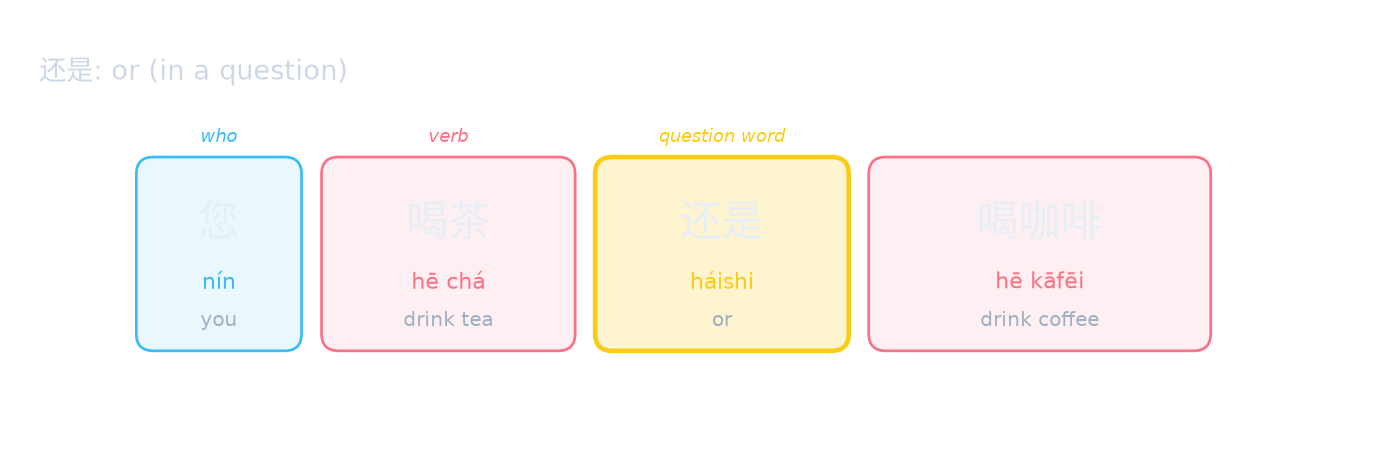
- you (polite)您to drink tea喝茶or还是喝咖啡? — "¿Te gustaría té o café?"
A or还是 B? (pregunta de elección)
- A or还是 B? pide a alguien que elija; no se necesita (yes/no ?)吗.
- Puede unir sustantivos, verbos o cláusulas: you你today今天go去or还是tomorrow明天go去?
you你today今天go去or还是tomorrow明天go去?
Ask: “Are you going today or tomorrow?” 你今天去____明天去?
Dificultad 1/5 · 100 monedas + un pequeño bono en el primer intento de hoy
还是 joins the choices in a question.
are是…or还是…
- Con are是: you你are是a teacher老师or还是a student学生? — "¿Eres profesor o estudiante?"
- we / us我们坐地铁or还是to take a taxi (in town)打车? — "¿Tomamos el metro o un taxi?"
you你are是a teacher老师or还是a student学生?
Build: “Shall we take the subway or a taxi?”
Dificultad 3/5 · 200 monedas + un pequeño bono en el primer intento de hoy
A 还是 B?
Sin (yes/no ?)吗 con or还是
- or还是 ya forma una pregunta: you你to drink tea喝茶or还是coffee咖啡?, no you你to drink tea喝茶or还是coffee咖啡(yes/no ?)吗?
- En una afirmación, "o" es or或者: tea茶or或者coffee咖啡all / both都can / may可以.
Which question is correct?
Dificultad 1/5 · 100 monedas + un pequeño bono en el primer intento de hoy
还是 questions take no 吗.
or还是 en "no sé si …"
- Después de don't不know知道 o to decide决定, or还是 mantiene su significado de "si … o no": I我don't不know知道he他comes来or还是don't不comes来。 — "No sé si vendrá o no.".
- or还是 también puede significar "sería mejor": or还是to walk走(suggestion)吧 — "Sería mejor que nos vayamos."
I我don't不know知道he他comes来or还是not不come来。
我不知道他来还是不来 is correct.
Dificultad 1/5 · 100 monedas + un pequeño bono en el primer intento de hoy
After 不知道, 还是 means “whether … or”.
Resumen
- A or还是 B? = ¿A o B? (pregunta de elección, sin (yes/no ?)吗).
- En afirmaciones se usa or或者; don't不know知道 A or还是 B = no sé si es A o B.
Lea la referencia completa: Gramática HSK 3 — Conectores.
A waiter asks what you would like to drink. Close the examples. Say a Mandarin response, then write it in Chinese. Explain briefly in English what the lesson’s pattern adds. Compare with the model, then change one detail and try again.
This is supported productive practice. Compare meaning and structure; your answer need not copy the model. A partner or teacher must hear the spoken response to comment on pronunciation.