Marketing internacional y cultura
Introducido| English | Significado |
|---|---|
| culture/ˈkʌltʃə/ | cultura |
| standardisation/ˌstændədaɪˈzeɪʃn/ | estandarización |
| adaptation/ˌædæpˈteɪʃn/ | adaptación local |
| localisation/ˌləʊkəlaɪˈzeɪʃn/ | localización |
A market is made of people, not averages
- Culture 文化 is the shared values, meanings, habits, and expectations that shape how groups communicate and choose.
- International marketing must avoid treating a country as one identical customer group. Research a defined segment and test what it values.
- A successful home-market message can confuse, offend, or simply fail to matter elsewhere.
Averages do not walk into shops; people do.
Standardise or adapt?
- Standardisation 标准化 keeps a product or marketing approach largely the same across markets. It can protect a consistent brand and reduce costs.
- Adaptation 本地化调整 changes an offer for local needs, such as language, size, payment method, packaging, or promotion. It can improve relevance but adds complexity and cost.
- The choice is not all-or-nothing: a firm can keep its core product while adapting the customer experience.
¿Qué significa la estandarización en el marketing internacional?
Dificultad 1/5 · 100 monedas + un pequeño bono en el primer intento de hoy
Puede proteger una marca consistente y reducir costos.
Empareja el enfoque con su probable beneficio.
Dificultad 2/5 · 140 monedas + un pequeño bono en el primer intento de hoy
La decisión suele ser mixta: mantener un valor central, adaptar la experiencia.
Communicate with evidence
- Localisation 本地化 is adapting language and content so that they work naturally in a specific market.
- Translation alone is not enough. Images, jokes, colours, dates, symbols, and channels can also carry different meanings.
- Use local research and feedback before a wide launch; a small pilot can reveal a misunderstanding before it damages trust.
Translation makes a marketing message localised.
Dificultad 1/5 · 100 monedas + un pequeño bono en el primer intento de hoy
Las imágenes, símbolos, métodos de pago y canales también pueden necesitar adaptación.
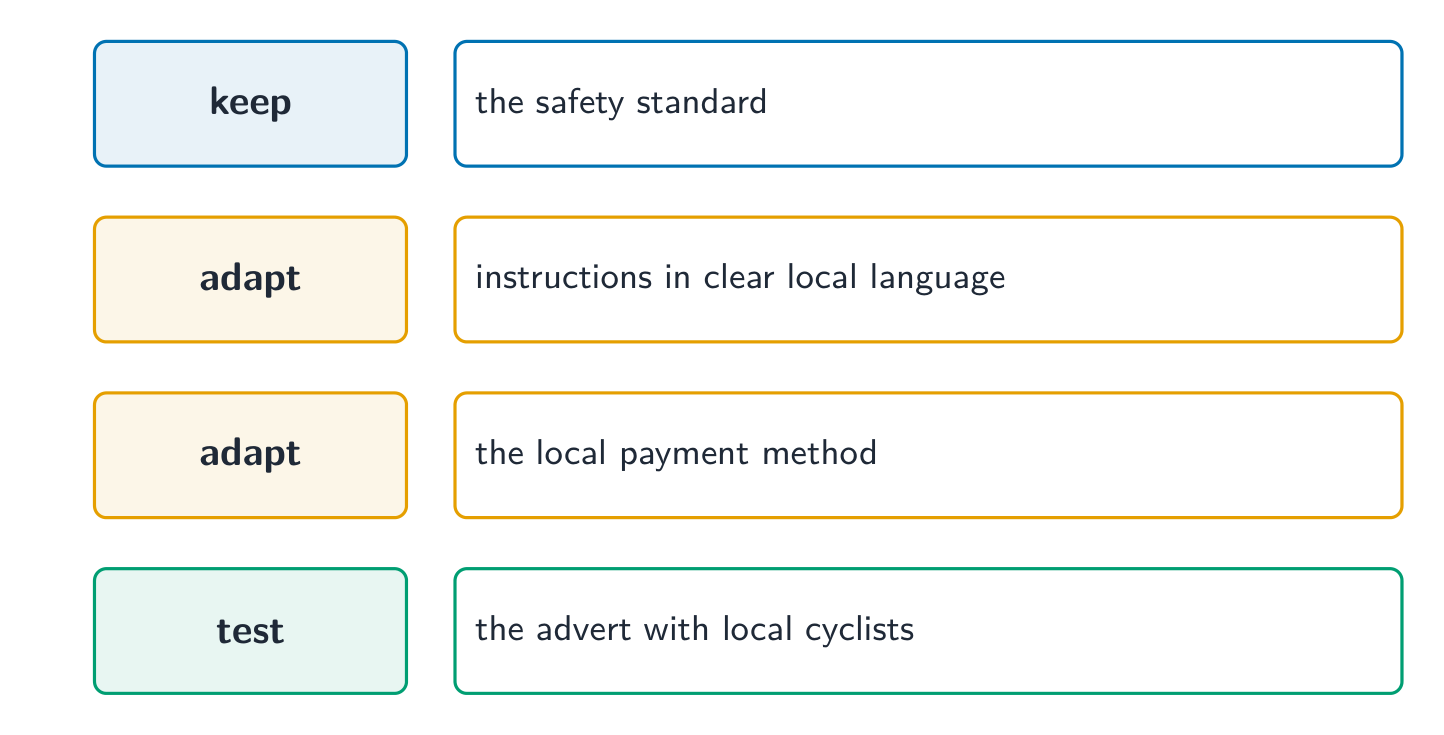
A bicycle-accessory company sells a safety-light kit abroad. It keeps the product's safety standard, but changes the instructions into clear local language, offers the payment method local customers use, and tests its advert with cyclists in that city.
The core promise stays consistent; the route to customer understanding changes.
¿Qué cambios podrían ser evidencia de adaptación basada en datos? Selecciona todas las que correspondan.
Dificultad 2/5 · 140 monedas + un pequeño bono en el primer intento de hoy
La evidencia local, no las suposiciones, debe guiar la adaptación.
Escribe una oración para el kit de luz de seguridad usando core-value-local-evidence-adaptation.
Dificultad 3/5 · 200 monedas + un pequeño bono en el primer intento de hoy
Ejemplo: “El estándar de seguridad se mantiene igual, pero los ciclistas locales usan pago móvil, por lo que el checkout se adapta.”
Core value → local evidence → adaptation. “The safety standard stays the same, but local cyclists prefer a different payment method, so checkout is adapted” makes a balanced international-marketing judgement.
Do not use stereotypes as research. A cultural assumption is a question to test with real customers, not evidence for a business decision.