Causes of World War II
Introducido| English | Significado |
|---|---|
| fascist/ˈfæʃɪst/ | Belonging to fascism, a political system with one powerful leader, extreme nationalism, no political opposition and praise of war. |
| totalitarian/təʊˌtælɪˈteərɪən/ | Describing a state that tries to control every part of people's lives, including the economy, the media and even private thought. |
| appeasement | The policy of giving in to some of an aggressive country's demands in order to avoid war, as Britain and France did with Hitler in the 1930s. |
"Peace for our time", September 1938
- On 30 September 1938, British Prime Minister Neville Chamberlain returned from Munich with an agreement signed by Adolf Hitler. Britain and France had allowed Germany to take the Sudetenland from Czechoslovakia, hoping this would satisfy him. Chamberlain told a London crowd it meant "peace for our time". Six months later, Germany occupied the rest of Czechoslovakia, and in September 1939 it invaded Poland.
- World War II had several causes: an unstable peace, economic crisis, imperial ambitions and — above all — fascist and totalitarian regimes.
What did Britain and France allow at Munich in 1938?
Dificultad 1/5 · 100 monedas + un pequeño bono en el primer intento de hoy
Appeasement.
A peace that did not hold
- The Treaty of Versailles (1919) made Germany accept war guilt, pay reparations, lose land and limit its army to 100 000 men.
- Many Germans saw it as unfair, and Hitler promised to overturn it.
To how many men did the Treaty of Versailles limit Germany's army?
Dificultad 2/5 · 140 monedas + un pequeño bono en el primer intento de hoy
One of the treaty's limits.
Economic crisis
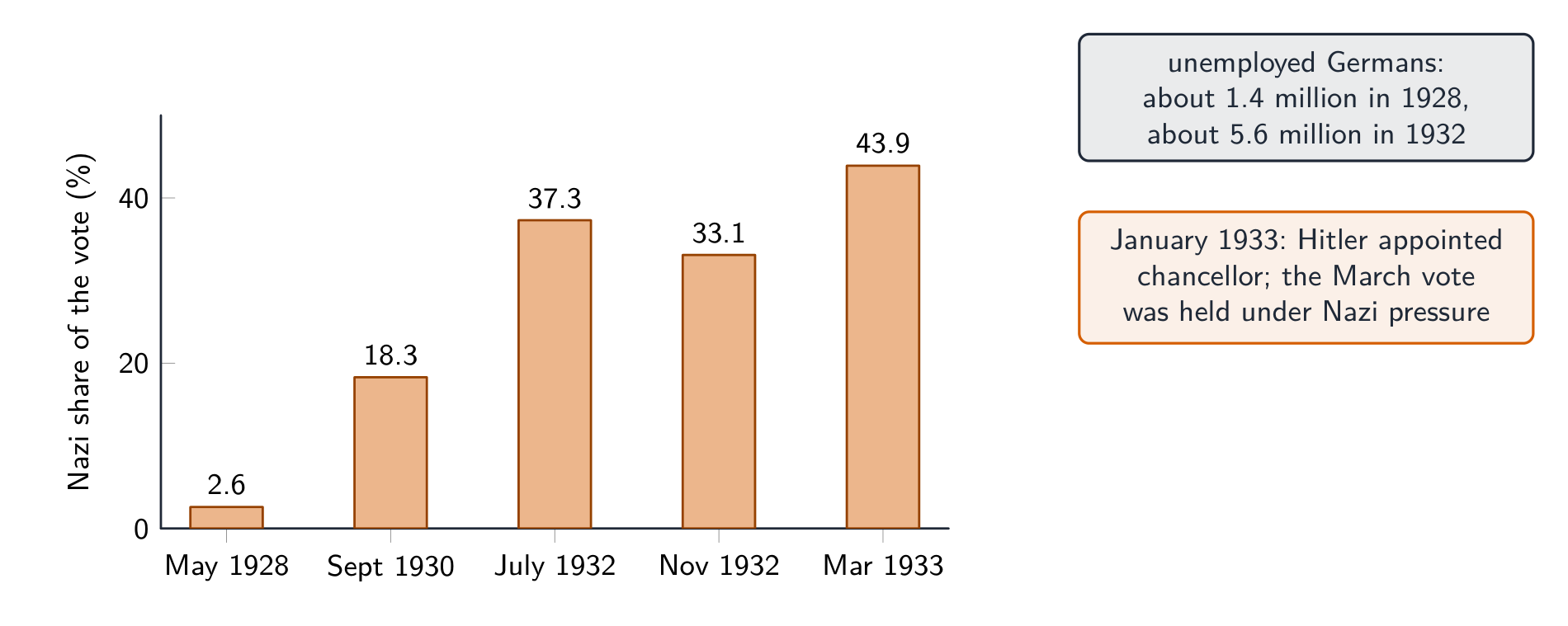
- The Great Depression from 1929 caused mass unemployment: about 6 million Germans were out of work by 1932.
- Desperate voters turned to extreme parties; the Nazi share of the vote rose from 2.6% in 1928 to 37% in July 1932.
Which of the CED's four causes is this?
Sort each factor in the outbreak of the second war.
The Nazi vote rose from 2.6% (1928) to 37% (July 1932). By how many percentage points?
Dificultad 2/5 · 140 monedas + un pequeño bono en el primer intento de hoy
37 − 2.6.
Worked example: imperial ambitions in the 1930s
- Japan: invaded Manchuria in 1931 and the rest of China in 1937, seeking raw materials and an empire.
- Italy: Mussolini invaded Ethiopia in 1935.
- Germany: took Austria and the Sudetenland in 1938 and Poland in 1939. The League of Nations failed to stop any of them.
Match each country to its 1930s conquest.
Dificultad 2/5 · 140 monedas + un pequeño bono en el primer intento de hoy
Imperial ambitions.
Fascist and totalitarian regimes
- Fascist 法西斯主义的 states such as Mussolini's Italy and Hitler's Germany glorified the nation, war and a single leader.
- A totalitarian 极权主义的 state tried to control every part of life — the economy, the press, schools and even private thought.
Appeasement
- Britain and France followed appeasement 绥靖政策: giving in to some demands to avoid war, because they feared another world war and were not ready to fight.
- The Nazi–Soviet Pact (August 1939) let Hitler invade Poland without fearing a Soviet attack.
Put these events in order.
Dificultad 3/5 · 200 monedas + un pequeño bono en el primer intento de hoy
1931, 1935, 1938, 1939.
The Treaty of Versailles did not make war inevitable. It created anger, but war came from the choices of aggressive regimes in the 1930s and the failure of others to stop them.
The Treaty of Versailles made World War II inevitable.
Dificultad 1/5 · 100 monedas + un pequeño bono en el primer intento de hoy
Choices in the 1930s caused it.
The unfair peace of 1919 and the Great Depression helped extreme parties rise. Japan, Italy and Germany pursued empires by conquest, and appeasement and a weak League failed to stop them. Above all, aggressive fascist and totalitarian regimes caused the war that began in 1939.
Explain the causes of World War II.
Causation.