Comparing State Formation
Introducido| English | Significado |
|---|---|
| Confucianism/kənˈfjuːʃɪənɪzəm/ | The teachings of Confucius, which stress order, respect for elders and rulers, and good government by educated officials. |
| tribute/ˈtrɪbjuːt/ | Goods or money paid by a weaker state or group to a stronger one as a sign of submission. |
Churches cut from rock, around 1200
- Around 1200, King Lalibela of Ethiopia ordered eleven churches to be carved downward into solid rock at his capital, Roha. The largest, Bete Medhane Alem, is about 33 metres long. His Zagwe dynasty claimed to rule as Christian kings, and the churches were meant as a "New Jerusalem". The churches show what this whole unit compares: how rulers justified their power.
- From 1200 to 1450, states across the world formed in different regions — and comparing them shows what states needed everywhere.
What did Lalibela's churches show about his rule?
Dificultad 1/5 · 100 monedas + un pequeño bono en el primer intento de hoy
A "New Jerusalem".
Compare processes, not lists
- A good comparison asks how states did the same job: justify their rule, collect revenue and govern over distance.
- Listing facts about each state is not a comparison.
Justification
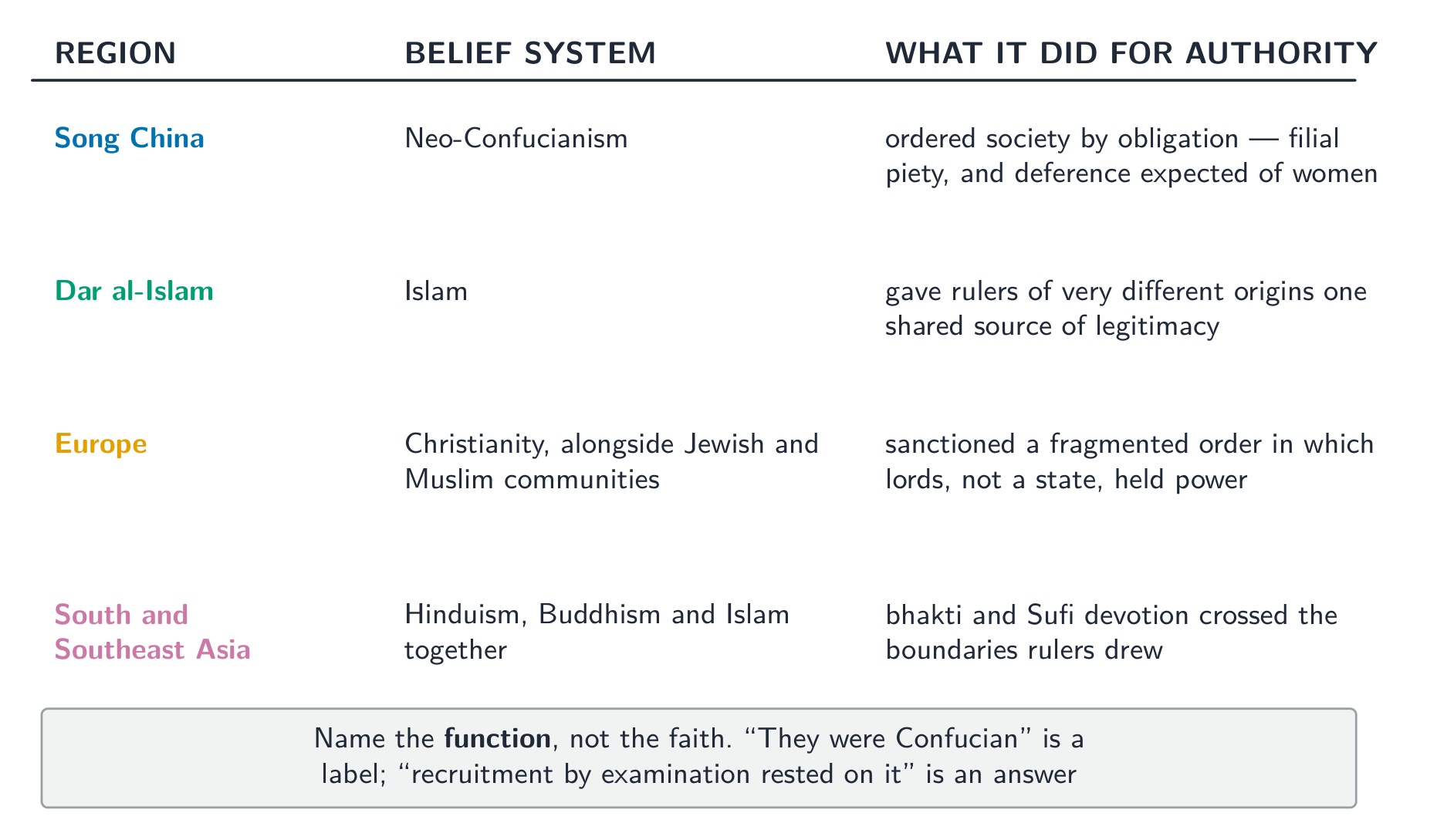
- Song China used Confucianism 儒家思想 and the civil service exams to show the emperor ruled by merit and the Mandate of Heaven.
- Ethiopia's kings used Christianity; the Delhi Sultanate and Mali used Islam.
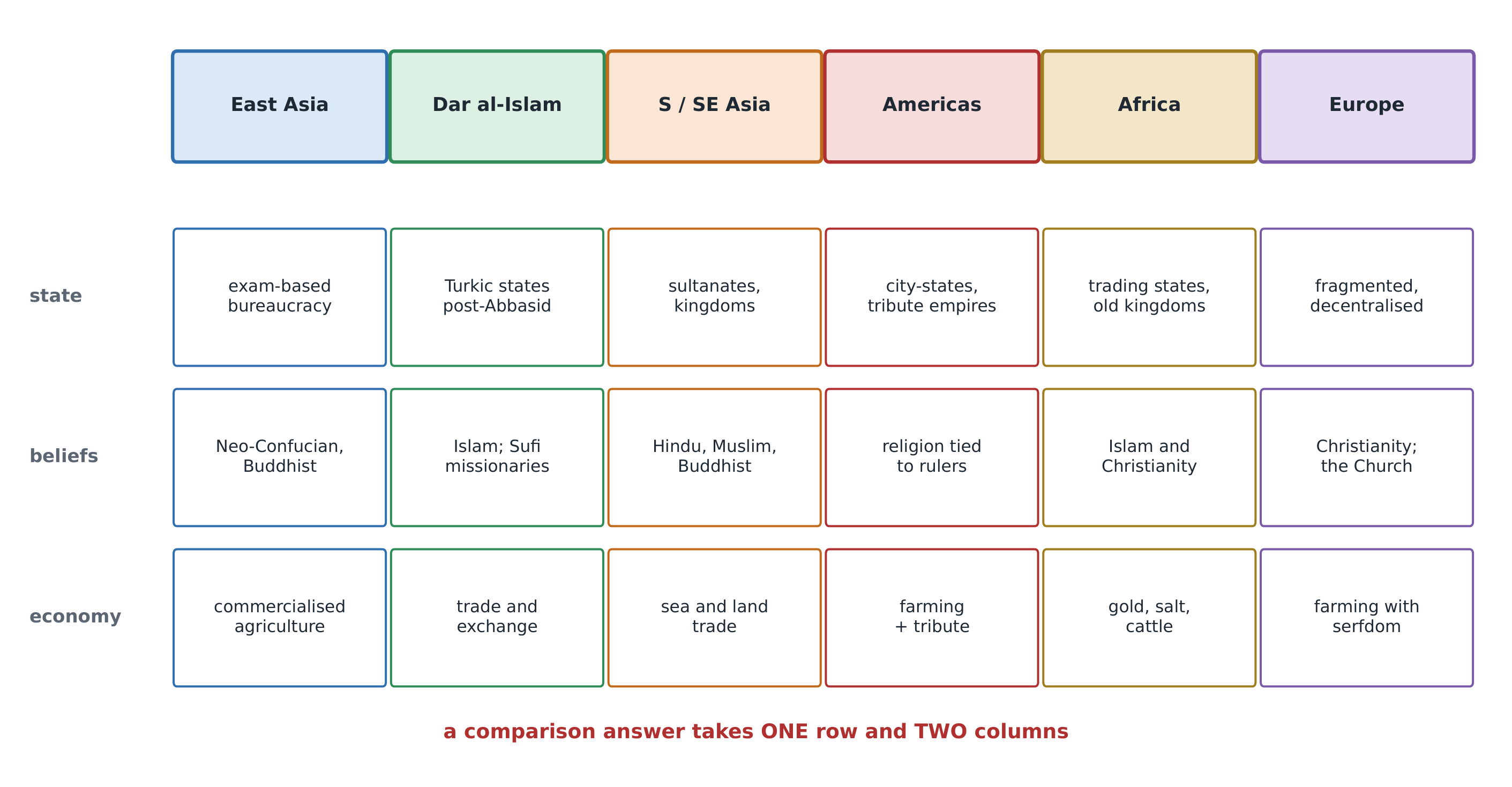
Which comparison question does this belong to?
Sort each observation by the three portable questions.
Match each state to its belief system.
Dificultad 2/5 · 140 monedas + un pequeño bono en el primer intento de hoy
Justification.
Worked example: comparing revenue
- Song China: taxes in coins and grain, collected by a paid bureaucracy, with canals carrying grain to the capital.
- Aztec Empire: tribute 贡品 — cloth, food and feathers delivered by conquered cities on a fixed schedule.
- Comparison: both moved wealth to the centre; the Song used officials, while the Aztecs left local rulers in place and took tribute.
Match each example to the comparison question.
Dificultad 2/5 · 140 monedas + un pequeño bono en el primer intento de hoy
Three jobs of a state.
Governing over distance
- Song officials were moved between provinces so they could not build local power.
- The Inca built roads and storehouses to move armies and food across the Andes.
Why did the Song move officials between provinces?
Dificultad 1/5 · 100 monedas + un pequeño bono en el primer intento de hoy
Governing over distance.
Similarity is as useful as difference
- All these states used a belief system to justify rule.
- Noticing a shared pattern across regions is as valuable as finding a difference.
Finding a similarity is as useful as finding a difference.
Dificultad 1/5 · 100 monedas + un pequeño bono en el primer intento de hoy
Shared patterns matter.
A comparison is not two separate descriptions. It must say directly how the cases are alike or different — for example, "both used religion, but the Song also used exams".
Which is a real comparison?
Dificultad 1/5 · 100 monedas + un pequeño bono en el primer intento de hoy
It links the cases directly.
States from 1200 to 1450 all had to justify rule, collect revenue and govern over distance. Lalibela's churches, Song exams, Aztec tribute and Inca roads show different answers to the same problems — and direct comparison of these answers is the skill this unit builds.
Compare how two states from 1200–1450 justified their rule.
Comparison.