Oxidation number and redox
Introducido| English | Significado |
|---|---|
| oxidation number/ˌɒksɪˈdeɪʃn ˈnʌmbə/ | número de oxidación |
| redox/rɪˈdɒks/ | redox |
| oxidation/ˌɒksɪˈdeɪʃn/ | oxidación |
| electron transfer/ɪˈlektrɒn ˈtrænsfɜː/ | transferencia de electrones |
| reduction/rɪˈdʌkʃn/ | reducción |
Tracking the electrons
- The oxidation number 氧化数 shows how many electrons an atom has lost or gained vs the free element.
- A redox 氧化还原 reaction moves electrons from one species to another.
- One mnemonic ties it all together: OIL RIG.
A substance that loses electrons in a reaction is being ______.
Dificultad 1/5 · 100 monedas + un pequeño bono en el primer intento de hoy
OIL: Oxidation Is Loss of electrons.
The rules
- an uncombined element is $0$.
- a simple ion equals its charge ($\text{Mg}^{2+}$ is $+2$).
- Group 1 is $+1$, Group 2 is $+2$; H is $+1$ (but $-1$ in metal hydrides); O is $-2$ (but $-1$ in peroxides); F is $-1$.
- the numbers add to 0 in a compound, or to the charge in an ion.
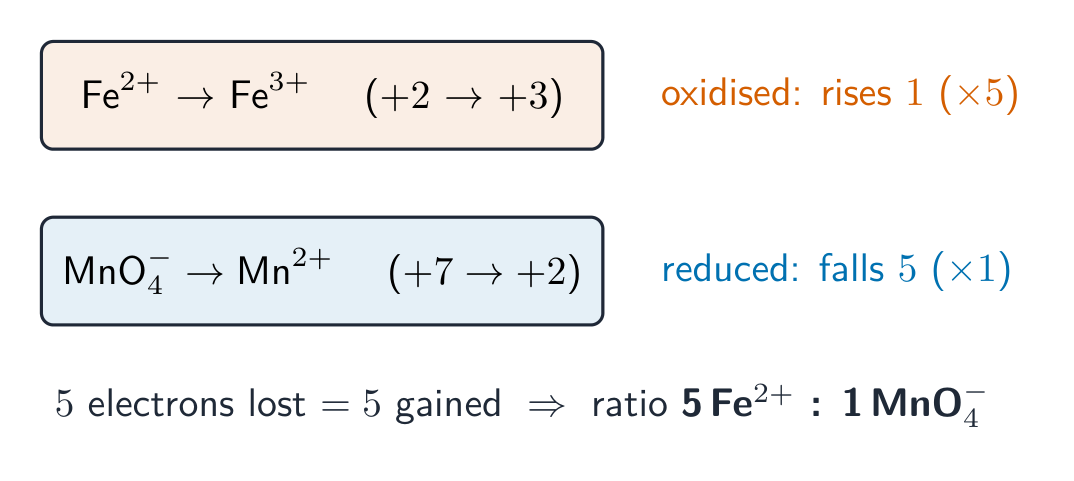
Balancing redox: total rise in oxidation 氧化 number equals total fall
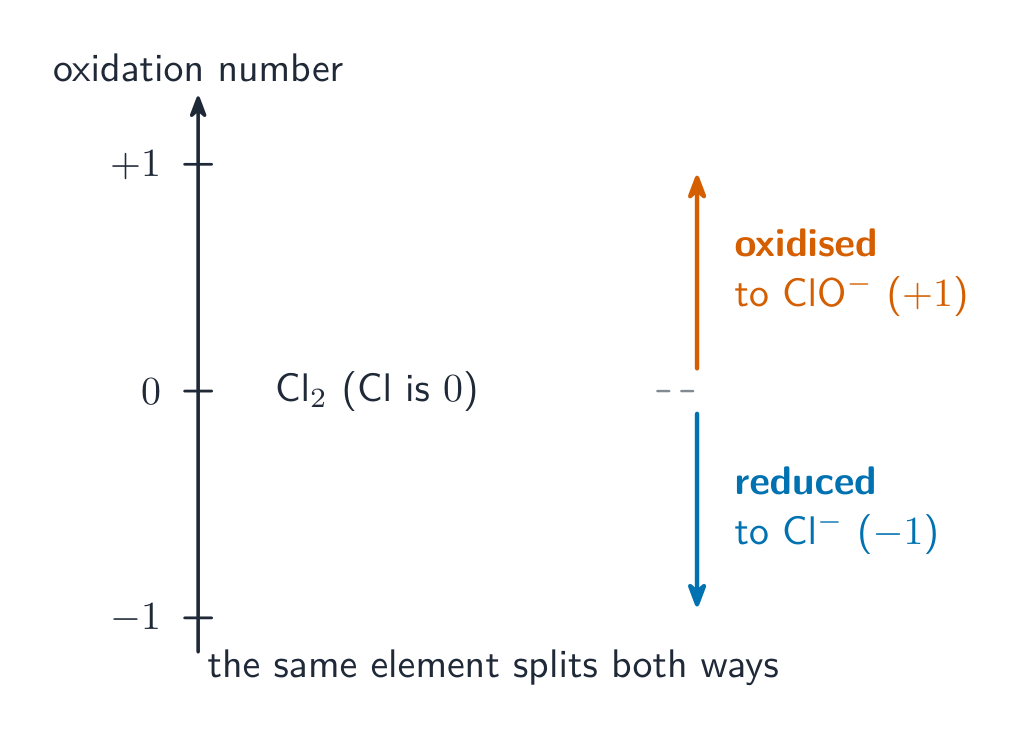
Disproportionation: the same element is both oxidised and reduced
Redox is electron transfer
Step through it: the metal loses (is oxidised) and the non-metal gains (is reduced) — oxidation number rises for one, falls for the other.
The oxidation number of an uncombined element (like O₂ or Fe) is:
Dificultad 1/5 · 100 monedas + un pequeño bono en el primer intento de hoy
A free, uncombined element always has an oxidation number of 0.
The usual oxidation number of oxygen in a compound is:
Dificultad 1/5 · 100 monedas + un pequeño bono en el primer intento de hoy
Oxygen is normally −2, except −1 in peroxides.
In KMnO₄, K is +1 and each O is −2. What is the oxidation number of Mn? (give the number, e.g. 7)
Dificultad 2/5 · 140 monedas + un pequeño bono en el primer intento de hoy
+1 (K) + Mn + 4×(−2) = 0, so Mn = +7.
OIL RIG
- Oxidation Is Loss of electrons → oxidation number goes up.
- Reduction Is Gain of electrons → oxidation number goes down.
- They always happen together — electrons lost by one are gained by another (electron transfer 电子转移).
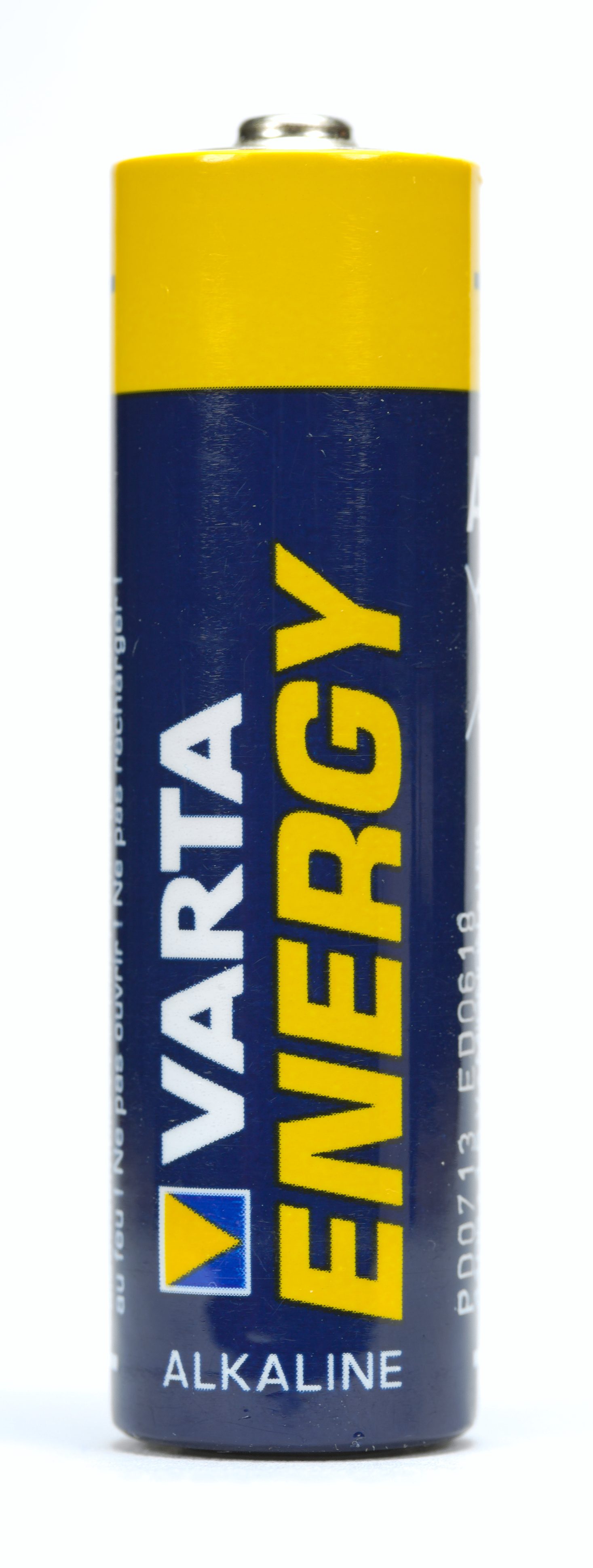
A battery uses redox reactions to push electrons round a circuit
Using OIL RIG, oxidation is:
Dificultad 1/5 · 100 monedas + un pequeño bono en el primer intento de hoy
Oxidation Is Loss of electrons; the oxidation number rises. Reduction Is Gain (number falls).
Worked example: apply the rules
Find the oxidation number of S in $\text{H}_2\text{SO}_4$, Cr in $\text{Cr}_2\text{O}_7^{2-}$, and Fe in rust, $\text{Fe}_2\text{O}_3$.
- Let the unknown be $x$ and use the sum rule. $\text{H}_2\text{SO}_4$: $2(+1) + x + 4(-2) = 0$, so $x = +6$. $\text{Cr}_2\text{O}_7^{2-}$: $2x + 7(-2) = -2$, so $2x = +12$ and $x = +6$.
- $\text{Fe}_2\text{O}_3$: $2x + 3(-2) = 0$, so $x = +3$. In $4\text{Fe} + 3\text{O}_2 \rightarrow 2\text{Fe}_2\text{O}_3$, Fe goes $0 \rightarrow +3$ (oxidised) and O goes $0 \rightarrow -2$ (reduced), both in one reaction.
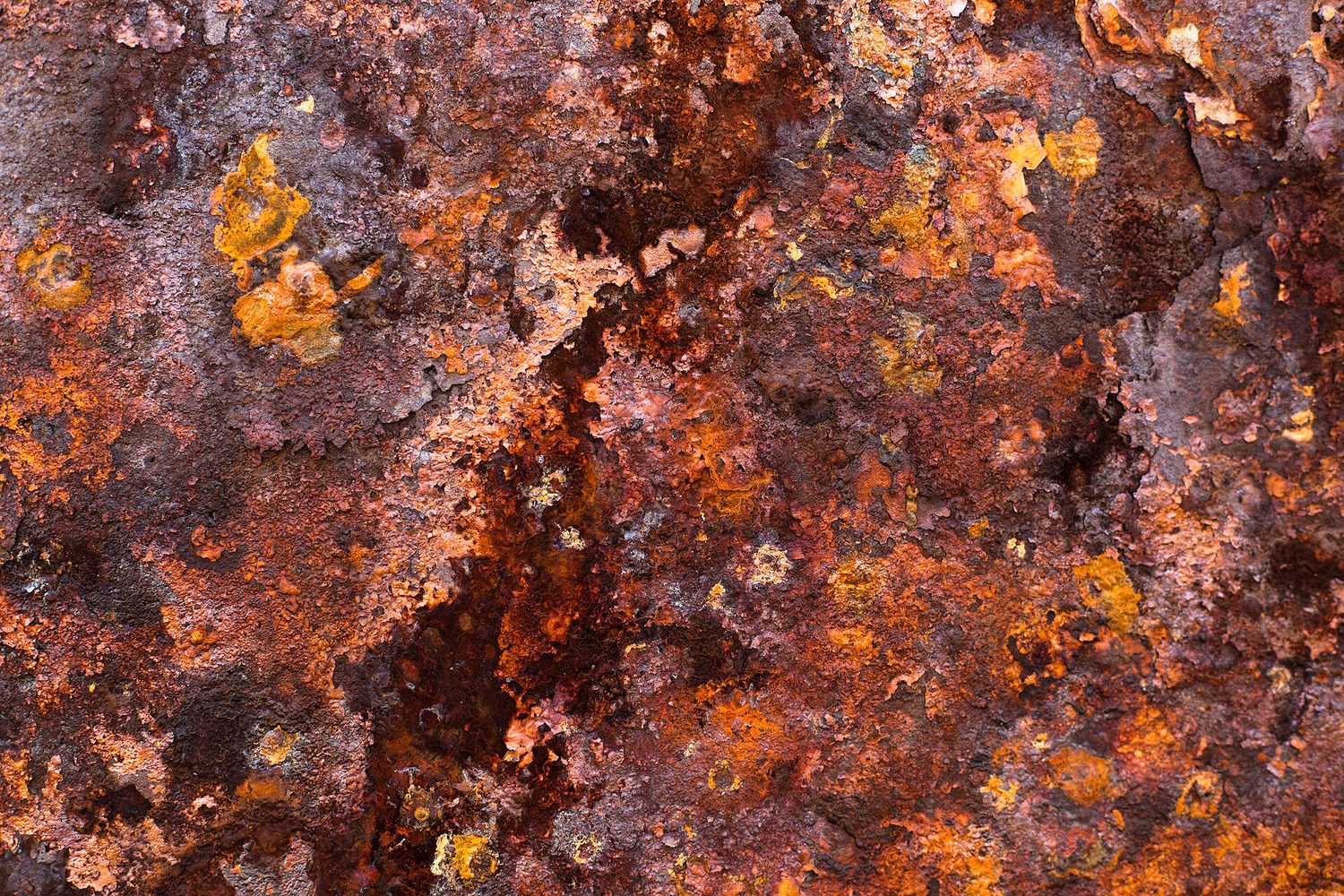
Rusting is the oxidation of iron
What is the oxidation number of manganese in $\text{MnO}_4^{-}$? (Enter a signed number, e.g. 7 for +7.)
Dificultad 2/5 · 140 monedas + un pequeño bono en el primer intento de hoy
$x + 4(-2) = -1$, so $x = +7$.
What is the oxidation number of nitrogen in the ammonium ion, $\text{NH}_4^{+}$?
Dificultad 1/5 · 100 monedas + un pequeño bono en el primer intento de hoy
$x + 4(+1) = +1$, so $x = -3$.
You've got it
- oxidation number = electrons lost/gained vs the free element (element = 0, ion = charge)
- key values: H $+1$, O $-2$, F $-1$; sum to 0 (compound) or charge (ion)
- OIL RIG: Oxidation Is Loss (number ↑), Reduction 还原 Is Gain (number ↓)
- oxidation and reduction always happen together (electron transfer)