52 questions
Overtaking, meeting traffic and speed
Overtaking, meeting oncoming vehicles, following distance and speed limits.
Tap an answer to check it, or open "Show the answer". To practise one question at a time, use the button.
-
1
In such conditions, the vehicle is allowed to overtake by borrowing the public bus lane on the right hand.
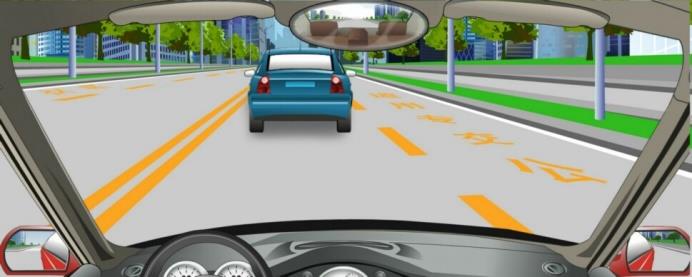
Show the answer
Answer: False
Do not use a reserved bus lane to overtake during the times when the restriction applies.
-
2
The speed limit on this urban road is:
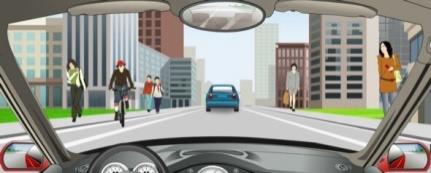
Show the answer
Answer: A. 30 km/hour
On an urban road without a centre line, the default maximum is 30 km/hour when no speed limit is posted.
-
3
The speed limit on this highway is:
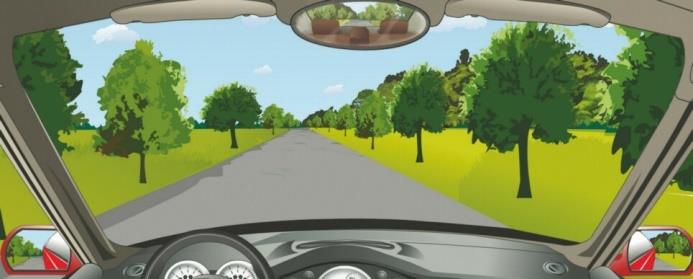
Show the answer
Answer: B. 40 km/hour
On a highway without a centre line, the default maximum is 40 km/hour when no speed limit is posted.
-
4
The speed limit on this urban road is:
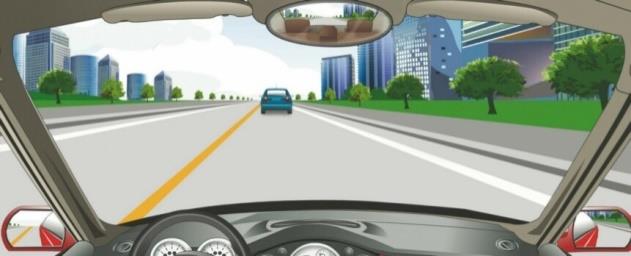
Show the answer
Answer: C. 50 km/hour
On an urban road with one motor-vehicle lane in each direction, the default maximum is 50 km/hour when no speed limit is posted.
-
5
The speed limit on this highway is:
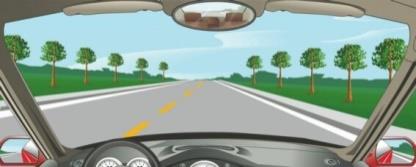
Show the answer
Answer: D. 70 km/hour
On a highway with one motor-vehicle lane in each direction, the default maximum is 70 km/hour when no speed limit is posted.
-
6
Exceeding the speed limit indicated by a speed limit sign is prohibited.
Show the answer
Answer: True
A speed limit sign sets the maximum permitted speed. Drive below it when road or weather conditions require a lower speed.
-
7
When driving a motor vehicle on an urban road without a central line, the maximum speed should not exceed 50 km/hour.
Show the answer
Answer: False
The default maximum on an urban road without a centre line is 30 km/hour when no speed limit is posted.
-
8
When driving a motor vehicle on a highway without a central line, the maximum speed should not exceed 70 km/hour.
Show the answer
Answer: False
On a highway without a centre line, the general maximum speed is 40 km/hour, unless a different limit applies.
-
9
When a motor vehicle makes a turn or a U-turn, or descends an abrupt slope, the maximum speed should not exceed 40 km/hour.
Show the answer
Answer: False
The maximum speed in these situations is 30 km/hour.
-
10
When a motor vehicle passes a narrow road or narrow bridge, the maximum speed should not exceed 30 km/hour.
Show the answer
Answer: True
A narrow road or bridge leaves less room to avoid danger, so the maximum speed is 30 km/hour.
-
11
What is the main reason for the rear-end collision of these two motor vehicles?
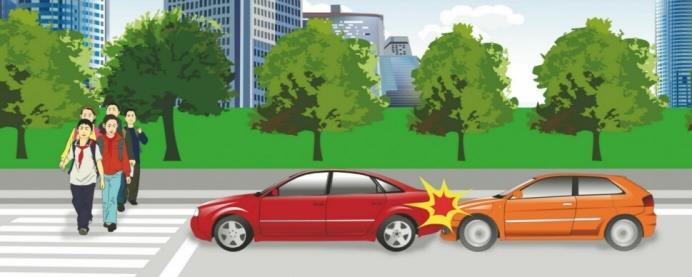
Show the answer
Answer: A. The vehicle behind failed to maintain a safe distance with the car in front
The following driver must leave enough distance to stop safely if the vehicle ahead brakes.
-
12
Under which of the following conditions is a motor vehicle prohibited from overtaking the vehicle in front?
Show the answer
Answer: B. When the vehicle in front is turning left
Do not overtake a vehicle that is turning left. Its path may cross yours.
-
13
When the motor vehicle behind signals to overtake on a road without a central line, if conditions permit, the vehicle in front may:
Show the answer
Answer: D. Reduce speed, move to the right side and yield
If it is safe, slow down and keep right to allow the vehicle behind to pass.
-
14
When a motor vehicle overtakes as shown, it:
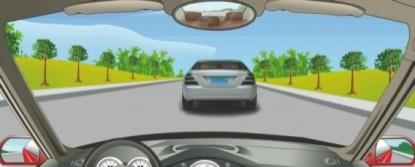
Show the answer
Answer: C. Should overtake from the left side of the vehicle in front
Overtake on the left after checking that the road is clear and it is safe to pass.
-
15
A motor vehicle may not overtake the front vehicle on the same lane when the vehicle in front is:
Show the answer
Answer: D. Overtaking
Do not overtake a vehicle that is already overtaking another vehicle.
-
16
A motor vehicle may not overtake the front vehicle on the same lane when the vehicle in front is:
Show the answer
Answer: C. Making a U-turn
A vehicle making a U-turn can cross your path, so you must not overtake it.
-
17
A motor vehicle is prohibited from overtaking which of the following vehicles on the same lane?
Show the answer
Answer: A. Patrol wagons on duty
Do not overtake a police vehicle carrying out an emergency task.
-
18
A motor vehicle is prohibited from overtaking which of the following vehicles on the same lane?
Show the answer
Answer: C. Ambulances which are executing tasks
Do not overtake an ambulance carrying out an emergency task.
-
19
A motor vehicle is prohibited from overtaking which of the following vehicles on the same lane?
Show the answer
Answer: B. Fire trucks which are executing tasks
Do not overtake a fire truck carrying out an emergency task.
-
20
Overtaking in the city is prohibited on:
Show the answer
Answer: D. Road sections with heavy traffic flows
Heavy traffic can leave too little space to overtake safely. Do not overtake when the conditions do not allow it.
-
21
Overtaking is prohibited on:
Show the answer
Answer: C. Crosswalk
Do not overtake at a pedestrian crossing. Pedestrians need a clear and safe path.
-
22
Overtaking is prohibited on:
Show the answer
Answer: B. Crossroads
Do not overtake at an intersection, where traffic may cross your path.
-
23
Overtaking is prohibited on:
Show the answer
Answer: D. Narrow bridges or curves
Narrow bridges and curves may not provide enough space or visibility for safe overtaking.
-
24
Overtaking is prohibited under this condition.
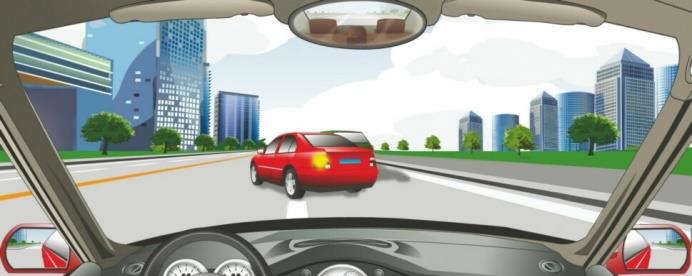
Show the answer
Answer: True
The vehicle ahead is signalling a left turn. Do not overtake while it is turning left.
-
25
When overtaking another motor vehicle, the driver should turn on the left indicator in advance, switch between high-beam and low-beam, or sound the horn.
Show the answer
Answer: True
Signal left in advance and warn the driver ahead with the horn or by switching beams, as appropriate.
-
26
Drivers should turn on the right indicator and move to the original lane immediately after overtaking.
Show the answer
Answer: False
Signal right and return only after leaving a safe distance from the vehicle you passed.
-
27
When encountering the condition shown, motor vehicles are allowed to overtake from either side.
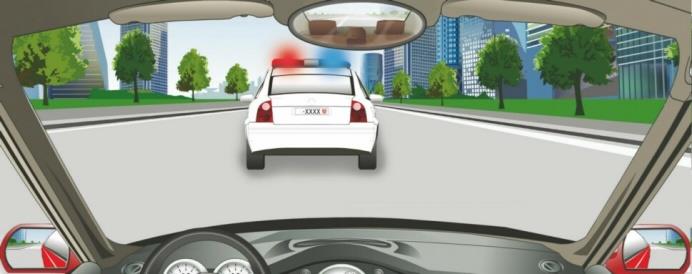
Show the answer
Answer: False
Do not overtake a police vehicle carrying out an emergency task.
-
28
When encountering the condition shown, motor vehicles are allowed to overtake from the right side.
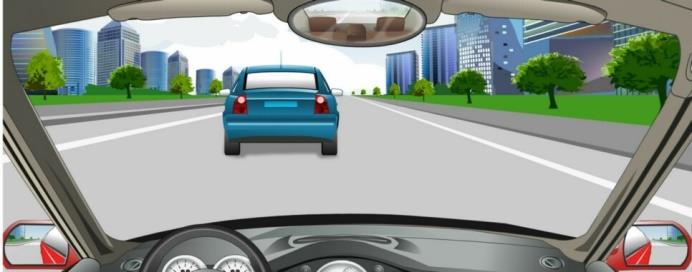
Show the answer
Answer: False
Overtake on the left when it is legal and safe to do so.
-
29
What should the driver do under this situation?
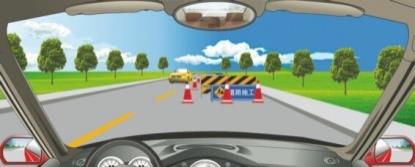
Show the answer
Answer: A. Stop and let the opposite vehicle pass first
The obstruction is on your side. Let the oncoming vehicle pass before going around it.
-
30
When a motor vehicle approaches an oncoming vehicle on a road without a central line, what should the driver do?
Show the answer
Answer: A. Reduce speed and keep right
Slow down and keep to the right when meeting an oncoming vehicle on a road without a centre line.
-
31
The motor vehicle has right of way under the condition shown.
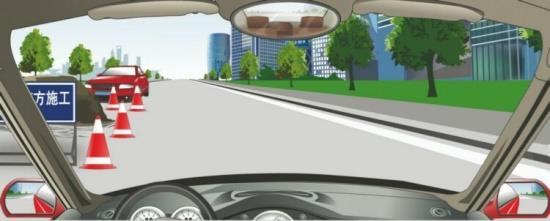
Show the answer
Answer: True
The obstruction is on the oncoming vehicle's side, so the unobstructed vehicle normally goes first.
-
32
When an oncoming vehicle suddenly overtakes and occupies your lane, what is the correct course of action?
Show the answer
Answer: B. Reduce speed and yield as much as possible and even stop your vehicle
Slow down and make room where it is safe. Stop if necessary to avoid a collision.
-
33
When a driver suddenly encounters an oncoming vehicle that suddenly overtakes and occupies his/her lane, the driver may refuse to yield to this vehicle and force it to give the right of way.
Show the answer
Answer: False
Slow down and yield where possible to avoid a head-on collision. Stop if necessary.
-
34
What should the driver do upon finding a vehicle behind intending to overtake him/her?
Show the answer
Answer: A. Reduce speed, identify the situation and move to the right side to yield
Check the situation, slow down and move right where safe to let the other vehicle pass.
-
35
What should the driver do when he/she wants to overtake but the vehicle in front neither reduces speed nor yields?
Show the answer
Answer: C. Stop overtaking
Do not force an overtake when there is not enough room. Wait until it is safe.
-
36
When driving a vehicle on the road, the driver should drive safely at the prescribed speed.
Show the answer
Answer: True
Obey the speed limit and choose a safe speed for the road and traffic conditions.
-
37
When overtaking, the driver should try his best to increase the horizontal distance and, when necessary, may cross a solid central line to overtake.
Show the answer
Answer: False
Leave a safe sideways distance when overtaking, but do not cross a solid centre line to overtake.
-
38
When following a vehicle on the road, the distance from the vehicle in front is not important. As long as the driver goes forward at the same speed as the vehicle in front, he can avoid a rear-end collision.
Show the answer
Answer: False
Keep a safe following distance. You need space to react and stop if the vehicle ahead brakes.
-
39
When approaching each other on a narrow road, the driver should slow down, yield or stop first.
Show the answer
Answer: True
Slow down and allow enough room for the oncoming vehicle. Stop and yield if necessary.
-
40
What should the driver do if he/she needs to borrow a lane to bypass an obstacle in front while an oncoming vehicle is approaching the obstacle at the same time?
Show the answer
Answer: A. Slow down or stop and let the vehicle from the opposite direction pass first
When the obstacle is on your side, let the oncoming vehicle pass before using its lane.
-
41
What should the driver do if an imperfect place is chosen for passing another vehicle?
Show the answer
Answer: B. Slow down and pass each other slowly, or stop to yield
Slow down and leave enough room for the oncoming vehicle. Stop and yield if there is not enough space to pass safely.
-
42
What should the driver do if he/she intends to enter the left lane to overtake the other vehicle but is unable to ensure a safe horizontal distance with the normally-running vehicle in front?
Show the answer
Answer: C. Give up overtaking
Do not overtake unless there is enough space beside the other vehicle.
-
43
What should the driver do when his/her vehicle is being overtaken by another vehicle?
Show the answer
Answer: B. Slow down and drive on the right side
Keep right and slow down to help the other vehicle pass safely.
-
44
What should the driver do when a vehicle behind gives an overtaking signal and the driver is able to yield?
Show the answer
Answer: C. Slow down voluntarily and drive by the right side
When it is safe to yield, slow down and keep right so the vehicle behind can pass.
-
45
When overtaking a parked vehicle on the right, what should the driver do to prevent other vehicles suddenly pulling out or opening a door?
Show the answer
Answer: A. Preserve horizontal safety distance and reduce speed
Slow down and leave enough space in case the parked vehicle moves or a door opens.
-
46
When overtaking a bicycle driving in the same direction, what should the driver do?
Show the answer
Answer: B. Observe the situation, slow down and maintain a sufficient safety distance
Check the road, slow down and leave enough space beside the bicycle when passing.
-
47
When anticipating a possibility of meeting with an oncoming vehicle whilst overtaking, a driver should overtake by speeding up in advance.
Show the answer
Answer: False
Do not overtake if you may meet an oncoming vehicle. Wait until the road is clear.
-
48
Overtaking is not permitted when driving in a tunnel.
Show the answer
Answer: True
Do not overtake in a tunnel, where space and visibility may be limited.
-
49
Overtaking is not permitted when passing a level crossing.
Show the answer
Answer: True
Do not overtake at a level crossing. Keep the crossing clear and follow the crossing signals.
-
50
When passing a sharp turn section, overtaking is allowed if there is only light traffic.
Show the answer
Answer: False
Do not overtake on a sharp bend. You may not be able to see approaching traffic.
-
51
Overtaking is not allowed when passing narrow roads or narrow bridges.
Show the answer
Answer: True
Do not overtake on a narrow road or bridge because there may not be enough safe space.
-
52
When driving at night, drivers should avoid overtaking as best as possible. If it is necessary to do so, he/she may alert the vehicle in front through changing lights.
Show the answer
Answer: True
Overtaking is harder at night because visibility is limited. When overtaking is safe and permitted, alternate high and low beams to alert the driver ahead.