53 questions
Expressways
Joining, driving on and leaving an expressway.
Tap an answer to check it, or open "Show the answer". To practise one question at a time, use the button.
-
1
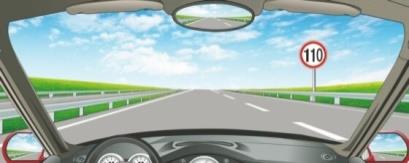
The speed limit on this expressway is:
Show the answer
Answer: B. 110 km/hour
The sign sets a maximum speed of 110 km/hour.
-
2
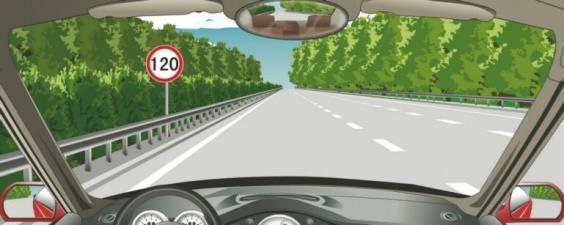
What is the speed limit for this section of the expressway?
Show the answer
Answer: A. 120 km/hour
The red-bordered sign shows a maximum speed of 120 km/hour.
-
3
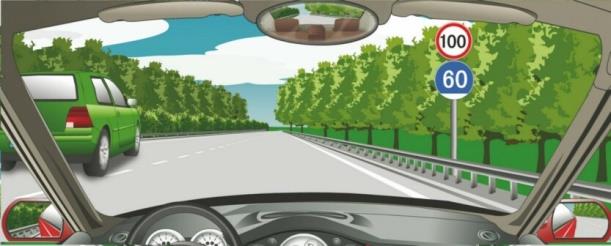
What is the minimum speed for this section of the expressway?
Show the answer
Answer: B. 60 km/hour
The blue sign shows a minimum speed of 60 km/hour. The red-bordered sign above it shows the maximum.
-
4
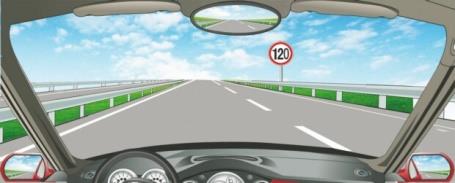
What is the minimum speed for this driving lane?
Show the answer
Answer: C. 100 km/hour
On an expressway with two lanes in the same direction, the minimum speed in the left lane is 100 km/hour.
-
5
What is the minimum speed for this driving lane?
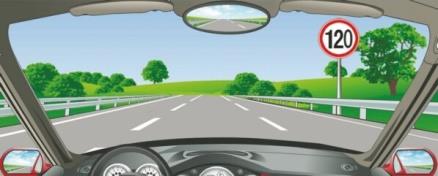
Show the answer
Answer: B. 90 km/hour
On an expressway with three or more lanes in the same direction, the minimum speed in the middle lane is 90 km/hour.
-
6
What is the speed limit for this driving lane?
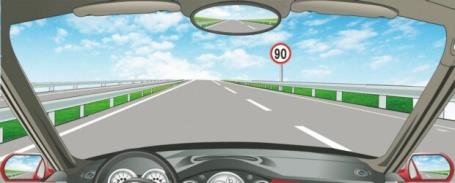
Show the answer
Answer: D. 90 km/hour
The red-bordered sign sets a maximum speed of 90 km/hour.
-
7
The minimum speed for driving a small passenger service motor vehicle on the highway is 90 km/hour.
Show the answer
Answer: False
The general minimum speed on an expressway is 60 km/hour. Higher minimum speeds apply to some lanes.
-
8
Motor vehicles running on the expressway should be driven at the speed indicated by the speed limit sign.
Show the answer
Answer: True
Follow the posted speed limits and adjust your speed to the road and weather conditions.
-
9
How should lamps be used when the motor vehicle is in this location?
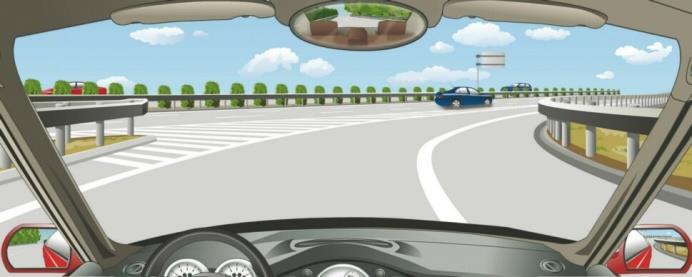
Show the answer
Answer: A. Turn on the left indicator
Use the left indicator before merging from the entrance lane into expressway traffic.
-
10
How should lamps be used when entering the deceleration lane?
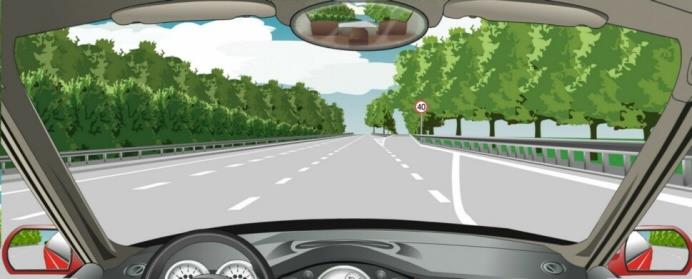
Show the answer
Answer: B. Turn on the right indicator
Use the right indicator before moving into the deceleration lane to leave the expressway.
-
11
If a small passenger service motor vehicle runs on the expressway at a speed of more than 100 km/hour, what's the safety distance from the vehicle in front?
Show the answer
Answer: D. Keep a distance of more than 100 meters
At more than 100 km/hour, keep at least 100 meters from the vehicle ahead. This gives you more room to react and brake.
-
12
If a small passenger service motor vehicle runs on the expressway at a speed of less than 100 km/hour, what's the minimum safety distance from the front vehicle?
Show the answer
Answer: A. The distance should be at least 50 meters
Below 100 km/hour, the distance may be reduced, but it must still be at least 50 meters.
-
13
What is the speed limit for a motor vehicle running on the expressway when the visibility range is less than 200 meters?
Show the answer
Answer: D. The speed limit should not exceed 60 km/hour
When visibility is below 200 meters, do not exceed 60 km/hour. Keep at least 100 meters from the vehicle ahead.
-
14
What is the speed limit for a motor vehicle on the expressway when the visibility range is less than 100 meters?
Show the answer
Answer: A. The speed limit should not exceed 40 km/hour
When visibility is below 100 meters, do not exceed 40 km/hour. Keep at least 50 meters from the vehicle ahead.
-
15
Besides controlling the speed limit of the motor vehicle below 20 km/hour, what should the driver do when running on the expressway with a visibility range less than 50 meters?
Show the answer
Answer: B. Leave the expressway as soon as possible
When visibility is below 50 meters, drive at no more than 20 km/hour and leave the expressway at the nearest exit as soon as possible.
-
16
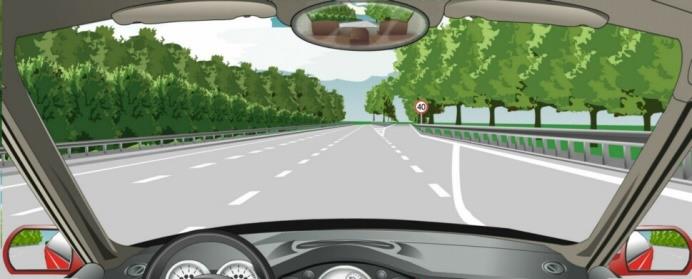
What should the motor vehicle driver do at this location when leaving the expressway?
Show the answer
Answer: B. Drive into the deceleration lane
Signal and enter the deceleration lane before slowing for the exit.
-
17
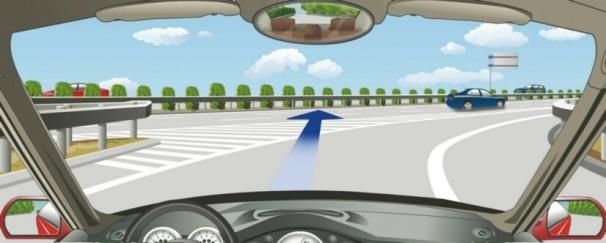
The driver is allowed to drive onto the driving lane of the expressway from here.
Show the answer
Answer: False
The arrow crosses the striped separation area. Follow the entrance lane and merge where permitted instead.
-
18
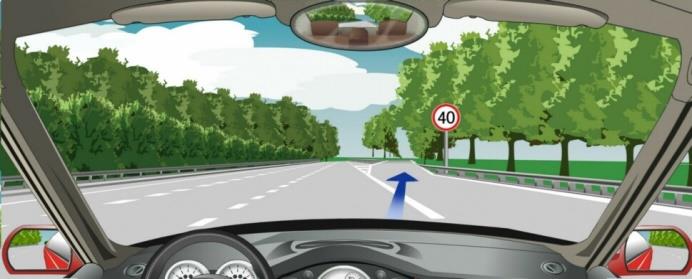
The driver is allowed to drive onto the ramp directly from here when leaving the expressway.
Show the answer
Answer: False
The arrow crosses the striped separation area. Enter the deceleration lane before reaching the ramp.
-
19
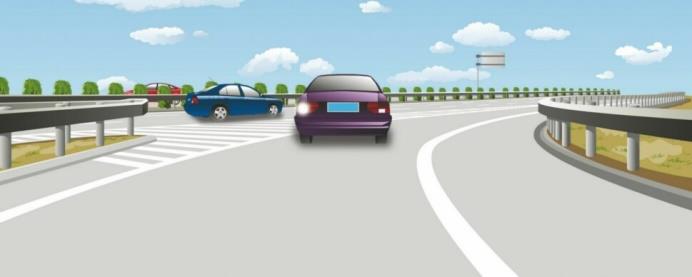
This small passenger service vehicle chooses a proper way to drive onto the driving lane of the expressway.
Show the answer
Answer: False
The vehicle is crossing the striped separation area. It should follow the entrance lane and merge where permitted.
-
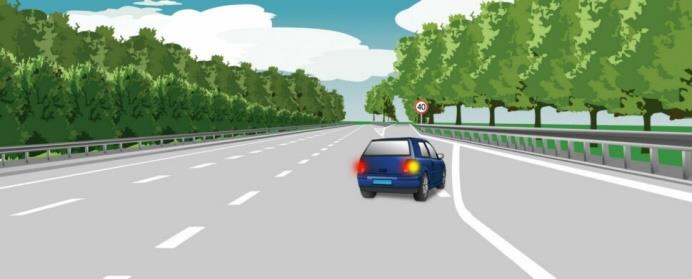
20
This small passenger service vehicle chooses a proper way to drive away from the driving lane of the expressway.
Show the answer
Answer: True
The vehicle is signalling right and moving into the deceleration lane before the exit.
-
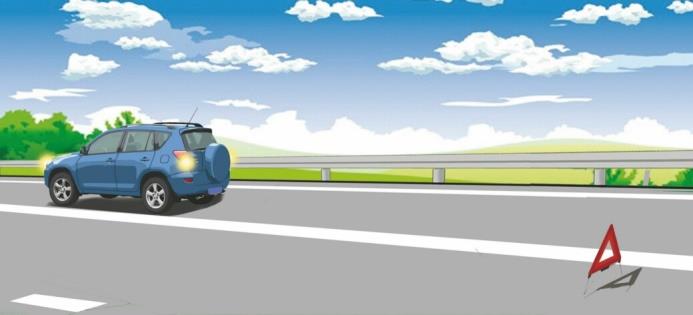
21
How far should the warning sign be set up behind a broken-down motor vehicle temporarily stopped on the expressway?
Show the answer
Answer: A. More than 150 meters
Place the warning sign at least 150 meters behind the vehicle so approaching drivers have time to react.
-
22
Which one of the following statements is wrong for a motor vehicle driver when his/her vehicle breaks down on the expressway?
Show the answer
Answer: C. Prohibiting passengers from disembarking
Passengers should leave the vehicle and move quickly to a safe place. Turn on the hazard lights, set up the warning sign and call the police.
-
23
Which one of the following vehicles should be used to pull a motor vehicle which breaks down or is involved in a traffic accident on the expressway?
Show the answer
Answer: D. The tow truck
A rescue vehicle or tow truck must tow a broken-down or damaged vehicle on an expressway.
-
24
When a motor vehicle breaks down on the expressway, the driver should set up a warning sign 50 to 100 meters behind the vehicle in the coming direction.
Show the answer
Answer: False
On an expressway, place the warning sign at least 150 meters behind the vehicle, facing approaching traffic.
-
25
When a motor vehicle breaks down on the expressway, the driver and all passengers in the vehicle should swiftly move to the right-hand road shoulder or to the emergency lane and the police should be called immediately.
Show the answer
Answer: True
Move away from moving traffic quickly and call the police. Use the hazard lights and place a warning sign behind the vehicle.
-
26
When a traffic accident occurs with a motor vehicle on the expressway and makes it unable to move normally, the vehicle should be towed by a rescue vehicle or a tow truck.
Show the answer
Answer: True
A vehicle that cannot move normally after an expressway crash must be towed by a rescue vehicle or tow truck.
-
27
Which one of the following entries should be chosen when approaching a toll gate on the highway?
Show the answer
Answer: D. An entry showing a green light
A green light shows that the toll lane is open. Follow the lane signs and slow down as you approach.
-
28
When driving into the acceleration lane of a highway, what is the minimum speed the driver should drive at?
Show the answer
Answer: D. 60 km/hour
Use the acceleration lane to build up a suitable speed, then enter the driving lane when it is safe.
-
29
If a motor vehicle misses the highway exit due to negligence, what should the driver do?
Show the answer
Answer: B. Continue driving forward until the next exit
Continue to the next exit. Reversing, stopping or making a U-turn on the highway is dangerous.
-
30
When a motor vehicle is impelled to stop on the highway due to a breakdown, what is the proper distance from the rear of the vehicle at which the driver should install a breakdown warning sign? Furthermore, the clearance lamp and tail lamp need to be turned on if the breakdown happens at night.
Show the answer
Answer: B. 150 meters
Place the warning sign at least 150 meters behind the vehicle. At night, also turn on the clearance and tail lamps.
-
31
When driving on the highway with complete signs and markings, the driver should drive in the specified lane at a specified speed according to:
Show the answer
Answer: B. Markings or signs
Follow the posted signs and road markings for lane use and speed.
-
32
Which one of the following behaviors is correct when a motor vehicle is on the highway?
Show the answer
Answer: D. Not drive or stop on an emergency parking strip under a non-emergency situation
The emergency parking strip is for emergencies. Do not use it for ordinary driving or stopping.
-
33
When driving on a highway with four lanes toward the same direction, the vehicles driving at 110 km/hour should drive in:
Show the answer
Answer: A. The leftmost lane
Follow the speed limits shown for each lane. Choose a lane in which your speed is permitted.
-
34
When entering a ramp, the driver should swiftly increase the speed to more than 60 km/hour.
Show the answer
Answer: False
Drive at a speed suitable for the ramp, its signs and traffic. Do not accelerate quickly just to exceed 60 km/hour.
-
35
Parking on highway ramps is allowed.
Show the answer
Answer: False
Stopping on a highway ramp can block traffic and cause a collision. Use a permitted stopping place.
-
36
Making U-turns on highway ramps is prohibited.
Show the answer
Answer: True
A U-turn on a ramp puts the vehicle against the flow of traffic. Continue to a safe, permitted route instead.
-
37
Reversing on highway ramps is prohibited.
Show the answer
Answer: True
Reversing on a ramp can cause a serious collision. Continue forward and use the next suitable exit or route.
-
38
When accelerating to more than 60 km/hour on a highway ramp, the driver is allowed to enter the driving lane directly.
Show the answer
Answer: False
Speed alone does not make it safe to enter. Check the traffic, signal and yield to vehicles already in the driving lane.
-
39
Vehicles should drive along the right-hand road shoulders on the highway.
Show the answer
Answer: False
Use the proper driving lane. The shoulder is not an ordinary lane for moving traffic.
-
40
When driving at 100 km/hour on the highway, the safety distance from the vehicle in front in the same lane is no less than 100 meters.
Show the answer
Answer: True
A gap of at least 100 meters at this speed gives you more time to react and stop.
-
41
When driving on the highway, the driver may change lanes frequently.
Show the answer
Answer: False
Frequent lane changes increase the risk of collision. Change lanes only when necessary and safe.
-
42
When leaving the highway, the driver should move onto the ramp after cutting speed in the deceleration lane.
Show the answer
Answer: True
Move into the deceleration lane in good time and slow down before entering the exit ramp.
-
43
When encountering a traffic jam caused by an accident on the highway, the driver may stop in the emergency stop strip or road shoulder on the right side.
Show the answer
Answer: False
Do not use the emergency strip or shoulder to wait in a traffic jam. Keep it clear for emergencies.
-
44
When encountering low visibility caused by dense foggy weather on the highway, the driver should stop rapidly by using the emergency brake.
Show the answer
Answer: False
Sudden braking in fog can cause a rear-end collision. Slow down smoothly, use the required lights and leave the highway when required.
-
45
When encountering blocked traffic ahead on the highway, the driver should line up by following the vehicles in front and turn on the hazard warning lamp immediately to avoid a rear-end collision.
Show the answer
Answer: True
Slow down and queue behind the traffic ahead. Hazard warning lights can alert drivers approaching from behind.
-
46
When encountering bypass traffic control on the highway, the driver may keep on the highway and pull over and discontinue driving until the end of the traffic control.
Show the answer
Answer: False
Follow the traffic control directions and take the designated diversion. Do not stop on the highway to wait for the control to end.
-
47
When encountering a sudden hump while driving on a flat highway, the minibus should cut speed promptly to avoid a burst tire.
Show the answer
Answer: True
Reduce speed in a controlled way before the hump. A hard impact can damage a tire or the vehicle.
-
48
When drivers feel tired while driving on the highway, they should stop immediately for a rest.
Show the answer
Answer: False
Do not stop in a driving lane. Leave the highway or reach a service area as soon as it is safe, then rest.
-
49
According to the Regulations on Implementing the Law on Road Traffic Safety, the speed limit on the highway should be less than 120 km/hour, so long as the driving speed is less than 120 km/hour the driving will be legal.
Show the answer
Answer: False
A speed below 120 km/hour is not always legal. Lane limits, posted limits and poor weather may require a lower speed.
-
50
When driving on the highway, drivers can adjust their driving speed according to their whim.
Show the answer
Answer: False
Choose a safe speed within the applicable limits and adjust it for traffic, weather and road conditions.
-
51
Articulated buses are not allowed to enter expressways.
Show the answer
Answer: True
Restrictions on vehicles entering expressways depend on the vehicle type and applicable road rules.
-
52
What is the speed limit for a freight vehicle on a highway?
Show the answer
Answer: C. No more than 100 km/hour
A freight vehicle must not exceed 100 km/h on an expressway. A lower posted limit must also be obeyed.
-
53
A full-trailer is not allowed to enter the highway.
Show the answer
Answer: True
A vehicle towing a full trailer is prohibited from entering an expressway.