71 questions
Lanes, junctions and right of way
Choosing a lane, turning, giving way, and pedestrians at crossings.
Tap an answer to check it, or open "Show the answer". To practise one question at a time, use the button.
-
1
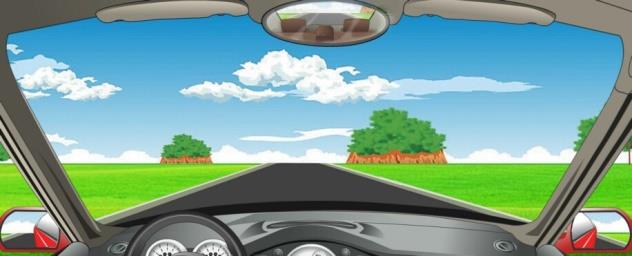
In such conditions, which lane should the motor vehicle take?
Show the answer
Answer: B. Take the middle lane
On a road without separate lanes for motor vehicles, non-motor vehicles and pedestrians, motor vehicles travel in the middle.
-
2
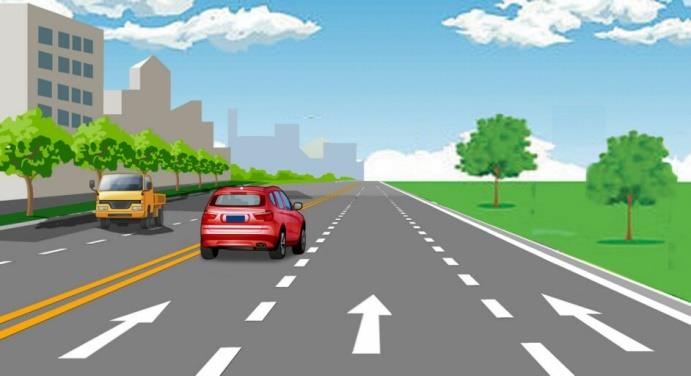
Which lane is the red car driving on?
Show the answer
Answer: A. Fast lane
The red car is in the leftmost lane for traffic travelling in its direction, the faster lane in this picture.
-
3
What should be done when a motor vehicle is changing to another lane on the road?
Show the answer
Answer: B. Pay attention not to interfere with the driving of other vehicles
When changing lanes, do not obstruct vehicles already travelling in the lane you want to enter.
-
4
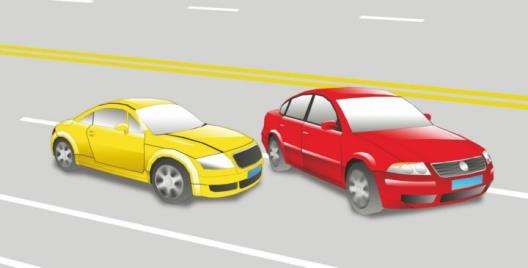
This red car chooses a proper method and route to change lanes.
Show the answer
Answer: False
The red car is changing lanes too close to the yellow car. A lane change must not obstruct a vehicle already in the target lane.
-
5
When entering or leaving special lanes for non-motor vehicles, the maximum speed should not exceed:
Show the answer
Answer: A. 30 km/hour
Slow to no more than 30 km/hour when entering or leaving a non-motor vehicle lane. Watch for cyclists and other road users.
-
6
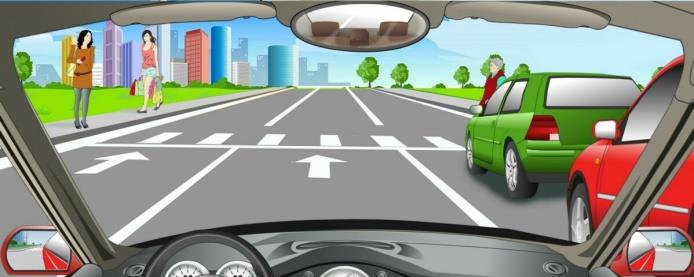
Under the condition shown, a motor vehicle may speed up and overtake the other vehicle.
Show the answer
Answer: False
The vehicles are near a pedestrian crossing, and a person may enter the road. Slow down and be ready to stop.
-
7
Which of the following is the correct way to pass this kind of intersection?
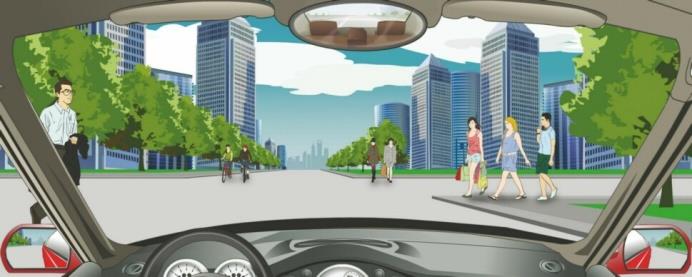
Show the answer
Answer: C. Reduce speed and drive slowly
Slow down at the intersection and watch for pedestrians and other road users.
-
8
When a motor vehicle turns left at this intersection, which lane should the driver take?
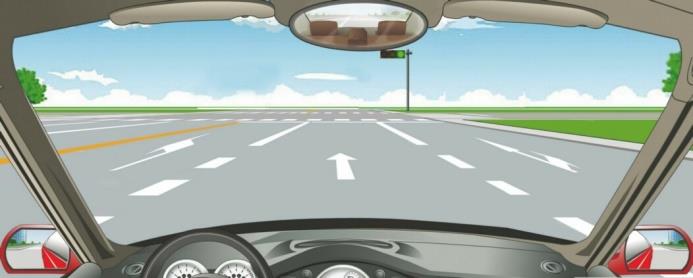
Show the answer
Answer: A. The far-left lane
Choose the lane marked for a left turn before reaching the intersection.
-
9
Which of the following is the correct way to turn left at this intersection?
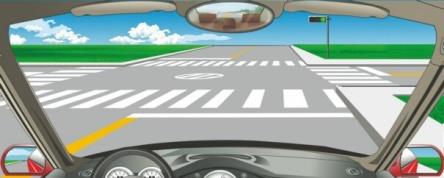
Show the answer
Answer: B. Turn on the left side closest to the center of the crossing
When turning left, pass to the left of the centre of the intersection and signal your turn.
-
10
Which of the following is the correct way to pass when entering this intersection?
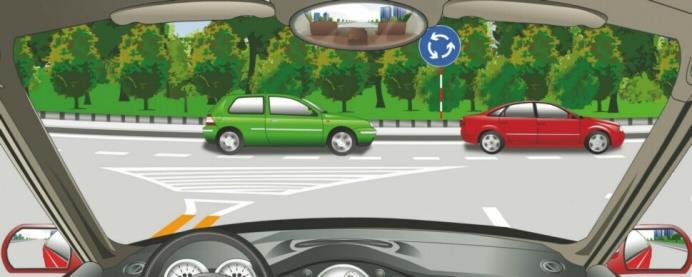
Show the answer
Answer: C. Yield to other vehicles at the intersection
When entering a roundabout, yield to vehicles already travelling inside it.
-
11
When turning right at an intersection where there is a vehicle ahead waiting for a green light, what should the driver do?
Show the answer
Answer: D. Stop and wait in proper order
Wait in the queue until you can proceed legally and safely. Do not cut around the waiting vehicle.
-
12
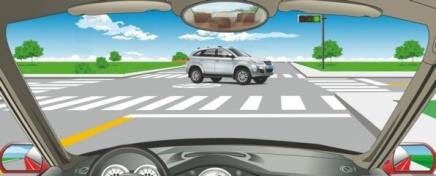
What should the driver do to turn right at this intersection?
Show the answer
Answer: A. Yield to allow the vehicle from the opposite direction to turn left
A vehicle turning right must yield to an oncoming vehicle turning left.
-
13
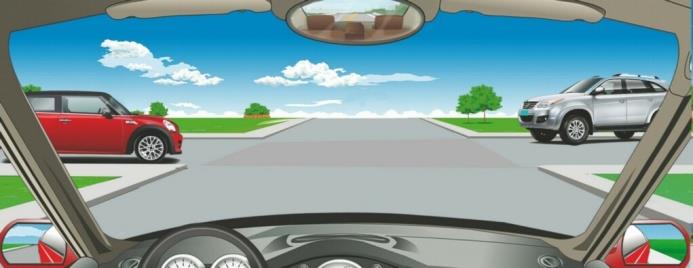
When driving through an intersection, what should the driver do in the condition?
Show the answer
Answer: B. Yield to the vehicles on the right lane
At an uncontrolled intersection, yield to a vehicle coming from the right.
-
14
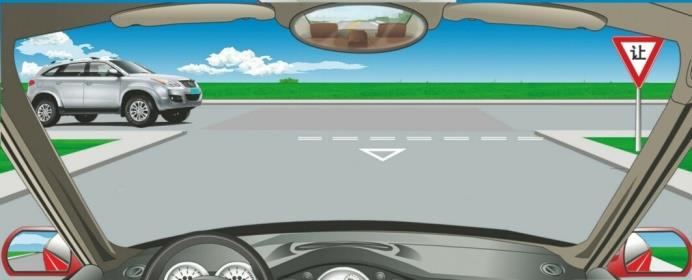
What is the correct way to pass this intersection?
Show the answer
Answer: C. Yield to the vehicles on the left side
The yield sign and road marking require you to give way to traffic on the road you are entering.
-
15
When a motor vehicle passes an intersection without traffic signals, what should the driver do?
Show the answer
Answer: A. Reduce speed and drive slowly
Slow down at an intersection without traffic signals and yield as required.
-
16
Motor vehicles should pass the intersection without traffic signals as soon as possible.
Show the answer
Answer: False
Slow down and check for other traffic at an intersection without signals. Yield when required.
-
17
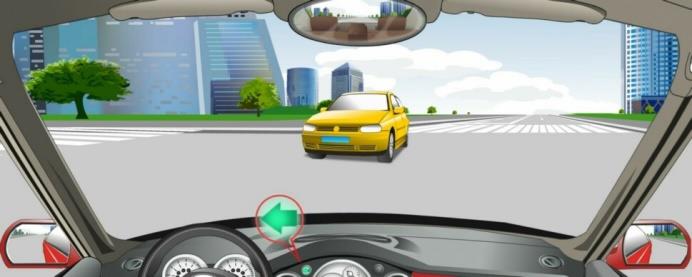
When making a turn at the intersection in this condition, motor vehicles should yield to the vehicles driving straight.
Show the answer
Answer: True
A turning vehicle must yield to an oncoming vehicle travelling straight.
-
18
When encountering such a condition at an intersection, motor vehicles have priority.
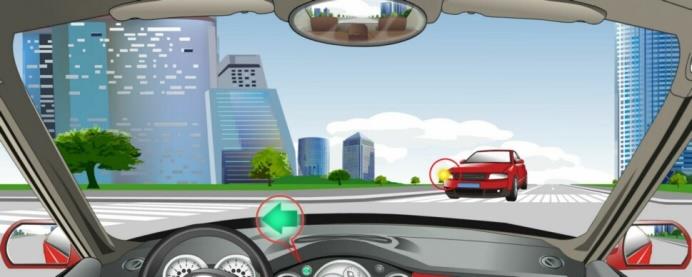
Show the answer
Answer: True
A vehicle turning right must yield to an oncoming vehicle turning left at the same intersection.
-
19
When encountering such a condition at an intersection, motor vehicles have priority.
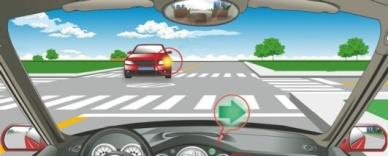
Show the answer
Answer: False
A vehicle turning right must yield to an oncoming vehicle turning left at the same intersection.
-
20
What should the driver do when encountering a line of waiting cars?
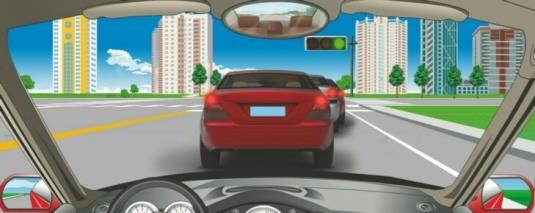
Show the answer
Answer: A. Wait in proper order
Wait in the queue instead of overtaking or cutting into it.
-
21
If a motor vehicle in front is driving slowly, what should the driver do?
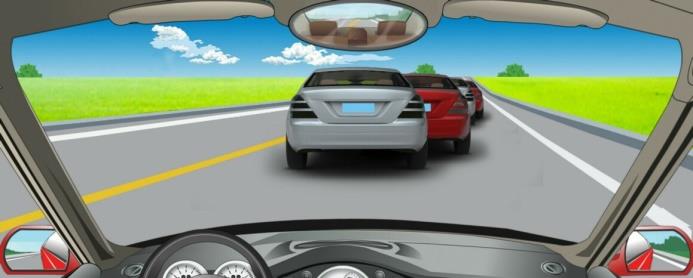
Show the answer
Answer: D. Drive in proper order
When traffic is moving slowly in a queue, follow in order and do not use the opposing lane to overtake.
-
22
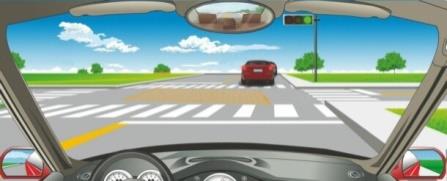
What should the driver do when encountering this condition at an intersection?
Show the answer
Answer: B. Stop and wait outside the intersection
Wait outside if traffic ahead would leave you stopped in the intersection. Keep the cross-hatched area clear.
-
23
When a motor vehicle drives through an intersection with reduced lanes, what should the driver do when a line of stopped or slow-moving vehicles is encountered?
Show the answer
Answer: C. One vehicle from each lane drives into the intersection in order and alternation
When lanes merge in slow traffic, vehicles take turns entering one at a time.
-
24
When encountering a line of stopped or slow-driving cars ahead, what should the driver do?
Show the answer
Answer: D. Drive in proper order
Stay in the queue and move forward in order.
-
25
When a motor vehicle encounters a traffic jam at the intersection ahead, what should the driver do?
Show the answer
Answer: A. Stop in order and wait outside the intersection
Wait outside the intersection so that you do not block crossing traffic.
-
26
When the vehicles in front are moving slowly at an intersection with no traffic signals, motor vehicles should pass alternately.
Show the answer
Answer: True
When traffic is slow at an intersection without signals, vehicles should take turns passing through.
-
27
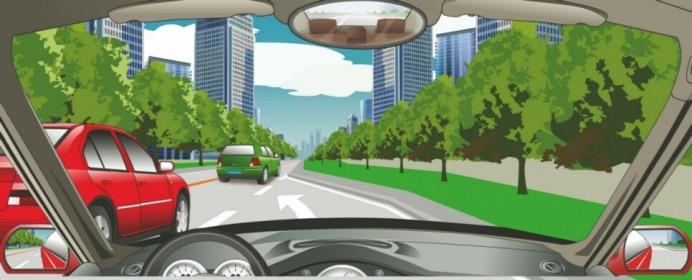
Under such circumstances, the driver should overtake the red car and change to another lane.
Show the answer
Answer: False
The lane marking directs you to continue in your lane. Do not make an unsafe lane change to overtake.
-
28
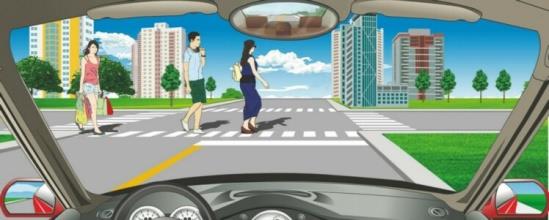
What should the driver do under such circumstances?
Show the answer
Answer: B. Stop and let the pedestrians go first
Stop and yield to pedestrians crossing at the crosswalk.
-
29
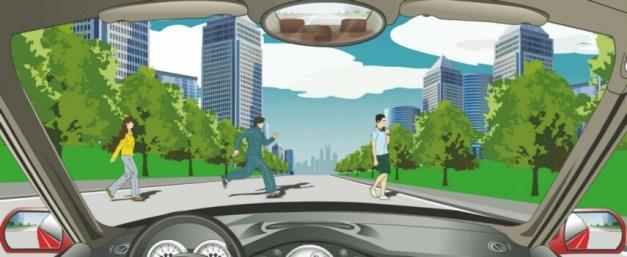
Under such circumstances, the driver should stop the vehicle and yield to pedestrians.
Show the answer
Answer: True
Stop and let the pedestrians cross safely.
-
30
How to make a U-turn at such an intersection?
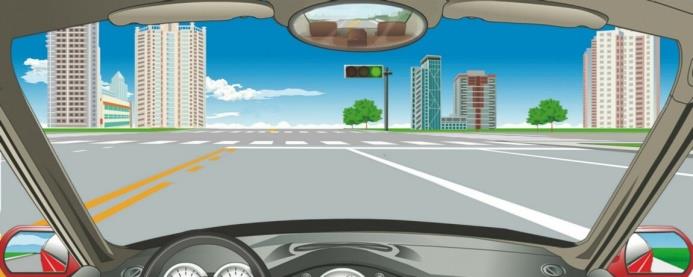
Show the answer
Answer: D. Make a U-turn on the central broken line
Use the break in the centre line for the U-turn, provided it is safe and does not obstruct other road users.
-
31
Making a U-turn on this road section is not allowed.
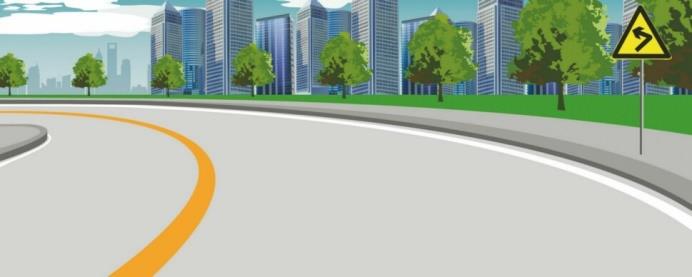
Show the answer
Answer: True
Do not make a U-turn on a dangerous bend, where approaching traffic may not see you in time.
-
32
Motor vehicle drivers are not allowed to make a U-turn at level crossings, bridges, steep slopes, tunnels or other dangerous road sections.
Show the answer
Answer: True
U-turns are prohibited at these dangerous locations because visibility or space may be limited.
-
33
When driving on this road section, the driver is allowed to make a U-turn as long as it will not affect the passing of other vehicles.
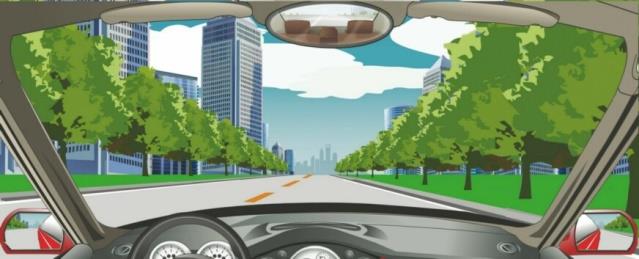
Show the answer
Answer: True
The broken centre line allows crossing when safe. A U-turn must not obstruct other vehicles or pedestrians.
-
34
Under such circumstances, what should the motor vehicle in front do?
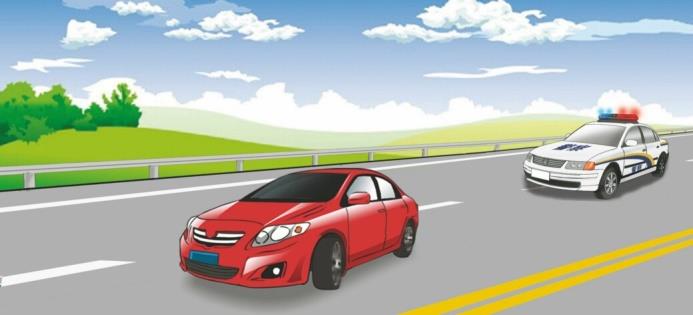
Show the answer
Answer: B. Yield in a timely fashion
Yield safely to a police vehicle using its emergency signals on an urgent task.
-
35
When encountering fire engines, ambulances, and wreckers with emergency tasks while driving, drivers should yield in a timely fashion to such vehicles.
Show the answer
Answer: True
Drivers must yield to emergency vehicles performing urgent duties with their warning signals in use.
-
36
When encountering road maintenance vehicles and engineering vehicles on duty while driving, drivers should pay attention to yield to such vehicles.
Show the answer
Answer: True
Slow down and give working road maintenance vehicles enough room to carry out their duties safely.
-
37
This traffic light means that motor vehicle drivers may directly turn left in front of oncoming traffic.
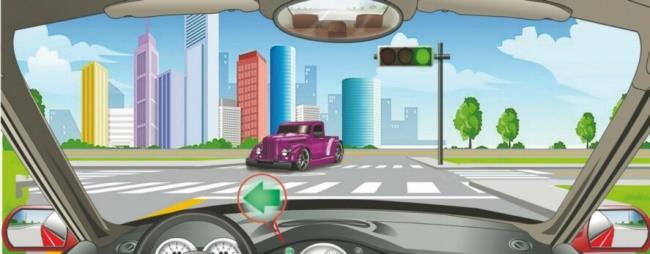
Show the answer
Answer: False
A green light does not give a left-turning driver priority over oncoming vehicles going straight. Yield before turning.
-
38
What's the main characteristic of pedestrians participating in road traffic?
Show the answer
Answer: D. They may walk around at will and can easily change directions
Pedestrians can change direction suddenly. Watch them carefully and be ready to slow down.
-
39
When the traffic conditions at an intersection are complicated, the driver should be patiently waiting instead of taking chances.
Show the answer
Answer: True
Wait until you understand the traffic situation and can proceed safely.
-
40
How should the driver change to another lane before an intersection?
Show the answer
Answer: C. Follow the direction guidance arrows in the area marked by broken lines
Choose the correct lane while lane changes are permitted and follow its direction arrows. Do not cross solid lane lines.
-
41
What should the driver do when his/her vehicle approaches a crosswalk?
Show the answer
Answer: D. Observe the movement of pedestrians and non-motor vehicles before passing
Slow down and watch for people crossing. Stop and yield when pedestrians are using the crosswalk.
-
42
What should the driver do if he/she is going to restart the vehicle after stopping at the roadside for a while?
Show the answer
Answer: C. Observe the conditions of surrounding vehicles
Check the surrounding traffic before moving off, and enter the road only when it is safe.
-
43
What should the driver do if the lane's green light is on but there are still pedestrians on the crosswalk?
Show the answer
Answer: D. Wait until all pedestrians have passed
A green light does not permit you to endanger pedestrians still crossing. Wait for them to finish crossing.
-
44
What should the driver do when he/she is reversing the vehicle on the road and finds other vehicles passing by?
Show the answer
Answer: C. Stop and yield voluntarily
Stop reversing and let the other vehicles pass. Continue only when the way is clear.
-
45
What should the driver do when the light at a congested intersection turns green?
Show the answer
Answer: B. Cannot enter the intersection
Do not enter a blocked intersection, even on a green light. Wait until there is space on the other side.
-
46
When approaching an intersection without a crosswalk, what should the driver do while pedestrians are crossing?
Show the answer
Answer: A. Slow down or stop to yield
Slow down or stop to let pedestrians crossing the road pass safely.
-
47
When encountering a non-motor vehicle intending to bypass a parked vehicle, what should the motor vehicle driver do?
Show the answer
Answer: B. Yield to the non-motor vehicle
Yield and give the non-motor vehicle enough room to pass the parked vehicle safely.
-
48
When a non-motor vehicle cuts in front, what should the motor vehicle driver do?
Show the answer
Answer: C. Yield at a reduced speed
Slow down and yield to avoid a collision, even if the other road user has cut in.
-
49
When an oncoming ambulance in the process of a rescue approaches in the driver's lane, what should the driver do?
Show the answer
Answer: A. Slow down or pull over
Slow down or pull over safely to give the ambulance room to pass.
-
50
When encountering students walking in line across the road, what should the driver do?
Show the answer
Answer: B. Stop and yield
Stop and let the group cross together. Do not drive through the line.
-
51
When another vehicle cuts in despite a motor vehicle driver having priority, what should the latter driver do?
Show the answer
Answer: D. Slow down and yield, and stop if necessary
Slow down and yield to prevent a collision. Stop if there is not enough room.
-
52
When another vehicle cuts in at an intersection to make turns, what should the driver do?
Show the answer
Answer: A. Stop and yield
Stop and yield to avoid a collision with the turning vehicle.
-
53
Before changing lanes, the driver should turn on the indicator in advance, observe the situation and keep a safe distance.
Show the answer
Answer: True
Signal early and check that there is a safe gap before changing lanes.
-
54
Before moving to the right lane, the driver should turn on the right-hand indicator, observe the situation and make sure it is safe.
Show the answer
Answer: True
Signal right and check the surrounding traffic before moving into the lane.
-
55
The driver is allowed to enter the other lane as soon as the indicator is turned on.
Show the answer
Answer: False
An indicator warns others of your intention; it does not give you a right to move. Check for a safe gap first.
-
56
Before driving into a traffic flow, the driver should turn on the indicator first, keep driving straight, and observe the traffic situation in the rear view mirror to make sure it's safe to do so.
Show the answer
Answer: True
Signal and check traffic behind before joining the flow. Enter only when there is a safe gap.
-
57
Before changing lanes, the driver should turn on the indicator and move to the nearside lane rapidly.
Show the answer
Answer: False
Signal and check for a safe gap before changing lanes. Do not move suddenly.
-
58
Before driving into a traffic flow from another lane, the driver should observe the traffic situation in the rear view mirror.
Show the answer
Answer: True
Check traffic behind before joining the flow, and move only when it is safe.
-
59
When passing a crosswalk, the driver should yield to pedestrians.
Show the answer
Answer: True
Slow down at a crosswalk and stop to let pedestrians crossing it pass.
-
60
Motor vehicles should speed up as soon as possible after pulling away from the roadside, then turn left and drive into the normal road.
Show the answer
Answer: False
Check traffic and signal before joining the road. Move into traffic only when there is a safe gap.
-
61
Motor vehicles should drive on the right side while turning, are not allowed to cut into another lane, and should "make a great left turn when turning left, make a light right turn when turning right".
Show the answer
Answer: True
Follow the correct path through the turn and stay in the proper lane. Do not cut across other traffic.
-
62
When driving into an intersection, the driver should cut speed, observe the traffic situation and make sure the situation is safe.
Show the answer
Answer: True
Slow down and check for traffic and pedestrians before entering the intersection.
-
63
When pedestrians cut into the road suddenly, a driver should cut speed rapidly and yield.
Show the answer
Answer: True
Slow down promptly and yield to prevent a collision with pedestrians.
-
64
When encountering a violation of the law on traffic safety by pedestrians, drivers are allowed not to yield.
Show the answer
Answer: False
A pedestrian's mistake does not remove the driver's duty to avoid a collision. Slow down or stop when needed.
-
65
When encountering a non-motor vehicle cutting in while the intersection traffic light is green, drivers are allowed not to yield.
Show the answer
Answer: False
Even with a green light, slow down or stop if needed to avoid a collision.
-
66
When making a U-turn, the driver should control the driving speed strictly, observe the traffic situation in front and behind carefully and make sure there is clear space for advance or reverse.
Show the answer
Answer: True
Make a U-turn slowly and check traffic in both directions. Make sure there is enough space to complete it safely.
-
67
When other vehicles cut in at a roundabout, the driver may not yield as long as they have priority.
Show the answer
Answer: False
Even when you have priority, slow down or yield if necessary to avoid a collision.
-
68
When entering an intersection, the vehicle which intends to turn left is allowed to enter the left-turn waiting area at any time.
Show the answer
Answer: False
Enter a left-turn waiting area only when the traffic signals and road conditions allow it.
-
69
Before changing lanes, the driver should turn on the indicator in advance, observe the traffic situation and make sure it's safe to do so.
Show the answer
Answer: True
Signal early and check for other road users. Change lanes only when you can do so safely.
-
70
When a road train makes a sharp turn either to the left or right, which side of the lane should it take and go along at a lower speed?
Show the answer
Answer: C. Outer side
A trailer cuts inward during a turn. Taking a wider path at low speed leaves more room for it.
-
71
When a road train turns, the tail of the tractor or the trailer often has to borrow the opposite lane. Therefore, what should be done when a road train is making a turn?
Show the answer
Answer: A. Be prepared to yield
A long vehicle may need extra road space to turn. Slow down and be ready to yield to other road users.