خطة التعلم الخاصة بك · متابعة · مراجعة →
一直 مقابل 一向 (باستمرار مقابل عادةً)
مُقدَّميبقى موقعك المحفوظ في هذا المتصفح. لا يكتمل استئناف الموقع الدرس أو الإجابة على أسئلته.
 5:54
HSK 6 قواعد 14: أزواج قد يسبب ارتباكاً
按照 مقارنة بـ 根据. تعني 按照 "وفقاً لخطة"؛ وتعني 根据 "بناءً على أدلة". خطة مقارنة بالبيانات. راجع الورقة التوضيحية للحصول على الشكل الكامل، والمعنى والحدود.
شروحات إنجليزية + أمثلة ماندرين · التسميات تتبع النص المنطوق
في هذا الدرس
All day, or always?
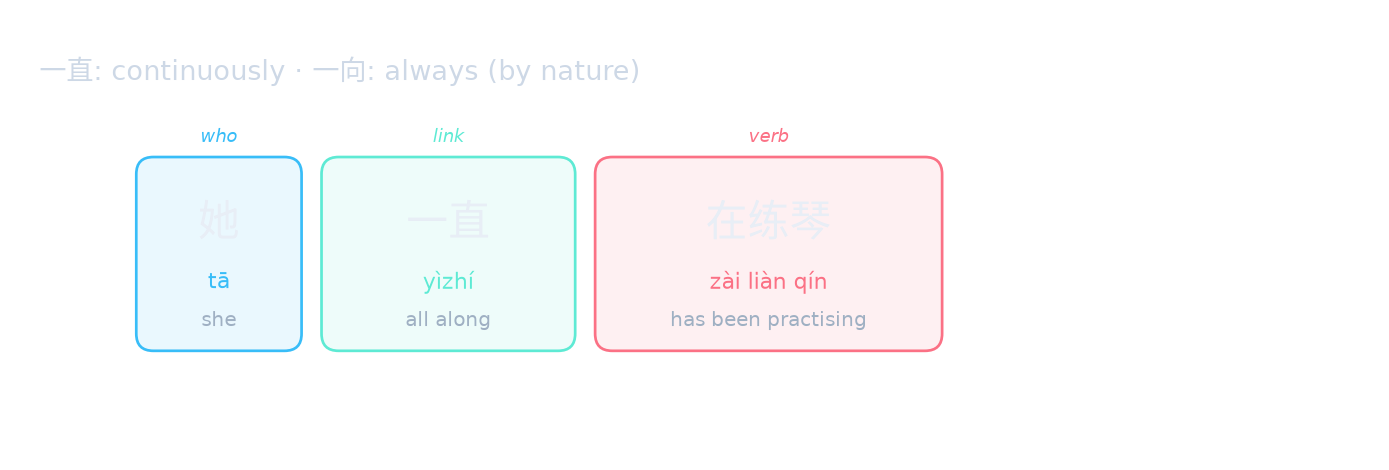
- Your neighbour has been practising piano all morning; she has always been hard-working.
- she / her她always一直at / in / (ongoing action)在练琴,she / her她has always been一向very很to work hard / effort努力。 — "She's been practising the piano all along; she's always been hard-working."
- Goal: choose between always一直 (continuously, for a period) and has always been一向 (always, as a habit).
always一直 = continuously (a stretch of time)
- always一直 = without a break over a stretch, past or future: always一直at / in / (ongoing action)在to rain下雨, I我will会always一直wait for等you你 — "I will keep waiting for you."
- It can also mean "straight": always一直to walk / to leave走.
I我will会always一直wait for等you你。
Build: “I will keep waiting for you.”
الصعوبة 3/5 · 200 عملة + مكافأة صغيرة عند الإنجاز الأول اليوم
会 + 一直 + verb.
has always been一向 = habitually, consistently (character)
- has always been一向 describes long-standing habits or character from past to present: he他has always been一向very很punctual准时 — "He's always been punctual."
- It does not look to the future: I我will会has always been一向wait for等you你 ✗.
he他has always been一向very很punctual准时。
Promise: “I'll always support you.” 我会____支持你。
الصعوبة 1/5 · 100 عملة + مكافأة صغيرة عند الإنجاز الأول اليوم
Future promises take 一直.
Future and activities
- Future promises take always一直: I我will会always一直to support支持you你 ("I will always support you"). has always been一向 is past-to-present only.
- An ongoing activity (at / in / (ongoing action)在 + verb) usually takes always一直: always一直at / in / (ongoing action)在wait for等; has always been一向 is about habits and traits.
- always一直 also works for a state over a period: he他always一直not不liked喜欢eating吃spicy food辣。 — "He has never liked spicy food."
Which is wrong?
الصعوبة 1/5 · 100 عملة + مكافأة صغيرة عند الإنجاز الأول اليوم
一向 does not look to the future.
Both possible
- he他always一直 / has always been一向not不liked喜欢eating吃spicy food辣 — both fine: a long-standing preference.
- has always been一向 sounds more like a character trait; always一直 more like continuity.
he他has always一向not不liked喜欢eating吃spicy food辣。
他一直不喜欢吃辣 and 他一向不喜欢吃辣 are both acceptable.
الصعوبة 1/5 · 100 عملة + مكافأة صغيرة عند الإنجاز الأول اليوم
For a long-standing preference, both work.
Recap
- always一直 = continuously (past or future; activities; also "straight ahead").
- has always been一向 = habitually, consistently (character, past to present, not future).
Read the full reference: HSK 6 grammar — Comparing similar adverbs.
Your neighbour has been practising piano all morning; she has always been hard-working. Close the examples. Say a Mandarin response, then write it in Chinese. Explain briefly in English what the lesson’s pattern adds. Compare with the model, then change one detail and try again.
This is supported productive practice. Compare meaning and structure; your answer need not copy the model. A partner or teacher must hear the spoken response to comment on pronunciation.
ما المشكلة؟ لا يرى ذلك سوى فريق الموقع.