خطة التعلم الخاصة بك · متابعة · مراجعة →
مكمّلات النتيجة 住 / 开 / 出来
مُقدَّميبقى موقعك المحفوظ في هذا المتصفح. لا يكتمل استئناف الموقع الدرس أو الإجابة على أسئلته.
 5:44
HSK 5 القواعد 18: المكمّلات
صفة يتبعها 得 ثم 很 أو 不得了 أو 要命 أو不行. تعني 不得了 درجة لا تصدق؛ وتعني 要命 حتى الموت (عامية)؛ وتعني 不行 بشكل سيء جداً (عامية). النمط: 形容词…
شروحات إنجليزية + أمثلة ماندرين · التسميات تتبع النص المنطوق
في هذا الدرس
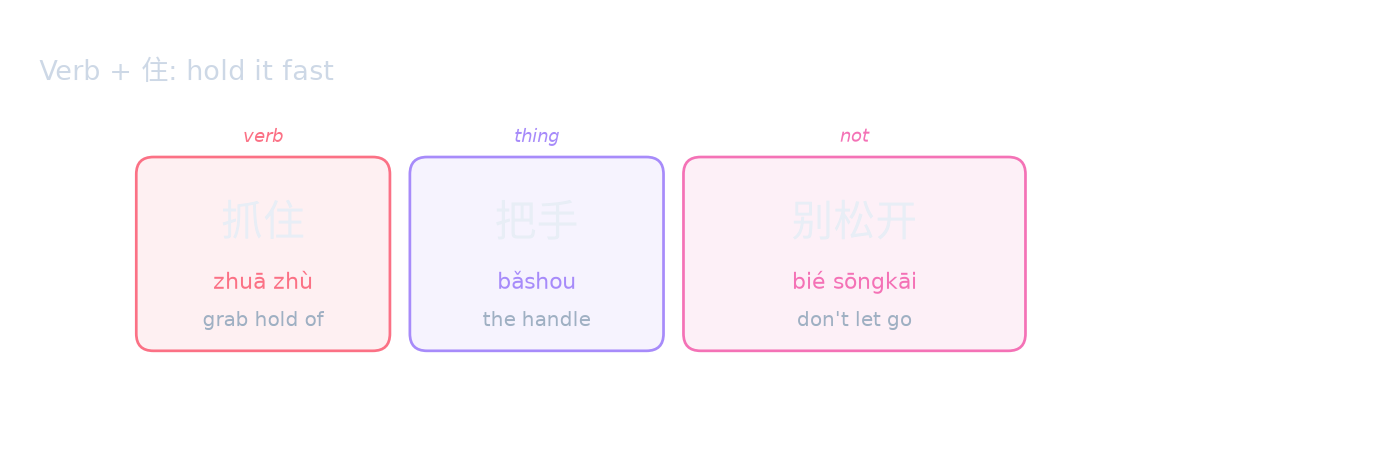
Hold on tight
- You are helping your little sister learn to ride a bike.
- to grab hold of抓住handle把手,don't别to release松开! — "Hold on to the handlebars, don't let go!"
- Goal: use the result complements to live / (firmly: 抓住, 记住)住, to open; to drive开 and (make out)出来.
Verb + to live / (firmly: 抓住, 记住)住 = fix, hold firmly
- to live / (firmly: 抓住, 记住)住 makes the result stable: to grab hold of抓住 (grab hold), remember记住 (memorise), to stop / stand still站住 (stop), to stop拦住 (block).
- remember记住my我(modifier / structural particle)的phone电话number号码。 — "Remember my phone number."
please请remember记住my我的phone电话number号码。
Complete: “Remember: the meeting is at nine.” 记____:会议九点开始。
الصعوبة 1/5 · 100 عملة + مكافأة صغيرة عند الإنجاز الأول اليوم
记住 = remember (fix in memory).
Verb + to open; to drive开 / (make out)出来
- to open; to drive开 = open or separate: to open打开 (open), to pull open拉开 (pull open), to leave走开 (go away).
- (make out)出来 = come out, emerge, or be recognised: want / think / miss想(make out)出来 (come up with), see看(make out)出来 (tell, make out), to write写(make out)出来 (write out).
I我see看(make out)出来he他not不happy高兴。
Match each verb to its meaning.
الصعوبة 2/5 · 140 عملة + مكافأة صغيرة عند الإنجاز الأول اليوم
住 fixes, 开 separates, 出来 brings out.
Potential forms
- can't remember记不住 = can't remember; to hit / play / make (a call)打not不to open; to drive开 = can't open; want / think / miss想not不(make out)出来 = can't think of it.
- (make out)出来 can split around an object: want / think / miss想out / to happen出一个means办法to come来 / want / think / miss想(make out)出来一个means办法 — "Come up with a solution."
- not不 goes between the verb and the complement for "can't": ✓ my我to hit / play / make (a call)打not不to open; to drive开bottle瓶子。 — "I can't open the bottle." (my我not不to open打开bottle瓶子 = "I won't open the bottle.")
“I can't open this bottle.” Which is correct?
الصعوبة 1/5 · 100 عملة + مكافأة صغيرة عند الإنجاز الأول اليوم
Potential complement: 打不开.
see看(make out)出来 versus saw看见
- saw看见 = see (with the eyes): my我saw看见he他(completed / change)了 — "I saw him."
- see看(make out)出来 = work out, notice from clues: my我see看(make out)出来he他at / in在to lie说谎 — "I could tell he was lying."
I我saw看见him他了。
看出来 and 看见 mean the same.
الصعوبة 1/5 · 100 عملة + مكافأة صغيرة عند الإنجاز الأول اليوم
看见 = see; 看出来 = work out from clues.
Recap
- to live / (firmly: 抓住, 记住)住 = fix firmly (remember记住, to grab hold of抓住); to open; to drive开 = open / apart / away (to open打开, to depart离开); (make out)出来 = come out / be recognised (want / think / miss想(make out)出来, see看(make out)出来).
- Potential: can't remember记不住, to hit / play / make (a call)打not不to open; to drive开, want / think / miss想not不(make out)出来.
Read the full reference: HSK 5 grammar — Complements.
You are helping your little sister learn to ride a bike. Close the examples. Say a Mandarin response, then write it in Chinese. Explain briefly in English what the lesson’s pattern adds. Compare with the model, then change one detail and try again.
This is supported productive practice. Compare meaning and structure; your answer need not copy the model. A partner or teacher must hear the spoken response to comment on pronunciation.