Prokaryotic cells and viruses
مُقدَّم| English | المعنى |
|---|---|
| prokaryotic/ˌprɒkərɪˈɒtɪk/ | بدائية النواة |
| unicellular/ˌjuːnɪˈseljʊlə/ | وحيد الخلية |
| peptidoglycan/ˈpeptɪdɒɡlɪkən/ | بيبتيدوجلايكان |
| nucleic acid/njuːˈklɪɪk ˈæsɪd/ | حمض نووي |
| capsid/ˈkæpsɪd/ | غلاف بروتيني |
| envelope/ˈenvələʊp/ | غشاء خارجي |
| host/həʊst/ | مضيف |
بدائيات النوى والفيروسات
- ليست جميع الخلايا حقيقية النواة. البكتيريا بدائية النواة — أصغر وأبسط.
- الفيروسات ليست خلايا حتى.
- معرفة الفروقات هو مقارنة امتحان مفضلة.
خلايا بدائية النواة (البكتيريا)
- الخلية بدائية النواة وحيدة الخلية وصغيرة (حوالي $1$–$5\ \mu\text{m}$).
- ليس لها نواة — DNA الدائري خاص بها حر في السيتوبلازم.
- لديها ريبوسومات أصغر (70S) وجدار خلوي من الببتيدوجلايكان (ليس السليلوز). قد تحتوي أيضًا على ناقلات صغيرة، وهي دوائر صغيرة إضافية من الحمض النووي.
- لا عضيات متعددة الأغشية — لذلك لا نواة، ولا ميتوكوندريا، ولا كلوروبلاستات.
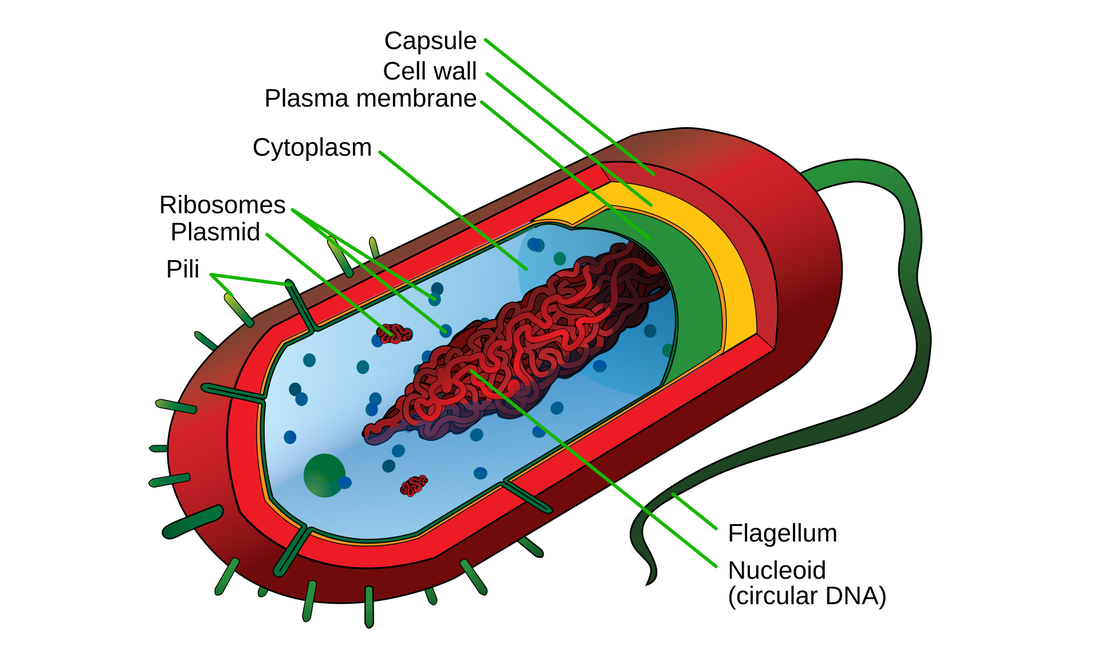
خلية بدائية النواة: DNA دائري حر، بدون نواة أو عضيات محاطة بغشاء
Explore a bacterium
Tap each part of this prokaryotic cell — note there is no nucleus and no membrane-bound organelles.
A key feature of a prokaryotic cell is that it:
الصعوبة 1/5 · 100 عملة + مكافأة صغيرة عند الإنجاز الأول اليوم
Prokaryotes have no nucleus and no double-membrane organelles; their DNA is circular and free.
Prokaryotes have larger 80S ribosomes, while the cytoplasm of eukaryotes has smaller 70S ribosomes.
الصعوبة 1/5 · 100 عملة + مكافأة صغيرة عند الإنجاز الأول اليوم
False. Prokaryotes have the smaller 70S ribosomes; the eukaryotic cytoplasm has 80S. Mitochondria and chloroplasts also contain 70S ribosomes.
The small extra ring of DNA in a bacterium, separate from its main loop, is a ______.
الصعوبة 1/5 · 100 عملة + مكافأة صغيرة عند الإنجاز الأول اليوم
Plasmids carry extra genes (e.g. antibiotic resistance) and can be passed between bacteria.
بدائية النواة مقابل حقيقية النواة
| ميزة | بدائية النواة | حقيقية النواة |
|---|---|---|
| الحجم | ~1-5 ميكرومتر | ~10-100 ميكرومتر |
| الحمض النووي الرئيسي | دائري، غير محاط بنواة | كروموسومات خطية داخل نواة |
| نواة | لا يوجد | موجود |
| عضيات ذات غشاء مزدوج | لا يوجد | ميتوكوندريا (+ بلاستيدات خضراء) |
| الريبوسومات | 70S | 80S في السيتوبلازم؛ 70S داخل الميتوكوندريا والبلاستيدات الخضراء |
Match each feature to the cell type it belongs to.
الصعوبة 2/5 · 140 عملة + مكافأة صغيرة عند الإنجاز الأول اليوم
The defining difference is the nucleus — absent in prokaryotes, present in eukaryotes, which also have membrane-bound organelles and 80S ribosomes.
الفيروسات
- جميع الفيروسات غير خلوية — أي ليست مكونة من خلايا.
- لكل منها نواة من حمض نووي (جينوم من DNA أو RNA) داخل غلاف بروتيني (كبسيدة); وبعضها يحتوي على غشاء دهني.
- الفيروس ليس له سيتوبلازم أو عضيات أو ريبوسومات — لذا لا يستطيع التنفس ولا تصنيع البروتينات، ولا يمكنه نسخ نفسه إلا داخل خلية مضيف حية.
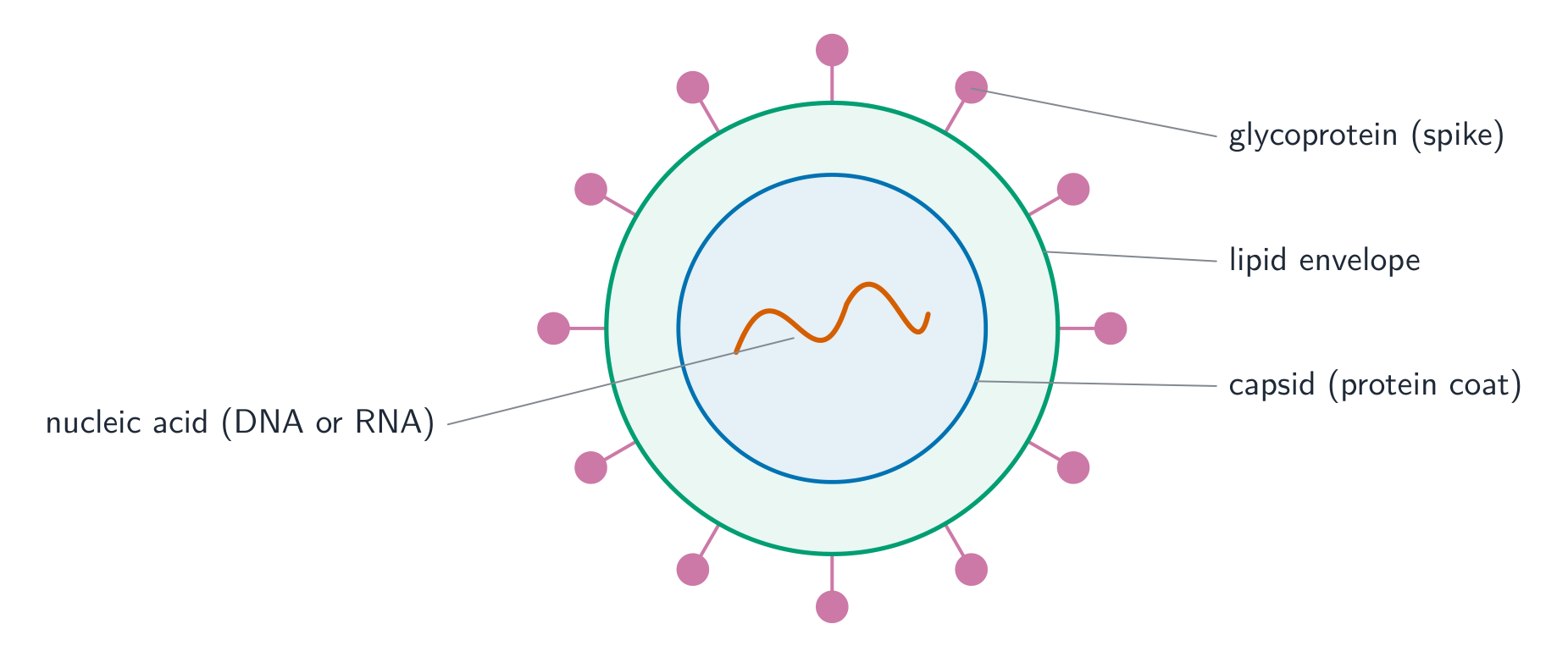
فيروس عام: نواة مواد وراثية داخل كابسيد بروتيني، مع غشاء دهني في بعض الفيروسات
A virus consists of:
الصعوبة 1/5 · 100 عملة + مكافأة صغيرة عند الإنجاز الأول اليوم
Viruses are non-cellular: nucleic acid + capsid (± lipid envelope), with no organelles.
The protein coat that surrounds a virus's nucleic acid is called the ______.
الصعوبة 1/5 · 100 عملة + مكافأة صغيرة عند الإنجاز الأول اليوم
The capsid is the protein coat; some viruses also have an outer lipid envelope.
Why can a virus only reproduce inside a host cell?
الصعوبة 1/5 · 100 عملة + مكافأة صغيرة عند الإنجاز الأول اليوم
With no ribosomes/organelles, a virus must hijack a host cell's machinery to copy itself.
مقارنة نفس الميزة من الجانبين
- بالنسبة للحمض النووي، قارن التنظيم والموقع بشكل منفصل: البكتيريا النموذجية تمتلك حمضاً نووياً دائرياً غير محاط بنواة؛ والخلايا الحيوانية النموذجية تمتلك كروموسومات خطية ضمن غشاء نووي.
- لا تكتب أن جميع الحموض النووية حقيقية النواة نووية. تحتوي الميتوكوندريا والبلاستيدات الخضراء على حمض نووي دائري صغير، وريبوسوماتها 70S تعني أن العثور على ريبوسوم 70S وحده لا يحدد الخلية كاملة على أنها بكتيرية.
- عينة قطرها 3 ميكرومتر تحتوي على غشاء خلوي، وسيتوبلازم، وجدار ببتيدوغليكان، وحمض نووي دائري، وريبوسومات 70S، لكنها تفتقر إلى نواة. هذه المجموعة تدعم أنها خلية بكتيرية.
- الجسيم الدقيق يحتوي على غلاف بروتيني وجينوم RNA، لكن لا يحتوي على سيتوبلازم أو ريبوسومات. هذا يدعم فكرة أن الفيروس: الغلاف البروتيني ليس جداراً خلوياً بكتيرياً، والفيروس ليس خلية بدائية النواة صغيرة.
Sample A has a peptidoglycan wall, cytoplasm, ribosomes and circular DNA. Sample B has an RNA genome inside a protein coat, with no cytoplasm or ribosomes. Classify the samples and explain why A can make proteins whereas B must use a host cell.
A is a typical bacterial cell; its ribosomes carry out protein synthesis. B is a virus; its protein coat is a capsid and it has no ribosomes, so it uses host-cell machinery to make proteins. The absence of a nucleus in A does not prevent its ribosomes from functioning.
لقد فهمت الأمر
- بدائيات النواة = صغيرة، بدون نواة، DNA دائري حر، ريبوسومات 70S، جدار من البيبتيدوجليكان، بدون عضيات ذات غشاء مزدوج
- الخلايا حقيقية النواة = أكبر حجماً، تحتوي على DNA خطي نووي، وريبوسومات سيتوبلازمية من نوع 80S؛ كما تحتوي الميتوكوندريا والكلوروبلاست على DNA دائري وريبوسومات من نوع 70S
- الفيروسات هي غير خلوية: مواد وراثية (DNA أو RNA) + كابسيد (± غلاف دهني)
- يحتاج الفيروس إلى خلية مضيفة للتكاثر
An animal epithelial cell and a typical bacterial cell are compared. Give one difference in the organisation of their main DNA and one difference in its location. Explain why “the animal cell has DNA and the bacterium does not” is wrong.
The epithelial cell has linear chromosomes inside a nucleus bounded by a nuclear envelope. The bacterium has circular DNA not enclosed in a nucleus. Both contain DNA; lack of a nucleus does not mean lack of genetic material. Mitochondria in the epithelial cell also contain small circular DNA.
A small structure contains circular DNA and 70S ribosomes. Which conclusion is justified from those two observations alone?
الصعوبة 1/5 · 100 عملة + مكافأة صغيرة عند الإنجاز الأول اليوم
Both bacteria and mitochondria contain circular DNA and 70S ribosomes. Look for cell boundaries and organelle context; viruses have no ribosomes.
An experimental substance inhibits bacterial 70S ribosomes but does not inhibit 80S ribosomes. A student says it cannot affect any structure in an animal cell. Explain why the claim is too strong.
Animal-cell cytoplasmic ribosomes are 80S, but mitochondria contain 70S ribosomes. Those ribosomes could be a target if the substance reaches them and acts on them. The ribosome types identify a potential concern; they do not prove the effect of a real drug.