الانتقال إلى المحتوى
المواد

AQA · GCSE · Biology

  • 1

    Cell biology

    1.1

    Cell biology: the unit of life

    Every living thing is built from cells, and the differences between them decide what each can do. This reference covers AQA GCSE Biology 8461, topic 4.1 Cell biology.

    How the exam treats this topic:

    • Paper 1 (4.1–4.4) carries Cell biology. Required practicals: RP1 (light microscope), RP2 (antiseptics/antibiotics on agar, biology only) and RP3 (osmosis in plant tissue).
    • Culturing microorganisms is biology only; standard-form answers for bacterial numbers are HT only.
    • Calculations the exam demands: magnification (image ÷ real), real size from image and magnification, area by πr², percentage change in mass, surface-area-to-volume ratio, bacterial division counts.
    1.1

    Cell structure: eukaryotes and prokaryotes

    المنهج

    تركيب الخلية، والتخصص، والميكروسكوب، والزراعة (عبارات AQA 8461 4.1.1.1-4.1.1.6، RP1، RP2).

    1. صف خلايا النبات والحيوان والبكتيريا، موضحًا الهياكل ووظائفها.
    2. اربط هياكل الخلايا المتخصصة بوظائفها.
    3. اشرح أهمية تمايز الخلايا.
    4. احسب التكبير والحجم الحقيقي وحجم الصورة، باستخدام الصيغة القياسية والسوابق.
    5. صف التقنية المعقمة مع الأسباب، وعدد انقسامات البكتيريا، ومناطق المناطق (للأحياء فقط).

    المصدر: منهج كامبريدج الدولي

    An animal cell, a plant cell and a bacterial cell with their key structures labelled.
    Learn the labels — the exam asks you to name and function them.
    Structure Function
    nucleus genetic material (DNA); controls the cell
    cytoplasm jelly where reactions happen
    cell membrane controls what enters and leaves
    mitochondria aerobic respiration releases energy
    ribosomes protein synthesis
    chloroplast (plant) photosynthesis
    permanent vacuole (plant) cell sap, keeps the cell firm
    cell wall (plant, cellulose) strength and support
    • Eukaryotic 真核 cells (plant and animal): genetic material enclosed in a nucleus.
    • Prokaryotic 原核 cells (bacteria) are much smaller; cytoplasm and cell membrane surrounded by a cell wall; genetic material is not in a nucleus — a single DNA loop plus one or more plasmids (small rings of DNA).

    Scale: use the prefixes centi (10⁻²), milli (10⁻³), micro (10⁻⁶), nano (10⁻⁹) and order-of-magnitude comparisons in standard form.

    مفردات تدريب
    English العربية
    eukaryotic/ˌjuːkərɪˈɒtɪk/ حقيقي النواة
    prokaryotic/ˌprɒkərɪˈɒtɪk/ بدائي النواة
    1.1

    Cell specialisation, differentiation and microscopy

    المنهج

    تركيب الخلية، والتخصص، والميكروسكوب، والزراعة (عبارات AQA 8461 4.1.1.1-4.1.1.6، RP1، RP2).

    1. صف خلايا النبات والحيوان والبكتيريا، موضحًا الهياكل ووظائفها.
    2. اربط هياكل الخلايا المتخصصة بوظائفها.
    3. اشرح أهمية تمايز الخلايا.
    4. احسب التكبير والحجم الحقيقي وحجم الصورة، باستخدام الصيغة القياسية والسوابق.
    5. صف التقنية المعقمة مع الأسباب، وعدد انقسامات البكتيريا، ومناطق المناطق (للأحياء فقط).

    المصدر: منهج كامبريدج الدولي

    خلايا متخصصة relate structure to function (learn one feature ↔ one advantage each):

    Cell Adaptation Function
    sperm cell tail for swimming, many mitochondria, acrosome with enzymes fertilisation
    nerve cell long axon, insulating sheath carrying impulses
    muscle cell many proteins fibres, many mitochondria contraction
    root hair cell large surface area, thin wall absorbing water and minerals
    xylem cell hollow, lignified walls, no end walls transporting water
    phloem cell sieve plates, few organelles transporting sugars

    التفاضل 分化: cells acquire different sub-cellular structures to become specialised. Animal cells differentiate mostly at an early stage; plant cells throughout life. In mature animals, cell division is mainly for repair and replacement.

    Microscopy: a light microscope uses lenses; an electron microscope has much higher magnification and resolving power 分辨能力, so far more sub-cellular structures could be seen and understood.

    $$\text{magnification} = \frac{\text{size of image}}{\text{size of real object}}$$

    Worked example. A cell image is 4.8 cm wide at magnification ×1200.

    • Convert first: $4.8\ \text{cm} = 4.8\times10^{-2}$ m $= 48\,000\ \mu\text{m}$.
      $$\text{real size} = \frac{\text{image size}}{\text{magnification}} = \frac{48\,000\ \mu\text{m}}{1200} = 40\ \mu\text{m}$$

    RP1: observe, draw and label plant and animal cells with a magnification scale included (e.g. a scale bar or the printed magnification).

    مفردات تدريب
    English العربية
    Differentiation/ˌdɪfəˌrenʃɪˈeɪʃn/ التمايز
    resolving power/rɪˈzɒlvɪŋ ˈpaʊə/ قوة التمييز
    1.1

    Culturing microorganisms (biology only)

    المنهج

    تركيب الخلية، والتخصص، والميكروسكوب، والزراعة (عبارات AQA 8461 4.1.1.1-4.1.1.6، RP1، RP2).

    1. صف خلايا النبات والحيوان والبكتيريا، موضحًا الهياكل ووظائفها.
    2. اربط هياكل الخلايا المتخصصة بوظائفها.
    3. اشرح أهمية تمايز الخلايا.
    4. احسب التكبير والحجم الحقيقي وحجم الصورة، باستخدام الصيغة القياسية والسوابق.
    5. صف التقنية المعقمة مع الأسباب، وعدد انقسامات البكتيريا، ومناطق المناطق (للأحياء فقط).

    المصدر: منهج كامبريدج الدولي

    Bacteria multiply by binary fission 二分裂 as often as once every 20 minutes with enough nutrients and a suitable temperature. They grow in nutrient broth or as colonies on agar gel.

    Aseptic technique 无菌操作 (each point earns a mark — know the لماذا):

    • sterilise Petri dishes and culture media before use — kills unwanted microorganisms;
    • flame the inoculating loop before transferring bacteria — kills contaminants on the loop;
    • secure the lid with adhesive tape and store upside down — stops airborne contamination and condensation dripping;
    • in schools, incubate at a maximum of 25 °C — prevents growth of pathogens harmful to humans.

    Worked example (division count). One bacterium divides every 20 minutes for 3 hours.

    • 3 hours = 180 min = 9 division times; number $= 2^9 = 512$.

    Worked example (zone area). A clear zone of radius 4 mm around an antibiotic disc.

    $$A = \pi r^2 = \pi \times 4^2 = 50\ \text{mm}^2\ \text{(2 s.f.)}$$

    RP2: effect of antiseptics/antibiotics on bacterial growth — measure zones of inhibition with a ruler (several diameters, mean, ÷2), controls with no substance.

    مفردات تدريب
    English العربية
    binary fission/ˈbaɪnəri ˈfɪʃn/ الانقسام الثنائي
    Aseptic technique/æˈseptɪk tekˈniːk/ التقنية المعقمة
    1.2

    Cell division: chromosomes, mitosis and the cell cycle

    المنهج

    انقسام الخلية والخلايا الجذعية (عبارات AQA 8461 4.1.2.1-4.1.2.3).

    1. صف الكروموسومات وتزاوجها في الخلايا الجسدية.
    2. صف دورة الخلية بما في ذلك المراحل الثلاث الرئيسية والانقسام المتساوي.
    3. صف وظيفة الخلايا الجذعية في الأجنة والحيوانات البالغة وأنسجة النمو النباتية.
    4. قيّم استخدام الخلايا الجذعية في الطب واستنساخ النباتات، بما في ذلك المخاطر والمعارضات الأخلاقية.

    المصدر: منهج كامبريدج الدولي

    • العنصر nucleus contains chromosomes 染色体 made of DNA; each chromosome carries many genes; body cells have chromosomes in pairs (humans: 23 pairs).
    • العنصر cell cycle: DNA replicates → growth (more ribosomes and mitochondria) → mitosis 有丝分裂 (one set of chromosomes pulled to each end; nucleus divides) → cytoplasm and membranes divide → two identical cells.

    Mitosis matters for growth and development of multicellular organisms, and repair. Recognise contexts where mitosis is occurring (a growing root tip, healing skin, a tumour).

    مفردات تدريب
    English العربية
    chromosomes/ˈkrəʊməsəʊmz/ الكروموسومات
    mitosis/maɪˈtəʊsɪs/ الانقسام المتساوي
    1.2

    الخلايا الجذعية

    المنهج

    انقسام الخلية والخلايا الجذعية (عبارات AQA 8461 4.1.2.1-4.1.2.3).

    1. صف الكروموسومات وتزاوجها في الخلايا الجسدية.
    2. صف دورة الخلية بما في ذلك المراحل الثلاث الرئيسية والانقسام المتساوي.
    3. صف وظيفة الخلايا الجذعية في الأجنة والحيوانات البالغة وأنسجة النمو النباتية.
    4. قيّم استخدام الخلايا الجذعية في الطب واستنساخ النباتات، بما في ذلك المخاطر والمعارضات الأخلاقية.

    المصدر: منهج كامبريدج الدولي

    A stem cell 干细胞 is an undifferentiated cell that can give rise to many more of the same type and, by differentiation, to other cell types.

    المصدر Can become
    embryo most types of human cell
    adult bone marrow many cells, including blood cells
    plant meristems any type of plant cell, throughout life

    Uses and evaluation (the credited pairs — benefit و risk/objection):

    • الطب: potential treatment for diabetes and paralysis; therapeutic cloning makes an embryo with the patient's own genes, so cells are not rejected.
    • Risks/ethics: transfer of viral infection; ethical and religious objections to using embryos.
    • Plants: meristem clones — rare species preserved from extinction; disease-resistant crops cloned quickly and economically.
    مفردات تدريب
    English العربية
    stem cell/stem sel/ الخلية الجذعية
    1.3

    Transport in cells

    المنهج

    النقل في الخلايا (عبارة AQA 8461 4.1.3، RP3).

    1. عرّف الانتشار، والتناضح، والنقل النشط مع أمثلة والفرق في الطاقة.
    2. اشرح العوامل المؤثرة على معدل الانتشار.
    3. احسب وقارن نسب مساحة السطح إلى الحجم؛ واشرح تكيفات أسطح التبادل.
    4. تحقق من تأثير تركيز المحلول على كتلة الأنسجة النباتية واحسب النسبة المئوية للتغير (RP3).

    المصدر: منهج كامبريدج الدولي

    Process الاتجاه الطاقة أمثلة
    diffusion 扩散 high → low concentration (net) لا O₂/CO₂ in gas exchange; urea from cells to blood plasma
    osmosis 渗透 water from dilute → concentrated solution through a partially permeable membrane لا water into plant cells
    active transport 主动运输 low → high (against the gradient) yes — from respiration mineral ions into root hairs; glucose from gut to blood

    Rate of diffusion increases with: concentration gradient, درجة حرارة, surface area of the membrane.

    Diffusion, osmosis and active transport compared in three panels.
    Direction and energy separate the three processes.
    Two cubes showing how doubling the side halves the surface-area-to-volume ratio.
    Bigger organisms need exchange surfaces.

    نسبة مساحة السطح إلى الحجم: single-celled organisms have a large SA:V — enough exchange across the surface alone. Multicellular organisms need exchange surfaces and a transport system. Exchange surfaces are effective by: large surface area, thin membrane (short diffusion path), (animals) good blood supply, (animals, gas exchange) ventilation.

    Adapted exchange surfaces to know: small intestine and lungs in mammals, gills in fish, roots and leaves in plants.

    Worked example (SA:V). A cube of side 2 mm: SA $= 6\times2^2 = 24$ mm², V $= 8$ mm³, SA:V $= 3:1$. A cube of side 4 mm: SA $= 96$, V $= 64$, SA:V $= 1.5:1$ — doubling the side halves the ratio.

    RP3 (osmosis): potato pieces (same surface area, blotted dry, exact masses) in a range of sugar or salt solutions; measure percentage change in mass:

    $$\%\ \text{change} = \frac{\text{change in mass}}{\text{initial mass}} \times 100$$

    Interpretation: gain in dilute solutions (water enters); no change where the solution matches the cell concentration; loss in concentrated solutions (water leaves). Control variables: volume of solution, temperature, time, surface area.

    مفردات تدريب
    English العربية
    diffusion/dɪˈfjuːʒn/ الانتشار
    osmosis/ɒzˈməʊsɪs/ الانتشار
    active transport/ˈæktɪv ˈtrænspɔːt/ النقل النشط
    1.3

    Checklist before you call this topic done

    • Label animal, plant and bacterial cells; match every structure to its function.
    • Specialised cells: one structural feature linked to one function each.
    • Magnification, real size and image size — convert units before dividing.
    • Aseptic technique whys; binary-fission counts; πr² zones (RP1, RP2).
    • Cell cycle stages and where mitosis occurs; stem cell sources with benefits and risks.
    • Diffusion, osmosis, active transport: direction, energy, examples; the three rate factors.
    • SA:V calculations; four exchange-surface features; percentage change in mass (RP3).
  • 2

    Organisation

    2.1

    Organisation: from cells to systems

    Cells form tissues, tissues form organs, organs form systems — and the digestive system, blood and plants each show the pattern. This reference covers AQA GCSE Biology 8461, topic 4.2 Organisation.

    How the exam treats this topic:

    • Paper 1 carries Organisation. Required practicals: RP4 (food tests) and RP5 (pH and amylase rate).
    • You must evaluate heart-disease treatments and stem-cell/lifestyle risk data, and interpret graphs and tables of risk factors.
    • Recall exactly: the enzymes table, the heart's vessels, blood components, plant tissues, transpiration factors.
    2.1

    Principles of organisation

    المنهج

    مبادئ التنظيم والجهاز الهضمي (عبارات AQA 8461 4.2.1-4.2.2.1، RP4، RP5).

    1. رتب الخلايا والأنسجة والأعضاء وأنظمة الأعضاء والكائنات الحية.
    2. صف طبيعة الإنزيمات وآلية القفل والمفتاح؛ وارتبط النشاط بالحرارة ودرجة الحموضة.
    3. استرجع مواقع وأفعال الأميليز والإنزيمات البروتينية والدهنية، مع المعادلات اللفظية.
    4. اشرح وظيفتي العصارة الصفراوية؛ وجرب الأطعمة (RP4) وتحقق من تأثير درجة الحموضة على الأميليز (RP5).

    المصدر: منهج كامبريدج الدولي

    Cells → tissues → organs → organ systems → organism.

    • A tissue 组织 is a group of cells with a similar structure and function.
    • An organ 器官 aggregates tissues performing specific functions.
    • Organ systems 器官系统 work together to form the whole organism.

    The digestive system is the named example of an organ system.

    مفردات تدريب
    English العربية
    tissue/ˈtɪʃuː/ نسيج
    organ/ˈɔːɡən/ الأعضاء
    organ systems/ˈɔːɡən ˈsɪstəmz/ أجهزة الجسم
    2.1

    The human digestive system (4.2.2.1)

    المنهج

    مبادئ التنظيم والجهاز الهضمي (عبارات AQA 8461 4.2.1-4.2.2.1، RP4، RP5).

    1. رتب الخلايا والأنسجة والأعضاء وأنظمة الأعضاء والكائنات الحية.
    2. صف طبيعة الإنزيمات وآلية القفل والمفتاح؛ وارتبط النشاط بالحرارة ودرجة الحموضة.
    3. استرجع مواقع وأفعال الأميليز والإنزيمات البروتينية والدهنية، مع المعادلات اللفظية.
    4. اشرح وظيفتي العصارة الصفراوية؛ وجرب الأطعمة (RP4) وتحقق من تأثير درجة الحموضة على الأميليز (RP5).

    المصدر: منهج كامبريدج الدولي

    الإنزيمات 酶 are biological catalysts: proteins with an active site whose shape fits one substrate — the lock and key model. Temperature and pH change the rate; far from the optimum the enzyme denatures (active site changes shape).

    إنزيم Made in Acts on Products
    amylase (a carbohydrase) salivary glands, pancreas, small intestine starch simple sugars (glucose)
    protease stomach, pancreas, small intestine بروتين amino acids
    lipase pancreas, small intestine lipids glycerol + 3 fatty acids

    Digestive enzymes turn food into small soluble molecules that can be absorbed into the bloodstream. The products build new carbohydrates, lipids and proteins; some glucose is used in respiration.

    العصارة الصفراوية 胆汁: made in the liver, stored in the gall bladder. It is قلوي, neutralising hydrochloric acid from the stomach, and emulsifies fat into small droplets, increasing the surface area — both raise the rate of fat breakdown by lipase.

    RP4 food tests (learn reagent, colour change, substance):

    اختبار Reagent Positive result
    sugars (reducing) Benedict's, heat blue → brick-red
    starch يود orange/brown → blue-black
    بروتين Biuret blue → purple
    lipids Sudan III red-stained layer on top

    RP5 (pH and amylase): buffer solutions at pH values, amylase + starch, continuous sampling onto a spotting tile with iodine, record the time for the starch to disappear — shortest time = fastest rate at the optimum pH.

    مفردات تدريب
    English العربية
    enzyme/ˈenzaɪm/ الإنزيمات
    Bile/baɪl/ العصارة الصفراوية
    2.2

    The heart, blood vessels and blood (4.2.2.2–4.2.2.3)

    المنهج

    القلب والأوعية الدموية والدم وأمراض القلب التاجية (عبارات AQA 8461 4.2.2.2-4.2.2.4).

    1. صف القلب والدورة الدموية المزدوجة مع خمسة أوعية دموية مسماة وخلايا ناظم ضربات القلب.
    2. ربط بنية الشريان والوريد والشعيرات الدموية بالوظيفة.
    3. تعرف على البلازما والخلايا الحمراء والخلايا البيضاء والصفائح الدموية مع تكيفاتها.
    4. اشرح أمراض القلب التاجية وقيّم الدعامات، والمثبطات، والصمامات، والزرعات، والقلوب الاصطناعية.

    المصدر: منهج كامبريدج الدولي

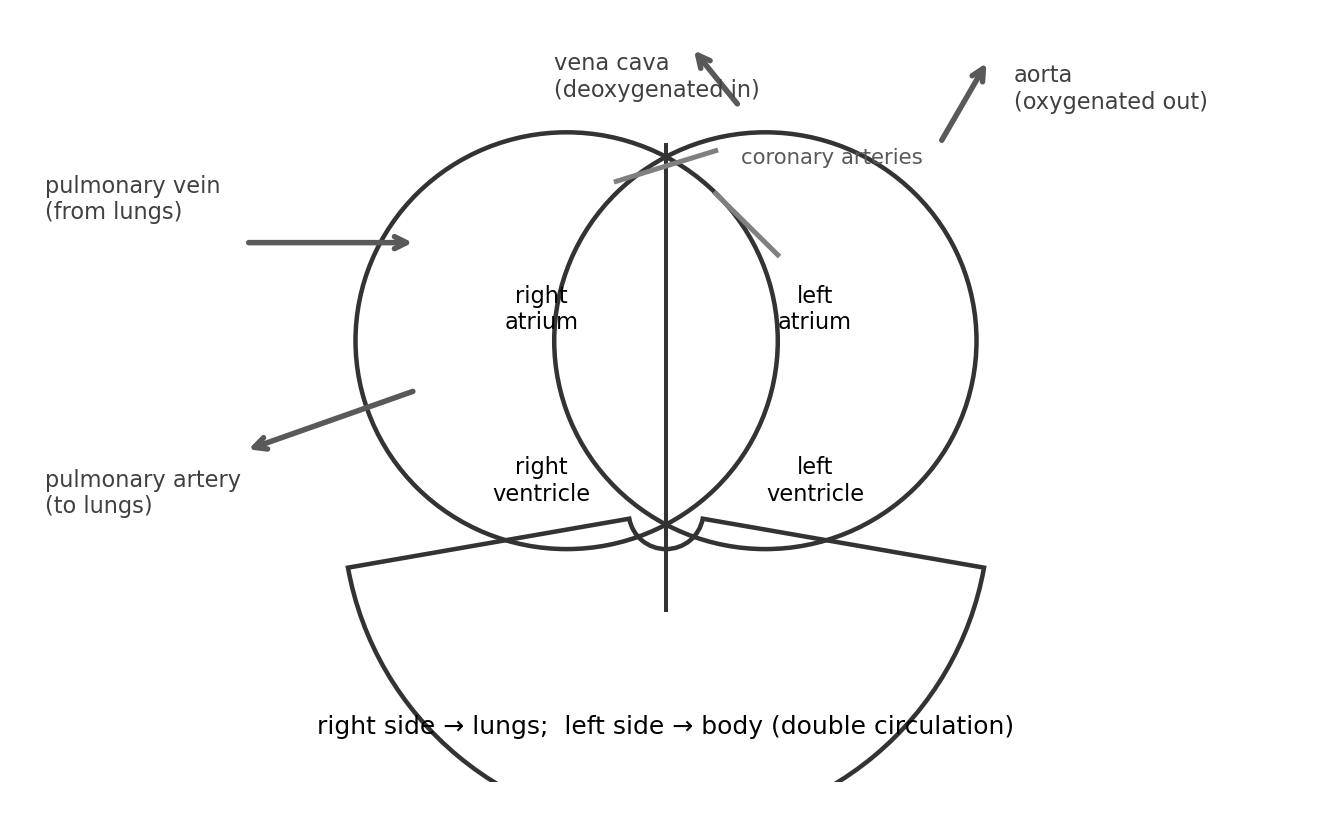
    The human heart with its four chambers and the five named vessels.
    Right side to the lungs; left side to the body.
    • The heart pumps blood in a double circulatory system: the right ventricle pumps blood to the lungs (gas exchange); the left ventricle pumps it around the rest of the body.
    • Vessels to know: aorta, vena cava, pulmonary artery, pulmonary vein, coronary arteries.
    • The resting heart rate is set by cells in the right atrium — the natural pacemaker; artificial pacemakers correct irregular rates.
    • Lungs: trachea → bronchi → alveoli 肺泡, surrounded by capillaries; alveoli are adapted by a large surface area, thin walls, good blood supply and ventilation.
    Vessel Structure Function
    artery thick, elastic, muscular walls; small lumen carries blood away at high pressure
    vein thin walls, large lumen, valves returns blood at low pressure
    capillary one cell thick exchange with tissues
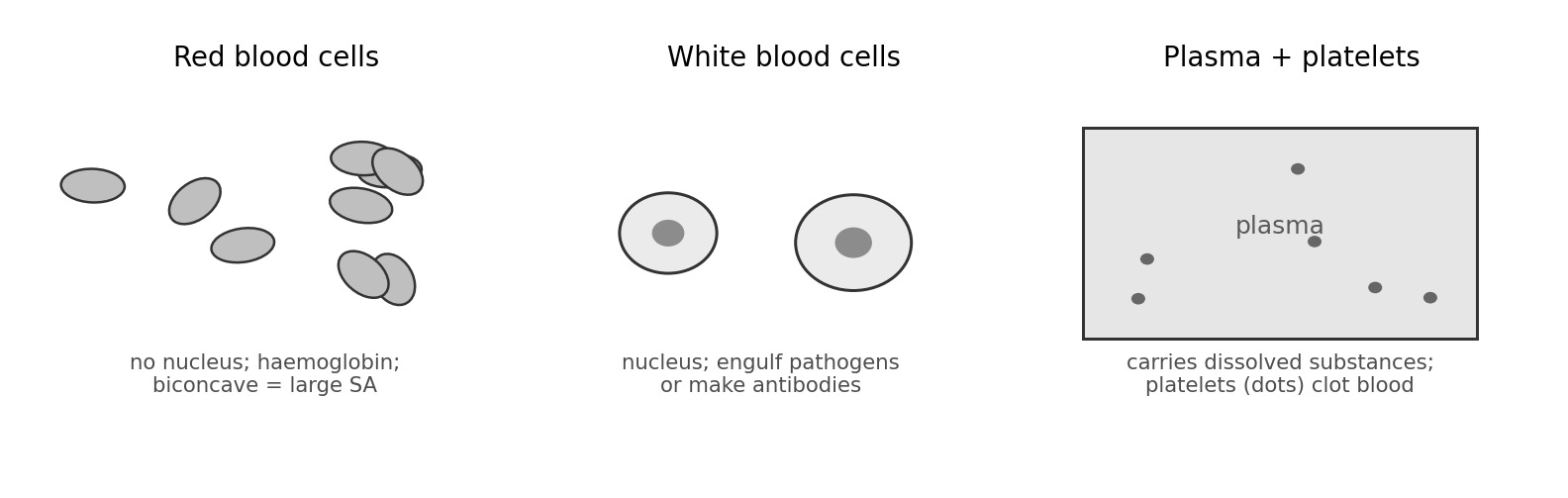
    Red cells, white cells, plasma and platelets.

    الدم is a tissue: plasma 血浆 (carries dissolved sugars, amino acids, CO₂, urea, hormones, and heat), red blood cells 红细胞 (no nucleus, packed with haemoglobin, biconcave — large surface area for oxygen transport), white blood cells 白细胞 (engulf pathogens or make antibodies), platelets 血小板 (clotting).

    مفردات تدريب
    English العربية
    alveoli/ˈælvɪɒli/ الحويصلات الهوائية
    plasma/ˈplæzmə/ بلازما الدم
    red blood cells/red blʌd selz/ خلايا الدم الحمراء
    white blood cells/waɪt blʌd selz/ خلايا الدم البيضاء
    platelets/ˈpleɪtlɪts/ الصفائح الدموية
    2.2

    Coronary heart disease (4.2.2.4) and treatments

    المنهج

    القلب والأوعية الدموية والدم وأمراض القلب التاجية (عبارات AQA 8461 4.2.2.2-4.2.2.4).

    1. صف القلب والدورة الدموية المزدوجة مع خمسة أوعية دموية مسماة وخلايا ناظم ضربات القلب.
    2. ربط بنية الشريان والوريد والشعيرات الدموية بالوظيفة.
    3. تعرف على البلازما والخلايا الحمراء والخلايا البيضاء والصفائح الدموية مع تكيفاتها.
    4. اشرح أمراض القلب التاجية وقيّم الدعامات، والمثبطات، والصمامات، والزرعات، والقلوب الاصطناعية.

    المصدر: منهج كامبريدج الدولي

    In CHD layers of fatty material build up inside the coronary arteries, narrowing them — less blood, so less oxygen for the heart muscle. Evaluate each treatment with benefits and risks:

    العلاج Benefit Risk/limitation
    stents 支架 keeps the artery open, restores flow surgery risk; doesn't treat the cause
    statins 他汀 reduce blood cholesterol, slowing fatty deposits long-term medication with side effects (liver)
    valve replacement (biological or mechanical) restores one-way flow major surgery; mechanical need lifelong anti-clotting drugs
    transplant (heart / heart and lungs) cures failure donor shortage; rejection — immunosuppressants
    artificial heart keeps the patient alive while waiting, or lets the heart rest infection, clotting, bulky
    مفردات تدريب
    English العربية
    stents/stents/ القوالب الداعمة
    statins/ˈstætɪnz/ المستحضرات الستيرولية
    2.3

    Health, lifestyle and cancer (4.2.2.5–4.2.2.7)

    المنهج

    الصحة ونمط الحياة والسرطان (عبارات AQA 8461 4.2.2.5-4.2.2.7).

    1. عرّف الصحة ووصف التفاعلات بين الأمراض والعوامل الأخرى.
    2. حدد عوامل الخطر ذات آليات سببية مثبتة للأمراض غير المعدية.
    3. ميّز بين الأورام الحميدة والخبيثة ووصف الأورام الثانوية.
    4. فسر بيانات عوامل الخطر، مع التمييز بين الارتباط والسببية.

    المصدر: منهج كامبريدج الدولي

    Health is the state of physical and mental well-being — not just the absence of disease. Diet, stress and life situations affect both; different diseases interact (immune defects → more infections; viruses → some cancers; immune reactions trigger asthma; severe physical illness → depression).

    Risk factors 危险因素 are linked to an increased rate of a disease — aspects of lifestyle or substances in the body/environment. A causal mechanism is proven for some, not others: diet/smoking/exercise → cardiovascular disease; obesity → Type 2 diabetes; alcohol → liver damage and brain function; smoking → lung disease and lung cancer; smoking and alcohol → unborn babies; carcinogens including ionising radiation → cancer. Interpret risk-factor data as correlation; proven mechanism makes it causation.

    Cancer results from changes in cells producing uncontrolled growth and division:

    • Benign tumours: contained in one area, usually within a membrane; do not invade.
    • Malignant tumours (cancers) invade neighbouring tissues and spread in the blood to form secondary tumours.

    Risk factors include lifestyle and, for some cancers, genes.

    مفردات تدريب
    English العربية
    Risk factors/rɪsk ˈfæktəz/ عوامل الخطر
    2.4

    Plant tissues and transport (4.2.3)

    المنهج

    أنسجة النباتات وأعضاؤها والنقل (عبارة AQA 8461 4.2.3).

    1. ربط أنسجة النبات (البشرة، النخاعي، الإسفنجي، الخشب، اللحاء، المرستيم، الخلايا الحارسة) بالوظائف.
    2. اشرح تكيفات الشعيرات الجذرية، الخشب واللحاء وعملتي النفاذية والتوزيع.
    3. اشرح تأثيرات درجة الحرارة والرطوبة وحركة الهواء وشدة الضوء على معدل النفاذية.

    المصدر: منهج كامبريدج الدولي

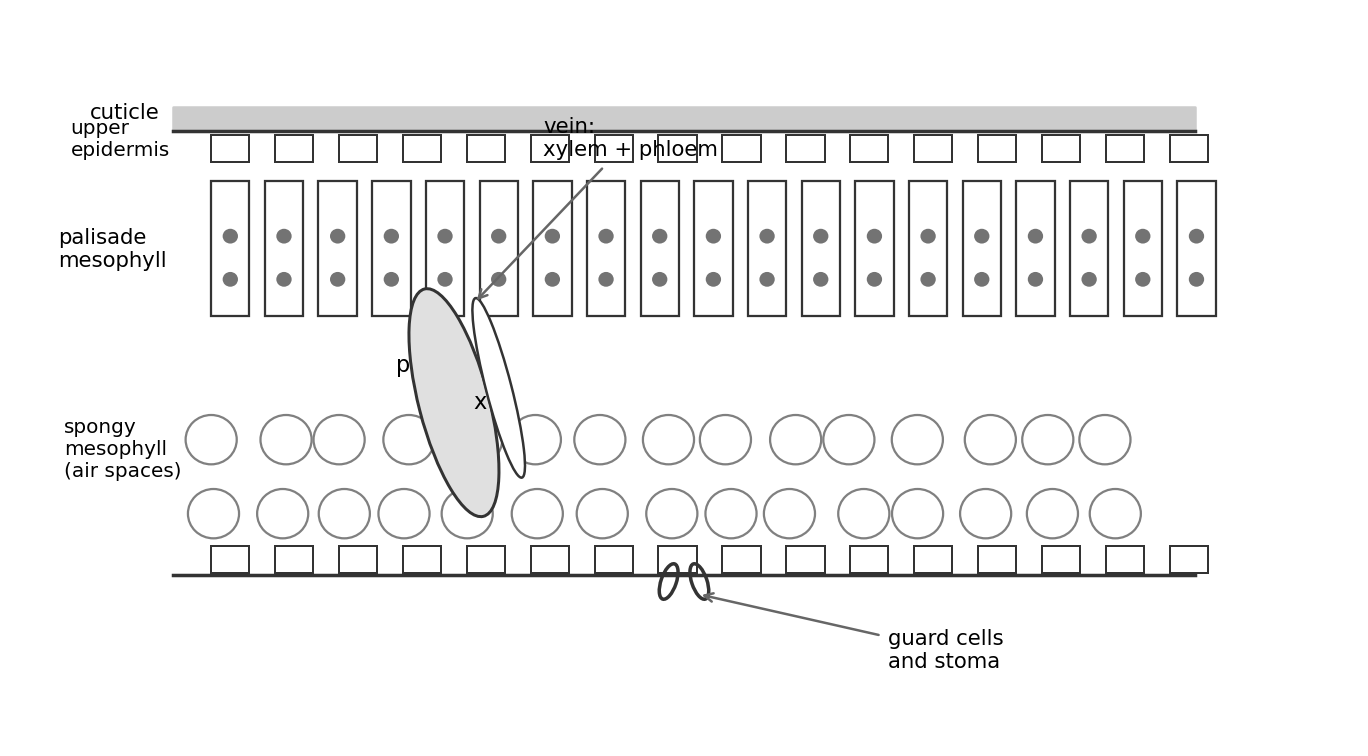
    A leaf in cross-section with its tissues labelled.
    Each tissue has one main job.
    • Epidermal tissue: protective covering; waxy cuticle on top.
    • النسيج الإسفنجي 栅栏组织: packed chloroplasts — most photosynthesis.
    • النسيج الفاسي: air spaces for gas exchange.
    • الخشب 木质部: hollow tubes strengthened by lignin — carries water and mineral ions from roots to leaves in the transpiration stream.
    • اللحاء 韧皮部: sieve tubes — carries dissolved sugars from leaves to the rest of the plant (translocation 运输).
    • Meristem: at the growing tips of shoots and roots (stem cells).
    • Guard cells 保卫细胞 surround stomata 气孔, controlling gas exchange and water loss.
    • Root hair cells: large surface area; water enters by osmosis, mineral ions by active transport.

    النتح 蒸腾作用 is the loss of water vapour from the leaves (mostly through stomata); it pulls the transpiration stream. The rate increases with: temperature ↑, air movement ↑, light intensity ↑ (stomata open); decreases with humidity ↑. Measure rate by water uptake with a potometer.

    مفردات تدريب
    English العربية
    palisade mesophyll/ˈpælɪseɪd ˈmesəfɪl/ نسيج إسفنجي سدي
    Xylem/ˈzaɪləm/ الخشب
    Phloem/ˈfləʊɪm/ اللحاء
    Guard cells/ɡɑːd selz/ الخلايا الحارسة
    stomata/ˈstəʊmətə/ الثغور
    Transpiration/trænspəˈreɪʃn/ النفاذية
    translocation/trænsləʊˈkeɪʃn/ الانتقال
    2.4

    Checklist before you call this topic done

    • Order cells → tissues → organs → systems with one example each.
    • Enzyme table: name, site, substrate, products; lock and key; denaturing.
    • Bile: two functions with reasons; RP4 tests and colours; RP5 method.
    • Label the heart with all five named vessels; double circulation; pacemaker.
    • Artery/vein/capillary structure ↔ function; four blood components with adaptations.
    • CHD: cause + each treatment's benefit and risk.
    • Risk factors with causal mechanisms; benign vs malignant tumours.
    • Plant tissues and their jobs; xylem vs phloem; four transpiration factors.
  • 3

    Infection and response

    3.1

    العدوى والاستجابة: الحرب في الداخل

    تغزو الممرضات، تستجيب الدفاعات، وتجهز الأدوية المعركة. يغطي هذا المرجع علم الأحياء AQA GCSE 8461، الموضوع 4.3 العدوى والاستجابة.

    كيف يعالج الامتحان هذا الموضوع:

    • Paper 1 يحمل هذا الموضوع؛ RP2 (المضادات الحيوية/المطهرات على وسط زجاجي) يرتبط بالموضوع 1.
    • الأجسام المضادة وحيدة النسل (4.3.2) وأمراض النبات (4.3.3) هما موضوعان للأحياء فقط، بينما الأجسام المضادة وحيدة النسل وكشف أمراض النبات هما للمستوى العالي فقط.
    • استرجاع بدقة: كل مرض مسمى → نوع الممرض، الأعراض، وطرق الانتشار؛ أنظمة الدفاع؛ مراحل اختبار الأدوية.
    3.1

    الأمراض المعدية والممرضات (4.3.1.1)

    المنهج

    Communicable diseases, pathogen types and named diseases (AQA 8461 statements 4.3.1.1-4.3.1.5).

    1. Explain how viruses, bacteria, protists and fungi spread in animals and plants, and how spread is reduced.
    2. Recall measles, HIV, TMV, Salmonella, gonorrhoea, rose black spot and malaria with pathogen type, spread, symptoms and control.

    المصدر: منهج كامبريدج الدولي

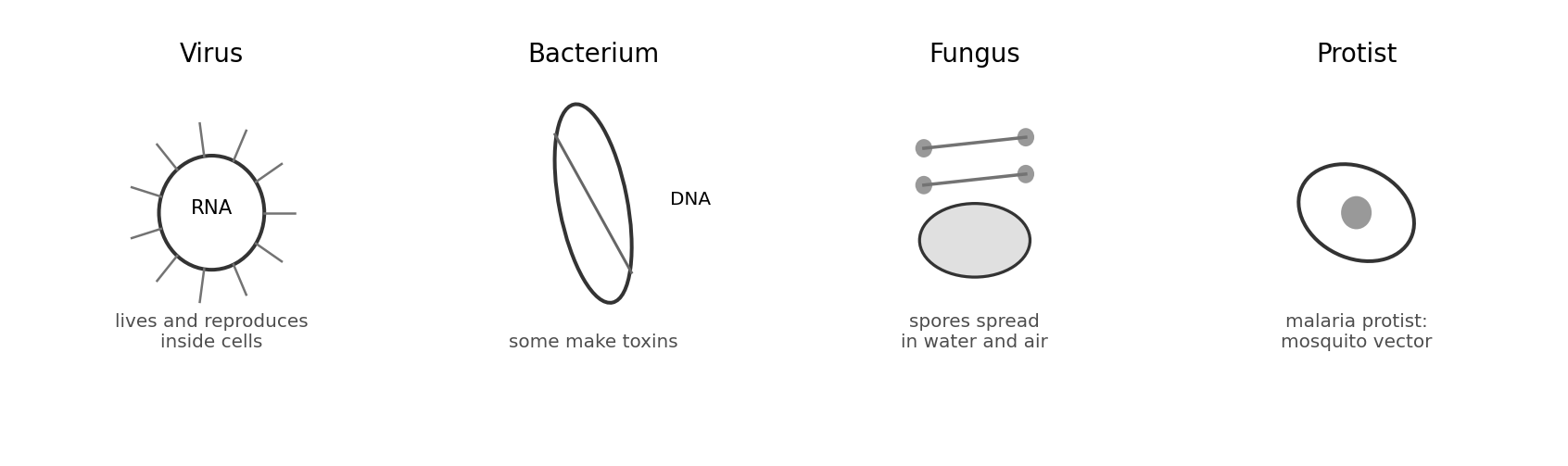
    الأنواع الأربعة للممرضات مع خصائصها الرئيسية.

    الممرضات هي كائنات دقيقة تسبب أمراضاً معدية: فيروسات، بكتيريا، طلائعيات، فطريات. تصيب النباتات أو الحيوانات وتنتشر عبر التلامس المباشر، الماء أو الهواء. قد تنتج البكتيريا سموماً تدمر الأنسجة؛ وتعيش الفيروسات وتتكاثر داخل الخلايا.

    تقليل الانتشار: النظافة (غسل اليدين)، تعقيم الجروح، المياه النظيفة، معالجة الصرف الصحي، استخدام الواقيات، مكافحة ناقلات المرض (شباك البعوض، تصريف المياه).

    مفردات تدريب
    English العربية
    Pathogens/ˈpæθədʒnz/ الممرضات
    toxins/ˈtɒksɪnz/ سموم
    phagocytosis/ˌfæɡəsɪˈtəʊsɪs/ البلعمة
    antibody production/ˈæntɪbɒdi prəˈdʌkʃn/ إنتاج الأجسام المضادة
    antitoxin production/ˌæntɪˈtɒksɪn prəˈdʌkʃn/ إنتاج مصل مضاد للسموم
    Vaccination/ˌvæksɪˈneɪʃn/ التطعيم
    Antibiotics/ˌæntɪbaɪˈɒtɪks/ المضادات الحيوية
    Monoclonal antibodies/ˈmɒnəʊklɒnl ˈæntɪbɒdiz/ الأجسام المضادة وحيدة النسل
    hybridoma/ˌhaɪbrɪˈdəʊmə/ خلية هجينة
    aphids/ˈeɪfɪdz/ المنقوشات
    chlorosis/ˈklɔːrəʊsiz/ اصفرار الأوراق
    3.1

    أمراض مسماة (4.3.1.2–4.3.1.5)

    المنهج

    Communicable diseases, pathogen types and named diseases (AQA 8461 statements 4.3.1.1-4.3.1.5).

    1. Explain how viruses, bacteria, protists and fungi spread in animals and plants, and how spread is reduced.
    2. Recall measles, HIV, TMV, Salmonella, gonorrhoea, rose black spot and malaria with pathogen type, spread, symptoms and control.

    المصدر: منهج كامبريدج الدولي

    المرض الممرض الانتشار الأعراض/العلامات التحكم
    الحصبة فيروس استنشاق الرذاذ (العطس، السعال) حمى، طفح جلدي أحمر؛ قد يكون قاتلاً تطعيم الأطفال الصغار
    نقص المناعة المكتسبة (HIV) فيروس الاتصال الجنسي، تبادل سوائل الجسم (إبر ملوثة مشتركة) مرض شبيه بالإنفلونزا؛ يهاجم خلايا المناعة → الإيدز في المرحلة المتقدمة أدوية مضادة للفيروسات القهقرية؛ الجنس الآمن؛ إبر نظيفة
    فيروس مosaic تبغ (TMV) فيروس (نباتات) التلامس بين النباتات اصفرار متعرج على الأوراق؛ انخفاض البناء الضوئي والنمو أصناف مقاومة؛ النظافة
    سالمونيلا بكتيريا تناول طعام في ظروف غير صحية حمى، مغص، قيء، إسهال (بكتيريا + سموم) تطعيم الدواجن (المملكة المتحدة)؛ تحضير الطعام بطريقة صحية
    السيلان بكتيريا الاتصال الجنسي إفرازات صمغية كثيفة صفراء/خضراء، ألم عند التبول مضادات حيوية (تزداد المقاومة)؛ الواقي الذكري
    بقعة سوداء وردية فطر (نباتات) أبواغ في الماء/الهواء بقع سوداء على الأوراق؛ أوراق صفراء وتساقط إزالة/حرق الأوراق؛ مبيد فطري
    الملاريا كائن أولي ناقل البعوض حمى متكررة؛ قد تكون قاتلة شبكات وقاية؛ منع تكاثر البعوض
    3.2

    أنظمة الدفاع البشري والمناعة (4.3.1.6–4.3.1.7)

    المنهج

    أنظمة الدفاع البشرية والتطعيم والأدوية (عبارات AQA 8461 4.3.1.6-4.3.1.9).

    1. صف أنظمة الدفاع غير النوعية وثلاث إجراءات خلايا الدم البيضاء.
    2. اشرح التطعيم على المستوى الفردي وتأثيره على المجتمع.
    3. ميّز بين المضادات الحيوية ومضادات الألم؛ اشرح لماذا لا يمكن للمضادات الحيوية علاج الفيروسات؛ وصف المقاومة.
    4. صف مصادر اكتشاف الأدوية ومراحل الاختبار قبل السريري والسريري بما في ذلك التجارب العمياء المزدوجة.

    المصدر: منهج كامبريدج الدولي

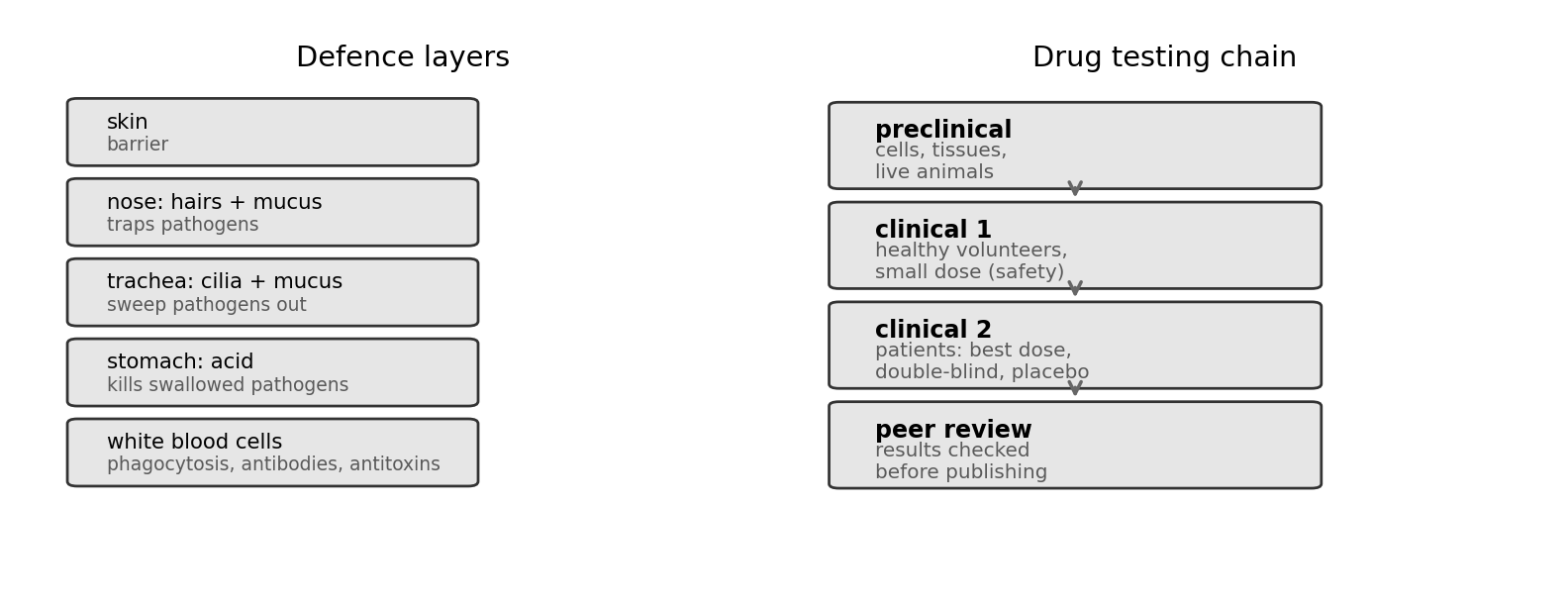
    طبقات الدفاع وسلسلة اختبار الأدوية.

    الدفاعات غير النوعية: الجلد (حاجز، تجلط الجروح)؛ الأنف (شعر، مخاط)؛ القصبات الهوائية والقصبات (مخاط، أهداب)؛ المعدة (حمض الهيدروكلوريك).

    يدمر الجهاز المناعي الممرضات التي تدخل. خلايا الدم البيضاء تدافع من خلال:

    1. البلعمة — ابتلاع الممرضات;
    2. إنتاج الأجسام المضادة — بروتينات ترتبط بالمستضد النوعي;
    3. إنتاج مضادات السموم — معادلة السموم.

    التطعيم: كميات صغيرة من ممرض ميت أو غير نشط تحفز خلايا الدم البيضاء لإنتاج أجسام مضادة؛ عند إعادة العدوى، تستجيب الخلايا الذاكرة بسرعة بأجسام مضادة صحيحة، مما يمنع العدوى. تأثير القطيع: تطعيم نسبة كبيرة يقلل الانتشار للجميع. التقييم: الفوائد (التحكم في الأوبئة، مثل الحصبة) مقابل الآثار الجانبية النادرة.

    3.2

    المضادات الحيوية ومسكنات الألم وتطوير الأدوية (4.3.1.8–4.3.1.9)

    المنهج

    أنظمة الدفاع البشرية والتطعيم والأدوية (عبارات AQA 8461 4.3.1.6-4.3.1.9).

    1. صف أنظمة الدفاع غير النوعية وثلاث إجراءات خلايا الدم البيضاء.
    2. اشرح التطعيم على المستوى الفردي وتأثيره على المجتمع.
    3. ميّز بين المضادات الحيوية ومضادات الألم؛ اشرح لماذا لا يمكن للمضادات الحيوية علاج الفيروسات؛ وصف المقاومة.
    4. صف مصادر اكتشاف الأدوية ومراحل الاختبار قبل السريري والسريري بما في ذلك التجارب العمياء المزدوجة.

    المصدر: منهج كامبريدج الدولي

    • المضادات الحيوية (مثل البنسلين) تعالج الأمراض البكتيرية عن طريق قتل البكتيريا داخل الجسم — مضادات حيوية محددة لبكتيريا محددة. لا يمكنها قتل الفيروسات (لأن الفيروسات تعيش داخل الخلايا؛ وقتلها سيؤذي أنسجة الجسم). المقاومة قضية رئيسية — سباق تطوير مضادات حيوية جديدة.
    • مسكنات الألم تعالج الأعراض ولا تقتل الممرضات.

    تطوير الأدوية: تُستخرج تقليدياً من النباتات والكائنات الدقيقة — الديجيتاليس من أصابع الخنثى (للقلب)، الأسبرين من الصفصاف، البنسلين من فطر بيسنيليوم (فليمنغ). معظم الأدوية الجديدة يتم تركيبها كيميائياً، لكن نقطة البداية قد لا تزال مواد كيميائية نباتية.

    مراحل الاختبار: ما قبل السريري (خلايا، أنسجة، كائنات حيية) → تجارب سريرية على متطوعين أصحاء (جرعة منخفضة، سلامة) ثم مرضى (الجرعة المثلى، الفعالية) → تجارب عمياء مزدوجة مع دواء وهمي؛ نتائج خاضعة للمراجعة من الزملاء.

    3.3

    الأجسام المضادة وحيدة النسل (علم الأحياء فقط، مستوى متقدم)

    المنهج

    الأجسام المضادة وحيدة النسل، بيولوجيا فقط وHT (عبارة AQA 8461 4.3.2).

    1. صف إنتاج الأجسام المضادة وحيدة النسل عبر الهجينوما.
    2. صف الاستخدامات في التشخيص والقياس والبحث وعلاج السرطان.

    المصدر: منهج كامبريدج الدولي

    الأجسام المضادة وحيدة النسل تُنتَج من مستنسخ واحد من الخلايا، وهي محددة لموقع ارتباط واحد على بروتين مضاد واحد. إنتاجها: تحفيز الخلايا الليمفاوية للفأر لإنتاج الجسم المضاد → دمجها مع خلية ورمية لتكوين هجينوما — تنقسم وتُنتِج الجسم المضاد → استنساخ الهجينوما → جمع وتنقية كميات كبيرة من جسم مضاد واحد محدد.

    الاستخدامات: اختبارات الحمل؛ قياس مستويات الهرمونات/المواد الكيميائية في الدم; اكتشاف الممرضات; البحث العلمي — حيث تحدد الأجسام المضادة الفلورية الجزيئات؛ علاج السرطان — حيث يرتبط الجسم المضاد بمادة مشعة/سامة لنقلها فقط إلى خلايا السرطان.

    3.4

    أمراض النبات (علم الأحياء فقط)

    المنهج

    أمراض النبات، بيولوجيا فقط (عبارة AQA 8463 4.3.3).

    1. الكشف عن أمراض النبات من العلامات وتحديد ها عبر الاختبارات اليدوية أو المخبرية أو أحادية النسل.
    2. شرح نقص أيونات النترات والمغنيسيوم.
    3. وصف استجابات الدفاع الفيزيائية والكيميائية والميكانيكية للنبات.

    المصدر: منهج كامبريدج الدولي

    الكشف عنها (مستوى متقدم): تقزم النمو، بقع على الأوراق، مناطق تعفن، نمو زائد، تشوه السيقان/الأوراق، تغير اللون، وجود الآفات.

    التحديد (مستوى متقدم): دليل البستنة/الموقع الإلكتروني؛ التحليل المخبري؛ مجموعات اختبار تستخدم الأجسام المضادة وحيدة النسل.

    مشاكل نباتية مسماة: TMV (فيروسي)، بقعة سوداء للورد (فطري)، المن (حشرات).

    نقص الأيونات: قلة النترات → تقزم النمو (النترات ضرورية لـ الأحماض الأمينية/البروتين)؛ نقص المغنيسيوم → الكلوروز (أوراق صفراء — المغنيسيوم ضروري لصنع الكلوروفيل).

    استجابات الدفاع: فيزيائية — جدران خلوية من السليلوز، بشرة شمعية، لحاء/طبقات ميتة؛ كيميائية — مواد مضادة للبكتيريا، سموم؛ ميكانيكية — أشواك، شعر، ذبول/تجعد الأوراق، المحاكاة.

    3.4

    قائمة التحقق قبل اعتبار هذا الموضوع مكتملاً

    • أربعة أنواع من الممرضات؛ ثلاث طرق للانتشار؛ طريقتان لتقليل انتشار كل مرض مسمى.
    • حفظ جدول الأمراض: الممرض، الانتشار، الأعراض، التحكم.
    • أربع دفاعات غير متخصصة؛ ثلاثة أفعال للخلايا البيضاء.
    • آلية التلقيح + التأثير السكاني؛ المضادات الحيوية مقابل المسكنات؛ لماذا تفشل المضادات الحيوية ضد الفيروسات.
    • مصادر الأدوية (القرنفل، الصفصاف، Penicillium) ومراحل ما قبل السريرية/السريرية مع الدواء الوهمي والعمياء المزدوجة.
    • (مستوى متقدم، علم الأحياء) تسلسل إنتاج الهجينوما وأربعة استخدامات للأجسام المضادة وحيدة النسل.
    • (علم الأحياء) علامات أمراض النبات، طرق التحديد، نقص النترات والمغنيسيوم، ثلاث فئات من الدفاع.
  • 4

    Bioenergetics

    4.1

    البيوطاقة: البناء الضوئي والتنفس الخلوي

    تمتص النباتات طاقة الشمس؛ كل خلية تطلقها مرة أخرى. يغطي هذا المرجع AQA GCSE علم الأحياء 8461، موضوع 4.4 البيوطاقة.

    كيف يعالج الامتحان هذا الموضوع:

    • ورقة 1 تتضمن البيوطاقة. RP6: شدة الضوء ومعدل البناء الضوئي باستخدام الطحالب المائية.
    • رسوم عامل الحد وثنائية أو ثلاثية العوامل، وقانون التربيع العكسي واقتصاديات الدفيئة للمستوى المتقدم فقط.
    • المعادلات معادلة لفظية — تعرف أيضاً الصيغ الرمزية (CO₂، H₂O، O₂، C₆H₁₂O₆).
    مفردات تدريب
    English العربية
    endothermic/ˌendəʊˈθɜːmɪk/ ماص للحرارة
    exothermic/eɡzəˈðɜːmɪk/ طارد للحرارة
    fermentation/fɜːmənˈteɪʃn/ تخمر
    oxygen debt/ˈɒksɪdʒn det/ ديون الأكسجين
    Metabolism/məˈtæbəlɪzəm/ الأيض
    lactic acid/ˈlæktɪk ˈæsɪd/ حمض اللاكتيك
    limiting factor/ˈlɪmɪtɪŋ ˈfæktə/ عامل محدود
    4.1

    البناء الضوئي (4.4.1.1)

    المنهج

    البناء الضوئي (AQA 8461 العناوين 4.4.1.1-4.4.1.2، RP6).

    1. كتابة معادلات البناء الضوئي بالكلمات والرموز، ووصفه كعملية ماصة للحرارة.
    2. شرح كيف تحدد شدة الضوء وتركيز CO2 ودرجة الحرارة معدل البناء الضوئي، بما في ذلك تفسير رسوم بيانية للعوامل المحددة.
    3. (HT) استخدام العلاقة العكسية لمربع المسافة بين شدة الضوء والمسافة، وأسباب اقتصاديات الصوبات.
    4. وصف RP6: شدة الضوء ومعدل البناء الضوئي مع نبات الطحالب المائية، وضوابطها وحساب المعدل.

    المصدر: منهج كامبريدج الدولي

    $$\text{carbon dioxide} + \text{water} \xrightarrow{\ \text{light}\ } \text{glucose} + \text{oxygen}$$
    $$6\,\text{CO}_2 + 6\,\text{H}_2\text{O} \rightarrow \text{C}_6\text{H}_{12}\text{O}_6 + 6\,\text{O}_2$$

    البناء الضوئي تفاعل ماص للحرارة: تنتقل الطاقة من البيئة إلى البلاستيدات الخضراء بواسطة الضوء.

    4.1

    معدل البناء الضوئي وعوامل الحد (4.4.1.2)

    المنهج

    البناء الضوئي (AQA 8461 العناوين 4.4.1.1-4.4.1.2، RP6).

    1. كتابة معادلات البناء الضوئي بالكلمات والرموز، ووصفه كعملية ماصة للحرارة.
    2. شرح كيف تحدد شدة الضوء وتركيز CO2 ودرجة الحرارة معدل البناء الضوئي، بما في ذلك تفسير رسوم بيانية للعوامل المحددة.
    3. (HT) استخدام العلاقة العكسية لمربع المسافة بين شدة الضوء والمسافة، وأسباب اقتصاديات الصوبات.
    4. وصف RP6: شدة الضوء ومعدل البناء الضوئي مع نبات الطحالب المائية، وضوابطها وحساب المعدل.

    المصدر: منهج كامبريدج الدولي

    معدل البناء الضوئي مقابل عامل حد واحد في كل مرة.
    يرتفع كل منحنى ثم يستوي عند نقطة يصبح فيها عامل آخر هو المحدد.

    يزيد المعدل مع: شدة الضوء، تركيز CO₂، درجة الحرارة (حتى الأمثل للتفاعلات الإنزيمية)، وكمية الكلوروفيل.

    قراءة الرسوم ذات العامل الواحد: القمة المستوية تعني أن شيئاً آخر أصبح عامل الحد. (HT) على الرسوم ذات العاملين أو ثلاثة عوامل، حدد أي عامل هو المحدد عند كل نقطة.

    (HT) قانون التربيع العكسي: مضاعفة المسافة عن المصباح تُربّع شدة الضوء (تجعلها ربع القيمة الأصلية):

    $$\text{light intensity} \propto \frac{1}{\text{distance}^2}$$

    (HT) اقتصاديات الدفيئة: إضافة الحرارة أو الضوء أو CO₂ ترفع المعدل — لكن كل منها يكلف مالاً؛ يضيف المزارع أرخص عامل محدود حتى النقطة التي لا يعود فيها الإنتاج الإضافي مجدياً اقتصادياً.

    إعداد RP6: نبتة بركانية تحت قمع مقلوب في كوب زجاجي، مع مصباح على مسافة مقاسة.

    RP6: نبتة بركانية في الماء على مسافات مختلفة من المصباح؛ عد الفقاعات الأكسجينية في الدقيقة (أو اجمع الغاز)؛ تحكم في درجة الحرارة وCO₂ (بيكربونات الصوديوم)؛ كرر وأخذ المتوسط؛ المعدل = عدد الفقاعات ÷ الوقت.

    مثال محلول. فقاعات: 30 في دقيقة عند 10 سم؛ عند 20 سم تكون شدة الضوء ربعها، لذا تتوقع نحو 8 في الدقيقة (إذا كان الضوء لا يزال محدداً).

    4.1

    استخدامات الجلوكوز (4.4.1.3)

    المنهج

    البناء الضوئي (AQA 8461 العناوين 4.4.1.1-4.4.1.2، RP6).

    1. كتابة معادلات البناء الضوئي بالكلمات والرموز، ووصفه كعملية ماصة للحرارة.
    2. شرح كيف تحدد شدة الضوء وتركيز CO2 ودرجة الحرارة معدل البناء الضوئي، بما في ذلك تفسير رسوم بيانية للعوامل المحددة.
    3. (HT) استخدام العلاقة العكسية لمربع المسافة بين شدة الضوء والمسافة، وأسباب اقتصاديات الصوبات.
    4. وصف RP6: شدة الضوء ومعدل البناء الضوئي مع نبات الطحالب المائية، وضوابطها وحساب المعدل.

    المصدر: منهج كامبريدج الدولي

    يُستخدم الجلوكوز الناتج من البناء الضوئي لـ:

    • التنفس الخلوي;
    • تحويله إلى نشا غير قابل للذوبان للتخزين;
    • دهون أو زيوت للتخزين;
    • سليلوز لجدران الخلايا.
    • الأحماض الأمينية للبروتين — وهذا يتطلب أيضًا أيونات النترات من التربة.
    4.2

    التنفس (4.4.2.1)

    المنهج

    التنفس الأيضي (AQA 8461 العناوين 4.4.1.3، 4.4.2.1-4.4.2.3).

    1. تسمية خمس استخدامات للجلوكوز الناتج من البناء الضوئي.
    2. المقارنة بين التنفس الهوائي واللاهوائي في العضلات والخميرة، مع المعادلات اللفظية، وأهمية التخمر الاقتصادية.
    3. شرح استجابة الجسم للتمارين الرياضية و(HT) دينان الأكسجين ودور الكبد.
    4. تعريف الأيض وسرد التفاعلات التي يتضمنها.

    المصدر: منهج كامبريدج الدولي

    التنفس تفاعل طارد للحرارة يحدث باستمرار في الخلايا الحية، وينقل الطاقة لـ: بناء جزيئات أكبر، الحركة، والحفاظ على دفء الجسم.

    هوائي لا هوائي (عضلات) لا هوائي (نبات/خميرة)
    الأكسجين مطلوب غير مطلوب غير مطلوب
    المعادلة جلوكوز + أكسجين → CO₂ + ماء جلوكوز → حمض اللاكتيك جلوكوز → كحول + CO₂
    الطاقة أكثر بكثير أقل بكثير أقل بكثير

    التنفس اللاهوائي في الخميرة هو التخمر، وهو مهم اقتصاديًا في الخبز (حيث يجعل CO₂ العجين يرتفع) والمشروبات الكحولية.

    4.2

    الاستجابة للتمرين (4.4.2.2)

    المنهج

    التنفس الأيضي (AQA 8461 العناوين 4.4.1.3، 4.4.2.1-4.4.2.3).

    1. تسمية خمس استخدامات للجلوكوز الناتج من البناء الضوئي.
    2. المقارنة بين التنفس الهوائي واللاهوائي في العضلات والخميرة، مع المعادلات اللفظية، وأهمية التخمر الاقتصادية.
    3. شرح استجابة الجسم للتمارين الرياضية و(HT) دينان الأكسجين ودور الكبد.
    4. تعريف الأيض وسرد التفاعلات التي يتضمنها.

    المصدر: منهج كامبريدج الدولي

    أثناء التمرين، تزداد معدل ضربات القلب ومعدل التنفس وحجم الشهيق لتوصيل المزيد من الدم المؤكسج إلى العضلات. إذا كان إمداد الأكسجين غير كافٍ، تنتقل العضلات إلى التنفس اللاهوائي: أكسدة غير كاملة للجلوكوز تتراكم حمض اللاكتيك → الإرهاق؛ تتراكم ديون الأكسجين.

    (HT) ينقل الدم حمض اللاكتيك إلى الكبد، الذي يحوله مرة أخرى إلى جلوكوز. ديون الأكسجين هي الأكسجين الإضافي المطلوب بعد التمرين للتفاعل مع حمض اللاكتيك المتراكم وإزالته.

    4.2

    الأيض (4.4.2.3)

    المنهج

    التنفس الأيضي (AQA 8461 العناوين 4.4.1.3، 4.4.2.1-4.4.2.3).

    1. تسمية خمس استخدامات للجلوكوز الناتج من البناء الضوئي.
    2. المقارنة بين التنفس الهوائي واللاهوائي في العضلات والخميرة، مع المعادلات اللفظية، وأهمية التخمر الاقتصادية.
    3. شرح استجابة الجسم للتمارين الرياضية و(HT) دينان الأكسجين ودور الكبد.
    4. تعريف الأيض وسرد التفاعلات التي يتضمنها.

    المصدر: منهج كامبريدج الدولي

    الأيض هو مجموع جميع التفاعلات في الخلية أو الجسم؛ التنفس يوفر الطاقة لها. ويشمل:

    • جلوكوز → النشا، الجليكوجين، السليلوز;
    • جليسرول + 3 أحماض دهنية → دهون;
    • جلوكوز + أيونات نترات → أحماض أمينية → بروتينات;
    • التنفس الخلوي;
    • تكسير البروتين الزائد → اليوريا للإخراج.
    4.2

    قائمة التحقق قبل اعتبار هذا الموضوع مكتملاً

    • اكتب معادلات الفوتوسنتيز اللفظية والرمزية؛ قل إنها تفاعلات ماصة للحرارة + ضوء→بلاستيدات خضراء.
    • اشرح عوامل المعدل الأربعة؛ اقرأ منحنيات عامل واحد التي تسطح؛ (HT) قانون التربيع العكسي واقتصاديات الدفيئة.
    • صف RP6 مع ضوابطها وحساب معدلها.
    • اذكر خمسة استخدامات للجلوكوز (مع النترات لتكوين البروتين).
    • قارن المعادلتين للهضم الهوائي واللاهوائي؛ وسمّ products تخمير المنتجين واستخداميهما.
    • تمارين: ثلاثة زيادات؛ حمض اللاكتيك والديون من الأكسجين؛ (HT) دور الكبد.
    • عرّف الأيض مع خمسه فروع له.
  • 5

    Homeostasis and response

    5.1

    التوازن الداخلي والاستجابة: الحفاظ على ثبات الظروف

    • التوازن الداخلي هو تنظيم الظروف الداخلية خلوية أو في الكائن الحي، للحفاظ على الظروف المثلى لعمل الإنزيمات وجميع وظائف الخلية، استجابةً للتغيرات الداخلية والخارجية.
    • يتحكم الجسم في تركيز جلوكوز الدم ودرجة حرارة الجسم ومستويات الماء.‬
    • كل نظام تحكم تلقائي يحتوي على: مستقبلات (تكتشف المحفزات)، مراكز تنسيق (المخ والحبل الشوكي والبنكرياس — تستقبل وتعالج المعلومات) ومنفذين (عضلات أو غدد — تحقق الاستجابة التي تعيد المستويات المثلى).
    • استجابات الجهاز العصبي سريعة وقصيرة الأمد؛ بينما استجابات الهرمونات أبطأ لكنها تعمل لفترة أطول.
    5.1

    التوازن الداخلي والجهاز العصبي (4.5.1–4.5.2.1، RP7)

    المنهج

    الاستتباب والجهاز العصبي (AQA 8461 العناوين 4.5.1-4.5.2.1، RP7).

    1. تعريف الاستتباب وتسمية ثلاث ظروف يتحكم بها الجسم.
    2. وصف المستقبلات ومراكز التنسيق والمحفزات، ومسار المحفز-المستقبل-المنسق-المحفز-الاستجابة.
    3. شرح القوس الانعكاسي، بما في ذلك العصبون الحسي، المشبك، العصبون الوسيط والعصبون الحركي، ولماذا الانعكاسات تلقائية وسريعة.
    4. وصف RP7: تأثير عامل على زمن رد فعل الإنسان، والضوابط ومعالجة البيانات.

    المصدر: منهج كامبريدج الدولي

    المسار: محفز ← مستقبل ← منسق (الجهاز العصبي المركزي: المخ + الحبل الشوكي) ← منفذ (انقباض العضلة / إفراز الغدة) ← استجابة.

    تمر المعلومات عبر خلايا تُسمى الأعصاب كـ نبضات كهربائية. يقوم الجهاز العصبي المركزي بتنسيق استجابة المنفذين.

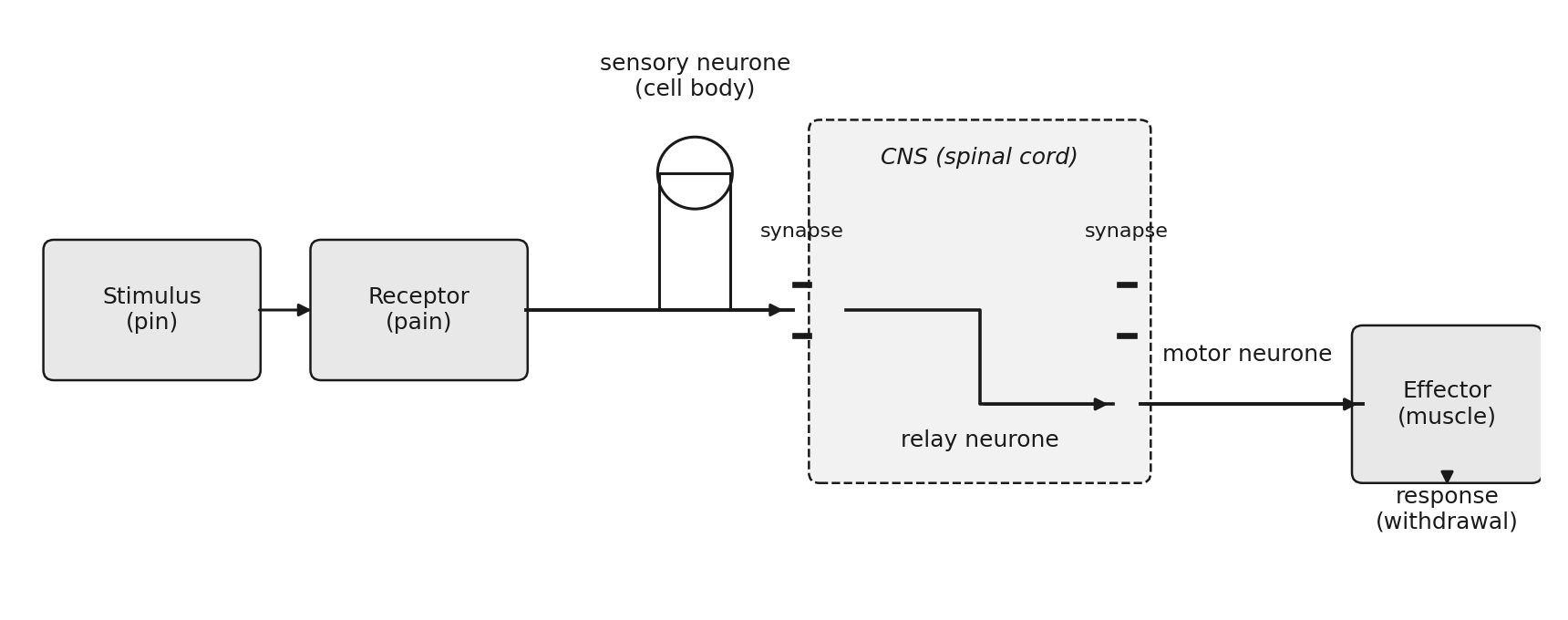
    قوس الانعكاس: من المحفز إلى المستقبل، العصب الحسي بجسمه الخلوي، العصب الوسيط في الجهاز العصبي المركزي، العصب الحركي نحو المنفذ، مع المشابك بين الأعصاب.

    قوس الانعكاس — حماية تلقائية وسريعة لا تشمل الجزء الواعي من المخ:

    محفز ← مستقبل ← العصب الحسي ← مشبك ← العصب الوسيط (في الجهاز العصبي المركزي) ← مشبك ← العصب الحركي ← منفذ ← استجابة.

    عند المشبك، يصل النبض الكهربائي إلى نهاية العصب ويتم إطلاق مادة كيميائية؛ تنتشر عبر الفجوة وتحفز نبضاً كهربائياً في العصب التالي.

    RP7 — زمن رد الفعل: صمّم وخطط لتأثير عامل (مثل الكافيين) على زمن رد فعل الإنسان. أسقط مسطرة بين إصبع وأصبع مريضك؛ قِس المسافة الملتقطة؛ حوّلها إلى زمن (أو استخدم اختباراً حاسوبياً)؛ سيطر المتغيرات (نفس اليد، نفس الارتفاع)؛ كرر العملية وحسب المتوسط. طبّق بيانات زمن رد الفعل من الرسوم البيانية والجداول.

    5.2

    المخ والعين ودرجة الحرارة — علم الأحياء فقط (4.5.2.2–4.5.2.4)

    المنهج

    المخ والعين ودرجة حرارة الجسم — علم الأحياء فقط (AQA 8461 العناوين 4.5.2.2-4.5.2.4).

    1. تحديد القشرة المخية والمخيخ والنخاع مع وظائفها، و(HT) صعوبات البحث في الدماغ وعلاجه.
    2. ربط هياكل العين بوظائفها وشرح عملية التكيف للأجسام القريبة والبعيدة.
    3. شرح قصر البصر وطول البصر وتصحيحهما العدسات والتقنيات الحديثة.
    4. شرح كيفية تنظيم درجة حرارة الجسم عبر توسع الأوعية، التعرق، تضيق الأوعية، والارتعاش (في سياق الحرارة في الجسم HT).

    المصدر: منهج كامبريدج الدولي

    المخ (إضافي HT)

    حدّد على رسم توضيحي: القشرة المخية (الوعي، الذاكرة، اللغة)، المخيخ (التوازن، تنسيق الحركة)، النخاع المستطيل (دورة القلب، التنفس).

    (HT) صعوبات البحث في الدماغ وعلاجه: فهو معقد وحساس، يتلف بسهولة، ويصعب الوصول إليه. طرق التتبع: دراسة المرضى المصابين بـ تلف دماغي، وتحفيز مناطق كهربائياً، ومسح الرنين المغناطيسي. تقييم فوائد ومخاطر الإجراءات الدماغية.

    العين

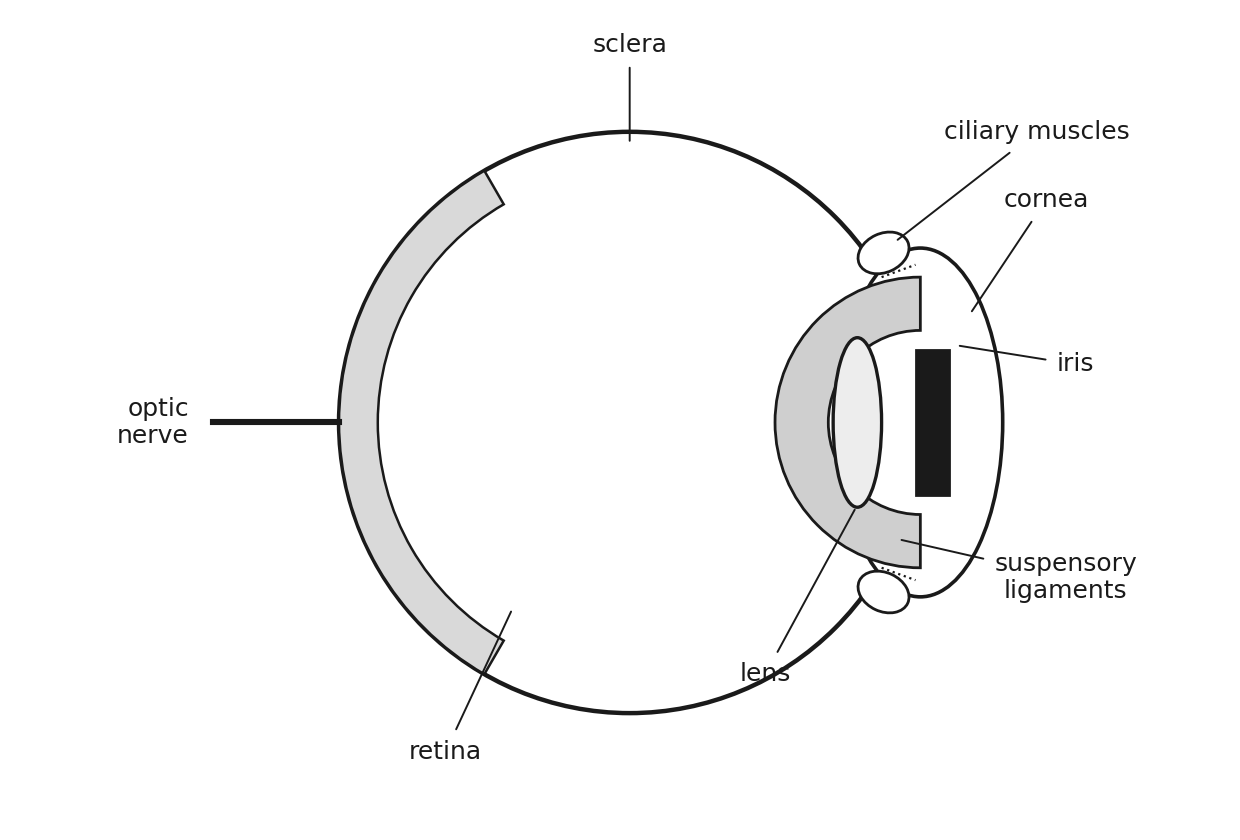
    مقطع عمودي للعين: الصلبة، القرنية، القزحية، العدسة، العضلات الهدبية، الأربطة المعلقة، الشبكية والعصب البصري.

    تحديد وشرح: الشبكية (خلايا مستقبلات حساسة لشدة الضوء ولونه)، العصب البصري (ينقل السيالات من الشبكية إلى الدماغ)، الصلبة (طبقة خارجية قوية)، القرنية (تكسر الضوء)، القزحية (عضلات ملونة تتحكم في حجم الحدقة — تكيف انعكاسي مع الضوء الخافت/الساطع)، العضلات الهدبية والأربطة المعلقة (تنظم شكل العدسة).

    التكيف البصري — تغيير شكل العدسة للتركيز:

    جسم قريب جسم بعيد
    العضلات الهدبية تنقبض ترتخي
    الأربطة المعلقة ترتخي مشدودة بإحكام
    العدسة أكثر سماكة، تكسر بشدة رقيقة، تكسر قليلاً

    العيوب: قصر النظر (رؤية القريبة — تركيز الأجسام البعيدة أمام الشبكية؛ يُصحح بعدسة مقعرة)، طول النظر (رؤية البعيد — تركيز الأجسام القريبة خلف الشبكية؛ عدسة محدبة). العلاجات: نظارات طبية، عدسات لاصقة، جراحة الليزر لإعادة تشكيل القرنية، استبدال العدسة.

    تنظيم درجة حرارة الجسم

    يحتوي المركز التنظيم الحراري في الدماغ على مستقبلات حساسة لدرجة حرارة الدم؛ ترسل المستقبلات الجلدية السيالات إليه.

    • ارتفاع الحرارة: تتمدد الأوعية الدموية (توسع الأوعية) — انتقال المزيد من الدم靠近 السطح لنقل الطاقة للبيئة؛ إفراز العرق — تبخر العرق ينقل الطاقة بعيداً.
    • انخفاض الحرارة: تنقبض الأوعية الدموية (تضييق الأوعية)؛ يتوقف التعرق؛ تنقبض العضلات الهيكلية (الرعشة — التنفس ينقل الطاقة لتدفئة الدم).

    (HT) اشرح في السياق كيف يخفض أو يرفع كل آلية درجة الحرارة عائدة إلى المستوى الأمثل.

    5.3

    التنسيق الهرموني في البشر (4.5.3)

    المنهج

    التنظيم الهرموني عند البشر (AQA 8461 العبارات 4.5.3).

    1. وصف الجهاز الغدي: الغدد، الهرمونات، الأعضاء المستهدفة، والست غدد المسميات.
    2. شرح التحكم بالأنسولين لمستوى الجلوكوز في الدم، (HT) الجلوكاجون والتغذية الراجعة السلبية، ومقارنة السكري النوع 1 والنوع 2.
    3. (بيولوجيا) وصف توازن الماء والنيتروجين: الكلى، الترشيح والإعادة الامتصاص الانتقائية، (HT) هرمون ADH، والغسيل الكلوي مقابل الزرع.
    4. (HT) شرح تفاعلات FSH وLH والإستراديول والبروجستيرون في الدورة الشهرية، وطرق منع الحمل، وأخصاب الأنابيب.
    5. (HT) شرح تأثير الأدرينالين والثيروكسين مع التغذية الراجعة السلبية.

    المصدر: منهج كامبريدج الدولي

    الجهاز الغدي هو غدد تفرز هرمونات مباشرة في مجرى الدم؛ ينقل الدم الهرمونات إلى الأعضاء المستهدفة. أبطأ من الأعصاب ولكن تأثيره أطول أمداً. تحديد على رسم توضيحي للجسم: الغدة النخامية (الغدة "الرئيسية" للدماغ)، البنكرياس، الدرقية، الغدة الكظرية، المبيض، الخصيتين.

    سكر الدم يتم مراقبته والتحكم فيه بواسطة البنكرياس:

    • ارتفاعه → يفرز البنكرياس الأنسولين → انتقل الجلوكوز من الدم إلى الخلايا؛ في خلايا الكبد والعضلات يتحول الجلوكوز الزائد إلى جلايكوجين للتخزين.
    • (HT) انخفاضه → يفرز البنكرياس الجلوكاجون → تحلل الجلايكوجين عوداً إلى جلوكوز، يُطلق في الدم. الأنسولين–الجلوكاجون هو دورة تغذية راجعة سالبة.

    السكري: النوع 1 — فشل البنكرياس في إنتاج ما يكفي من الأنسولين؛ ارتفاع غير منتظم في سكر الدم؛ يُعالج بـ حقن الأنسولين. النوع 2 — لم تعد خلايا الجسم تستجيب للأنسولين؛ يُعالج بـ نظام غذائي مقيد بالكربوهيدرات وتمارين رياضية؛ السمنة عامل خطر. تفسير رسوم بيانية لمستوى سكر الدم مع السكري ودونه.

    توازن الماء والنيتروجين — علم الأحياء فقط

    يغادر الماء عبر الرئتين (الزفير) والبشرة (العرق، مع أيونات واليوريا) — دون تحكم في هاتين العمليتين. يتم إزالة فائض الماء والأيونات واليوريا عن طريق الكلى في البول. لا تعمل الخلايا التي تفقد أو تكتسب الكثير من الماء بالانتشار الأسموزي بكفاءة. (HT) يتم إزالة الأمين من الأحماض الأمينية الزائدة من النظام الغذائي في الكبد: الأمونيا (سامة) → اليوريا للتخلص الآمن منها.

    تقوم الكلى بـ ترشيح الدم وإعادة امتصاص انتقائي للجلوكوز وبعض الأيونات والماء. (HT) إذا كان الدم مركزًا جدًا، يفرز الفص hypophyseal هرمون ADH، مما يجعل أنابيب الكلى أكثر نفاذية، sehingga يتم إعادة امتصاص المزيد من الماء — مرة أخرى التغذية الراجعة السالبة.

    فشل الكلى: يُعالج بـ الزراعة أو الغسيل الكلوي — يتدفق الدم بين أغشية شبه منفذة في محلول الغسيل الذي يحتوي على التركيز الصحيح للماء/الأيونات، بحيث تنتشر الفضلات للخارج بينما يُحتفظ بالجلوكوز والمواد المفيدة؛ تقييم الجهاز الميكانيكي مقابل الزراعة.

    الهرمونات في التكاثر البشري

    الإستراديول (المبيض) — الهرمون النسائي الرئيسي؛ عند البلوغ تنضج البويضات وتطلق واحدة تقريبًا كل 28 أيام (التبويض). التستوستيرون (الحبوبة) — يحفز إنتاج الحيوانات المنوية.

    (HT) الدورة الشهرية:

    الهرمون المصدر الدور
    FSH الفص hypophyseal يسبب نضوج البويضة في المبيض (في الجريبة)
    LH الفص hypophyseal يحفز إطلاق البويضة (التبويض)
    الإستراديول المبيض (الجريبة) يحافظ على بطانة الرحم ويبنيها؛ يحفز ذروة LH
    البروجستيرون المبيض (الجسم الأصفر) يحافظ على بطانة الرحم؛ يكبح FSH و LH
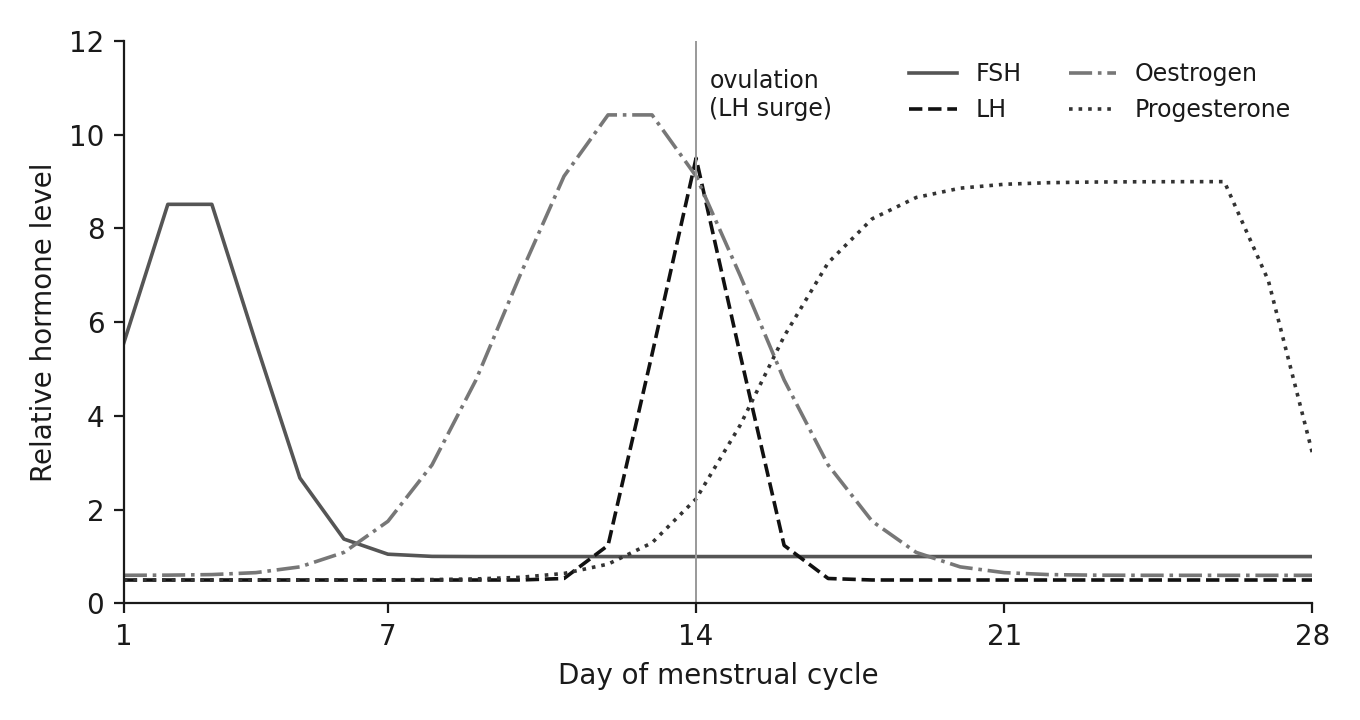
    مستويات الهرمونات خلال الدورة الشهرية 28-يوم: FSH مبكرًا، ارتفاع الإستراديول، ذروة يوم 14 LH والتبويض، ثم البروجستيرون.

    (HT) تفسير رسوم بيانية لمستويات الهرمونات عبر الدورة: يبدأ FSH نمو الجريبة → يرتفع الإستراديول → تحفز ذروة LH التبويض (حوالي اليوم 14) → يحافظ البروجستيرون على سماكة البطانة حتى ينخفض وتتجدد الدورة.

    منع الحمل — تقييم الطرق الهرمونية وغير الهرمونية: حبوب منع الحمل (تكبح FSH فلا تنضج بويضات)، حقن/زراعة/لصوق البروجستيرون مطلق البطيء، الطرق العازلة (الواقي الذكوري، الحجاب السفلي)، الأجهزة داخل الرحم، المبيدات المنوية، الامتناع عندما قد تكون البويضة في قنا فالوب، التعقيم.

    العقم (HT): 'أدوية الخصوبة' (FSH + LH) تحفز نضوج البويضات. IVF: FSH و LH يحفزان عدة بويضات → تُجمع البويضات وتخصب مع الحيوانات المنوية في المختبر → تنمو الأجنة إلى كرات صغيرة من الخلايا → يُنقل واحد أو اثنان إلى الرحم. تقييم: إجهاد عاطفي/جسدي، معدلات نجاح منخفضة، خطر ولادة متعددة الأجنة.

    التغذية الراجعة السالبة (HT): الأدرينالين (الغدد الكظرية، الخوف/التوتر) يزيد معدل ضربات القلب وتسليم الأكسجين والجلوكوس للدماغ والعضلات — 'القتال أو الهروب'. الثيروكسين (الدرقية) يحفز معدل الأيض الأساسي وهو مهم في النمو والتطور؛ يتم التحكم في مستواه بالتغذية الراجعة السالبة. تفسير مخططات التغذية الراجعة السالبة البسيطة.

    مفردات تدريب
    English العربية
    Homeostasis/ˌhəʊmiːəˈstɑːsiz/ التوازن الداخلي
    neurone/ˈnjuːrəʊn/ العصبون
    synapse/ˈsɪnæps/ مشابك عصبية
    retina/ˈretɪnə/ الشبكية
    accommodation/əˌkɒməˈdeɪʃn/ التكيف البصري
    myopia/maɪˈəʊpɪə/ قصر النظر
    hyperopia/ˌhaɪpəˈrəʊpɪə/ طول النظر
    vasodilation/ˌvæsədɪˈleɪʃn/ توسع الأوعية الدموية
    vasoconstriction/ˌvæsəkənˈstrɪkʃn/ انقباض الأوعية الدموية
    hormone/ˈhɔːməʊn/ هرمون
    insulin/ˈɪnsjuːlɪn/ الأنسولين
    glycogen/ˈɡlaɪkədʒn/ الجلايكوجين
    glucagon/ˈɡluːkæɡən/ الجلوكاجون
    negative feedback/ˈneɡətɪv ˈfiːdbæk/ التغذية الراجعة السلبية
    urea/juːˈrɪə/ اليوريا
    ADH/ˌeɪ diː ˈeɪtʃ/ هرمون مضاد لإدرار البول (ADH)
    oestrogen/ˈiːstrədʒn/ الإستراديول
    ovulation/ˌɒvjʊˈleɪʃn/ الإباضة
    testosterone/teˈstɒstərəʊn/ التستوستيرون
    auxin/ˈɔːksɪn/ الأوكسين
    phototropism/ˌfəʊtəʊˈtrəʊpɪzəm/ استجابة الضوء
    gravitropism/ˈɡrævɪtrəʊpɪzəm/ الاستجابة الجاذبية
    sweat/swet/ العرق
    5.4

    هرمونات النبات — علم الأحياء فقط (4.5.4)

    المنهج

    هرمونات النبات — بيولوجيا فقط (AQA 8461 العبارات 4.5.4، RP8).

    1. شرح الاستجابة الضوئية والاستجابة الجاذبية عبر التوزيع غير المتساوي للأوكسينات في الساق والجذر.
    2. وصف RP8: تأثير الضوء أو الجاذبية على الشتلات حديثة الإنبات، مع قياسات الطول والرسومات الموضحة.
    3. (HT) وصف استخدامات الأوكسينات، الجيبريلينات، والإيثيلين في الزراعة والبستنة وصناعة الغذاء.

    المصدر: منهج كامبريدج الدولي

    تنتج النباتات هرمونات لتنسيق والتحكم في النمو والاستجابة للضوء (التوجه الضوئي) والجاذبية (التوجه الأرضي). التوزيع غير المتساوي للأوكسين يسبب معدلات نمو غير متساوية في الجذور والسيقان — تنحني السيقان نحو الضوء؛ تنمو الجذور أسفل.

    RP8: استقصاء تأثير الضوء أو الجاذبية على البادرات المنبثقة حديثاً — تدوين القياسات الطولية و رسم بيولوجي دقيق ومُصنَّف.

    (HT) الجيبيريلينات تُحفِّز إنبات البذور؛ الإيثين يتحكم في انقسام الخلايا ونضج الثمار.

    (HT) الاستخدامات: الأوكسينات كمبيدات للأعشاب، مساحيق تجذر، ولتعزيز النمو في زراعة الأنسجة؛ الإيثين للتحكم في النضج أثناء التخزين والنقل؛ الجيبيريلينات لإنهاء سكون البذور، تحفيز التزهير وزيادة حجم الثمرة. ضع في اعتبارك تأثير مبيدات الأعشاب على التنوع البيولوجي.

    5.4

    قائمة التحقق قبل اعتبار هذا الموضوع مكتملاً

    • عرّف الاستتباب؛ المقيّس–المركز المنسق–العامل الحاصل مذكور بالترتيب؛ ارسم قوس الانعكاس مع المشبك.
    • جدول أجزاء العين والتكيف (معلومة ثابتة)؛ قصر النظر مقابل طول النظر مع التصحيحات.
    • درجة الحرارة: توسيع الأوعية/التعرق مقابل تضيق الأوعية/الرعشة، في السياق (HT).
    • الإنسولين و(HT) الجلوكاجون مع التغذية الراجعة السلبية؛ علاجات النوع 1 مقابل النوع 2.
    • (Bio) ترشيح الكلى + إعادة الامتصاص الانتقائي؛ (HT) الهرمون المضاد لإدرار البول؛ الغسيل الكلوي مقابل الزرع.
    • (HT) تفاعلات FSH–الإستروجين–LH–البروجستيرون والرسم البياني؛ قائمة وسائل منع الحمل؛ خطوات IVF؛ الأدرينالين والثيروكسين.
    • (Bio) الاستجابات الاتجاهية مع الأوكسين؛ RP8؛ (HT) الاستخدامات الثلاثة للهرمونات.
  • 6

    Inheritance, variation and evolution

    6.1

    Inheritance, variation and evolution: passing it on

    • Sexual reproduction mixes genetic information; asexual reproduction clones it. Meiosis halves chromosomes for gametes; fertilisation restores them.
    • DNA → genes → alleles → phenotype: the Punnett square turns this into probabilities.
    • Natural selection changes inherited characteristics across generations. Selective breeding, genetic engineering and cloning (biology only) use different mechanisms. Fossils and resistant bacteria provide evolutionary evidence; classification uses evidence of relationships.
    6.1

    Reproduction, DNA and genomes (4.6.1.1–4.6.1.5)

    المنهج

    التكاثر، الحمض النووي والجينوم (AQA 8461 العبارات 4.6.1.1-4.6.1.5).

    1. مقارنة التكاثر الجنسي واللاجنسي، مع ذكر الكائنات التي تستخدم كليهما.
    2. شرح كيف يُقلل الانقسام الاختزالي عدد الكروموسومات وكيف يستعيدها الإخصاب، وتتبع تطور الجنين.
    3. وصف الحمض النووي، الجينات والجينوم، ونقاش أهمية الجينوم البشري.
    4. (بيولوجيا) وصف بنية النيوكليوتيدات للحمض النووي وكود القواعد؛ (HT) تصنيع البروتين وتأثير الطفرات.

    المصدر: منهج كامبريدج الدولي

    التكاثر الجنسي — fusion of male and female gametes (sperm + egg in animals; pollen + egg in flowering plants). Meiosis forms gametes; mixing of genetic information gives variety in offspring. التكاثر اللاجنسي — one parent, no fusion, mitosis only: genetically identical offspring (clones 克隆).

    Meiosis: one parent cell's chromosomes are copied, then two divisions give four genetically different gametes, each with a single set of chromosomes.

    الانقسام المنصف 减数分裂: in reproductive organs, copies of the genetic information are made first, then the cell divides مرتين to form four gametes, each with a single set of chromosomes — all genetically different. الإخصاب restores the normal number; the new cell divides by mitosis and cells differentiate as the embryo develops.

    (Bio) Sexual vs asexual: sexual gives variation — a survival advantage if the environment changes, and the variation selective breeding uses; asexual needs no mate (time and energy efficient), is faster, and produces many identical offspring when conditions are favourable. Malarial parasites: asexual in the human host, sexual in the mosquito; many fungi: asexual spores + sexual; strawberry plants: sexual seeds + asexual runners; daffodils: bulb division.

    DNA and the genome: DNA is a polymer of two strands forming a double helix, held in the nucleus as chromosomes. A gene 基因 is a small section of DNA that codes for a sequence of amino acids → a specific protein. The genome 基因组 is the entire genetic material of the organism. Importance of the human genome: searching for genes linked to disease; understanding and treating inherited disorders; tracing human migration patterns from the past.

    (Bio) DNA structure: a polymer of four different nucleotides 核苷酸 — common sugar + phosphate group + one of four bases — A 腺嘌呤, C 胞嘧啶, G 鸟嘌呤, T 胸腺嘧啶; alternating sugar–phosphate backbone; a sequence of three bases codes for one amino acid, and the base order controls the amino-acid order of the protein.

    (HT Bio) Protein synthesis: on ribosomes, from a template; carrier molecules bring specific amino acids in the correct order; the chain folds into a unique shape that lets the protein work as an enzyme, hormone or structural protein (e.g. collagen). In complementary strands C pairs with G, T with A. Mutations change the base sequence: a mutation may leave the protein unchanged, alter it slightly, or change its shape so an enzyme no longer fits its substrate or a structural protein loses strength. Variants in non-coding DNA can switch genes on and off, changing how genes are expressed.

    Apply the reproduction and DNA knowledge

    Try first — strawberries. Seeds form after fertilisation; runners form without gamete fusion. Identify the two routes and explain which may help a population survive a new disease.

    Worked reasoning. Seeds result from sexual reproduction: meiosis makes gametes and fertilisation mixes genetic information. Variation means some offspring may resist the disease. Runners form by mitosis from one parent: clones, apart from mutation. Asexual reproduction needs no mate and is fast in favourable conditions; neither route guarantees survival.

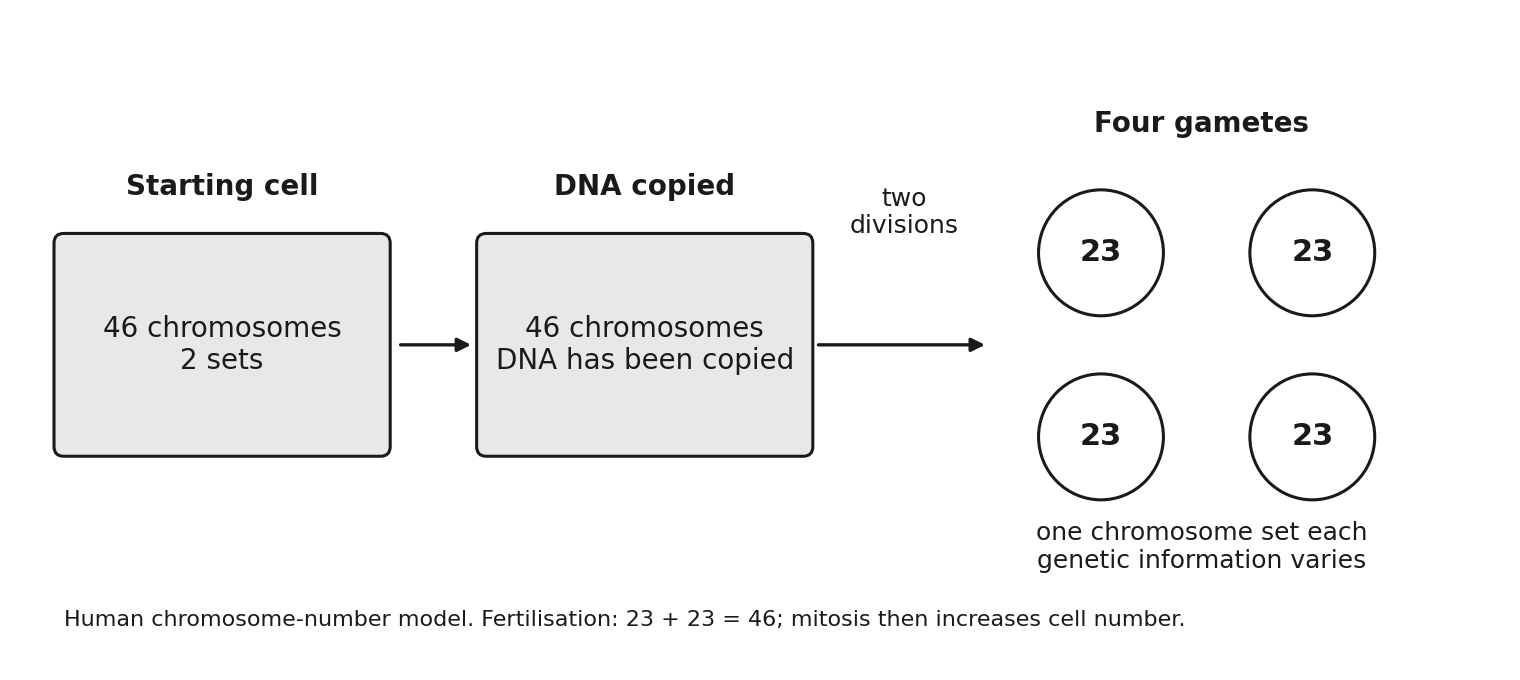
    Try first — chromosome number. A human cell has 46 chromosomes before meiosis. Predict the number of gametes, their chromosome number, the number after fertilisation and the division growing the embryo.

    Worked reasoning. DNA is copied before two divisions form four gametes, each with 23 chromosomes (one set). DNA copying does not change the count to 92 chromosomes at that point. Fertilisation combines 23 + 23 = 46; mitosis increases embryo cell number and cells differentiate. The diagram models chromosome numbers, not the stages of meiosis.

    Try first — scale and code. Distinguish a gene, chromosome and genome. (HT Bio) Write the bases complementary to A C G T and explain whether a mutation must stop an enzyme working.

    Worked reasoning. A gene is a DNA section coding an amino-acid sequence for a protein; a chromosome contains a long DNA molecule and many genes; a genome is all the organism’s genetic material. Complementary bases are T G C A. At ribosomes, a template and carrier molecules determine the amino-acid order; the chain folds. A mutation may leave the protein unchanged or change its shape and function. Non-coding variants can change whether genes are expressed.

    مفردات تدريب
    English العربية
    meiosis/meɪˈəʊsɪs/ الانقسام المنصف
    clone/kləʊn/ استنساخ
    gene/dʒiːn/ الجين
    genome/ˈdʒiːnəʊm/ الجينوم
    nucleotide/ˈnjuːklɪɒtaɪd/ نيوكليوتيد
    6.2

    Genetic inheritance, disorders and sex determination (4.6.1.6–4.6.1.8)

    المنهج

    الوراثة الجينية، الاضطرابات وتحديد الجنس (AQA 8461 العبارات 4.6.1.6-4.6.1.8).

    1. تعريف النطفة، الكروموسوم، الجين، الأليل، السائد، المتنحي، متمايز النسل، غير متمايز النسل، النمط الجيني والنمط الظاهري.
    2. إكمال وتفسير مربعات بينيت وأشجار العائلة، مع النسب والاحتمالات.
    3. شرح وراثة تعدد الأصابع وسرطان الرئة الوراثي وقضية فحص الأجنة.
    4. تحديد الجنس باستخدام التقاطع XX/XY، بما في ذلك النسب.

    المصدر: منهج كامبريدج الدولي

    Learn the terms: gamete 配子 (sex cell), chromosome 染色体 (DNA structure), gene (section coding a protein), allele 等位基因 (a form of a gene), السائدة 显性 (expressed with one copy), متنحي 隐性 (expressed only with two), homozygous 纯合 (two same alleles), heterozygous 杂合 (two different), genotype 基因型 (alleles present), phenotype 表现型 (characteristics expressed).

    Single-gene examples: fur colour in mice; red-green colour blindness. Most characteristics result from multiple genes interacting.

    Punnett squares and crosses: complete a Punnett square, extract ratios (e.g. 3:1, 1:1) and probabilities from genetic crosses and family trees. (HT) Construct a cross from parent genotypes and predict outcomes with probability.

    Inherited disorders: polydactyly 多指症 (extra fingers or toes) — السائدة allele; cystic fibrosis 囊性纤维化 (a disorder of cell membranes) — متنحي allele. Make informed judgements about the economic, social and ethical issues of embryo screening.

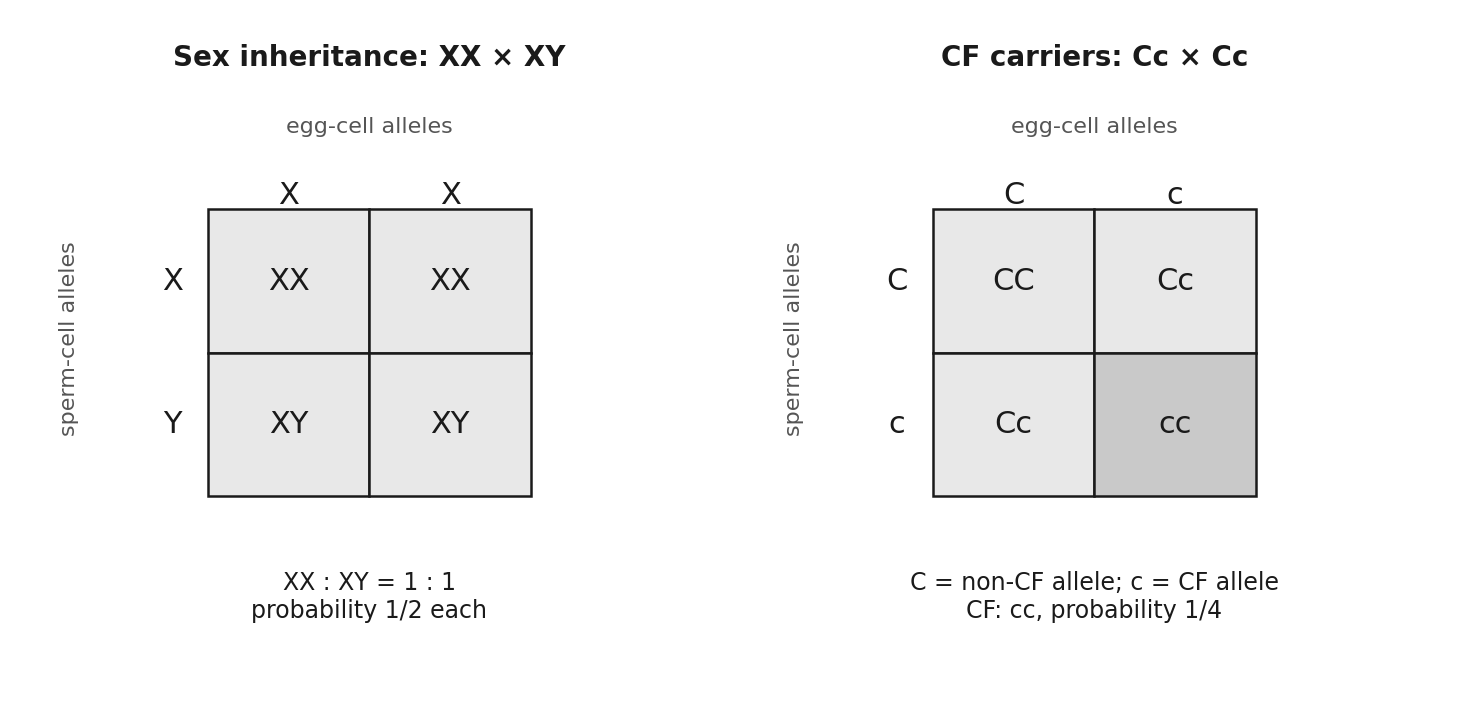
    Left: the XX × XY sex cross giving a 1:1 ratio. Right: two cystic-fibrosis carriers (Cc × Cc), with a 1/4 probability of cc.

    Sex determination: body cells have 23 pairs of chromosomes; 22 pairs control characteristics, one pair carries the sex genes — female XX, male XY. A sex cross (X×X, X×Y) gives a 1:1 ratio, 50 % chance each.

    From terms to family inference and probabilities

    Try first — terminology. D causes dominant polydactyly; d does not. Classify Dd and predict its phenotype and gamete alleles.

    Worked reasoning. Dd is heterozygous (two different alleles); DD and dd are homozygous. Genotype means the alleles present; phenotype means the characteristics expressed. Dd is affected because one D is expressed. “Dominant” does not mean stronger or more common. Gametes contain D or d, not Dd.

    Guided family inference — adapted from AQA June 2024 Paper 2H Q06.2. An affected father and unaffected mother have an unaffected son. Deduce the father’s genotype before reading the answer.

    Worked reasoning. The mother and son are dd. The father passed d to his son, but must also carry D because he is affected. Therefore he is Dd. The child’s genotype supplies evidence that the father’s phenotype alone cannot provide.

    Construct a cross (HT). Two unaffected CF carriers are Cc and Cc. Each produces gametes C or c. Combining them gives CC, Cc, Cc, cc: probability of CF = 1/4; probability of being a carrier = 1/2. Carriers do not have CF in this recessive model. The separate XX × XY cross gives XX, XX, XY, XY: probability 1/2 each in the GCSE sex-determination model.

    Exam transfer — adapted from AQA June 2024 Paper 2H Q06.3. An affected mother Dd and unaffected father dd have three unaffected sons. Construct a cross and predict whether the fourth child will be affected.

    Worked reasoning. Egg alleles D/d combine with sperm alleles d/d to give Dd, dd, Dd, dd. Two of four equally likely combinations are affected: probability = 2/4 = 1/2. Earlier births do not change this probability. The four boxes describe possible combinations, not four promised children.

    Evaluate — teacher-written screening scenario. Screening can identify embryos with the CF genotype, but treatment is costly and some embryos may not be used. A biological benefit is identifying cc embryos to inform the couple’s decisions. Cost can limit access and creates funding choices. Some families object to selecting or not using embryos; others prioritise reducing inherited disease. An informed judgement uses the stated evidence and recognises different values.

    مفردات تدريب
    English العربية
    gamete/ˈɡæmiːt/ الخلية الجنسية
    chromosome/ˈkrəʊməsəʊm/ الكروموسوم
    allele/əˈliːl/ أليل
    dominant/ˈdɒmɪnənt/ سائد
    recessive/rɪˈsesɪv/ متنحي
    homozygous/ˌhɒməˈzɪɡəs/ نقي الصفة
    heterozygous/ˌhetrəˈzɪɡəs/ متغاير الزيجوت
    genotype/ˈdʒenətaɪp/ التركيب الجيني
    phenotype/ˈfenətaɪp/ النمط الظاهري
    polydactyly/ˌpɒlɪˈdæktili/ تعدد الأصابع
    cystic fibrosis/ˈsɪstɪk fɪˈbrəʊsɪs/ تليف الكيس
    6.3

    Variation, selective breeding, genetic engineering and cloning (4.6.2)

    المنهج

    التباين، والتربية الانتقائية، والهندسة الوراثية، والاستنساخ (عبارات AQA 8461 4.6.2).

    1. وصف التفاعل بين الجينوم والبيئة وأسباب التباين الثلاثة ودور الطفرة.
    2. شرح التطور عن طريق الاختيار الطبيعي وتشكل الأنواع الجديدة.
    3. وصف التربية الانتقائية واستخداماتها ومخاطر التزاوج القريب.
    4. وصف الهندسة الوراثية وخطواتها الرئيسية (HT) وفوائدها ومخاطرها ومعارضاتها.
    5. (بيولوجيا) وصف زراعة الأنسجة، والتقطيع، وزراعة الأجنة، واستنساخ الخلايا البالغة.

    المصدر: منهج كامبريدج الدولي

    التباين 变异 — differences between individuals in a population — comes from genes inherited (genetic), conditions of development (environmental), or a combination. There is usually extensive genetic variation within a population; all genetic variants arise from mutations — most have no effect on the phenotype, some influence it, very few determine it. A rare mutation giving a new phenotype suited to an environmental change can change the species rapidly.

    التطور: a change in the inherited characteristics of a population over time, through natural selection 自然选择, which may result in a new species. All species evolved from simple life forms that first developed over three billion years ago. Natural selection: variation → the phenotype best suited to the environment survives and breeds → those characteristics are passed on. If two populations become so different they cannot interbreed to produce fertile offspring, two new species have formed.

    التربية الانتقائية (artificial selection): choose parents with the desired characteristic from a mixed population → breed → choose the best offspring → repeat over many generations. Uses: disease resistance in food crops; animals with more meat or milk; dogs with gentle natures; large or unusual flowers. Risk: inbreeding 近交 — breeds prone to disease or inherited defects.

    Genetic engineering: modifying the genome by introducing a gene from another organism to give a desired characteristic — GM crops resistant to insect attack or herbicides (increased yields); bacteria engineered to make human insulin. (HT) Steps: enzymes isolate the required gene → inserted into a vector (bacterial plasmid or virus) → vector inserts the gene into the required cells → transferred early in development so the organism develops with the desired characteristic. Weigh benefits (medicine, agriculture) against risks (wild-flower and insect populations, unexplored health effects) and ethical objections.

    (Bio) Cloning: tissue culture — small groups of plant cells grown into identical new plants (preserving rare species; nurseries); cuttings — simple, older gardeners' method; embryo transplants — splitting unspecialised cells of a developing animal embryo into identical embryos placed in host mothers; adult cell cloning — nucleus removed from an unfertilised egg cell → nucleus from an adult body cell inserted → electric shock makes it divide into an embryo → ball of cells placed in the womb.

    Apply variation, selection and biotechnology

    Start with variation — teacher-written seedling case. Seedlings differ in inherited disease resistance. Genetically identical plants grow to different heights under different light conditions. Identify genetic and environmental variation, then explain what may happen during a disease outbreak.

    Worked reasoning. Resistance alleles provide genetic variation; light conditions can cause environmental differences in height. Phenotype often depends on both. Resistant plants may survive the disease and reproduce more successfully, passing favourable alleles to offspring. Over generations, resistance alleles can become more common. Mutations change DNA; they do not occur because an organism needs a particular change.

    Exam transfer — adapted from AQA June 2024 Paper 2H Q01.2. Describe natural selection using insects that already vary in inherited insecticide resistance.

    Worked reasoning. The insecticide is a selection pressure: more susceptible insects die. Resistant survivors reproduce and pass resistance alleles to offspring. The population’s inherited characteristics change across generations; an individual does not evolve just by being sprayed. Speciation requires populations to become unable to interbreed to produce fertile offspring.

    Compare mechanisms — teacher-written crop case. A grower wants inherited disease resistance without transferring a gene. Select resistant parents from a mixed population, breed them, select resistant offspring and repeat over many generations. This is selective breeding, not natural selection or genetic engineering. Repeatedly breeding close relatives risks inherited defects and reduced genetic variation.

    Linked exam explanation — adapted from AQA June 2024 Paper 2H Q09.1. GM soya plants resist glyphosate. Explain how spraying the field can increase yield.

    Worked reasoning. Glyphosate kills weeds but the resistant crop survives. Less competition gives the crop more light, water and mineral ions. More light and water can support photosynthesis, producing glucose for respiration and building biomass. Nitrate ions support amino-acid and protein synthesis. Link resources to growth and harvested yield; “GM means higher yield” omits the mechanism. These are authored explanation points checked against the scheme, not an official model or a guaranteed score.

    HT — follow a gene. Enzymes isolate a required gene (for example, human insulin). Insert it into a vector such as a bacterial plasmid; use the vector to introduce it into the required cells. The modified cells express the gene and produce the substance. For a developing animal or plant, introduce the gene early so the organism develops with the desired characteristic.

    Evaluate — teacher-written GM scenario. An insect-resistant crop suffers less target-pest damage, but a study reports fewer nearby non-target insects without establishing why. Reduced damage may improve harvest. The insect decline raises a food-web concern; compare modified and unmodified fields while accounting for habitat and pesticide use. Association alone does not prove the inserted gene caused the decline. Judge the particular modification and evidence.

    Biology — choose and order cloning methods. A nursery can use tissue culture to grow plants from small groups of cells, or cuttings from a parent plant. Embryo transplants split cells before they specialise and place identical embryos into host mothers. Adult cell cloning removes an unfertilised egg’s nucleus, inserts an adult body-cell nucleus, stimulates division with an electric shock, and transfers the ball of cells to a womb. The adult body-cell donor supplies the nuclear genetic information. Environmental differences can still affect a clone’s phenotype.

    مفردات تدريب
    English العربية
    variation/ˌveərɪˈeɪʃn/ تباين
    natural selection/ˈnætʃərəl sɪˈlekʃn/ انتقاء طبيعي
    inbreeding/ˈɪnbriːdɪŋ/ التزاوج القريب
    adenine/ˈædəniːn/ أدينين
    cytosine/ˈsaɪtəsaɪn/ سيتوسين
    guanine/ˈɡwɑːnaɪn/ غوانين
    thymine/ˈθaɪmaɪn/ ثيمين
    6.4

    Evolution, genetics and evidence (4.6.3, biology only)

    المنهج

    التطور، وعلم الوراثة والأدلة (عبارات AQA 8461 4.6.3، علم الأحياء فقط).

    1. وصف نظرية داروين ولماذا تم قبولها تدريجياً، ونظرية لامارك.
    2. وصف مساهمات والاس ومندل ونمو علم الوراثة.
    3. شرح الحفريات وتكوينها ولماذا السجل غير مكتمل وأسباب الانقراض وأشجار التطور.
    4. شرح البكتيريا المقاومة للمضادات الحيوية وكيفية إبطاء مقاومة المضادات.

    المصدر: منهج كامبريدج الدولي

    (Bio) Darwin's theory: wide variation within a species; individuals best suited to the environment survive to breed; the useful characteristics are passed on. Published in On the Origin of Species (1859). Accepted only gradually: it challenged the idea that God made all living things; insufficient evidence at publication; the mechanism of inheritance was unknown for another 50 years. Lamarck's rival theory — that changes acquired during an organism's lifetime are inherited — is now known to be wrong in almost all cases.

    (Bio) Wallace: independently proposed evolution by natural selection; joint 1858 publications with Darwin prompted Darwin to publish; best known for warning colouration and pioneering work on speciation — the steps by which new species arise.

    (Bio) Mendel and the growth of genetics: mid-19th-century breeding experiments showed each characteristic is inherited through 'units' passed unchanged to descendants; late 19th century — chromosomes observed in cell division; early 20th century — the units behave like chromosomes → genes on chromosomes; mid-20th century — DNA structure determined and gene function worked out. Mendel's work was unrecognised in his lifetime.

    (Bio) Evidence for evolution: genes show characteristics pass to offspring; fossils; antibiotic resistance in bacteria.

    (Bio) Fossils form when parts do not decay (a decay condition is absent), when parts are replaced by minerals as they decay, or as preserved traces (footprints, burrows, rootlet traces). Early soft-bodied life left few traces, mostly destroyed by geological activity — so science cannot be certain how life began. Extinction means no individuals of a species remain — causes include new diseases, new predators, competition, environmental change, catastrophic events. Evolutionary trees use current classification data and fossil data.

    (Bio) Resistant bacteria: mutations produce genetic variants; some are resistant to a particular antibiotic. Susceptible bacteria are killed, while resistant survivors reproduce quickly and pass on resistance genes. The resistant strain becomes more common and can spread (for example, MRSA). This population change is evidence for evolution. Resistance can make infection harder to treat; it does not mean every antibiotic is ineffective or that people have no immune defence. Reducing inappropriate prescribing and unnecessary agricultural antibiotic use reduces avoidable selection pressure. Developing new antibiotics takes time and resources.

    Try first — resistance explanation. A population contains susceptible and resistant variants before antibiotic exposure. Explain why resistant bacteria become more common, and correct “the antibiotic makes every bacterium mutate because it needs resistance”.

    Worked reasoning. Genetic variation already exists; mutations are not directed by need. Antibiotic exposure selects survivors. Resistant bacteria reproduce and pass resistance genes to offspring, increasing their share of the population. Selection and inheritance explain the change without claiming that every individual becomes resistant.

    Use historical and fossil evidence

    Explain the history (Biology). Darwin and Wallace independently proposed natural selection; their joint writings appeared in 1858 and Darwin published his book in 1859. Acceptance was gradual: the theory challenged prevailing creation beliefs, some scientists found the evidence insufficient, and inheritance mechanisms were unknown. Mendel’s plant breeding suggested inherited units. His work’s importance was recognised after his death; later chromosome behaviour, genes on chromosomes and DNA structure connected these units to physical mechanisms.

    Apply speciation — teacher-written case. A barrier separates a population into different habitats. Different selection pressures favour different variants; survivors reproduce and pass favourable alleles to offspring. Mutations supply genetic variants. Over many generations the populations may diverge. Separation alone does not prove a new species: inability to interbreed to produce fertile offspring is the stated species criterion.

    Interpret evidence — teacher-written fossil case. A footprint preserved in rock is a trace fossil; a shell replaced by minerals illustrates mineral replacement. Conditions that prevent decay can also preserve remains. Soft-bodied organisms may leave no trace, and geological activity destroys fossils. An incomplete record still supplies evidence of past organisms and change. A species missing from one site is not necessarily extinct: extinction means no living individuals remain anywhere.

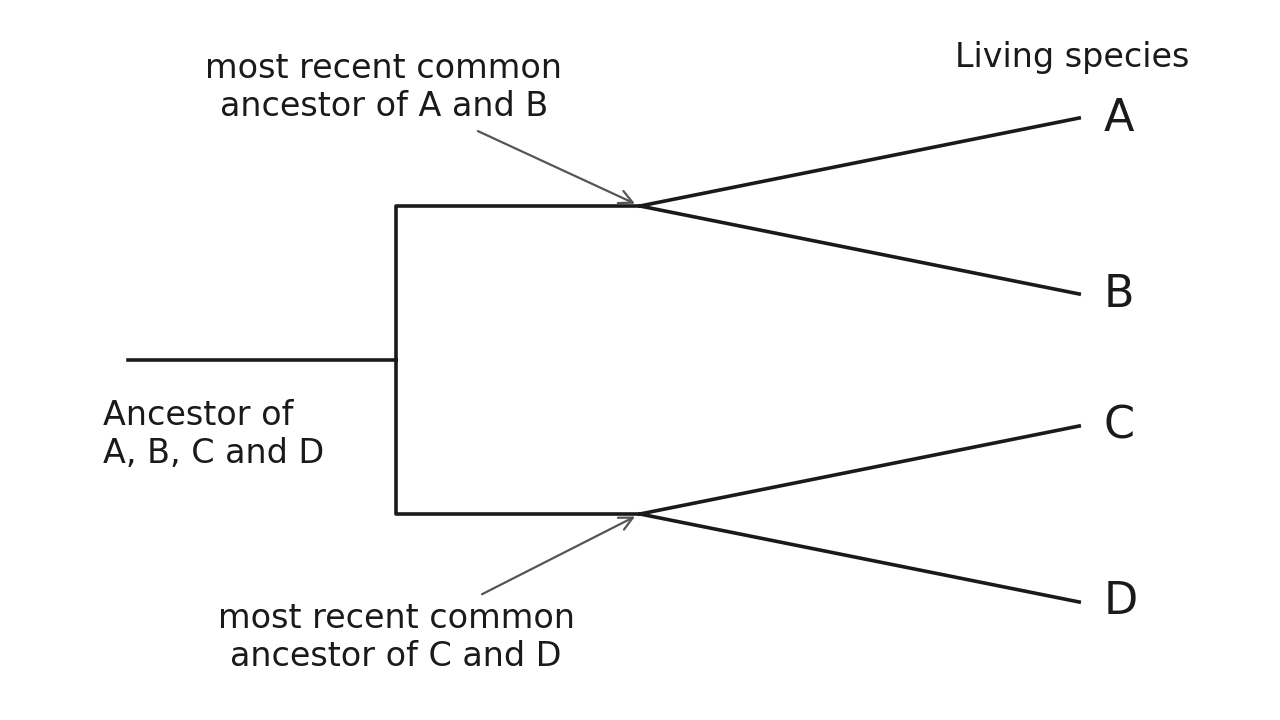
    Read the diagram. Trace A and B back to their first shared fork: this is their most recent common ancestor. A and C share the older ancestor of all four species, so A and B are more closely related. This is a schematic without a time scale; do not infer dates from branch lengths or relationships from vertical spacing. Trees use classification and fossil evidence.

    6.5

    Classification of living organisms (4.6.4)

    المنهج

    تصنيف الكائنات الحية (عبارة AQA 8461 4.6.4).

    1. وصف نظام لينيوس والتسمية الثنائية.
    2. وصف نظام ثلاثية domains لويزه وما دفعه.
    3. تفسير أشجار التطور باستخدام التصنيف وبيانات الحفريات.

    المصدر: منهج كامبريدج الدولي

    Linnaeus: classification by structure and characteristics into kingdom, phylum, class, order, family, genus, species; organisms named by the binomial system (genus + species).

    Three-domain system (Carl Woese), from chemical-analysis evidence: archaea (a distinct domain of prokaryotes, including many organisms from extreme environments), bacteria (true bacteria), eukaryota (protists, fungi, plants, animals). Improvements in microscopes and biochemistry drove the new models.

    An evolutionary tree: branches from a common ancestor; identify the first shared fork when tracing two tips back to their most recent common ancestor; drawn lengths here are not a time scale.

    Evolutionary trees show how scientists believe organisms are related — interpret them using classification and fossil data.

    Apply classification. In Panthera leo و Panthera tigris, Panthera identifies the shared genus; the second word distinguishes the species within it. The ranks are kingdom → phylum → class → order → family → genus → species. New microscopy and chemical-analysis evidence can reveal relationships that external appearance does not show, leading to revised classification. Woese’s three domains are archaea, bacteria and eukaryota.

    Final retrieval. Without the answers, explain (1) how 23-chromosome gametes restore 46 at fertilisation; (2) the next affected-child probability for Dd × dd after three unaffected births; (3) how antibiotic exposure changes a bacterial population. Check: two gamete sets combine; the cross gives a 1/2 probability independently at each birth; resistant survivors reproduce and pass on resistance genes. Then use the earlier worked examples to retrieve gene transfer, cloning order and common ancestry.

    6.5

    Checklist before you call this topic done

    • Meiosis (four gametes, halved number) vs mitosis; sexual vs asexual advantages with named organisms.
    • All ten genetics terms; Punnett squares with ratios; polydactyly vs cystic fibrosis; XX/XY cross 1:1.
    • (Bio) DNA nucleotides and bases; (HT) protein synthesis and mutations.
    • Variation three sources; natural selection sequence; selective breeding steps and inbreeding risk; (HT) genetic engineering steps; (Bio) four cloning methods.
    • (Bio) Darwin/Wallace/Mendel history, fossil formation and why the record is incomplete, MRSA story, Linnaeus ranks and the three domains.
  • 7

    البيئة

    7.1

    Ecology: communities, cycles and human impacts

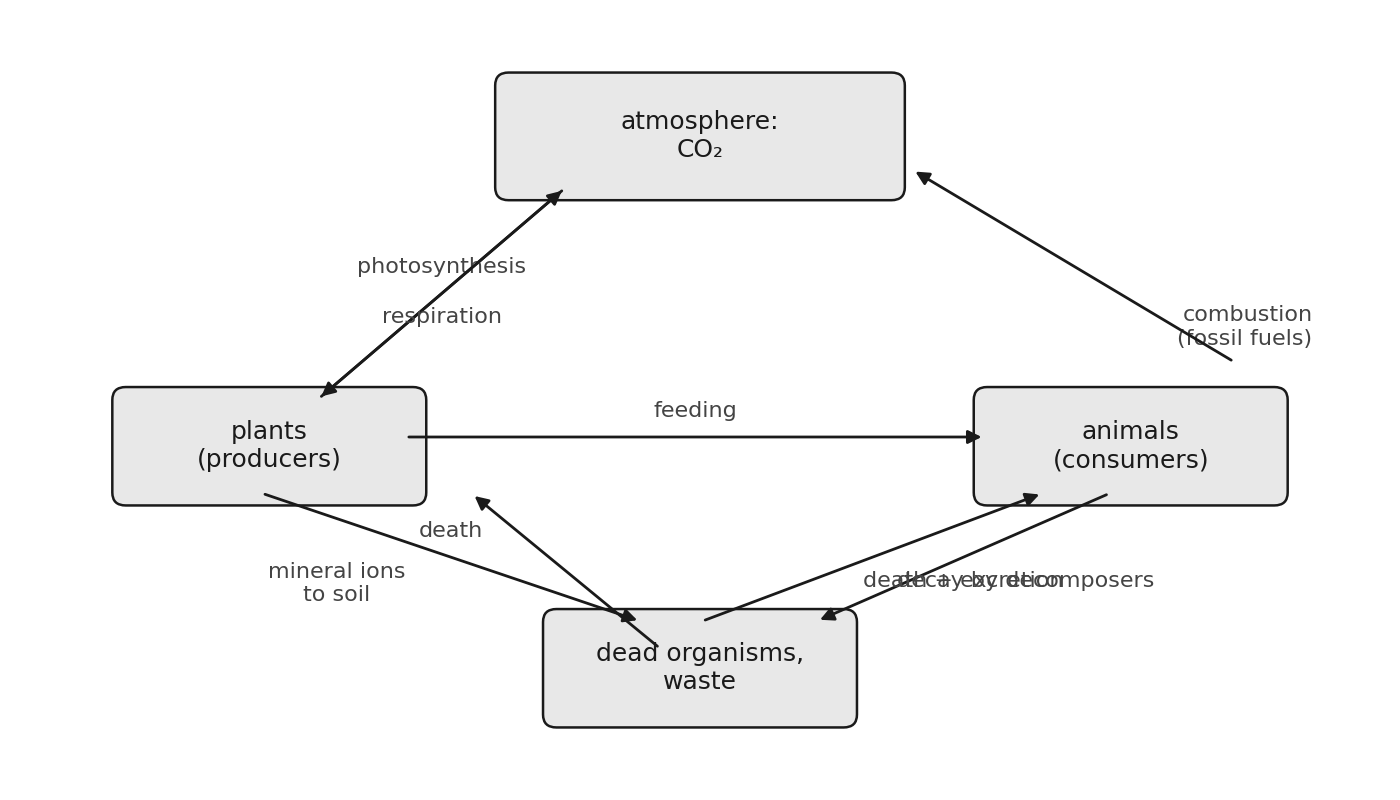
    • The Sun's energy passes through ecosystems; carbon and water cycle between the living and non-living world.
    • Communities compete and depend on each other; adaptations fit organisms to their conditions.
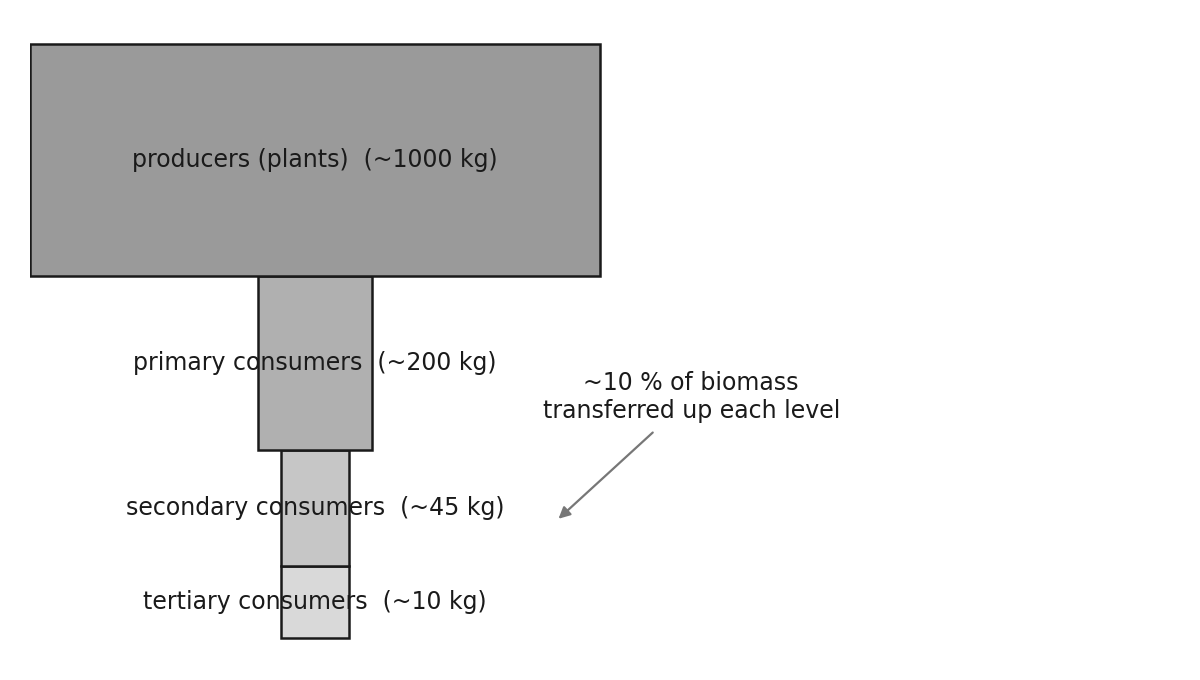
    • Human activity — waste, land use, deforestation, global warming — threatens biodiversity, and trophic-level biology (bio only) explains why food chains are short.
    7.1

    Adaptations, interdependence and competition (4.7.1)

    المنهج

    التكيفات، والتكامل المتبادل والمنافسة (عبارة AQA 8461 4.7.1).

    1. وصف مستويات التنظيم في النظام البيئي وتعريف النظام البيئي والمجتمع والعوامل الحيوية وغير الحيوية.
    2. اقترح العوامل التي تتنافس عليها النباتات والحيوانات، واشرح الترابط المتبادل.
    3. اشرح كيف تؤثر التغيرات في العوامل غير الحية والحية المعطاة على المجتمع البيئي.
    4. اشرح التكيفات البنيوية والسلوكية والوظيفية، والكائنات شديدة التحمل.

    المصدر: منهج كامبريدج الدولي

    An ecosystem 生态系统 is the interaction of a community of living organisms (biotic 生物因子) with the non-living (abiotic factor 非生物因子) parts of their environment. Levels of organisation: individual → population → community → ecosystem.

    المنافسة 竞争: plants compete for light, space, water and mineral ions; animals compete for food, mates and territory. Interdependence 相互依赖: each species depends on others for food, shelter, pollination, seed dispersal — remove one species and the whole community can be affected.

    Abiotic factors affecting a community: light intensity, temperature, moisture levels, soil pH and mineral content, wind intensity and direction, carbon dioxide levels (plants), oxygen levels (aquatic animals). Biotic factors : availability of food, new predators arriving, new pathogens, one species outcompeting another until numbers fall too low to breed. Explain the effect of a change in any of these from given data.

    التكيفات 适应性 — features that enable survival in normal conditions — are structural (shape/body), behavioural (actions) or functional (processes, e.g. camouflage chemistry, venom). Extremophiles 极端微生物 live in extreme environments — high temperature, pressure or salt — e.g. bacteria in deep-sea vents.

    مفردات تدريب
    English العربية
    ecosystem/ˈiːkəʊsɪstəm/ نظام بيئي
    biotic factor/baɪˈɒtɪk ˈfæktə/ عامل حيوي
    abiotic factor/ˌæbɪˈɒtɪk ˈfæktə/ عامل غير حيوي
    competition/ˌkɒmpəˈtɪʃn/ تنافس
    interdependence/ˌɪntədɪˈpendəns/ التكامل
    adaptation/ˌædæpˈteɪʃn/ تكيف
    extremophile/ekˈstreməfaɪl/ ميكروب متطرف
    7.2

    Organisation of an ecosystem and material cycles (4.7.2, RP9/RP10)

    المنهج

    تنظيم النظام البيئي ودورات المواد (عبارة AQA 8461 4.7.2، RP9/RP10).

    1. استخدم مفردات السلسلة الغذائية من المنتج إلى المستهلك الثانوي الثالث، وفسر دورات المفترس والفريسة.
    2. وصّف أخذ العينات RP9 باستخدام الخطوط المستقيمة والمربعات، مع المتوسط والمنوال والوسيط.
    3. اشرح دورة الكربون والمياه ودور الكائنات الدقيقة.
    4. (بيولوجيا) اشرح كيف تؤثر درجة الحرارة والماء والأكسجين على معدل التحلل، مع RP10 والغاز الحيوي.

    المصدر: منهج كامبريدج الدولي

    Photosynthetic organisms are the producers 生产者 of biomass for life on Earth. Food chains: producer (green plant/alga making glucose by photosynthesis) → primary consumers 初级消费者 → secondary consumers 次级消费者 → tertiary consumers 三级消费者. A predator-prey cycle: prey numbers rise first, the predator population follows with a delay, and both oscillate.

    Predators kill and eat prey; in a stable community their numbers rise and fall in cycles — interpret the classic predator–prey graph (prey rises first, predator follows).

    Sampling (RP9): transects and quadrats measure the distribution and abundance of species; calculate mean, mode, median of abundance; plot graphs with suitable scales.

    The carbon cycle: photosynthesis takes CO2 into plants, feeding passes carbon to animals, decay by decomposers returns it, with respiration and combustion releasing CO2.

    Carbon cycle: returns carbon from organisms to the atmosphere as carbon dioxide for photosynthesis — respiration (plants, animals, decomposers), decay, combustion. Water cycle: evaporation and precipitation provide fresh water before it drains to the sea. Microorganisms recycle materials — returning carbon to the atmosphere as CO₂ and mineral ions to the soil. The nitrogen cycle is NOT required.

    (Bio) Decomposition (RP10): temperature, water and oxygen affect the rate of decay. Gardeners and farmers provide optimum conditions for rapid decay 腐解 of waste into compost — a natural fertiliser. Anaerobic decay produces methane — biogas generators. RP10: effect of temperature on the rate of decay of fresh milk by measuring pH change.

    (HT Bio) Environmental change: temperature, water availability, atmospheric-gas composition — changes may be seasonal, geographic or human-caused — shift the distribution of species.

    مفردات تدريب
    English العربية
    producer/prəˈdjuːsə/ منتج
    primary consumer/ˈpraɪməri kənˈsuːmə/ مستهلك أولي
    secondary consumer/ˈsekəndəri kənˈsuːmə/ مستهلك ثانوي
    tertiary consumer/ˈtɜːʃjəri kənˈsuːmə/ مستهلك ثالثي
    decomposition/ˌdiːkɒmpəˈzɪʃn/ تحلل
    7.3

    Biodiversity and human interactions (4.7.3)

    المنهج

    التنوع البيولوجي والتفاعلات البشرية (عبارة AQA 8461 4.7.3).

    1. عرّف التنوع البيولوجي واشرح لماذا يعزز استقرار النظم البيئية.
    2. اشرح كيف تقلل النفايات واستخدام الأراضي وإزالة الغابات والاحترار العالمي من التنوع البيولوجي.
    3. وصف البرامج التي تحافظ على التنوع البيولوجي.

    المصدر: منهج كامبريدج الدولي

    التنوع البيولوجي 生物多样性 is the variety of all different species on Earth or within an ecosystem; it stabilises ecosystems by reducing the dependence of one species on another, and our own future relies on maintaining it.

    • Waste management: population growth and living standards increase resource use and waste → pollution 污染 in water (sewage, fertiliser, toxic chemicals), air (smoke, acidic gases) and on land (landfill, toxic chemicals) — killing plants and animals.
    • Land use: building, quarrying, farming and dumping waste reduce land for other species; destroying peat bogs for garden compost destroys habitat and biodiversity, and decaying or burnt peat releases CO₂.
    • Deforestation in tropical areas: land for cattle and rice fields, crops for biofuels.
    • Global warming: rising atmospheric CO₂ and methane contribute to global warming; describe biological consequences (distribution shifts, migration changes, biodiversity loss).

    Maintaining biodiversity — programmes reducing negative human effects: breeding programmes for endangered species; protection and regeneration of rare habitats; field margins and hedgerows reintroduced in single-crop areas; reduced deforestation and CO₂ emissions; recycling rather than landfill.

    مفردات تدريب
    English العربية
    biodiversity/ˌbaɪəʊdaɪˈvɜːsɪti/ التنوع البيولوجي
    pollution/pəˈluːʃn/ تلوث
    7.4

    Trophic levels and food security — biology only (4.7.4–4.7.5)

    المنهج

    المستويات الغذائية والأمن الغذائي، بيولوجيا فقط (عبارات AQA 8461 4.7.4-4.7.5).

    1. سمِّ المستويات الغذائية، وصف المحللات، وبنأهرام الكتلة الحيوية.
    2. اشرح فقدان الكتلة الحيوية بين المستويات واحسب كفاءة الانتقال.
    3. صف العوامل البيولوجية التي تهدد الأمن الغذائي.
    4. قيّم تقنيات الزراعة، والمصايد المستدامة، ودور التكنولوجيا الحيوية.

    المصدر: منهج كامبريدج الدولي

    Trophic levels: 1 producers (plants, algae); 2 primary consumers (herbivores); 3 secondary consumers (carnivores eating herbivores); 4 tertiary consumers (carnivores eating carnivores). Apex predators have no predators. Decomposers secrete enzymes onto dead material and absorb the small soluble food molecules.

    A pyramid of biomass with producers at the bottom and about 10 percent of biomass passing to each level above.

    Pyramids of biomass: trophic level 1 at the bottom; construct from data. Transfer of biomass: producers transfer ~1 % of incident light energy into biomass; only ~10 % of biomass passes from each level to the next — losses from egested faeces (not all ingested material is absorbed) and النفايات (CO₂ and water from respiration, water and urea in urine); glucose used in respiration. Calculate efficiency by percentage or fraction of mass.

    Food security 粮食安全 — having enough food for the population — is threatened by: rising birth rate; changing diets in developed countries; new pests and pathogens; environmental changes (famine when rains fail); the cost of agricultural inputs; conflicts affecting water or food availability.

    Farming techniques improve efficiency by restricting energy transfer from food animals to the environment — limiting movement و controlling temperature; high-protein feeds increase growth. Weigh these against ethical objections to intensive farming.

    Sustainable fisheries: maintain fish stocks where breeding continues — control net size and fishing quotas .

    Role of biotechnology: culturing microorganisms for food — Fusarium fungus grown on glucose syrup in aerobic conditions produces mycoprotein 菌蛋白 (protein-rich, vegetarian); GM bacteria produce insulin; GM crops such as golden rice add food or nutritional value.

    مفردات تدريب
    English العربية
    food security/fuːd sɪˈkjʊərɪti/ الأمن الغذائي
    mycoprotein/ˈmaɪkəprəʊtiːn/ بروتين فطري
    7.4

    Checklist before you call this topic done

    • Definitions chain: ecosystem, community, abiotic/biotic factors with examples.
    • Plant vs animal competition; interdependence consequences; three adaptation types + extremophiles.
    • Food-chain vocabulary; predator–prey cycle read off a graph; RP9 sampling with mean/mode/median.
    • Carbon and water cycles with decomposers' role; (bio) decay factors + biogas + RP10.
    • Four human threats + five biodiversity programmes named.
    • (Bio) Trophic levels, pyramid shape, 10 % rule with efficiency calculation.
    • (Bio) Six food-security threats; efficiency farming, net size and quotas, mycoprotein, golden rice.

تسجيل الدخول أو إنشاء حساب

IGCSE، A-Level & AP