您的已保存位置保留在此浏览器中。恢复操作不会完成课程或回答其中的问题。
Part 2: a few notes, a full story
-
Goal: choose brief notes, speak in a connected way about the actual card, and explain the "why" it asks for. Start with the Speaking format. Use recordings throughout — written choices help you prepare, but only speech shows how you sound.
-
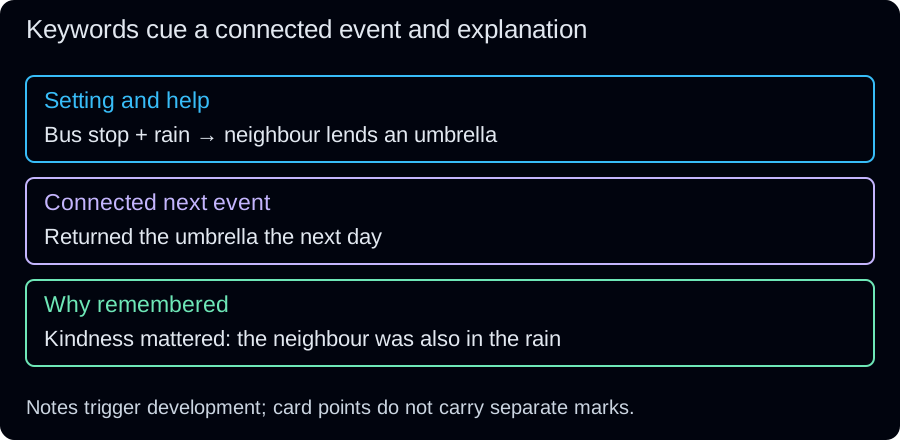
Card: Describe a time someone helped you. Say where you were, who helped you, what happened, and explain why you remember it. Notes: bus stop / rain / neighbour / umbrella / returned next day / grateful.
-
A developed reason: "My neighbour was getting wet too, but she gave me her umbrella anyway — that's why I remember it." It links the feeling to what happened. Six adjectives about gratitude would leave the event waiting at the bus stop.

Part 2 个人陈述的时间上限是多少分钟?
难度 2/5 · 今日首次完成可获 140 金币及少量额外奖励
个人陈述最多两分钟;时间到了考官会叫停。用计时器练习展开相关内容。
Use the minute to plan a route
- One minute to prepare, then up to two minutes to speak. Write short cues for each point and for the explanation — any words that help you remember, not only nouns.
- For this card: place → the neighbour's help → what you did next → why it mattered. A written script takes too long and is hard to adapt. Your notes aren't marked; they're only there to help you speak.
怎样有效利用一分钟准备时间?
难度 1/5 · 今日首次完成可获 100 金币及少量额外奖励
关键词帮助记住思路,也方便灵活表达;完整句子费时,还容易让你照着念。
Develop the reason, not a different story
- "It was nice" is a judgement with nothing behind it. "She was getting wet too" makes the reason specific. "I returned the umbrella the next day with a box of biscuits" continues the same story instead of starting a new one.
- If you finish early in practice, add a relevant detail or reason — don't jump to an unrelated topic just to fill time. In the test, the examiner decides when to stop you, and being stopped is normal.
必须把两分钟固定而平均地分配给卡片的每个要点。
难度 1/5 · 今日首次完成可获 100 金币及少量额外奖励
把要点作为路线,时间分配随卡片调整,并给指定的解释部分留出空间。
Let the timeline choose the grammar
- "I was waiting when my neighbour offered me the umbrella" — a short action inside a longer past situation. "I had left my coat at home" — something that happened even earlier.
- "I still remember it" — the present, commenting on the past. Range means using the right structures for the meaning, not banning the present tense from a past story or forcing in a past perfect.
Which examples use past-time structures suitable for the intended past-event meanings? Choose all that apply.
难度 2/5 · 今日首次完成可获 140 金币及少量额外奖励
The first, second and fourth use suitable past-time structures. Present tense can still be appropriate for a current comment, such as I still remember it; grammar must match the intended timeline.
A past-event answer may appropriately include “I still remember it” as a current comment.
难度 1/5 · 今日首次完成可获 100 金币及少量额外奖励
The memory comment concerns the present while the narrated event concerns the past. Choose tense by the intended time.
In “I had left my coat at home before I reached the bus stop”, which event is earlier?
难度 1/5 · 今日首次完成可获 100 金币及少量额外奖励
The past perfect and before locate leaving the coat earlier than arrival at the stop.
Improve the same card, then try a new one
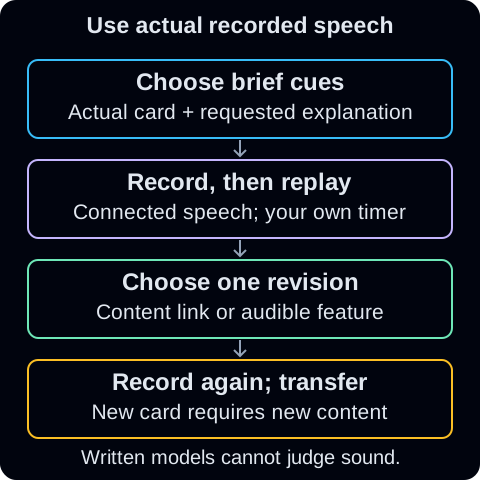
- Record a first attempt and find one thin explanation. Record again and develop it. That shows what your revision changed — on that card.
- Then try a new card: a useful object — what it is, how you use it, why it's useful. Keep the planning method, but choose new details. Retelling the umbrella story would answer the wrong question.
把常见 Part 2 话题的完整答案背下来,是备考时间的好用法。
难度 1/5 · 今日首次完成可获 100 金币及少量额外奖励
固定稿可能不适合卡片或追问。准备话题和细节,才能灵活回答。
What to listen for
- Did you cover the topic and the explanation, in speech a listener could follow? The card's points guide your content; they don't each get a fixed number of seconds or a separate mark. Recordings and a listener tell you things a written check can't.
- Checked on 19 October 2026: IELTS Speaking format.

View the original cue map at full size
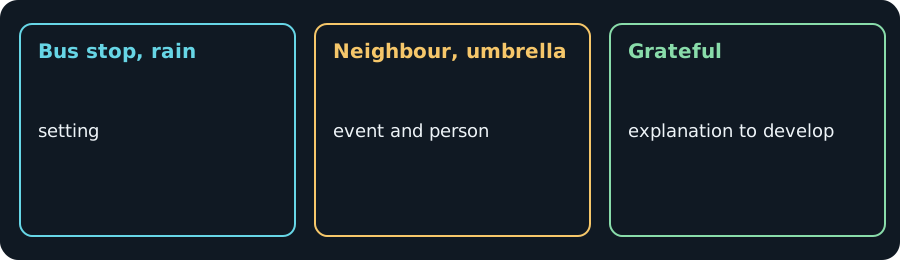
- Use notes to plan a connected turn, choose grammar for the timeline, and test the method on a new card.
Match the distinctions in this worked case.
难度 2/5 · 今日首次完成可获 140 金币及少量额外奖励
Develop the explanation: “I remembered the kindness because the neighbour was also waiting in the rain, yet offered me the umbrella.” The feeling is connected to an event rather than added as a list of adjectives.
Which addition develops why the event mattered?
难度 1/5 · 今日首次完成可获 100 金币及少量额外奖励
Original long-turn preparation: “bus stop / rain / borrowed umbrella / neighbour / returned next day / grateful”. These notes can cue where, what happened, who helped and why you remember it. Develop the explanation: “I remembered the kindness because the neighbour was also waiting in the rain, yet offered me the umbrella.” The feeling is connected to an event rather than added as a list of adjectives.
A new card asks about a useful object. Which response transfers the planning method?
难度 1/5 · 今日首次完成可获 100 金币及少量额外奖励
Transfer keeps the method while changing the content to answer the new card.
From a cue to a reason a listener can follow
- Learning to cook: soup / aunt / salty / dinner. "It was important because it was important" goes in a circle. "My aunt let me taste the soup and fix it myself, so I learned to check my own cooking" shows how she helped — and "Now I can make dinner when she works late" explains why it matters.
- A quiet place: courtyard / wall / chapter / afternoon → "The wall blocks the traffic noise, so I can read a whole chapter without losing my place." "It's beautiful, amazing and fantastic" adds adjectives but no reason.

Guided planning choices
- Ten written questions, each with a hint: choose a route, develop the explanation, keep the timeline consistent, or recover when a word is missing. Choose, then read why the other option does or doesn't fit the card.
- These are planning choices, not Speaking questions — they can't hear you. A plan is useful if it helps you talk; collecting elaborate notes is not a separate competitive sport.
原始卡片:描述一顿你学会做的饭菜;说明是什么菜、如何学会的、哪里困难,并解释学习它的重要性。笔记:扁豆汤 / 阿姨教 / 盐太多 / 分享家庭晚餐。计划提示: 保持通往所需解释的路径。
决策: 哪些笔记补充了缺失的解释?选择 ONE 答案。
难度 1/5 · 今日首次完成可获 100 金币及少量额外奖励
新的提示将技能与说话者生活中的有益改变联系起来。重复话题词汇或展开成关于食物的讲座,并不能解释这项学习为何重要。
原始题目:描述一个你喜欢阅读的安静场所;说明它在哪里、你何时去、在那里做什么,并解释你为什么喜欢它。草稿:“那里很好。非常非常好。” 规划提示: 发展一个相关特征及其产生的效果。
决策: 哪项补充内容能阐述原因?选择 ONE 个答案。
难度 1/5 · 今日首次完成可获 100 金币及少量额外奖励
此处的场所特征与说话者的阅读体验产生了关联。形容词的重复增加了很少的解释力;这种普遍性断言超出了这个个人叙述的范围。
原始题目:描述一件你拥有的有用物品;说明它是什么、你是如何得到的、如何使用它,并解释为什么它有用。物品:一盏小台灯。 规划提示: 将题目要点作为提示,而非等时分配框。
决策: 什么是有效的规划决策?选择 ONE 个答案。
难度 1/5 · 今日首次完成可获 100 金币及少量额外奖励
简短的提示可以支持连贯的发展。在本课中,这些要点并不承载相同的时间分配或单独固定的分值。
原始过去事件题目:描述一次你修理某物的经历。预期顺序:发现车轮松动;此前曾借过工具;拧紧车轮;至今仍在使用该工具盒。 规划提示: 为每个时间点选择合适的语法。
决策: 哪个句子保留了原意?选择 ONE 个答案。
难度 1/5 · 今日首次完成可获 100 金币及少量额外奖励
had borrowed 将借用行为定位在更早的时间点;still use 描述现在的状态。仅仅出现时态并不能得分:它必须符合预期的时间线。
原始题目:描述一个教过你某项技能的人;说明是谁、教了什么、如何教的,并解释为何印象深刻。草稿:“我表哥教我缝补口袋。”构思提示: 聚焦教学过程的展开,而非无关的生平介绍。
决策: 哪一项补充能将方法与效果联系起来?请选择一个答案。
难度 1/5 · 今日首次完成可获 100 金币及少量额外奖励
具体动作解释了表哥是如何帮助 speaker 学习的。偏离主题的生平介绍或重复的赞美都无法有效展开教学内容。
原始题目:描述一次令你难忘的经历;包括地点、同伴、经过以及铭记于心的原因。草稿:“我们错过了渡轮,于是沿着海岸线步行,直到下一班船出发。”构思提示: 将后续细节与同一事件建立联系。
决策: 哪一项续写能保持内容的相关性?请选择一个答案。
难度 1/5 · 今日首次完成可获 100 金币及少量额外奖励
该续写部分展开了事件的经过及难忘的原因。它没有将一次误船经历泛化为对交通系统的普遍论断。
原始题目:描述一项你学到的实用技能。你想说“我用___把木边磨光滑”,但想不起“砂纸”这个词。构思提示: 传达缺失的含义。
决策: 哪一项补救措施能让叙述继续推进?请选择一个答案。
难度 1/5 · 今日首次完成可获 100 金币及少量额外奖励
清晰的释义保留了原本的工具和动作含义。这并非发音质量的证明,但有助于维持沟通流畅。
原始题目:描述一次改变你对某地看法的访问。实际录音在罗列细节时显得语速过快。构思提示: 利用真实音频选择补救策略。
决策: 最有益的下次尝试是什么?请选择一个答案。
难度 1/5 · 今日首次完成可获 100 金币及少量额外奖励
分组有助于听者理解含义。没有通用的语速或强制停顿模式;书面笔记无法确立实际表达或分数段。
原始卡片:描述一份有用的礼物。说话者称该礼物去年冬天到达,但随后表示已使用了十年。**计划提示:**检查时间线的一致性。
**决策:**说话者应该修复什么?选择一个答案。
难度 1/5 · 今日首次完成可获 100 金币及少量额外奖励
时间线会改变听者的理解。在华丽词汇之前修复该含义;仅靠长度并不能使叙述连贯。
原始卡片:描述一项你首次尝试的活动。你将同一个陶艺答案修改了两次。**计划提示:**区分修改与迁移。
**决策:**什么检验了该方法是否能应用到新任务中?选择一个答案。
难度 1/5 · 今日首次完成可获 100 金币及少量额外奖励
同一卡片的修改显示了对该回答的打磨。新主题需要选择和开发新内容,这提供了灵活运用的不同证据。
Planning choices without hints
- Ten more questions with new cards and short draft fragments. Decide what each card actually needs instead of applying a fixed story, tense list or sentence count.
- Then do the three recorded tasks below. They are where the real practice happens.
原始卡片:描述一本你推荐的书;说明它是什么、推荐给谁、关于什么,并解释推荐理由。草稿:“这是一本关于本地鸟类的书。我告诉了我表哥。”
**决策:**仍缺少什么相关的发展内容?选择一个答案。
难度 1/5 · 今日首次完成可获 100 金币及少量额外奖励
草稿已点明书籍与读者,但所需理由尚需展开。表亲的兴趣可提供相关联系,无需作出普遍性断言。
原题卡:描述一次改变计划的情况;说明原计划是什么、为何改变、改做何事,并解释你的感受。草稿:“我们原本打算野餐。因道路积水,遂改为在家做饭。”
判断: 哪项续写能回答剩余未涉及的方面?请选择一项答案。
难度 1/5 · 今日首次完成可获 100 金币及少量额外奖励
感受及其发展过程回答了最后一个方面。若泛泛而谈洪水讲座,则此个人化回应将显得不完整。
原题卡:描述一家你喜欢的商店;包括其位置、售卖商品、前往时间,以及你喜欢它的原因。你选择了一家维修店而非超市。
判断: 哪项补充能在不改变所选内容的前提下,进一步说明你为何喜欢这家维修店?请选择一项答案。
难度 1/5 · 今日首次完成可获 100 金币及少量额外奖励
一项相关的服务特色可解释偏好。维修店契合此类题卡要求;无需将其替换为背诵的话题或虚构政策。
原题卡:描述一项你养成的新习惯。预期含义:你从春季开始步行上班,且至今仍在坚持。
判断: 哪项表述能保留该时间线?请选择一项答案。
难度 1/5 · 今日首次完成可获 100 金币及少量额外奖励
过去开始加当前持续的习惯符合预期含义。语法多样性应服务于意义,而非机械遵循时态清单。
原始题目:描述一个你学到东西的地方。你已经提到了社区工作坊及其位置。
判断: 哪个细节能展开学习过程而非重复确认地点?选择一个答案。
难度 1/5 · 今日首次完成可获 100 金币及少量额外奖励
该动作解释了在工作坊中发生了什么以及学习是如何发生的。单纯重复命名无法丰富叙述内容。
原始题目:描述一个你喜欢与其共度时光的人并解释原因。草稿:“我叔叔有一辆自行车。这辆自行车有两个轮子。”
判断: 哪个修改能将细节与问题关联起来?选择一个答案。
难度 1/5 · 今日首次完成可获 100 金币及少量额外奖励
共同的活动和叔叔的行为解释了说话者为何珍视这段时光。当物体细节与这种关系相连时,它便变得有意义。
原始题目:描述你参加的一次庆祝活动。练习时你说“上周五”,意识到自己实际指的是周六。
判断: 哪种修正最能保护原意和叙述连贯性?选择一个答案。
难度 1/5 · 今日首次完成可获 100 金币及少量额外奖励
简短的更正既修正了日期又延续了叙述。这里没有关于固定扣分或必须修正次数的硬性规则。
原始题目:描述一件你想要拥有的物品并解释原因。你的描述是基于假设的。
判断: 哪个句子能保持这种假设状态清晰明确?选择一个答案。
难度 1/5 · 今日首次完成可获 100 金币及少量额外奖励
符合预期对象的用途并发展其可能的好处。保持所选状态一致,而非强加过去购买或伪造证据。
原始卡片:描述一次你解决问题的经历。你已经解释了你给相同的储物箱贴上了标签。
决定: 哪一项补充说明了该解决方案为何重要?选择 ONE 答案。
难度 1/5 · 今日首次完成可获 100 金币及少量额外奖励
后果将解决方案与问题联系起来。重复、普遍断言和不相关事件无法提供这种联系。
原始卡片:描述一个你想重游的地方并解释原因。你的录音列举了许多景点,但从未展开返回的理由。
决定: 哪个是最高效的复习目标?选择 ONE 答案。
难度 1/5 · 今日首次完成可获 100 金币及少量额外奖励
所需的解释较为薄弱。更多的名称无法弥补这一点,且转录文本不能证明发音。应使用实际音频进行表达审查。
Record: a repair
- Card: something you repaired — what it was, the problem, what you did, and why it mattered. One minute of notes, then record up to two minutes with your own timer. Listen back before reading the examples.
- The recorder needs microphone access; allow it only if you want to use it. Audio stays on this page, isn't uploaded, and disappears if you reload. You can use your own phone recorder instead. Compare your content with the written examples, and your sound with the checklist.
原始口语卡片: 描述一次你修理某物的经历。说明是什么物品、存在什么问题、你是如何修理的,并解释这次修理对你为何重要。
用一分钟时间做简要笔记,然后用自己的计时器录制一段长达两分钟的连贯陈述。停止后播放 My recording,接着打开书面指导并进行对比。使用你可以展开的细节;不要朗读准备好的演讲稿。不提供自动计时或口语评分。
将实际口语与卡片及清单进行对比。同一卡片的修订与新卡片的尝试提供了不同的证据。这是自我评估,而非考官的评判。
Record: learning from someone
- Card: a skill you learned from another person — the skill, the person, how they helped, and why you value it. Choose a skill you can really explain. "They are good and it was useful" is a start; a specific action and its result is the development.
- Record before reading the models. Listen, find one thin explanation or unclear link, and record again. The soup example shows decisions; it's not a script to learn.
原始口语卡片: 描述一项你从他人那里学到的技能。说明该技能是什么、谁教了你、他们如何帮助你学习,并解释你为什么重视这项技能。
用一分钟时间做简要笔记,然后用自己的计时器录制一段最长两分钟的连贯陈述。停止播放后,打开“我的录音”,再查阅书面指导并进行对比。请使用可以展开的细节;不要朗读准备好的演讲稿。不提供自动计时或口语评估。
将实际口语与卡片及清单进行对比。同一卡片的修订与新卡片的尝试提供了不同的证据。这是自我评估,而非考官的评判。
Record: a place that suits you
- Card: a place where you spend quiet time — where, when, what you do, and why it suits you. Choose new content. A repair story doesn't become a place description by adding "at the courtyard".
- Listen for whether a stranger could follow your route and reasons. For sounds and pauses, use the clarity lab.
原始口语卡片: 描述一个你喜欢度过安静时光的地方。说明地点、前往时间、在那里的活动,并解释这个地方为何适合你。
用一分钟时间做简要笔记,然后用自己的计时器录制一段最长两分钟的连贯陈述。停止播放后,打开“我的录音”,再查阅书面指导并进行对比。请使用可以展开的细节;不要朗读准备好的演讲稿。不提供自动计时或口语评估。
将实际口语与卡片及清单进行对比。同一卡片的修订与新卡片的尝试提供了不同的证据。这是自我评估,而非考官的评判。
From the past to the future
- Card: an activity you would like to try. Choose the content and grammar for something that hasn't happened yet — not every card is a past story.
- Record, listen and improve one thing. There's no model for this one; the written guidance helps you check your planning afterwards.
原始全新口语题卡:描述一项你想尝试的活动。说说它是什么,你是如何听说它的,你将如何开始,并解释为什么想尝试。
在新的一次尝试中,使用一分钟做笔记,用自己的计时器录制最多两分钟。回放、比较并录制一次有用的修改。这些是本地练习说明;该页面不运行考试计时器。
新材料测试你选择和开发新内容的能力。该页面仅记录自我评估;不推断 proficiency 结果。
Come back another day
- Card: a decision that helped you use your time better. Come back on a different day, before rereading the examples. Make brief notes, record, listen, and improve one link or one sound.
- Next: Parts 1 and 3, or the clarity lab if the problem is how you sound.
Checked on 19 October 2026: IELTS Speaking format. All cards and examples are our own teaching material; there is no automatic pronunciation score.
原始全新口语题卡:描述一个帮助你更好地利用时间的决定。说说你做出了什么决定,何时及为何做出,发生了什么变化,并解释你现在对这个决定的感受。
在新的一次尝试中,使用一分钟做笔记,用自己的计时器录制最多两分钟。回放、比较并录制一次有用的修改。这些是本地练习说明;该页面不运行考试计时器。
新材料测试你选择和开发新内容的能力。该页面仅记录自我评估;不推断 proficiency 结果。