有的是 + Noun (have plenty of)
引入您的已保存位置保留在此浏览器中。恢复操作不会完成课程或回答其中的问题。
Plenty to choose from
- A friend worries she won't find a novel to read on holiday.
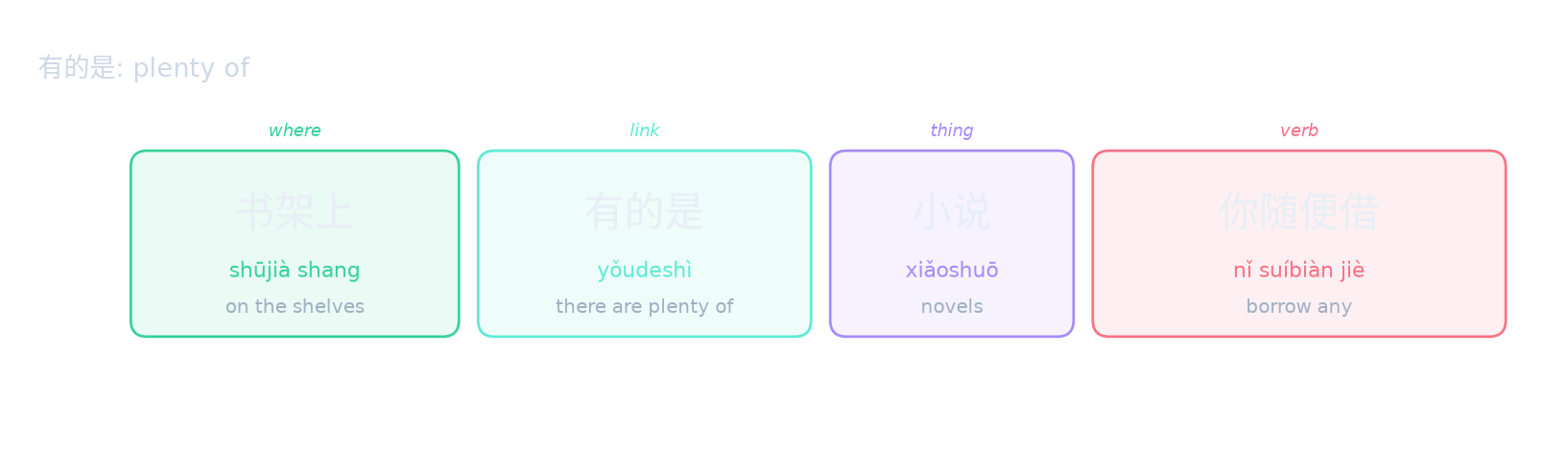
- 书架上have plenty of有的是novel小说,you你as you like; casual随便to borrow借。 — "There are plenty of novels on the shelf; borrow whatever you like."
- Goal: say there is plenty of something with have plenty of有的是 + noun.
have plenty of有的是 + Noun = have plenty of
- have plenty of有的是 + noun = "have plenty of, there's no shortage of": have plenty of有的是time时间, have plenty of有的是ways办法 — "There are plenty of ways."
- It reassures: there is more than enough.
don't别worry着急,we我们have plenty of有的是time时间。
Reassure: “Don't worry, there are plenty of tickets.” 别担心,票____。
难度 1/5 · 今日首次完成可获 100 金币及少量额外奖励
Topic + 有的是 = plenty.
Topic first, have plenty of有的是 after
- this kind of这种thing; stuff东西,supermarket超市inside; in里have plenty of有的是。 — "Things like this — the supermarket has loads."
- he他have plenty of有的是ways办法。 — "He has plenty of ways (he'll manage)."
he他has plenty of有的是ways办法。
Build: “He has plenty of ways (to solve it).”
难度 3/5 · 今日首次完成可获 200 金币及少量额外奖励
Subject + 有的是 + noun.
Not "some are"
- have plenty of有的是 = plenty; have有(modifier / structural particle)的 + noun = some: have有(modifier / structural particle)的person人to like喜欢 — "some people like it". Do not mix them up.
- No a lot of很多 inside: have plenty of有的是money钱, not have plenty of有的是a lot of很多money钱.
- The noun can also come first as the topic: we我们have plenty of有的是time时间 = time时间,we我们have plenty of有的是 — "We have plenty of time."
What does 有的人不喜欢吃辣 mean?
难度 1/5 · 今日首次完成可获 100 金币及少量额外奖励
有的 + noun means “some (of them)”: 有的人不喜欢吃辣 “Some people don't like spicy food.” It says nothing about how many, so “plenty” overstates it.
have plenty of有的是 versus a lot of很多
- have有a lot of很多time时间 is neutral.
- have plenty of有的是time时间 adds "so don't worry" — the speaker downplays any shortage.
we我们have有a lot of很多time时间。
有的是时间 suggests there's no need to hurry.
难度 1/5 · 今日首次完成可获 100 金币及少量额外奖励
It reassures that there is more than enough.
Recap
- have plenty of有的是 + noun = plenty of, no shortage (reassuring, spoken).
- have有(modifier / structural particle)的 + noun = some; no a lot of很多 inside have plenty of有的是.
Read the full reference: HSK 5 grammar — Adjectives.
A friend worries she won't find a novel to read on holiday. Close the examples. Say a Mandarin response, then write it in Chinese. Explain briefly in English what the lesson’s pattern adds. Compare with the model, then change one detail and try again.
This is supported productive practice. Compare meaning and structure; your answer need not copy the model. A partner or teacher must hear the spoken response to comment on pronunciation.