对 … 来说 (for / as far as … is concerned)
引入您的已保存位置保留在此浏览器中。恢复操作不会完成课程或回答其中的问题。
For me, it's hard
- Your classmate finds Chinese tones easy, but you don't.
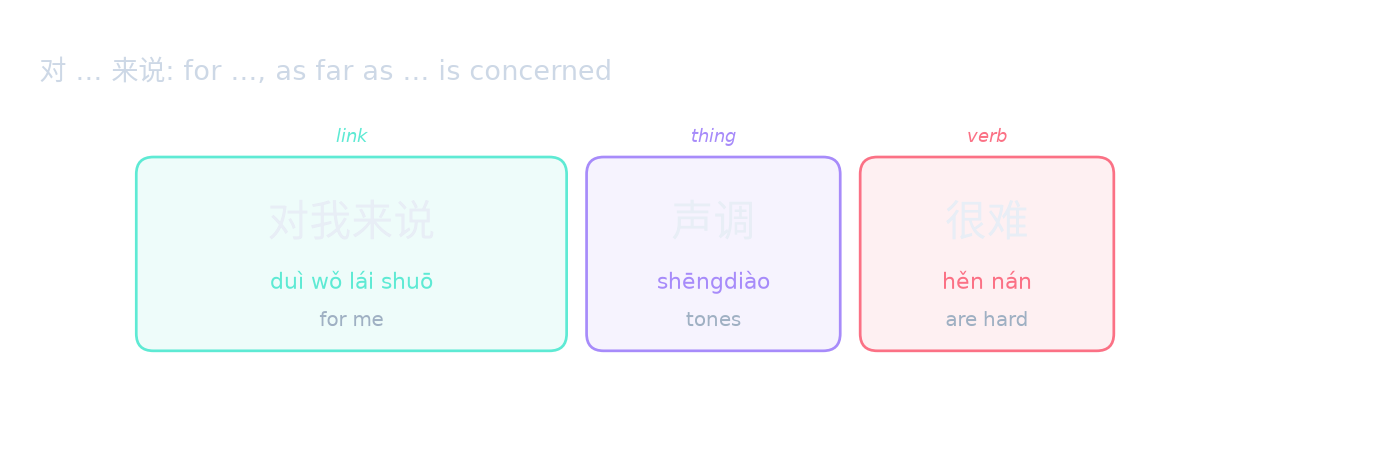
- for对me我(as far as … goes)来说,tones声调very很hard难。 — "For me, tones are hard."
- Goal: give a point of view with for对…(as far as … goes)来说 ("for …").
for对 + person + (as far as … goes)来说,… = for, as far as … is concerned
- for对 X (as far as … goes)来说 gives the point of view from which something is judged.
- It usually starts the sentence, followed by a comma.
for对me我(as far as … goes)来说,tones声调very很hard难。
Complete: “For me, this isn't a problem.” 对我____,这不是问题。
难度 1/5 · 今日首次完成可获 100 金币及少量额外奖励
对 X 来说.
Groups and things too
- for对students学生(as far as … goes)来说,time时间most最important重要。 — "For students, time is the most important thing."
- for对this这个city城市(as far as … goes)来说,to travel; tourism旅游very很important重要。 — "Tourism is very important for this city."
for对students学生(as far as … goes)来说,time时间most最important重要。
Build: “For students, time is the most important thing.”
难度 3/5 · 今日首次完成可获 200 金币及少量额外奖励
对 X 来说, then the judgement.
Keep all three parts
- Use the full frame for对…(as far as … goes)来说: for对me我(as far as … goes)来说, not for对me我to speak说 (that means "said to me").
- The judgement follows: for对he / him他(as far as … goes)来说,this这is not / no不是question / problem问题 — "For him, this isn't a problem."
What does 他对我说 mean?
难度 1/5 · 今日首次完成可获 100 金币及少量额外奖励
Without 来说, 对 + person + 说 = say to.
for对…(as far as … goes)来说 versus in在…view看来
- for对…(as far as … goes)来说 = how it affects or matters to someone: for对me我(as far as … goes)来说very很hard难 — "It's hard for me."
- in在…view看来 = someone's opinion: in my opinion在我看来,this这个method办法no good不好 — "In my opinion, this isn't a good idea."
in在my我view看来,this这个method办法not不good好。
在我看来 introduces an opinion.
难度 1/5 · 今日首次完成可获 100 金币及少量额外奖励
在…看来 = in someone's view.
Recap
- for对 X (as far as … goes)来说,… = for X / as far as X is concerned.
- Keep (as far as … goes)来说 (for对me我to speak说 = said to me); in在…view看来 = in someone's opinion.
Read the full reference: HSK 4 grammar — Basic sentence patterns.
Your classmate finds Chinese tones easy, but you don't. Close the examples. Say a Mandarin response, then write it in Chinese. Explain briefly in English what the lesson’s pattern adds. Compare with the model, then change one detail and try again.
This is supported productive practice. Compare meaning and structure; your answer need not copy the model. A partner or teacher must hear the spoken response to comment on pronunciation.