Verb + 起来 (in terms of doing it)
引入您的已保存位置保留在此浏览器中。恢复操作不会完成课程或回答其中的问题。
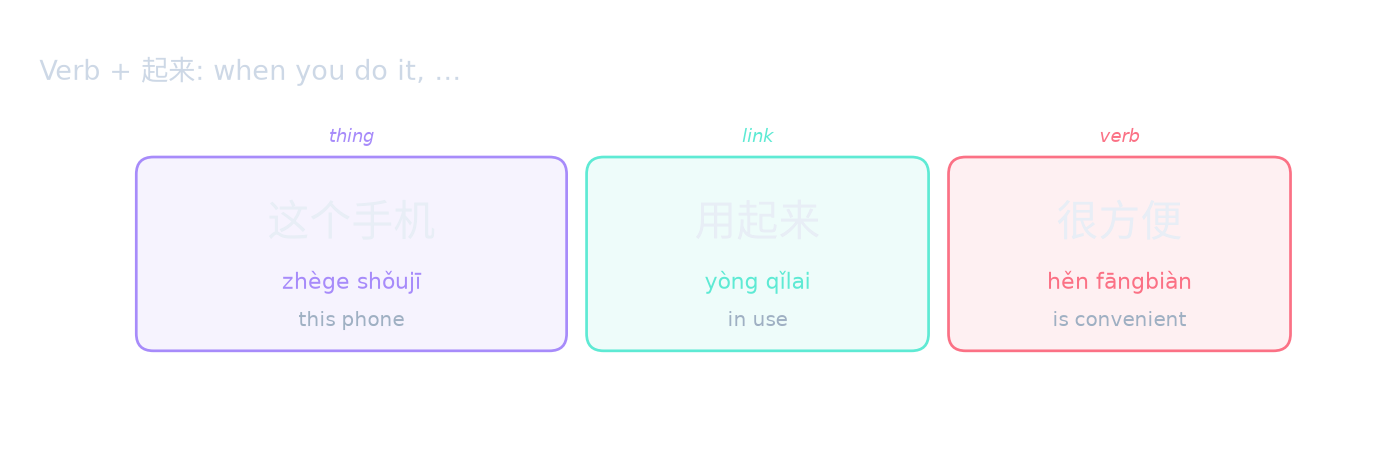
Easy to use?
- A friend asks what you think of your new phone after a week.
- this这个mobile phone手机to use / with用(in doing)起来very很convenient方便。 — "This phone is very convenient to use."
Verb + (in doing)起来 + comment = when you do it
- Verb + (in doing)起来 = "when it comes to doing it, in the doing": the comment judges the experience.
- say说(in doing)起来easy容易,do做(in doing)起来hard难 — "Easier said than done."
say说(in doing)起来easy容易,do做(in doing)起来hard难。
Complete: “This method sounds simple but is hard to do.” 这个方法听____简单,做起来难。
难度 1/5 · 今日首次完成可获 100 金币及少量额外奖励
Verb + 起来 + comment.
说起来容易,做起来难 means “easier said than done”.
难度 1/5 · 今日首次完成可获 100 金币及少量额外奖励
It judges saying versus doing.
Senses and experience
- this这个dish (of food); vegetable菜to eat吃(in doing)起来slightly有点儿spicy辣。 — "This dish tastes a bit spicy."
- this这(measure word)首song歌listen听(in doing)起来very很familiar熟悉。 — "This song sounds familiar."
this这(measure word)首song歌listen听(when)起来very很familiar熟悉。
Build: “This song sounds familiar.”
难度 3/5 · 今日首次完成可获 200 金币及少量额外奖励
Thing + Verb + 起来 + comment.
The thing judged comes first
- Put what you are judging first: this这本书to read (aloud); to study读(in doing)起来very很interesting有意思, not to read (aloud); to study读(in doing)起来this这本书very很interesting有意思 in most speech.
- (in doing)起来 here does not mean "get up" or "start"; it marks the experience of doing.
Three uses of (in doing)起来
- Judging: to use / with用(in doing)起来very很convenient方便. Starting: he他laugh笑(completed / change)了(in doing)起来 — "He started laughing."
- Upward movement: to stand站(in doing)起来 — "stand up". Context and the following comment tell you which.
he他laugh笑了(start)起来。
Match each sentence to the use of 起来.
难度 2/5 · 今日首次完成可获 140 金币及少量额外奖励
The comment and the verb tell you which use it is.
Recap
- Thing + Verb + (in doing)起来 + comment = it is … to do: to use / with用(in doing)起来convenient方便, say说(in doing)起来easy容易.
- Other (in doing)起来: start (laugh笑(in doing)起来), upward (to stand站(in doing)起来).
Read the full reference: HSK 4 grammar — Complements.
A friend asks what you think of your new phone after a week. Close the examples. Say a Mandarin response, then write it in Chinese. Explain briefly in English what the lesson’s pattern adds. Compare with the model, then change one detail and try again.
This is supported productive practice. Compare meaning and structure; your answer need not copy the model. A partner or teacher must hear the spoken response to comment on pronunciation.