难 + Verb (unpleasant to …)
引入您的已保存位置保留在此浏览器中。恢复操作不会完成课程或回答其中的问题。
The canteen's new dish
- You try the canteen's new soup. It is salty and cold.
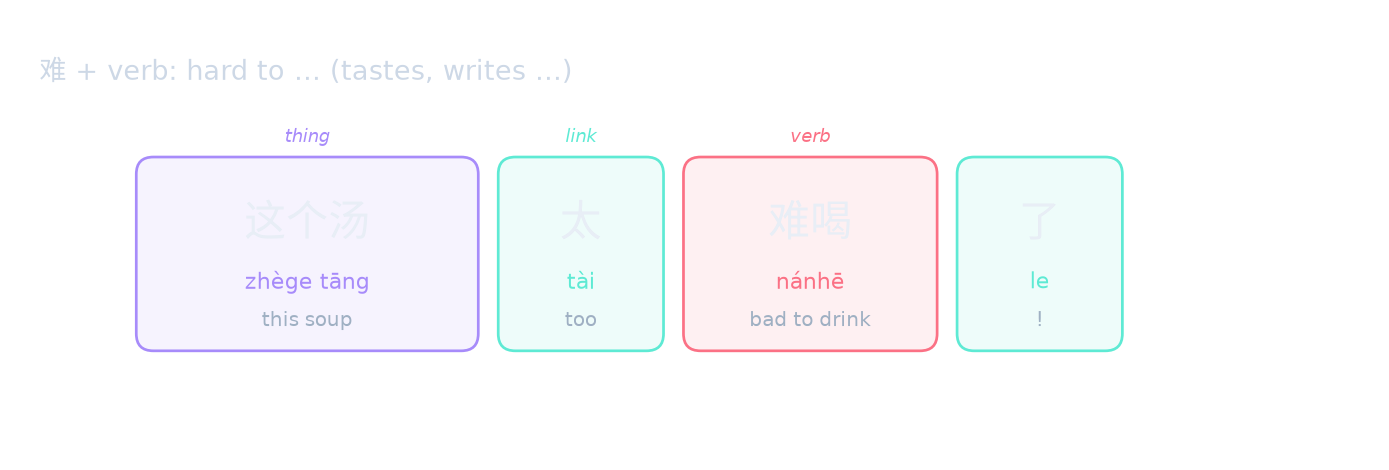
- this这个汤太hard to难to drink喝(completed / change)了! — "This soup tastes awful!" hard to难 + a sense verb = unpleasant to …
hard to难 + sense verb
- unpalatable难吃, hard to难to drink喝, bad-looking难看, unpleasant to hear难听, unpleasant smell难闻 = bad-tasting (food), bad-tasting (drinks), ugly, unpleasant to hear, bad-smelling.
- They work like adjectives: very很bad-looking难看, too太unpleasant to hear难听(completed / change)了. The opposites start with good好: tasty好吃, tasty (drinks)好喝, good-looking好看, pleasant to hear好听, 好闻.
this这(measure word)首song歌very很unpleasant to hear难听。
Complete: “This colour is ugly.” 这个颜色很____。
难度 1/5 · 今日首次完成可获 100 金币及少量额外奖励
难看 = unpleasant to look at, ugly.
hard to难 + other verbs: hard to …
- With most other verbs, hard to难 means "difficult to": this这个Chinese character字very很hard to难to write写。 — "This character is hard to write."
- his他(modifier / structural particle)的question问题very很hard to难answer回答。 — "His question is hard to answer."
his他的question问题very很hard to难answer回答。
Match each word to its meaning.
难度 2/5 · 今日首次完成可获 140 金币及少量额外奖励
With sense verbs 难 means unpleasant; with other verbs it means hard to do; 难受 is a feeling.
Build: “His question is hard to answer.”
难度 3/5 · 今日首次完成可获 200 金币及少量额外奖励
Topic + 很 + 难 + verb.
Unpleasant versus difficult
- unpalatable难吃 means it tastes bad, not that it is hard to eat; bad-looking难看 means ugly, not hard to see.
- to feel unwell难受 is a feeling: "feel unwell, upset": I / me我headache头疼,very很to feel unwell难受.
hard to难 + Verb versus no good不好 + Verb
- not不tasty好吃 is milder: "not tasty". unpalatable难吃 is stronger: "awful".
- no good不好to write写 (not easy to write) is similar to very很hard to难to write写, but softer.
this这(measure word)个dish菜not不tasty好吃。
Which is the mildest way to say the food is not good?
难度 1/5 · 今日首次完成可获 100 金币及少量额外奖励
不好吃 is milder than 难吃.
Recap
- hard to难 + sense verb (unpalatable难吃, bad-looking难看, unpleasant to hear难听, unpleasant smell难闻, hard to难to drink喝) = unpleasant to that sense; opposite good好 + verb.
- hard to难 + other verbs = hard to do: hard to难to write写, hard to难answer回答. to feel unwell难受 = feel bad.
Read the full reference: HSK 3 grammar — Verb phrases.
You try the canteen's new soup. It is salty and cold. Close the examples. Say a Mandarin response, then write it in Chinese. Explain briefly in English what the lesson’s pattern adds. Compare with the model, then change one detail and try again.
This is supported productive practice. Compare meaning and structure; your answer need not copy the model. A partner or teacher must hear the spoken response to comment on pronunciation.