应该 / 该 (should, ought to)
引入您的已保存位置保留在此浏览器中。恢复操作不会完成课程或回答其中的问题。
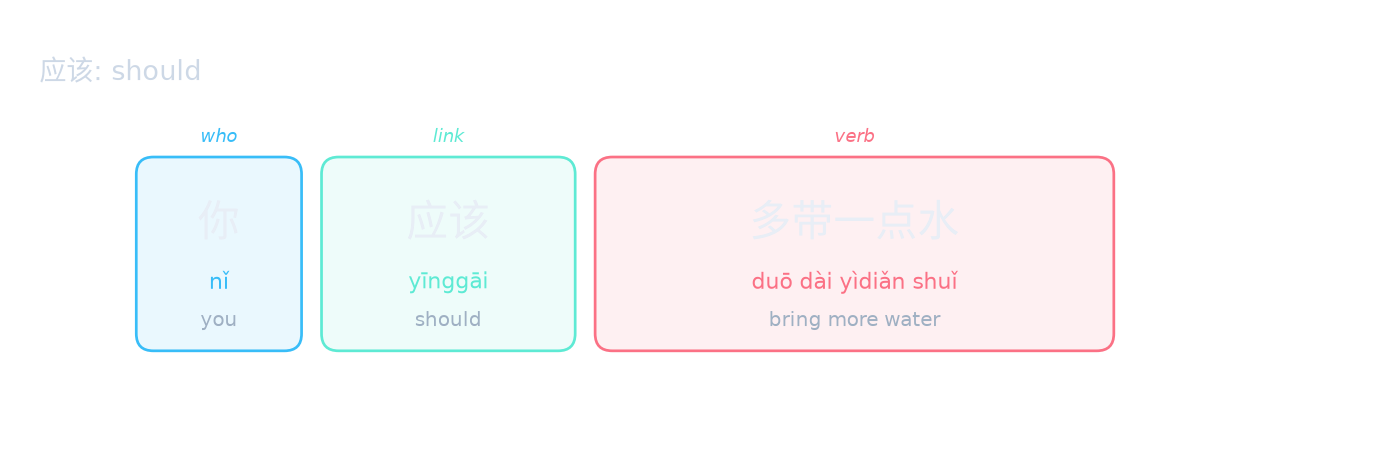
A hot day out
- Your friend is going hiking at noon in 35 degrees with one small bottle of water.
- you你should应该多带a bit一点water水。 — "You should take some more water."
should应该 / should该 + Verb
- should应该 + Verb = "should, ought to": advice or duty. should该 is the shorter, spoken form.
- Negative: not不should应该 = "shouldn't": you你not不should应该so这么late晚go to bed睡觉.
you你not不should应该so这么late晚go to bed睡觉。
Advise: “You should see a doctor.” 你____去看医生。
难度 1/5 · 今日首次完成可获 100 金币及少量额外奖励
应该 + verb gives advice.
It is time to …
- should该 + Verb + (completed / change)了 = "it's time to …": twelve o'clock十二点(completed / change)了,I我should该go走(completed / change)了。 — "It's twelve; I should be going."
- should该 + person + Verb = "it's someone's turn": should该you你(completed / change)了 — "Your turn."
twelve o'clock十二点了,I我should该go走了。
What does 该你了 mean?
难度 1/5 · 今日首次完成可获 100 金币及少量额外奖励
该 + person = it's that person's turn.
Build: “It's twelve; I should be going.”
难度 3/5 · 今日首次完成可获 200 金币及少量额外奖励
该 + verb + 了 = it's time to.
Form and position
- should应该 goes after the subject and before the verb: you你should应该to rest休息, not should应该you你to rest休息.
- Put not不 before should应该 to say "shouldn't": you你not不should应该to go去, not you你should应该not不to go去.
should应该 for "probably"
- should应该 can also be a confident guess: he他should应该already已经perfect到家(completed / change)了。 — "He should be home by now."
- Context tells you which one: advice to a person, or a guess about a situation.
he他should应该already已经arrive到home家了。
In 他应该已经到家了, 应该 is advice to him.
难度 1/5 · 今日首次完成可获 100 金币及少量额外奖励
Here 应该 is a confident guess: “he should be home by now.”
Recap
- should应该 / should该 + Verb = should; not不should应该 = shouldn't.
- should该…(completed / change)了 = it's time to …; should该you你(completed / change)了 = your turn; should应该 can also mean "probably".
Read the full reference: HSK 3 grammar — Auxiliary verbs.
Your friend is going hiking at noon in 35 degrees with one small bottle of water. Close the examples. Say a Mandarin response, then write it in Chinese. Explain briefly in English what the lesson’s pattern adds. Compare with the model, then change one detail and try again.
This is supported productive practice. Compare meaning and structure; your answer need not copy the model. A partner or teacher must hear the spoken response to comment on pronunciation.