跳到主要内容

助词

HSK 4 · 知识点 8

本主题的视频课程 打开视频页面
3:32

HSK 4 语法 08:助词

三个助词,三种用途。吗可包裹已含疑问词的问句;双用吧构成两难语气;句末的的表示确信。每个助词……

英文讲解与普通话例句 · 字幕与原声同步

点击任意汉字可查看拼音和释义。
English

Three sentence-final particles that change how a sentence sounds. (yes/no ?)吗ma after a statement checks something you think is true; (suggestion)吧ba used twice weighs two options (to go去qù(suggestion)吧ba,太远tài yuǎn;不去bù qù(suggestion)吧ba, again又yòusorry; to feel embarrassed不好意思bù hǎo yì sī); and a final (modifier / structural particle)的de makes a statement sound certain: 他会来tā huì lái(modifier / structural particle)的de.

8.1

一目了然

English
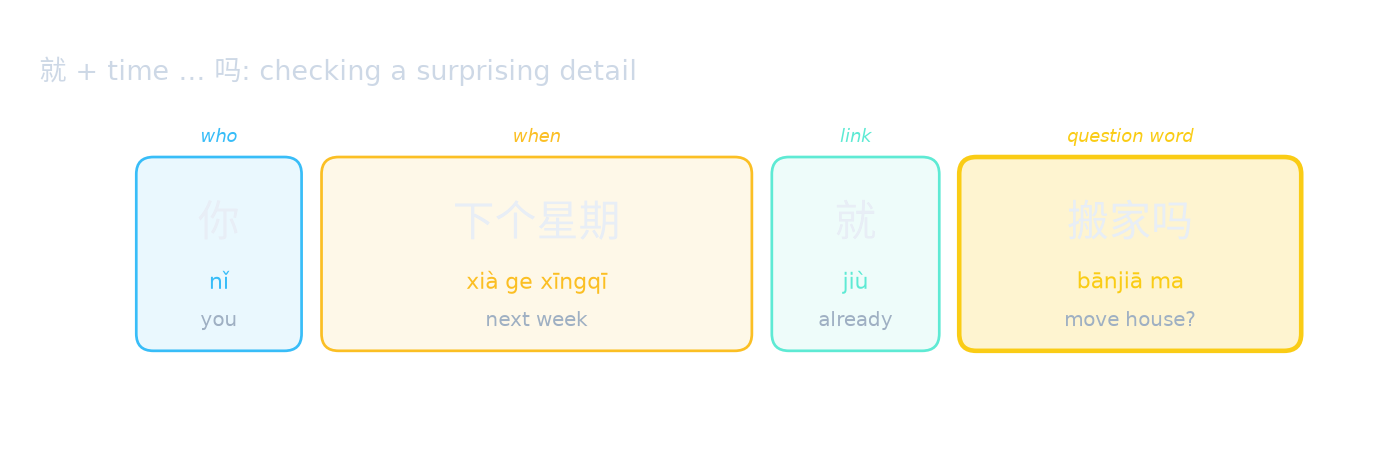
  • 1. Statement + (yes/no ?)吗ma – yes/no confirmation: you你nǐnext week下个星期xià gè xīng qīthen / just就jiùto move house搬家bān jiā(yes/no ?)吗ma?
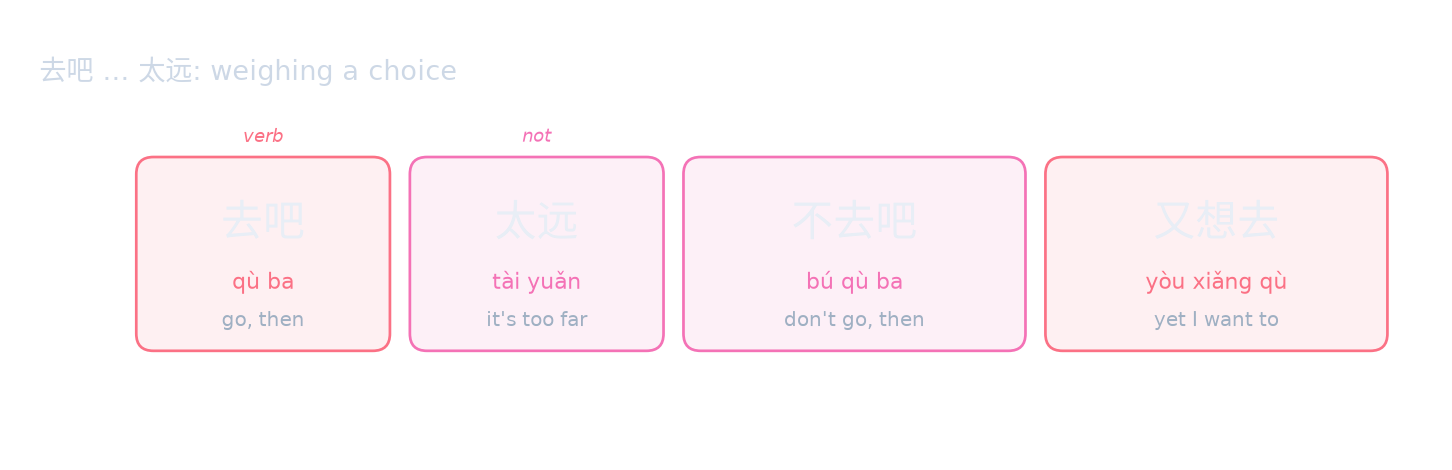
  • 2. … (suggestion)吧ba,… ;… (suggestion)吧ba,… – weighing options: to go去qù(suggestion)吧ba,太远tài yuǎn;不去bù qù(suggestion)吧ba,wages; salary工资gōng zīagain又yòudegree / adjective linker很hěntall; high高gāo。
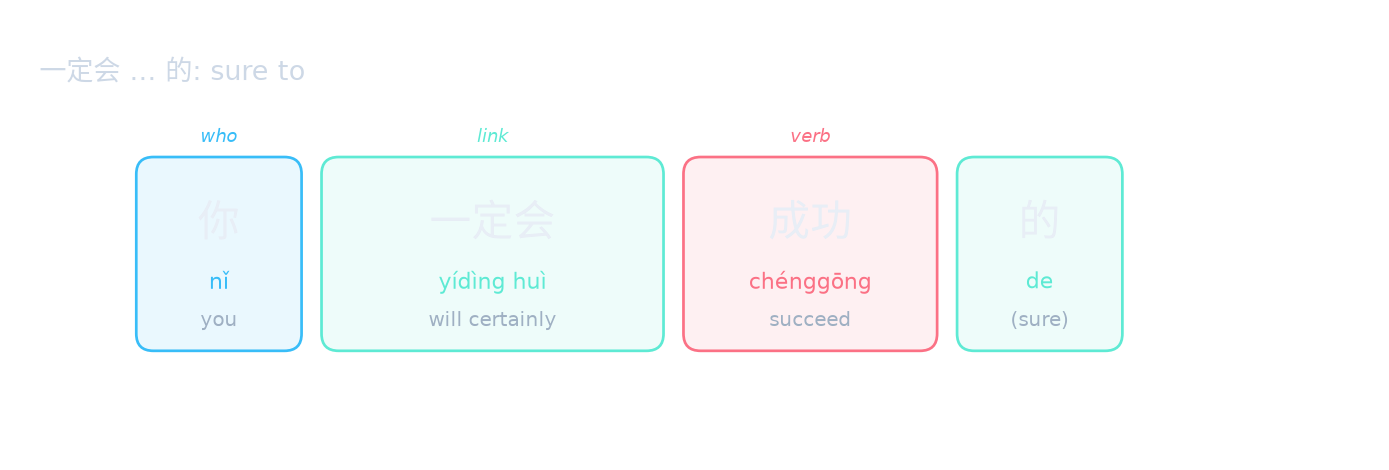
  • 3. Sentence-final (modifier / structural particle)的de – modal: certainty: you你nǐdefinitely / certain一定yí dìngcan / will会huìto succeed; success成功chéng gōng(modifier / structural particle)的de。
8.2

1. 陈述句 + 吗(确认是或否)

English

Form: statement + (yes/no ?)吗ma? · negative statement + (yes/no ?)吗ma?

  • you你nǐto be / is是shìstudent学生xué shēng(yes/no ?)吗ma? Nǐ shì xuésheng ma? – Are you a student?
  • you你nǐnext week下个星期xià gè xīng qīthen / just就jiùto move house搬家bān jiā(yes/no ?)吗ma? – You're moving as soon as next week?
  • you你nǐnot不bùtired累lèi(yes/no ?)吗ma? Nǐ bú lèi ma? – Aren't you tired?

How it works. (yes/no ?)吗ma at the end turns a statement into a yes-no question; the word order does not change. Said with surprise, it checks something you heard (you你nǐnot不bùto go去qù(yes/no ?)吗ma?). A negative (yes/no ?)吗ma question often shows surprise or expects "yes".

Answering a negative question. to / towards / correct对duì agrees with the statement inside the question, which can feel the opposite of English.

Q: you你nǐnot不bùhungry饿è(yes/no ?)吗ma? Meaning
to / towards / correct对duì,I / me我wǒnot不bùhungry饿è。 Right, I'm not hungry.
not不bù,I / me我wǒhungry饿è。 No, I am hungry.

Watch out

  • One question form at a time. No (yes/no ?)吗ma after a question word (wrong: you你nǐto go去qùwhere哪儿nǎr(yes/no ?)吗ma? unless you mean "anywhere") or after A-not-A (wrong: you你nǐ去不去qù bù qù(yes/no ?)吗ma?).
就 + time … 吗: checking a surprising detail
词汇 训练
汉字 拼音 English
对 duì right; to (someone); towards
8.3

2. … 吧,… ;… 吧,…(权衡不同选择)

English

Form: option 1 + (suggestion)吧ba,problem;option 2 + (suggestion)吧ba,(again又yòu) + problem

  • to go去qù(suggestion)吧ba,太远tài yuǎn;不去bù qù(suggestion)吧ba,wages; salary工资gōng zīagain又yòudegree / adjective linker很hěntall; high高gāo。 Qù ba, tài yuǎn; bú qù ba, gōngzī yòu hěn gāo. – If I take it, it's too far; if I don't, the pay is high.
  • to speak说shuō(suggestion)吧ba,to be afraid怕pàhe / him他tāto get angry生气shēng qì;not不bùto speak说shuō(suggestion)吧ba,again又yòuto feel / think觉得jué deno good不好bù hǎo。 – If I tell him, I'm afraid he'll be angry; if I don't, I feel bad.
  • to eat吃chī(suggestion)吧ba,can / will会huìfat胖pàng;不吃bù chī(suggestion)吧ba,can / will会huìhungry饿è。 – If I eat it, I'll get fat; if I don't, I'll be hungry.

How it works. This pattern shows a dilemma: two choices, each with a drawback. Here (suggestion)吧ba means "suppose I …", followed by a comma and the problem. again又yòu in the second half adds "but on the other hand". Keep the two halves parallel.

(suggestion)吧ba + comma + problem sentence + (suggestion)吧ba
"if I were to …" (dilemma) a suggestion: "let's"
to go去qù(suggestion)吧ba,太远tài yuǎn we / us我们wǒ mento walk / to leave走zǒu(suggestion)吧ba
去吧 … 太远: weighing a choice
词汇 训练
汉字 拼音 English
工资 gōng zī wages; salary
8.4

3. 句末的“的”(表示确定的语气)

English

Form: (definitely / certain一定yí dìng / definitely; to be sure肯定kěn dìng) + can / will会huì / can / be able to能néng + verb + (modifier / structural particle)的de

  • you你nǐdefinitely / certain一定yí dìngcan / will会huìto succeed; success成功chéng gōng(modifier / structural particle)的de。 Nǐ yídìng huì chénggōng de. – You'll definitely succeed.
  • to feel relieved放心fàng xīn,I / me我wǒwon't / can't不会bú huìto tell告诉gào sùother people别人bié rén(modifier / structural particle)的de。 Fàngxīn, wǒ bú huì gàosu biérén de. – Don't worry, I won't tell anyone.
  • this这个zhè gequestion / problem问题wèn tícan / be able to能néngto solve解决jiě jué(modifier / structural particle)的de。 – This problem can be solved, I'm sure.

How it works. (modifier / structural particle)的de at the end of a sentence with can / will会huì or can / be able to能néng makes a judgement, promise or reassurance firmer. The sentence is correct without it; (modifier / structural particle)的de adds certainty.

can / will会huì……(modifier / structural particle)的de to be / is是shì……(modifier / structural particle)的de
certainty about the future focus on a detail of a past event
我会wǒ huìto come来lái(modifier / structural particle)的de (I'll definitely come) I / me我wǒto be / is是shìyesterday昨天zuó tiānto come来lái(modifier / structural particle)的de (it was yesterday that I came)
一定会 … 的: sure to
词汇 训练
汉字 拼音 English
肯定 kěn dìng definitely; to be sure
成功 chéng gōng to succeed; success
8.5

练习

English

Cover the teaching pages before you answer. The answers are at the end.

1. Statement + (yes/no ?)吗ma (yes/no confirmation)

1. Make a question: “Are you a student?” you你nǐto be / is是shìstudent学生xué shēng…………?

2. Which question is correct?

  • A. you你nǐtomorrow明天míng tiānto come来lái(yes/no ?)吗ma?
  • B. (yes/no ?)吗mayou你nǐtomorrow明天míng tiānto come来lái?
  • C. you你nǐ去不去qù bù qù(yes/no ?)吗ma?
  • D. you你nǐwhat什么shén metime; when时候shí hòuto come来lái(yes/no ?)吗ma?

3. Q: you你nǐnot不bùhungry饿è(yes/no ?)吗ma? You are not hungry. What do you say?

  • A. to / towards / correct对duì,I / me我wǒhungry饿è。
  • B. to / towards / correct对duì,I / me我wǒnot不bùhungry饿è。
  • C. not不bù,I / me我wǒhungry饿è(completed / change)了le。
  • D. (yes/no ?)吗ma,I / me我wǒnot不bùhungry饿è。

4. Build: “Aren't you tired?”

Put in order: tired累lèi / (yes/no ?)吗ma? / you你nǐ / not不bù

5. Your friend mentions she's moving next week, and you can't quite believe it. Use Statement + (yes/no ?)吗ma. Write your answer in Chinese, then say it aloud.

2. … (suggestion)吧ba,… ;… (suggestion)吧ba,… (weighing options)

6. Complete the dilemma: “If I eat it, I'll get fat; if I don't, I'll be hungry.” to eat吃chī…………,can / will会huìfat胖pàng;不吃bù chī(suggestion)吧ba,can / will会huìhungry饿è。

7. In to go去qù(suggestion)吧ba,太远tài yuǎn;不去bù qù(suggestion)吧ba,again又yòuwant / think / miss想xiǎngto go去qù, what does the speaker feel?

  • A. Torn between two choices
  • B. Sure about going
  • C. Inviting a friend
  • D. Happy to stay at home

8. Build: “If I tell him, I'm afraid he'll be angry.”

Put in order: to speak说shuō(suggestion)吧ba / , / to get angry生气shēng qì。 / to be afraid怕pàhe / him他tā

9. True or false? In the dilemma pattern, (suggestion)吧ba means “let's”. If false, correct it.

10. You can't choose between two jobs: one is near home, the other pays more. Use … (suggestion)吧ba,… ;… (suggestion)吧ba,…. Write your answer in Chinese, then say it aloud.

3. Sentence-final (modifier / structural particle)的de (modal: certainty)

11. Reassure: “He'll definitely come.” he / him他tādefinitely / certain一定yí dìngcan / will会huìto come来lái…………。

12. Which sentence focuses on HOW a past event happened?

  • A. 我会wǒ huìto go去qù(modifier / structural particle)的de。
  • B. he / him他tāwon't / can't不会bú huìto forget忘wàng(modifier / structural particle)的de。
  • C. I / me我wǒto be / is是shì坐火车zuò huǒ chēto come来lái(modifier / structural particle)的de。
  • D. you你nǐcan / will会huìto like喜欢xǐ huan(modifier / structural particle)的de。

13. Build: “Don't worry, I won't tell anyone.”

Put in order: ,I / me我wǒwon't / can't不会bú huì / to feel relieved放心fàng xīn / to tell告诉gào sùother people别人bié rén / (modifier / structural particle)的de。

14. True or false? you你nǐcan / will会huìto succeed; success成功chéng gōng is wrong without (modifier / structural particle)的de. If false, correct it.

15. Your friend is nervous about tomorrow's interview. You are sure it will go well. Use Sentence-final (modifier / structural particle)的de. Write your answer in Chinese, then say it aloud.

8.6

混合练习

English

These questions mix the patterns and use new situations.

16. Choose (yes/no ?)吗ma, (suggestion)吧ba or (modifier / structural particle)的de: you你nǐto be / is是shì新来xīn lái(modifier / structural particle)的deteacher老师lǎo shī…………? (you think so and check) / don't别biéanxious担心dān xīn,he / him他tādefinitely / certain一定yí dìngcan / will会huìto come来lái…………。 (you are sure)

17. Weigh two options with (suggestion)吧ba: going is too far; not going is impolite.

18. Someone asks you你nǐnot不bùto like喜欢xǐ huan(yes/no ?)吗ma? You do like it. Answer clearly.

19. Find and fix the problem. Someone asks you你nǐnot不bùto like喜欢xǐ huan(yes/no ?)吗ma? You do like it, but you answer to / towards / correct对duì. What has gone wrong?

20. Use it yourself. Ask a friend if they are free tomorrow, then answer that you are not.

8.7

答案与解析

English

Mark your work, then correct each mistake in your own words.

1. Statement + (yes/no ?)吗ma (yes/no confirmation)

1. (yes/no ?)吗ma

Statement + (yes/no ?)吗ma.

2. A. you你nǐtomorrow明天míng tiānto come来lái(yes/no ?)吗ma?

Only a plain statement takes (yes/no ?)吗ma.

3. B. to / towards / correct对duì,I / me我wǒnot不bùhungry饿è。

to / towards / correct对duì agrees with the negative statement “you're not hungry”.

4. you你nǐnot不bùtired累lèi(yes/no ?)吗ma?

Negative statement + (yes/no ?)吗ma.

5. Model answer: you你nǐnext week下个星期xià gè xīng qīthen / just就jiùto move house搬家bān jiā(yes/no ?)吗ma?

Check your answer:

  • No (yes/no ?)吗ma after a question word: you你nǐto go去qùwhere哪儿nǎr?, not you你nǐto go去qùwhere哪儿nǎr(yes/no ?)吗ma? (unless it means "anywhere").
  • No (yes/no ?)吗ma after A-not-A: you你nǐ去不去qù bù qù?, not you你nǐ去不去qù bù qù(yes/no ?)吗ma?

2. … (suggestion)吧ba,… ;… (suggestion)吧ba,… (weighing options)

6. (suggestion)吧ba

Option + (suggestion)吧ba, then the problem.

7. A. Torn between two choices

Each option has a drawback: a dilemma.

8. to speak说shuō(suggestion)吧ba,to be afraid怕pàhe / him他tāto get angry生气shēng qì。

Option + (suggestion)吧ba, then the worry.

9. False.

Here it means “suppose I …”; the suggestion (suggestion)吧ba ends a sentence.

10. Model answer: to go去qù(suggestion)吧ba,太远tài yuǎn;不去bù qù(suggestion)吧ba,wages; salary工资gōng zīagain又yòudegree / adjective linker很hěntall; high高gāo。

Check your answer:

  • Keep the two halves parallel: to go去qù(suggestion)吧ba…;不去bù qù(suggestion)吧ba…. Each needs its own problem.
  • This (suggestion)吧ba is not a suggestion ("let's"); it means "if I were to …".

3. Sentence-final (modifier / structural particle)的de (modal: certainty)

11. (modifier / structural particle)的de

Final (modifier / structural particle)的de adds certainty.

12. C. I / me我wǒto be / is是shì坐火车zuò huǒ chēto come来lái(modifier / structural particle)的de。

to be / is是shì…(modifier / structural particle)的de focuses on a detail of a past event.

13. to feel relieved放心fàng xīn,I / me我wǒwon't / can't不会bú huìto tell告诉gào sùother people别人bié rén(modifier / structural particle)的de。

Promise + (modifier / structural particle)的de.

14. False.

(modifier / structural particle)的de only adds certainty; the sentence is fine without it.

15. Model answer: you你nǐdefinitely / certain一定yí dìngcan / will会huìto succeed; success成功chéng gōng(modifier / structural particle)的de。

Check your answer:

  • This (modifier / structural particle)的de adds certainty to a future or general statement; to be / is是shì…(modifier / structural particle)的de focuses on how/when/where a past event happened: I / me我wǒto be / is是shì坐飞机zuò fēi jīto come来lái(modifier / structural particle)的de – "I came by plane."
  • Without (modifier / structural particle)的de, the sentence is still correct; (modifier / structural particle)的de just makes it more reassuring or firm.

Mixed practice

16. you你nǐto be / is是shì新来xīn lái(modifier / structural particle)的deteacher老师lǎo shī(yes/no ?)吗ma?don't别biéanxious担心dān xīn,he / him他tādefinitely / certain一定yí dìngcan / will会huìto come来lái(modifier / structural particle)的de。A statement + (yes/no ?)吗ma checks; can / will会huì……(modifier / structural particle)的de sounds certain.

17. to go去qù(suggestion)吧ba,太远tài yuǎn(completed / change)了le;不去bù qù(suggestion)吧ba,again又yòunot so good不太好bù tài hǎo。Each option takes (suggestion)吧ba, and the second often has again又yòu.

18. not不bù,I / me我wǒdegree / adjective linker很hěnto like喜欢xǐ huan。Saying to / towards / correct对duì would agree with the negative question and mean "right, I don't like it". A full answer avoids the confusion.

19. to / towards / correct对duì agrees with the question, so it means "right, I don't like it". Answer with the verb: not不bù,I / me我wǒdegree / adjective linker很hěnto like喜欢xǐ huan.

20. Model answer. you你nǐtomorrow明天míng tiānto have time (to do sth)有空yǒu kòng(yes/no ?)吗ma?—— I / me我wǒtomorrow明天míng tiān没空méi kòng。A short full answer is clearer than to / towards / correct对duì or not不bùto / towards / correct对duì.

Review later. Tomorrow, answer three negative questions with full sentences.

该知识点的互动课程

逐步完成,配合即时检查练习。

更多 HSK 4 知识点

登录或创建账户

IGCSE, A-Level & AP