跳到主要内容

句式 — 数量 & 范围

HSK 4 · 知识点 23

本主题的视频课程 打开视频页面
3:37

HSK 4 语法 23:数量与范围

五种工具,一条主线。重复动词、目标优先语序、任何后不加“的”、对称结构,以及处所后的方位词。每种框架都有其规则……

英文讲解与普通话例句 · 字幕与原声同步

点击任意汉字可查看拼音和释义。
English

Three patterns about scope: who or what is included. any任何rèn hé + noun + all / both都dōu/also也yě means "any" with no exceptions; (既…又) both / since既jì……also也yě/again又yòu…… joins two qualities; for / (wéi) to be为wèi……and / but而ér…… gives a purpose in a formal way. Each pattern needs its second word (all / both都dōu/also也yě, also也yě/again又yòu, and / but而ér) to be complete.

23.1

一目了然

English
  • 1. for / (wéi) to be为wèi … and / but而ér … – for the sake of: he / him他tāin order to为了wèi leup / on / last; to get on, attend上shànguniversity大学dà xuéand / but而érto work hard / effort努力nǔ lìto work; job工作gōng zuò。
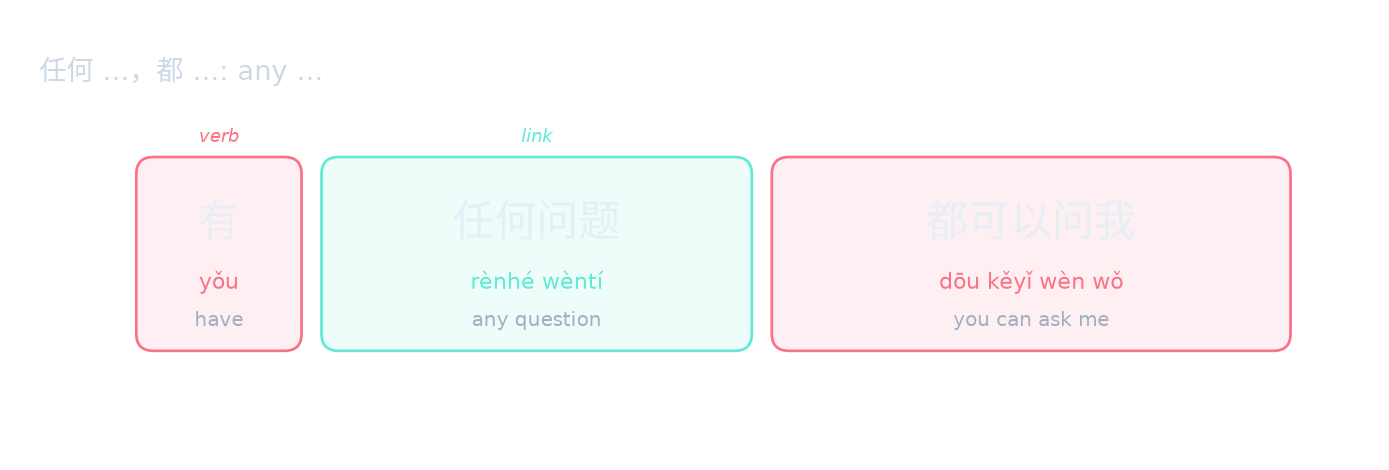
  • 2. any任何rèn hé + Noun + all / both都dōu / also也yě – any: to have / there is有yǒuany任何rèn héquestion / problem问题wèn tí,all / both都dōucan / may可以kě yǐto ask问wènI / me我wǒ。
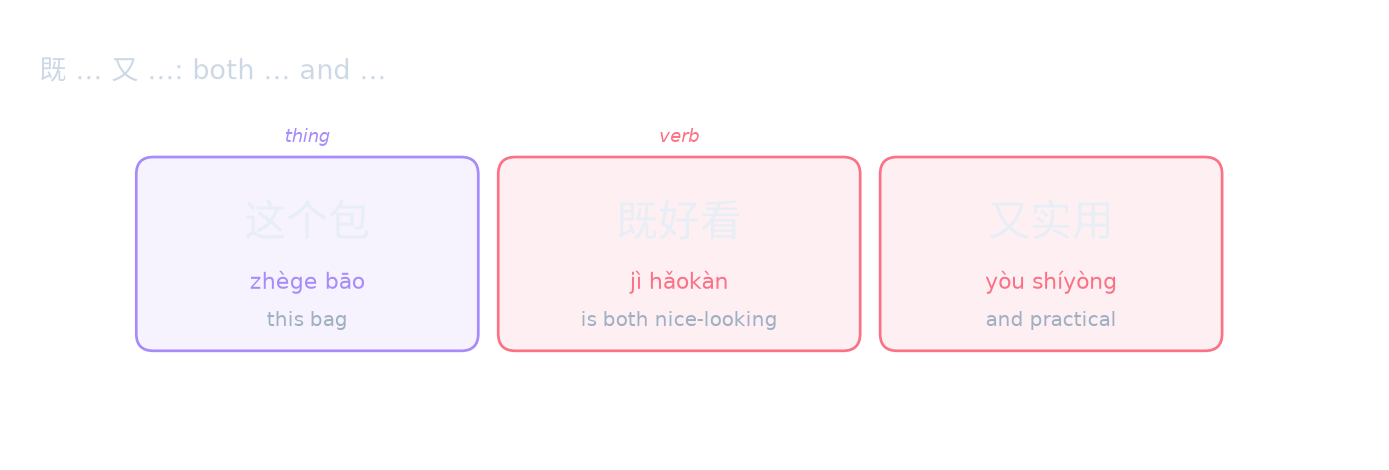
  • 3. (既…又) both / since既jì … also也yě / again又yòu … – both … and …: this这个zhè gebag / to wrap包bāo(既…又) both / since既jìgood-looking好看hǎo kànagain又yòupractical实用shí yòng。
23.2

1. 为 … 而 …(为了某种目的)

English

Form: for / (wéi) to be为wèi((completed / change)了le) + goal / cause + and / but而ér + action / feeling (formal)

  • he / him他tāin order to为了wèi leup / on / last; to get on, attend上shànguniversity大学dà xuéand / but而érto work hard / effort努力nǔ lìto work; job工作gōng zuò。 Tā wèile shàng dàxué ér nǔlì gōngzuò. – He works hard in order to go to university.
  • for / (wéi) to be为wèidream; to dream of梦想mèng xiǎngand / but而érto strive奋斗fèn dòu。 – Strive for your dreams.
  • everyone大家dà jiāall / both都dōufor / (wéi) to be为wèihe / him他tā(modifier / structural particle)的deto succeed; success成功chéng gōngand / but而érhappy; glad高兴gāo xìng。 – Everyone was happy about his success.
  • don't不要bú yàofor / (wéi) to be为wèitrifle小事xiǎo shìand / but而érto get angry生气shēng qì。 – Don't get angry over small things.

How it works. for / (wéi) to be为wèi……and / but而ér…… ties a purpose (or a cause of a feeling) tightly to an action in one phrase. Here for / (wéi) to be为wèi is read wèi, and and / but而ér does not mean "but": it links the purpose to the verb. It suits speeches, slogans and writing.

in order to为了wèi le + goal,clause for / (wéi) to be为wèi……and / but而ér + verb
everyday formal, one tight phrase
in order to为了wèi leup / on / last; to get on, attend上shànguniversity大学dà xué,he / him他tāto work hard / effort努力nǔ lìto work; job工作gōng zuò he / him他tāfor / (wéi) to be为wèiup / on / last; to get on, attend上shànguniversity大学dà xuéand / but而érto work hard / effort努力nǔ lìto work; job工作gōng zuò
为了 … 而 …: for the sake of
词汇 训练
汉字 拼音 English
而 ér and; whereas
成功 chéng gōng to succeed; success
23.3

2. 任何 + 名词 + 都 / 也

English

Form: any任何rèn hé + noun + all / both都dōu / also也yě · not不bù / not / haven't没méi + verb + any任何rèn hé + noun

  • to have / there is有yǒuany任何rèn héquestion / problem问题wèn tí,all / both都dōucan / may可以kě yǐto ask问wènI / me我wǒ。 Yǒu rènhé wèntí, dōu kěyǐ wèn wǒ. – If you have any questions at all, you can ask me.
  • 任何人rèn hé rénall / both都dōucan / may可以kě yǐto participate参加cān jiā。 – Anyone can take part.
  • I / me我wǒwon't / can't不会bú huìto tell告诉gào sù任何人rèn hé rén。 – I won't tell anyone.
  • any任何rèn hétime; when时候shí hòuyou你nǐall / both都dōucan / may可以kě yǐto / for / give给gěiI / me我wǒto make a telephone call打电话dǎ diàn huà。 – You can call me any time.

How it works. any任何rèn hé rènhé "any (at all)" goes before a noun. As the subject it needs all / both都dōu or also也yě. After a negative verb it means "no … at all": he / him他tānot have / haven't没有méi yǒuany任何rèn héquestion / problem问题wèn tí.

Spoken More formal
who谁shéiall / both都dōucan / may可以kě yǐto come来lái 任何人rèn hé rénall / both都dōucan / may可以kě yǐto come来lái

Watch out

  • wrong: 任何人rèn hé rénto know知道zhī dào → 任何人rèn hé rénall / both都dōuto know知道zhī dào.
  • any任何rèn hé never stands alone: 任何人rèn hé rén, any任何rèn héthing; stuff东西dōng xī.
任何 …,都 …: any …
词汇 训练
汉字 拼音 English
任何 rèn hé any
23.4

3. 既 … 也 / 又 …(表示两种情况同时存在)

English

Form: subject + (既…又) both / since既jì A again又yòu / also也yě B

  • this这个zhè gebag / to wrap包bāo(既…又) both / since既jìgood-looking好看hǎo kànagain又yòupractical实用shí yòng。 Zhège bāo jì hǎokàn yòu shíyòng. – This bag is both good-looking and practical.
  • this这个zhè gedish (of food); vegetable菜cài(既…又) both / since既jìcheap便宜pián yiagain又yòutasty好吃hǎo chī。 – This dish is both cheap and tasty.
  • he / him他tā(既…又) both / since既jìto be / is是shìteacher老师lǎo shī,also也yěto be / is是shìauthor作家zuò jiā。 – He is both a teacher and a writer.
  • we / us我们wǒ men(既…又) both / since既jìwant / will / need要yàoto study; to learn学习xué xí,also也yěwant / will / need要yàoto rest休息xiū xī。 – We need both to study and to rest.

How it works. (既…又) both / since既jì jì A again又yòu / also也yě B joins two qualities, roles or actions of the same subject, with equal weight. It is a little more formal and balanced than again又yòu……again又yòu…….

(既…又) both / since既jì……again又yòu…… not only不但bù dàn……moreover而且ér qiě……
two points, equal weight builds up: the second is stronger
(既…又) both / since既jìtall; high高gāoagain又yòuthin瘦shòu not only不但bù dàncheap便宜pián yi,moreover而且ér qiěquality质量zhì liàngdegree / adjective linker很hěngood好hǎo

Watch out

  • One subject only: wrong: he / him他tā(既…又) both / since既jì……,she / her她tāagain又yòu…….
  • The two should fit together; for a contrast, use but但是dàn shì.
既 … 又 …: both … and …
词汇 训练
汉字 拼音 English
不但 bù dàn not only
质量 zhì liàng quality
23.5

练习

English

Cover the teaching pages before you answer. The answers are at the end.

1. for / (wéi) to be为wèi … and / but而ér … (for the sake of)

1. Complete (formal): “Strive for your dreams.” for / (wéi) to be为wèidream; to dream of梦想mèng xiǎng…………to strive奋斗fèn dòu。

2. In don't不要bú yàofor / (wéi) to be为wèitrifle小事xiǎo shìand / but而érto get angry生气shēng qì, what does and / but而ér do?

  • A. means “but”
  • B. links the cause to the feeling
  • C. asks a question
  • D. means “and then later”

3. Build: “Everyone was happy about his success.”

Put in order: everyone大家dà jiāall / both都dōu / happy; glad高兴gāo xìng。 / and / but而ér / for / (wéi) to be为wèihe / him他tā(modifier / structural particle)的deto succeed; success成功chéng gōng

4. True or false? in order to为了wèi le…,… is the more everyday form. If false, correct it.

5. Your cousin works two jobs to save for university. Use for / (wéi) to be为wèi … and / but而ér …. Write your answer in Chinese, then say it aloud.

2. any任何rèn hé + Noun + all / both都dōu / also也yě (any)

6. Complete: “Anyone can take part.” …………person人rénall / both都dōucan / may可以kě yǐto participate参加cān jiā。

7. Which sentence is correct?

  • A. person人rénany任何rèn héall / both都dōuto know知道zhī dào这件zhè jiànmatter事shì。
  • B. 任何人rèn hé rénall / both都dōuto know知道zhī dào这件zhè jiànmatter事shì。
  • C. any任何rèn héall / both都dōuperson人rénto know知道zhī dào这件zhè jiànmatter事shì。
  • D. 任何人rèn hé rénto know知道zhī dào这件zhè jiànmatter事shì。

8. Build: “I won't tell anyone.”

Put in order: won't / can't不会bú huìto tell告诉gào sù / I / me我wǒ / person人rén。 / any任何rèn hé

9. True or false? who谁shéiall / both都dōucan / may可以kě yǐto come来lái is a spoken way to say 任何人rèn hé rénall / both都dōucan / may可以kě yǐto come来lái. If false, correct it.

10. At the end of the lesson your teacher wants to be sure everyone understood. Use any任何rèn hé + Noun + all / both都dōu / also也yě. Write your answer in Chinese, then say it aloud.

3. (既…又) both / since既jì … also也yě / again又yòu … (both … and …)

11. Complete: “This dish is both cheap and tasty.” this这个zhè gedish (of food); vegetable菜cài(既…又) both / since既jìcheap便宜pián yi…………tasty好吃hǎo chī。

12. Which sentence is correct?

  • A. he / him他tā(既…又) both / since既jìtall; high高gāoagain又yòuthin瘦shòu。
  • B. he / him他tātall; high高gāo(既…又) both / since既jìagain又yòuthin瘦shòu。
  • C. (既…又) both / since既jìhe / him他tātall; high高gāoagain又yòuthin瘦shòu。
  • D. he / him他tā(既…又) both / since既jìtall; high高gāo,she / her她tāagain又yòuthin瘦shòu。

13. Build: “He is both a teacher and a writer.”

Put in order: he / him他tā(既…又) both / since既jìto be / is是shìteacher老师lǎo shī / also也yěto be / is是shì / , / author作家zuò jiā。

14. True or false? not only不但bù dàn…moreover而且ér qiě… usually makes the second point stronger. If false, correct it.

15. You are recommending a backpack to a friend. Use (既…又) both / since既jì … also也yě / again又yòu …. Write your answer in Chinese, then say it aloud.

23.6

混合练习

English

These questions mix the patterns and use new situations.

16. Say "Any student must follow the rules."

17. Join with (既…又) both / since既jì……again又yòu……: the restaurant is cheap / it is clean.

18. Say formally "He studies hard for the competition."

19. Find and fix the problem. A note says I / me我wǒa little一点儿yì diǎnrwater水shuǐalso也yěnot / haven't没méito drink喝hē. A classmate thinks the writer drank a little water. Correct the reading.

20. Use it yourself. Write that any student must follow the rules, and that the library is both quiet and convenient.

23.7

答案与解析

English

Mark your work, then correct each mistake in your own words.

1. for / (wéi) to be为wèi … and / but而ér … (for the sake of)

1. and / but而ér

for / (wéi) to be为wèi A and / but而ér B links the purpose and the action.

2. B. links the cause to the feeling

In for / (wéi) to be为wèi + cause + and / but而ér + verb, and / but而ér links the cause to the reaction: don't不要bú yàofor / (wéi) to be为wèitrifle小事xiǎo shìand / but而érto get angry生气shēng qì “Don't get angry over small things.” It does not mean “but” here.

3. everyone大家dà jiāall / both都dōufor / (wéi) to be为wèihe / him他tā(modifier / structural particle)的deto succeed; success成功chéng gōngand / but而érhappy; glad高兴gāo xìng。

for / (wéi) to be为wèi + cause + and / but而ér + feeling.

4. True.

True. in order to为了wèi le…,… is the everyday way to state a purpose. for / (wéi) to be为wèi…and / but而ér… is more formal and written.

5. Model answer: he / him他tāin order to为了wèi leup / on / last; to get on, attend上shànguniversity大学dà xuéand / but而érto work hard / effort努力nǔ lìto work; job工作gōng zuò。

Check your answer:

  • In this pattern for / (wéi) to be为wèi is read wèi ("for"); it is written or formal speech. In chat, in order to为了wèi le…, I / me我wǒ… is enough.
  • and / but而ér does not mean "but" here; it links the purpose or cause to the action.

2. any任何rèn hé + Noun + all / both都dōu / also也yě (any)

6. any任何rèn hé

any任何rèn hé + noun + all / both都dōu.

7. B. 任何人rèn hé rénall / both都dōuto know知道zhī dào这件zhè jiànmatter事shì。

任何人rèn hé rénall / both都dōuto know知道zhī dào这件zhè jiànmatter事shì is right: any任何rèn hé + noun as the subject needs all / both都dōu before the verb, and any任何rèn hé always comes before its noun.

8. I / me我wǒwon't / can't不会bú huìto tell告诉gào sù任何人rèn hé rén。

Negative verb + any任何rèn hé + noun.

9. True.

QW + all / both都dōu is the spoken equivalent.

10. Model answer: to have / there is有yǒuany任何rèn héquestion / problem问题wèn tí,all / both都dōucan / may可以kě yǐto ask问wènI / me我wǒ。

Check your answer:

  • As a subject, any任何rèn hé + noun needs all / both都dōu / also也yě: 任何人rèn hé rénall / both都dōuto know知道zhī dào, not 任何人rèn hé rénto know知道zhī dào.
  • any任何rèn hé goes before a noun only; it does not stand alone: 任何人rèn hé rén, not just any任何rèn hé.

3. (既…又) both / since既jì … also也yě / again又yòu … (both … and …)

11. again又yòu

(既…又) both / since既jì A again又yòu B ((既…又) both / since既jì A also也yě B is also correct).

12. A. he / him他tā(既…又) both / since既jìtall; high高gāoagain又yòuthin瘦shòu。

he / him他tā(既…又) both / since既jìtall; high高gāoagain又yòuthin瘦shòu is right: (既…又) both / since既jì A again又yòu B describes one subject, with both words after it. A second subject (she / her她tā) breaks the pattern.

13. he / him他tā(既…又) both / since既jìto be / is是shìteacher老师lǎo shī,also也yěto be / is是shìauthor作家zuò jiā。

(既…又) both / since既jìto be / is是shì…,also也yěto be / is是shì….

14. True.

It builds up; (既…又) both / since既jì…again又yòu… gives equal weight.

15. Model answer: this这个zhè gebag / to wrap包bāo(既…又) both / since既jìgood-looking好看hǎo kànagain又yòupractical实用shí yòng。

Check your answer:

  • Both parts belong to one subject: he / him他tā(既…又) both / since既jì…again又yòu…, not he / him他tā(既…又) both / since既jì…,she / her她tāagain又yòu….
  • Usually both qualities point the same way ((既…又) both / since既jìcheap便宜pián yiagain又yòutasty好吃hǎo chī); for a clear contrast, use but但是dàn shì (degree / adjective linker很hěncheap便宜pián yi,but但是dàn shìnot不bùtasty好吃hǎo chī).

Mixed practice

16. any任何rèn héstudent学生xué shēngall / both都dōuwant / will / need要yàoto comply with遵守zūn shǒurule; to stipulate规定guī dìng。any任何rèn hé + noun needs all / both都dōu or also也yě.

17. 这家zhè jiārestaurant饭馆fàn guǎn(既…又) both / since既jìcheap便宜pián yiagain又yòuclean干净gān jìng。

18. he / him他tāfor / (wéi) to be为wèito participate参加cān jiācompetition比赛bǐ sàiand / but而ér努力学习nǔ lì xué xí。for / (wéi) to be为wèi + purpose + and / but而ér + action.

19. a little一点儿yì diǎnr……also也yěnot / haven't没méi means "not even a little": the writer drank no water at all.

20. Model answer. any任何rèn héstudent学生xué shēngall / both都dōuwant / will / need要yàoto comply with遵守zūn shǒurule; to stipulate规定guī dìng。library图书馆tú shū guǎn(既…又) both / since既jìquiet安静ān jìngagain又yòuconvenient方便fāng biàn。

Review later. Tomorrow, use any任何rèn hé……all / both都dōu and (既…又) both / since既jì……again又yòu…… in two sentences about your school.

这有帮助吗?

该知识点的互动课程

逐步完成,配合即时检查练习。

更多 HSK 4 知识点

登录或创建账户

IGCSE, A-Level & AP