Using life to feed and to heal
Bread rises, yoghurt thickens, insulin saves lives — all products of organisms put to work. This last section covers how humans increase yields (glasshouses, fertiliser, pest control), grow micro-organisms at scale (fermenters), and change organisms deliberately: selective breeding, genetic modification and cloning.
Edexcel International GCSE Biology 4BI1, Section 5 (statements 5.1–5.20B) completes the course. The B-suffixed statements (fish farming, micropropagation, mammal cloning) are Biology-only.
Food production
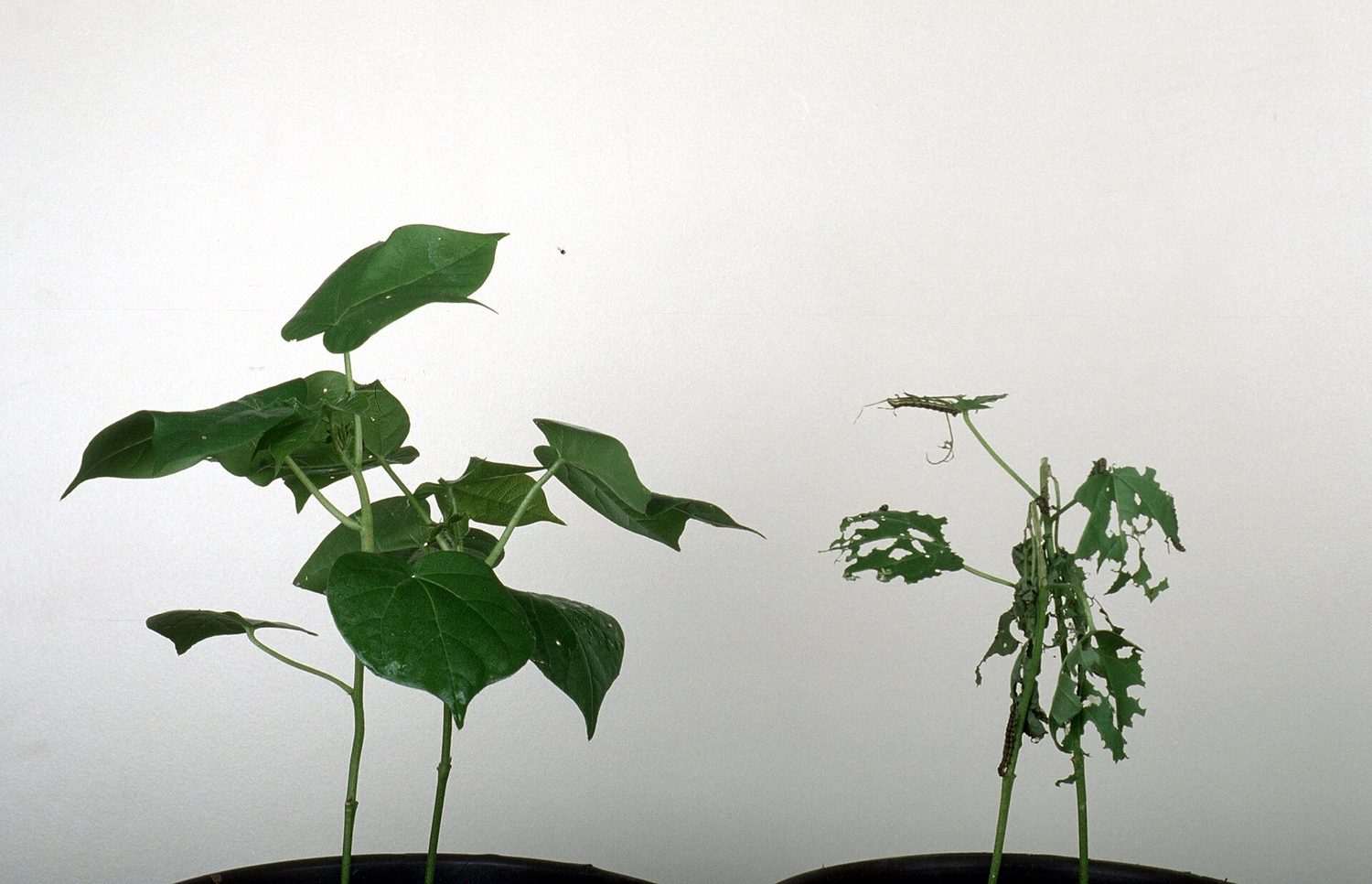
Crop plants. Glasshouses and polythene tunnels trap heat and shelter crops, letting farmers control light, temperature, CO₂ and water; raising CO₂ and temperature toward the optimum lifts the photosynthesis rate and yield. Fertilisers replace mineral ions (nitrate for amino acids, magnesium for chlorophyll) the soil loses with each harvest. Pest control: pesticides kill pests quickly and completely but risk bioaccumulation 生物累积, harming other species and leaving residues; biological control 生物防治 (introducing a pest's predator) is self-sustaining and specific but slow and less controllable if the control species itself spreads.
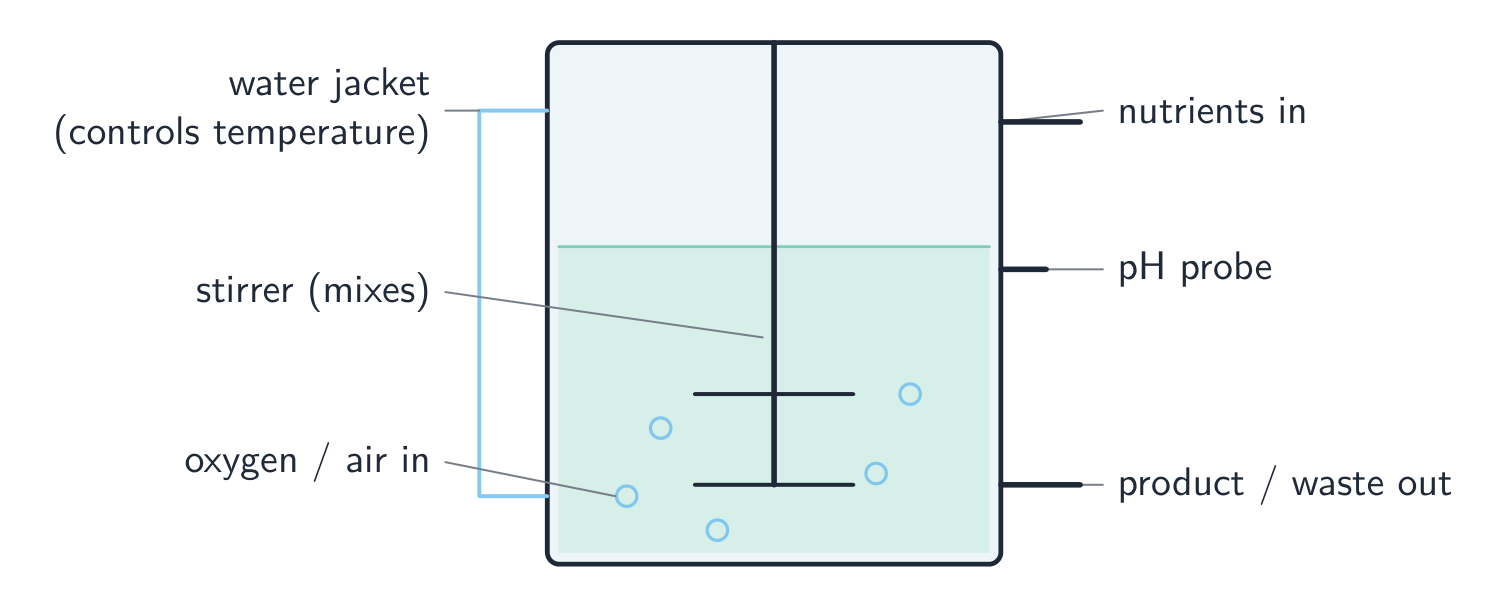
Micro-organisms. Yeast 酵母 ferments sugar: anaerobically it produces carbon dioxide (which raises bread) and ethanol; Lactobacillus converts milk sugar to lactic acid, thickening yoghurt. An industrial fermenter 工业发酵罐 keeps micro-organisms at their optimum: aseptic precautions (no contamination), nutrients, optimum temperature and pH, oxygenation (air supply for aerobic cultures) and agitation (stirring spreads heat and nutrients evenly).
(B) Fish farming provides protein efficiently: maintain water quality, control predation (intraspecific — among the fish — and interspecific), control disease, remove waste, control feeding quality and frequency, and selectively breed fast-growing strains.
Selective breeding
Choose parents with the desired characteristics → breed them → select the best offspring → repeat over generations. It develops plants with higher yield, disease resistance or hardiness, and animals with more meat, milk or docility — but it narrows the gene pool, increasing vulnerability to disease, and takes many generations.
Genetic modification (genetic engineering)
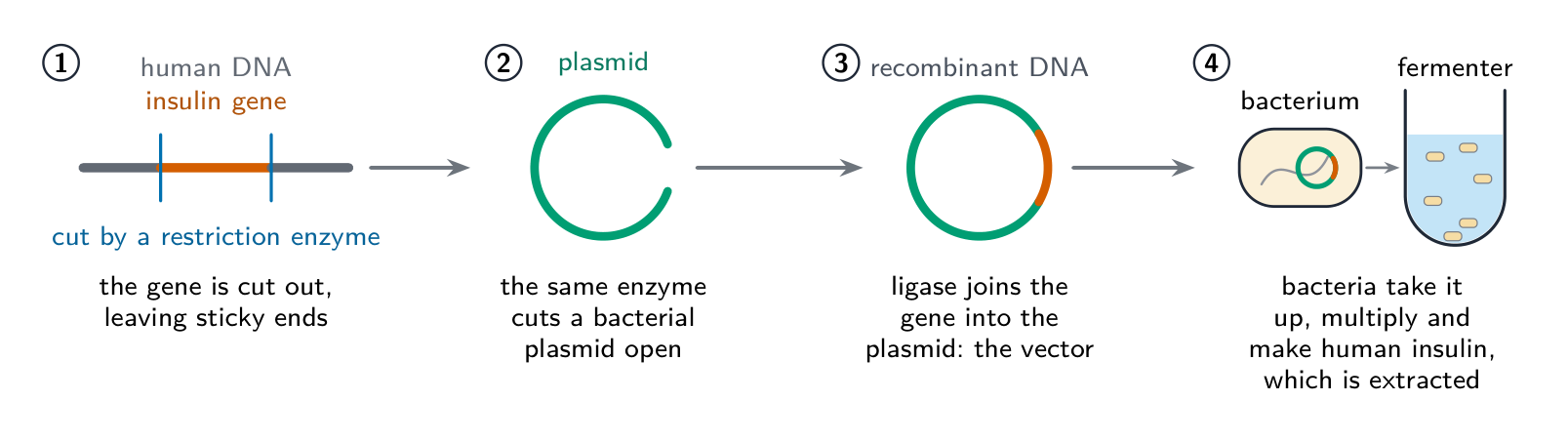
Restriction enzymes 限制性内切酶 cut DNA at specific sites; ligase 连接酶 joins pieces of DNA together. A plasmid 质粒 (or a virus) acts as a vector 载体: the human insulin gene is cut out, inserted into an opened plasmid, and the recombinant DNA is taken up by bacteria, which multiply in a fermenter producing human insulin. GM plants can resist pests or herbicides or make more food. An organism receiving genes from a different species is transgenic 转基因.
Cloning (B)
Micropropagation 微繁殖 (tissue culture): a small explant 外植体 is grown in vitro 体外 on a nutrient medium with growth hormones, producing genetically identical plantlets — commercial quantities of plants with desirable characteristics, disease-free and fast. Mammal cloning: a diploid nucleus from a mature cell is inserted into an enucleated egg cell (its own nucleus removed); the cell divides into an embryo placed in a surrogate — Dolly the sheep. Cloned transgenic animals can produce human proteins in their milk.
Check yourself
- Give two ways a glasshouse raises crop yield.
- State one advantage and one disadvantage of biological control.
- Why does Lactobacillus thicken milk?
- List the five conditions a fermenter maintains.
- (B) Name two methods of controlling predation in fish farming.
- Give two drawbacks of selective breeding.
- Name the enzyme that cuts DNA and the one that joins it.
- What is a vector in genetic engineering?
- Explain why bacteria with the human insulin gene make useful medicine.
- (B) Outline the stages of cloning a mammal.
Answers: 1 Traps heat near the optimum; CO₂, light and water controlled (any two); 2 Advantage — self-sustaining, no residues; disadvantage — slow, and the control species may spread; 3 It converts lactose to lactic acid, which coagulates the milk protein; 4 aseptic conditions, nutrients, optimum temperature and pH, oxygenation, agitation; 5 (B) nets or covers keep out other species (interspecific predation); fish of different sizes or ages are kept apart, so the large do not eat the small (intraspecific predation); 6 narrows the gene pool, so disease spreads easily; takes many generations.
Answers continued: 7 Restriction enzymes cut; ligase joins; 8 a plasmid or virus carrying recombinant DNA into a cell; 9 they multiply fast in a fermenter, secreting human insulin — safe and producible at scale; 10 (B) Diploid nucleus from a mature cell → enucleated egg → divides into an embryo → implanted in a surrogate.